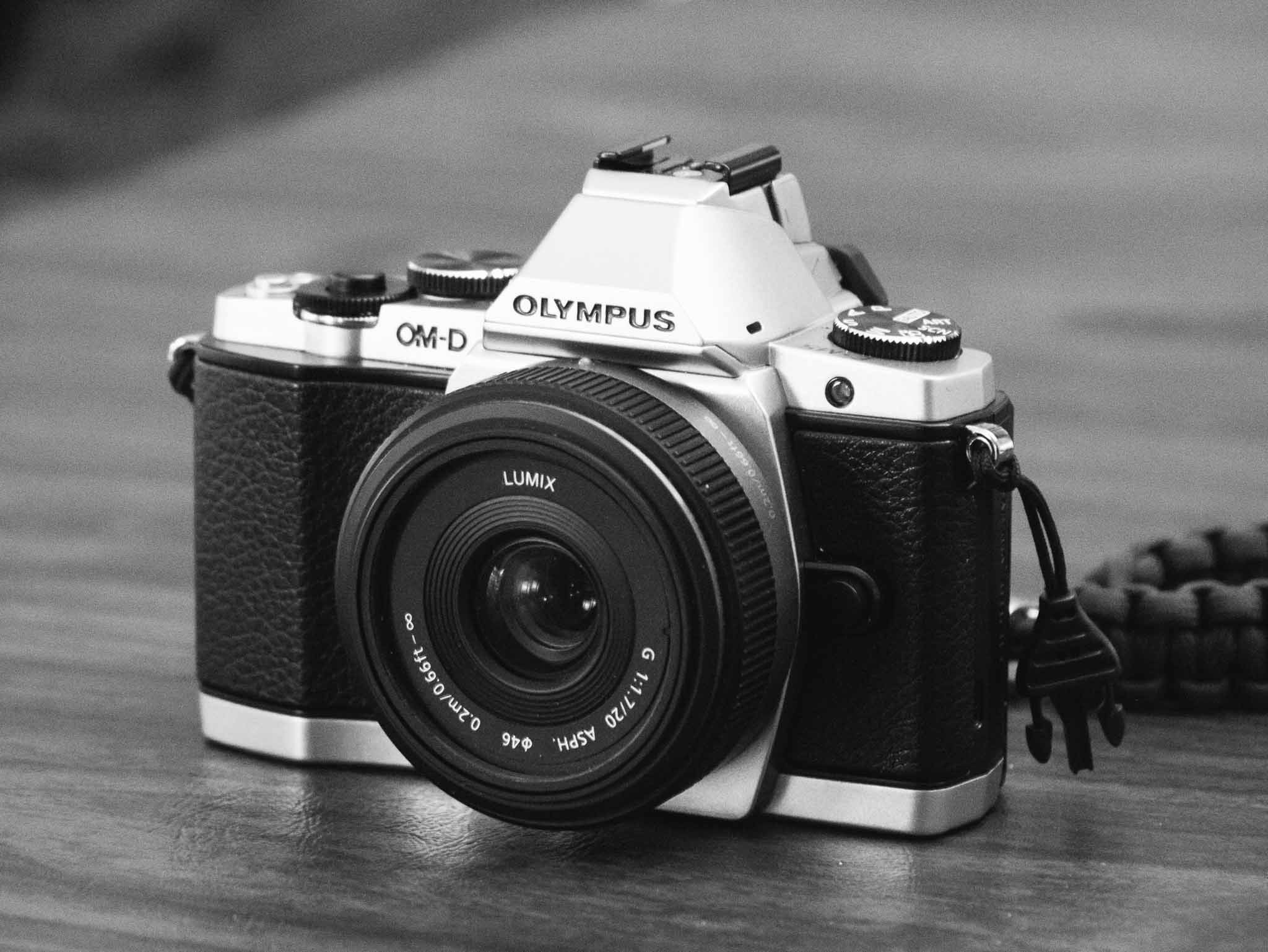
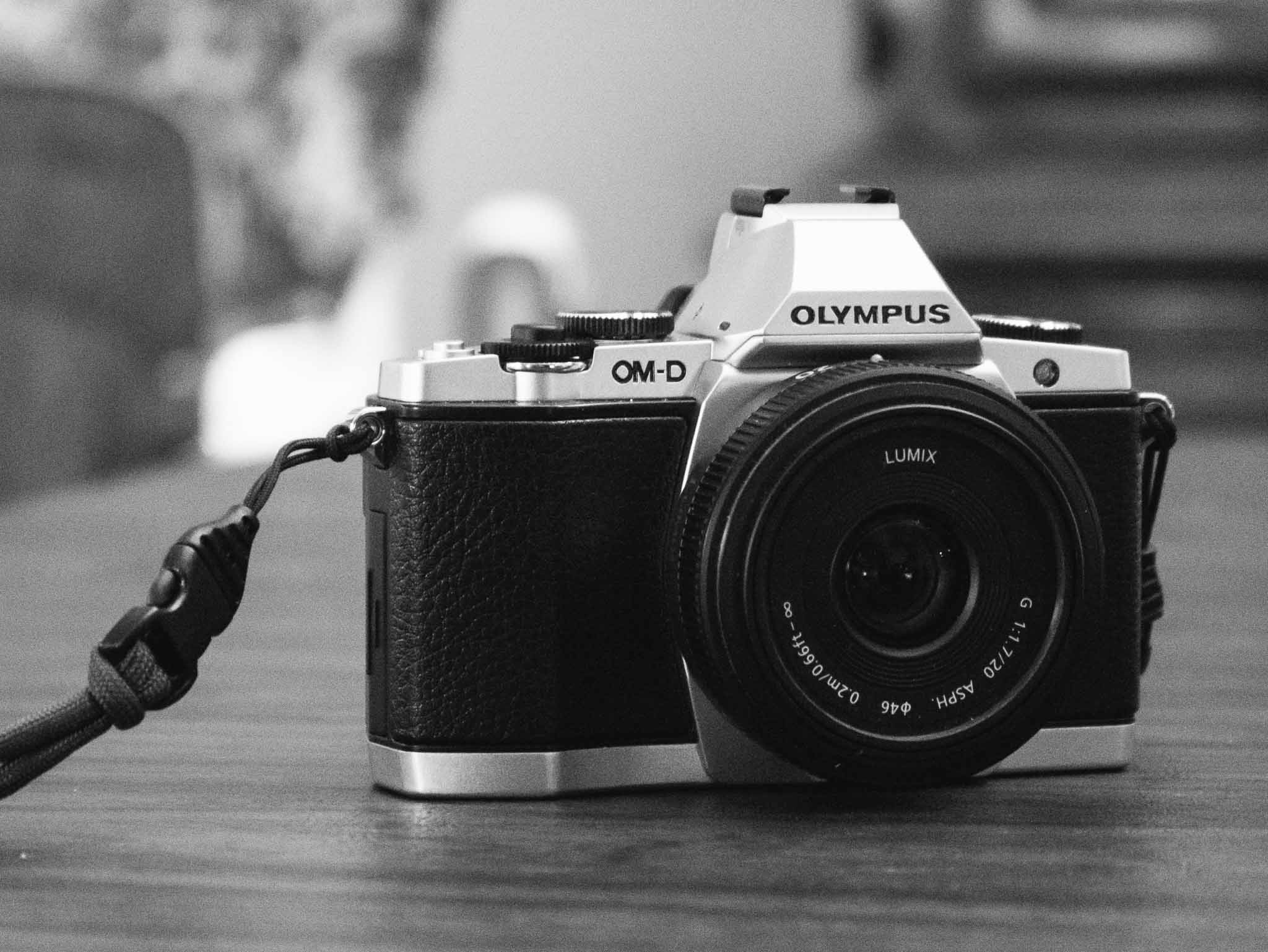
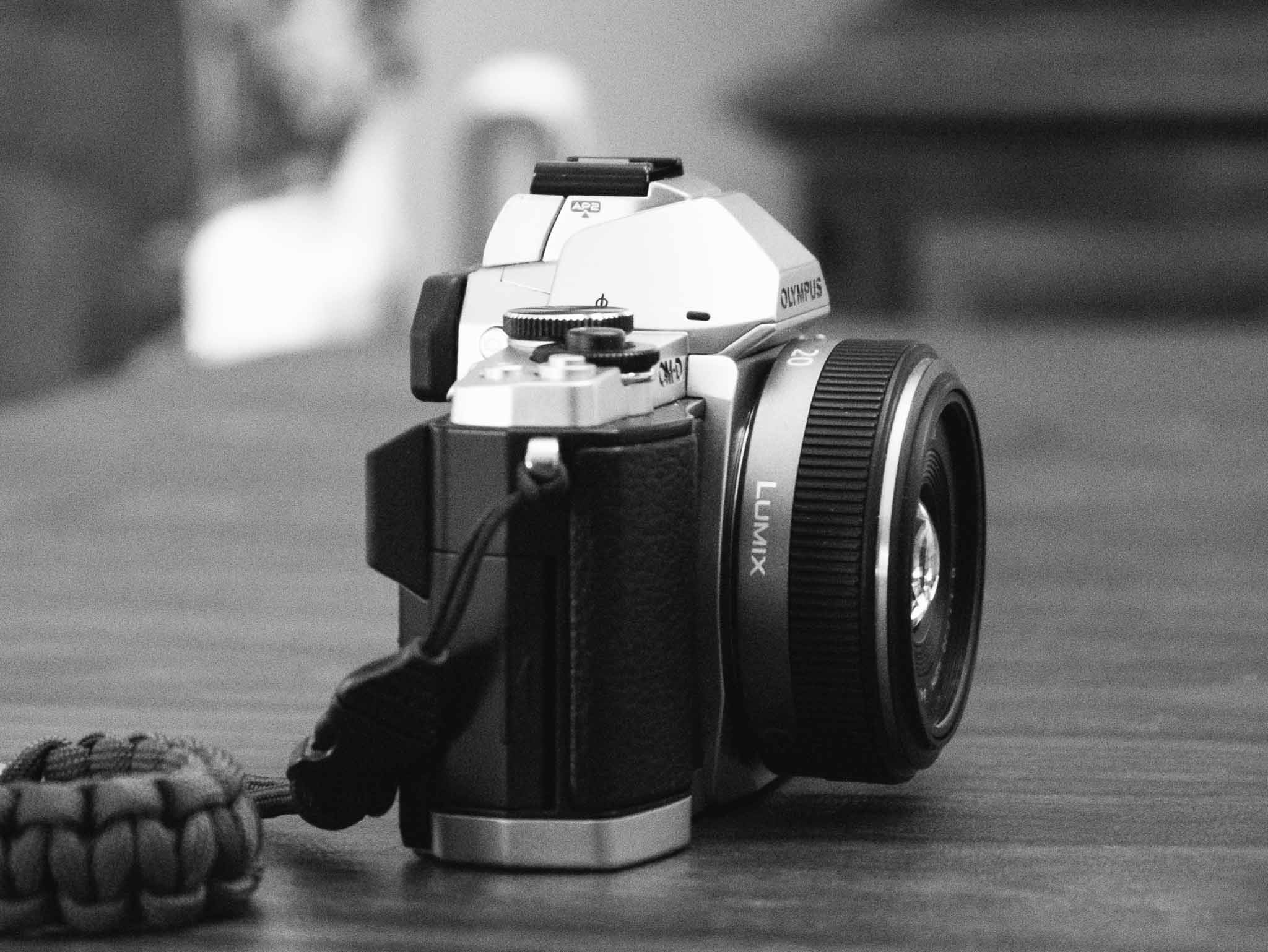
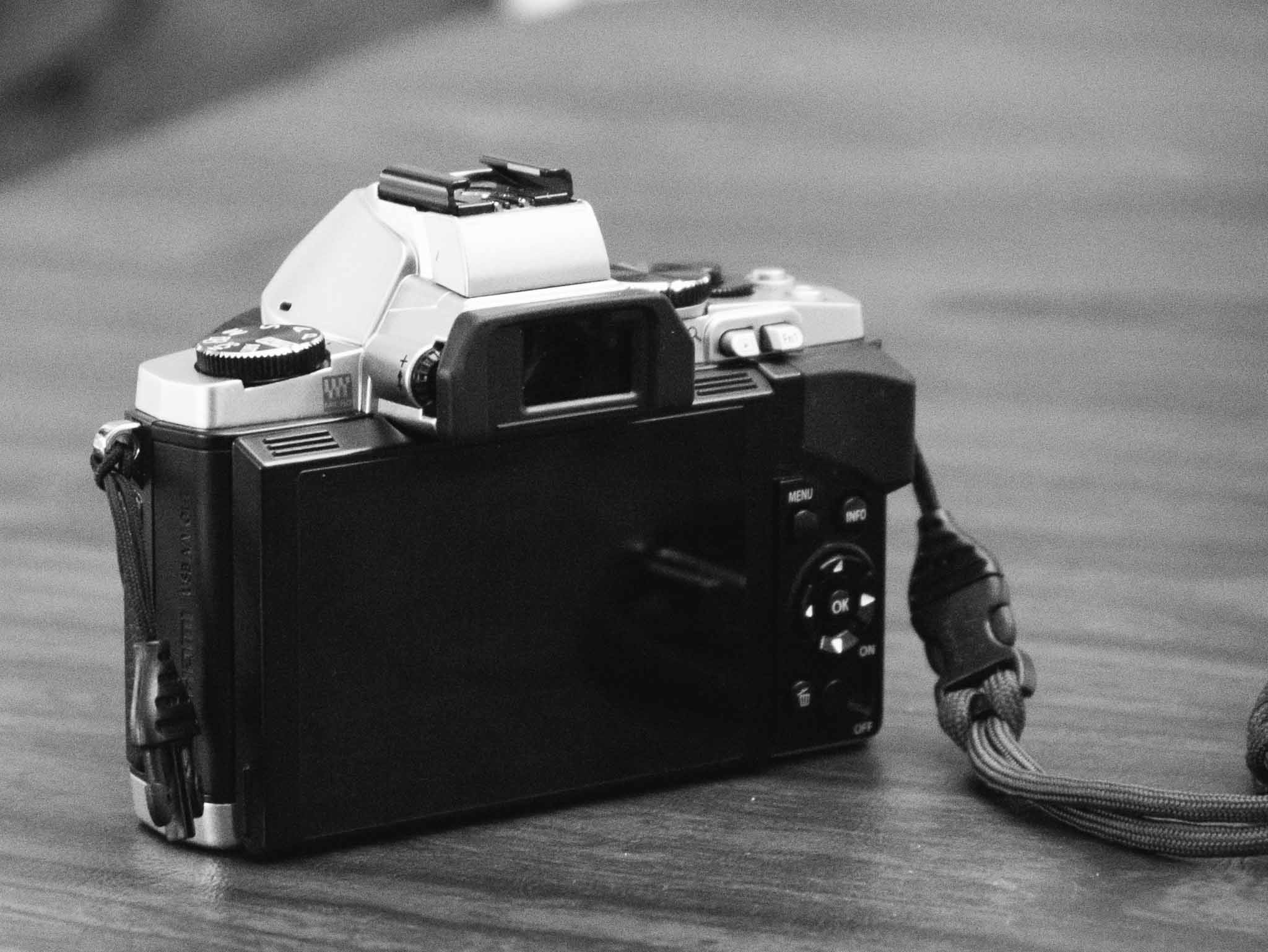
The Olympus OM-D E-M5 was released a year and a half ago and is coming up on its second anniversary rather quickly, even so it is the camera I chose to replace my beloved Panasonic GX1. (You can read a great review of the E-M5 from Steve Huff.) ((Also, here’s my GX1 review.))
Shawn Blanc and I often chat about cameras, well, actually we send links to each other and drool over new gear — that’s part of the “fun” of photography. A few months ago (maybe?) I told Shawn: “I am beginning to think the best/smartest/cheapest way to buy a new camera is to wait until it’s a year old.”
At the time I was looking to update the GX1, but it was a half-hearted endeavor as the GX1 works phenomenally well for me and I don’t really need a new camera. But I wanted one, so I kept my eyes out for deals and kept lusting over different options.
As luck would have it I landed the OM-D E-M5 for a great price, but before I bought the E-M5 I was seriously considering these four cameras:
Panasonic GX7: This was the natural evolution for me as it is effectively the new model of my current GX1. I won’t lie: this was my first choice. The reviews of the GX7 are only solid and it seems a waste of money to ignore the fact that there are other, more passionately reviewed, cameras to be had. There seemed to be something intangible missing from the GX7 and that seemed reason enough to keep looking.
Panasonic GM1: This looks like a beast of a small camera. Lots of people like it, and have great passion for it. What turned me off the camera is that this seems like a new venture: insanely small and still fully-functional. In other words it sounds like the original MacBook Air to me — which tells me to wait for the next revision of the camera. Also by the time I researched this camera I was pretty well decided on wanting to get an electronic view finder this time — instead of just an LCD display — and that’s something the GM1 doesn’t have. The one thing I really miss from a full sized DSLR is the viewfinder for composing my images. ((Though I must say, now that I have a viewfinder again I find that I am using it far less than I would have assumed.))
Fujifilm X-pro 1: I cannot tell you how much I want this camera. By all accounts this is a fantastic camera that boasts an APS-C sized sensor — much larger than the micro four-thirds sensors — which is a huge benefit when it comes to image feel on shallow depth of field photos. While micro four-thirds cameras are getting better, nothing beats a full frame sensor, but APS-C is closer to full frame (most entry level DSLRs use APS-C sensor sizes to put that into perspective) than a micro four-thirds camera and thus the X-Pro-1 is very appealing in this size class. But the X-Pro 1, as great as it maybe, is not great looking (this matters to me) and would set me back almost $1,700, since it uses its own lens mount, requiring me to buy a new lens) and not just a camera body. The price alone was enough to eliminate this camera from the running for now.
Fujifilm e-x2: Another great camera, but this one newer and better looking than the X-pro 1, and again with a similar large sensor. Still, though, the overall price of buying a new lens made this unrealistic this time around for me — though I still very much would love to get this camera, I had to pick buying this and not having a lens, or finding a cheaper body.
Side note: One line of cameras I did not consider is the Sony cameras. While many people like them, and they seem to be well regarded, I have never liked them whenever I held/shot them. My father has the NEX-7 and I just don’t like the controls or feel of the camera overall. I can’t explain this better, but it’s just not a camera system that I really enjoy and therefore is not interesting to me.
As you can see the OM-D wasn’t even something I considered while shopping. The main reason I glossed over the camera was because I thought it was too big, looked to DSLR-ish, and so forth. I thought these other offerings would be better and I came within a click of buying the GX7 — but then I stopped.
I read reviews, I looked around, and came to the OM-D E-M5 — even with its ridiculous name — and began to see it as a great buy. It packed a bunch of features that I wanted and was missing from the GX1, would be a true upgrade, wouldn’t be too much bigger, and would fit all the gear I currently have. It sounded like a win on paper.
Why the E-M5
The first question you may be asking yourself is why the E-M5 and not the newer E-M1? There are three reasons:
- The image quality isn’t substantially better between the two as far as I can discern from reading a ton of reviews. The E-M1 is better, but I don’t think the gap in performance is enough to justify the price premium of the E-M1.
- The body on the E-M1 is much bigger, and that’s something I’m trying to avoid with this class of camera and the E-M5 is quite a bit smaller in use. If I was to consider the E-M1, I would also be looking at the Canon 5D/7D series as I have many excellent lenses that fit Canons — and once a camera is at a certain size getting a bigger camera isn’t that much of a difference.
- Price. The E-M1 is hot and new, and is priced accordingly. This time around I was trying to get the best bang for my buck, while staying as inexpensive as I could.
The latter two reasons are why I stayed away from the E-M1. It is the better camera, but it likely isn’t the better camera for me. It costs a lot more and is purposefully built larger, and I really didn’t want something substantially larger.
I have owned a DSLR for years and have found that I tend not to use cameras that are bulky to carry around. I love using them, but I never take them with me so they never get used. One of the reasons I love the GX1 is because it is small enough to stash in a jacket when going out — and I use the camera more because of that. Small is important to me, and it seemed that the E-M5 is in the elite ranks of quality but still small enough to carry around — though not as easy to carry around as the GX1. ((The biggest size difference is in the height, as the E-M5’s viewfinder makes it stick up quite a bit more.))
Steve Huff, in his review of the OM-D EM-1, lists out the advantages of the EM-1 over the EM-5. There isn’t much said about the image sensor, and a lot said about the physical aspects of the camera and a lot of nice-to-haves. Huff even points this out:
This [E-M1] is an amazing camera because the E-M5 is amazing the way it is. Add these improvements and you have something special that usually only comes around every 2-3 years.
Seems like the EM-5 is a fantastic, top-tier camera, but smaller than the EM-1. To me that’s like choosing a slightly smaller computer with slightly lower specs than the bigger version because you know the smaller computer will fit you better.
Love It
The E-M5 blew me away on the first day I used it. Not only does the design look great, ((I am a sucker for the old-school looking silver and black cameras that are popular (again) today.)) but the image stabilization on this camera is phenomenal (more on that in a bit). Overall I have found two things to be true about this camera:
- It is an absolute joy to shoot with.
- It produces surprisingly great images. And I don’t mean that in the way that a person who just bought their first ‘real’ camera means it: “Gee, this DSLR takes way better pictures than my Nokia.” I mean it in the sense that the images feel like they should be coming from a much larger, much more expensive, camera body. They feel like they should be coming from my 5D — except there are many shots I have been taking with the E-M5 that even the 5D couldn’t capture given the relatively low ISO range of my much older 5D.
The E-M5 is still small, but it is bigger and weighs more than the GX1 so it’s not as pocketable, but what you get in return is absolute top-notch quality. There’s a reason Steve Huff chose the EM-1 as the camera of the year (2013), and not a Lieca, or Sony A7 — there’s a lot to love about the OM-D lineup of cameras. (In case you are wondering the Sony RX1 was his 2012 pick while the EM-5 was in second place, or his “second pick” as he puts it.)
I’ve found the E-M5 produces excellent images and is a joy to shoot with.
Image Stabilization
The one tech-spec that sets the E-M5 leaps ahead of all my other cameras is the image stabilization (IS). I have Canon IS lenses, but my GX1 and most of the primes I shoot with on the 5D lack IS of any kind. The IS on the E-M5 is outstanding, but keep in mind I have nothing to compare it to other than my few IS Canon lenses.
So instead, something that speaks for itself:

The above image was shot, handheld, with a shutter speed of 0.4 seconds (by comparison typical logic says I shouldn’t even get a crisp picture with a slower shutter than 1/30th a second). Now, my arms were supported. Basically I had my elbows propped on the arms of the chair, but no other support. The image is just as sharp as an image I shot seconds later at 1/100th of a second.
That just blows my mind. It’s not a practical application in that most of the time I won’t be able to support my arms in that way — but I truly didn’t think that image possible before I took it.
Practically speaking you shouldn’t expect to be able to hand hold any camera at that speed, but it’s an extreme example, that helps to show how good the 5-axis IS in the E-M5 really is. For the most part I have yet to find a situation where I got a blurry image because of a slow shutter — this takes yet another “worry” out of photography for me. ((This is not limited to the E-M5, but I am not out to compare it against all the models out there — I value my sanity too much.))
More serious photographers may balk at this, but let’s face facts: most images that people take are going to be snapshots. Things like phenomenal IS and high-ISO are important for snapshots. The image stabilization alone has made the E-M5 worth the upgrade for me.
Feel
I’ve held hundreds of cameras and shot regularly with dozens of DSLRs and 35mm SLRs, I’ve held and tried dozens of small interchangeable lens cameras, and I’ve owned countless point and shoots over the years.
I speak with experience when I say: the feel of a good camera in your hand is unmistakeable.
To me, the Canon 5D series (I’ve shot with both my MKI and a MKII) feel absolutely perfect in my hands. Whereas most point and shoots, and cell phones are cumbersome to hold for framing a perfect shot with a steady hand. With micro four-thirds it’s been hit and miss with how these cameras feel in my hand, typically feeling too light or too small.
The GX1 was very light, but was just about as small as I could hold stable with my hands. The GX1 always lacked good grip spots, and that too has been a complaint on the E-M5 for some. (Note: you can buy an overpriced grip to fix that issue, or just get the larger EM-1 that addresses that directly.) This is one tradeoff with smaller cameras: smaller area for large hands to grip.
The E-M5 however feels very nice in my hand. While the front grip is shallow, the thumb grip on the rear gives you a strong leverage point over the camera — which is needed as I wouldn’t describe the E-M5 has lightweight.
The real winner of the EM-5 is that weight. This is a camera that feels solid, well built — it feels like a tank and I love it. The GX1 doesn’t feel bad in general, but it doesn’t feel nearly as great as the E-M5 in comparison.
Issues
You’ll find lots of people talking about different issues with any camera. I am going to skip past the tech-spec comparison issues, like battery life (it’s not bad, but not great) and instead focus on three things: an info display issue, button and dial placement/usage, and some high ISO banding issues.
Shutter Speed Display
No matter how you compose your image, the camera will show you the shutter speed and aperture. That’s common on any camera, but the way the E-M5 handles this display drives me nuts. No matter the display I look at, it is often not possible to tell if the shutter is 1/4 second, or 0.4 seconds. In either of those two cases the display will simply read: 4.
Sometimes, SOMETIMES, the display will put something like 2” to denote that the camera is speaking in seconds — otherwise you are left to guess. In time I hope to be able to figure this one out, but for right now it is the single most annoying and frustrating thing about this camera.
Buttons & Dials
Every camera — especially every camera manufacturer — has a different philosophy about how and where buttons should be placed. The GX1 had a power button in a very convenient spot, so convenient that I accidentally turned the camera on/off more than once.
The E-M5 has a similarly annoyingly placed power switch — though it is placed in a bit more DSLR standard location. It’s on the bottom right corner of the back of the camera.
Here’s the thing: if you use the E-M5 one-handed (which is kind of the de facto way to use it) then you pick it up right handed — making it nearly impossible to turn the camera on with that same hand. It’s a finger contortionist move of olympic-level difficulty.
If you can’t tell, the power switch is the biggest annoyance I have with the camera. It’s just in a bad spot, with bad switch style, and annoying.
The dials though, they confuse(d) me a lot. There are two dials on the top of the EM-5. By default the one attached to the shutter sets the exposure compensation, and the larger dial changes settings for the camera mode you are in (e.g. Aperture in Aperture Priority mode).
The entire dial setup is changeable, but completely backwards out of the box (at least for me). I switched the dials around, and also switched the direction you turn the dials to increase/decrease the settings.
It’s my opinion that the E-M5 would be incredibly frustrating to use/learn if you couldn’t change around these dials. So if the dials bug you (and this may be due to my Canon background) be sure to change them before you pull your hair out trying to use the camera. It’s nice that I could change these, but a very odd default setting if you ask me.
High ISO and Banding Issues
UPDATE: I’ve gotten word this only happens when paired with the Panasonic 20mm f1.7 lens (which was my test lens). I am testing now with other lenses to confirm. Apologies. This is great news though.
One of the first things I noticed when I started trying the camera is under very high ISO modes (3200+) there is visible banding in the images. You can see it in this photo below:

(Here’s the same photo edited — you can hardly see the banding once edited.)
Now, before I talk about this anymore I want to tell you my thinking on high ISO usage/importance.
I am a photographer that will force my camera to shoot at the lowest possible ISO for as long as possible. I hate auto-ISO. I want control over my ISO. Not too long ago ISO 1600 was considered the upper limit of a useable image, but that above example? ISO 10,000. Yeah, it’s pretty useable.
So here’s my high-ISO theory/advice: don’t worry about the image quality, because it’s likely an image that you could only get using a really high-ISO on a camera (any camera). It’s great if the image looks like an ISO 200 image, but it’s not necessary because almost every image shot at high-ISO is a snapshot. In other words a picture for documenting/remembering a moment and not a photo for a contest. ((This is my rule, get your own.))
In a nutshell my feelings about banding on the EM-5 are twofold:
- The nerd in me hates that the banding is this obvious, because without the banding the noise is well controlled even at ISO 10,000. The banding is what makes this image less useable.
- The practical photographer in me realizes that getting a sharp image, even with banding, is better than getting a blur of unfocused people. Getting the image versus only having the mental picture makes the banding acceptable.
In short: I am fine with the banding because it allows me to capture an image that I would otherwise likely not be able to get.
Some will find this banding unacceptable though, so they should get an EM-1 where the issue is fixed from what I have read.
The Photos
I have been enjoying the heck out of this camera and I find the image quality to exceed my expectations for the E-M5. Here’s a bunch of photos I have snapped, in no particular order. (Fair warning: I tested over Christmas so there’s many photos of my daughter doing Christmas like stuff.)
Buy It
I love this camera.
If you buy the OM-D EM-5 from this link, you help support the site — and I personally think this camera is worth every penny.