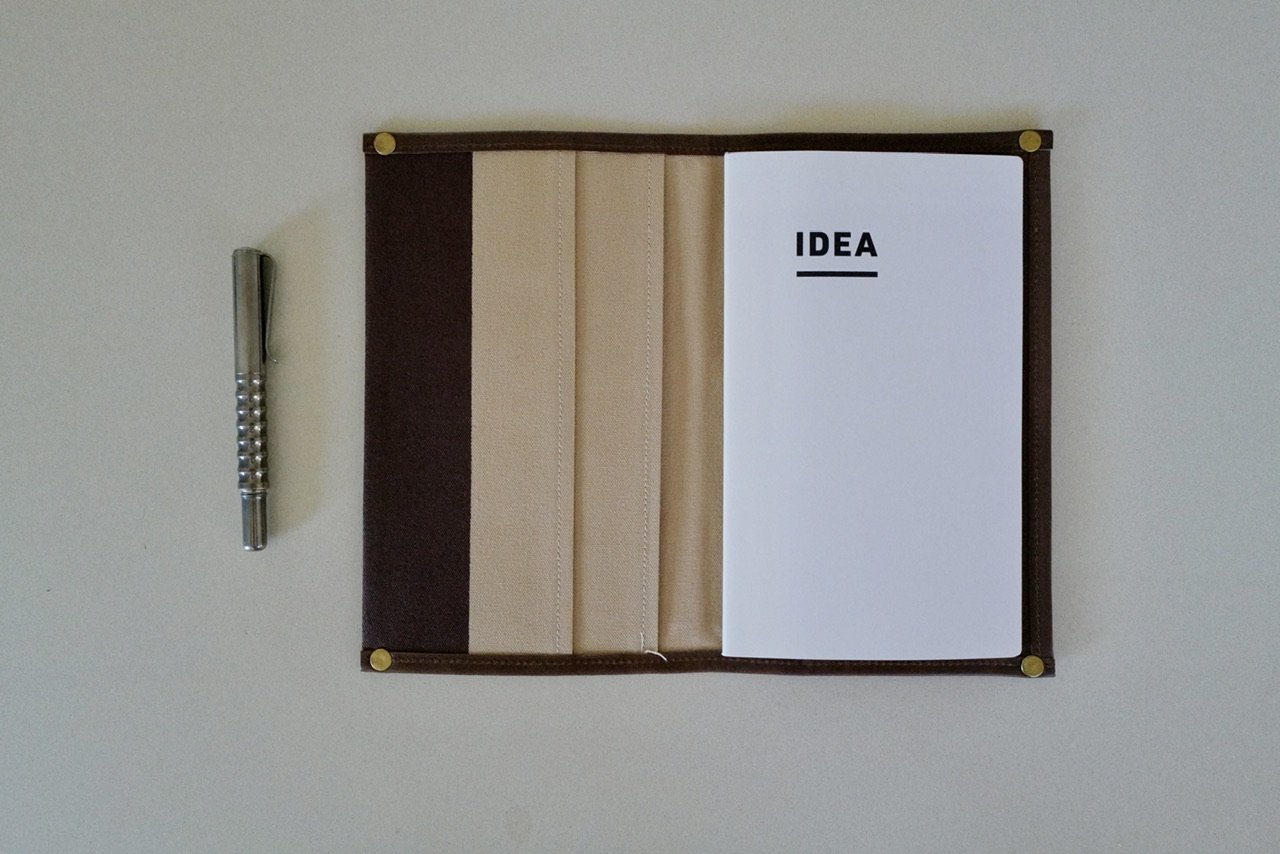
The way this works is simple: use a notebook and a pen when you need to work through a problem of any kind.
Not a tablet with a stylus. Not a notetaking app. Not a pencil. Paper and pen.
Give me a blank page of my notebook and my pen — I shall fill that page in no time.
I’ve been doing this for years now. It doesn’t matter the problem, something with math and numbers: paper and pen. Org structures? Paper and pen. Blog posts? Paper and pen.
When the idea feels like it is right there, but I can’t seem to realize it, that’s when I turn to a notebook to think.
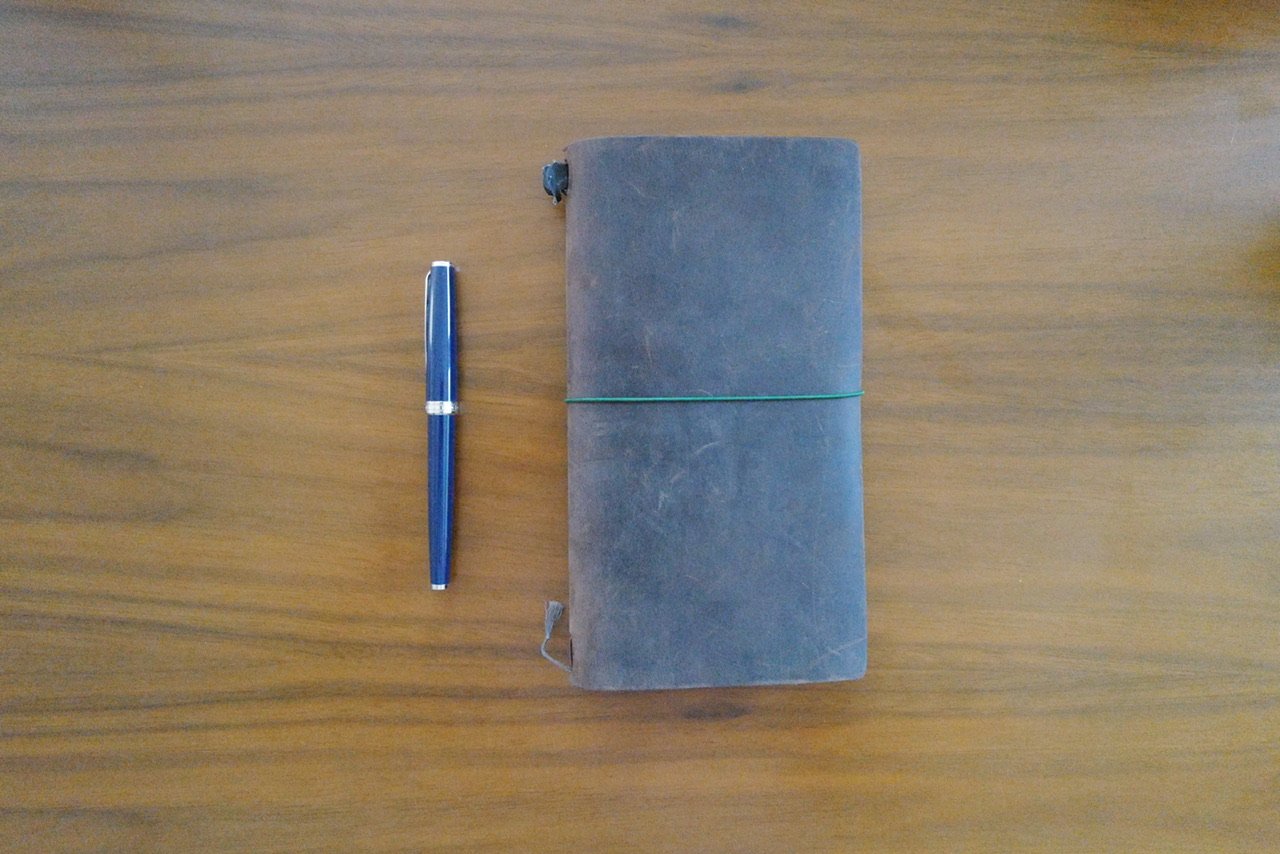
This seems to work because the human mind abhors the emptiness of a blank page.
I typically juice the cycle by writing a heading, a date, or any one liner associated with what I want to think about to get things moving. From there the mess happens, scribbles and words. They are disjointed but reconfigured with arrows. In all of that, my thinking solidifies, and the idea takes hold.
You do need things to get started on this though, but the list is short and not necessarily expensive — in fact expensive doesn’t matter here.
Here’s what you need:
- A Good Pen
- A Lovely Notebook
- No Phone (or use my Attention Mode)
- A Watch, Analog
- A Nice Drink
It is really that simple, if you are stuck and want to be not-stuck then get a paper and a pen, and you’ll quickly start moving again. That’s it.
Since I am not one to leave you hanging on gear, let’s talk about each of those items. Both what I use (though you use what you want, I’ll touch on that at the end) but why that item and why that adjective for it.
The Pen
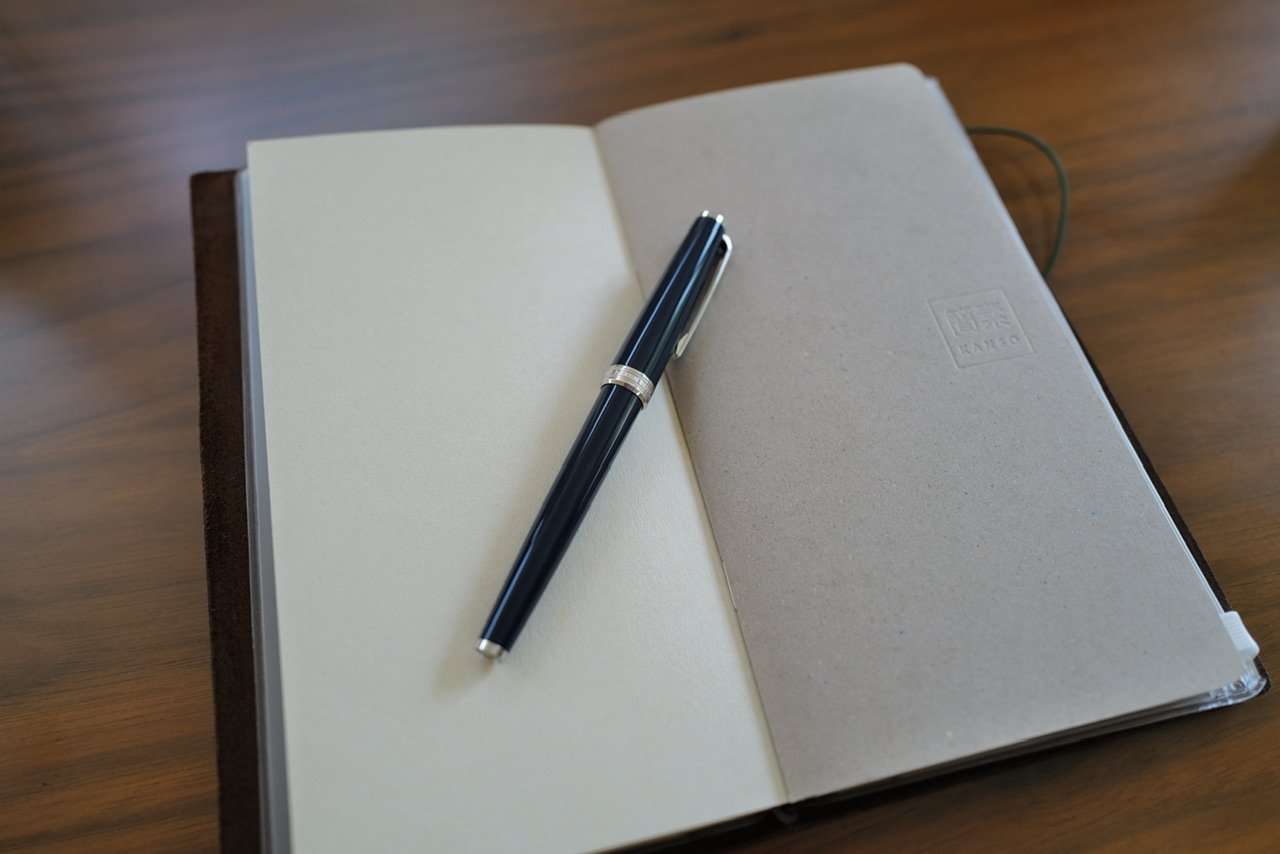
Many people write with whatever they have, but that’s a mistake. First, it has to be a pen. With a pencil you are apt to want to correct things, but with a pen you cannot correct. You can cross out, or scribble over things, but there’s a freedom in knowing that there’s no going back. There’s also a fear too, but as often is the case, from fear comes focused thinking.
Your pen does need to be good. It need not be great, just good. It should be comfortable to hold, and write freely with your method of writing. If your pen digs in a spot on your hand, you won’t want to write, you’ll excuse the task. If the ink jumps and letters don’t form well, you’ll avoid the task. You need a pen which feels good in your hand, and writes well for you — but you don’t need anything more than that.
Some Options:
– Montblanc PIX Rollerball
– Tactile Turn Slim Side Click Short
– These OHTO Flash Pens
The Notebook
One can go down a deep rabbit hole trying to find the best notebook, but it’s listed second for a reason. It’s second to the pen. You must pick the pen first, then you find the notebook which best suits your pen. Not all paper is equal, you’ll want paper which holds the ink from your pen of choice well.
But the notebook is the most visible aspect of your tools for this task. It is what you see and stare at, and what others see as well. So you should take time to select what you feel connected with. Maybe it’s a quirky Field Note of the day, their marketing engine is strong after all. Perhaps it’s the cloth of the Baron Fig Confidant. The questionable history of a Moleskin notebook. The waterproofness of Rite in the Rain. The hype of Tomoe.
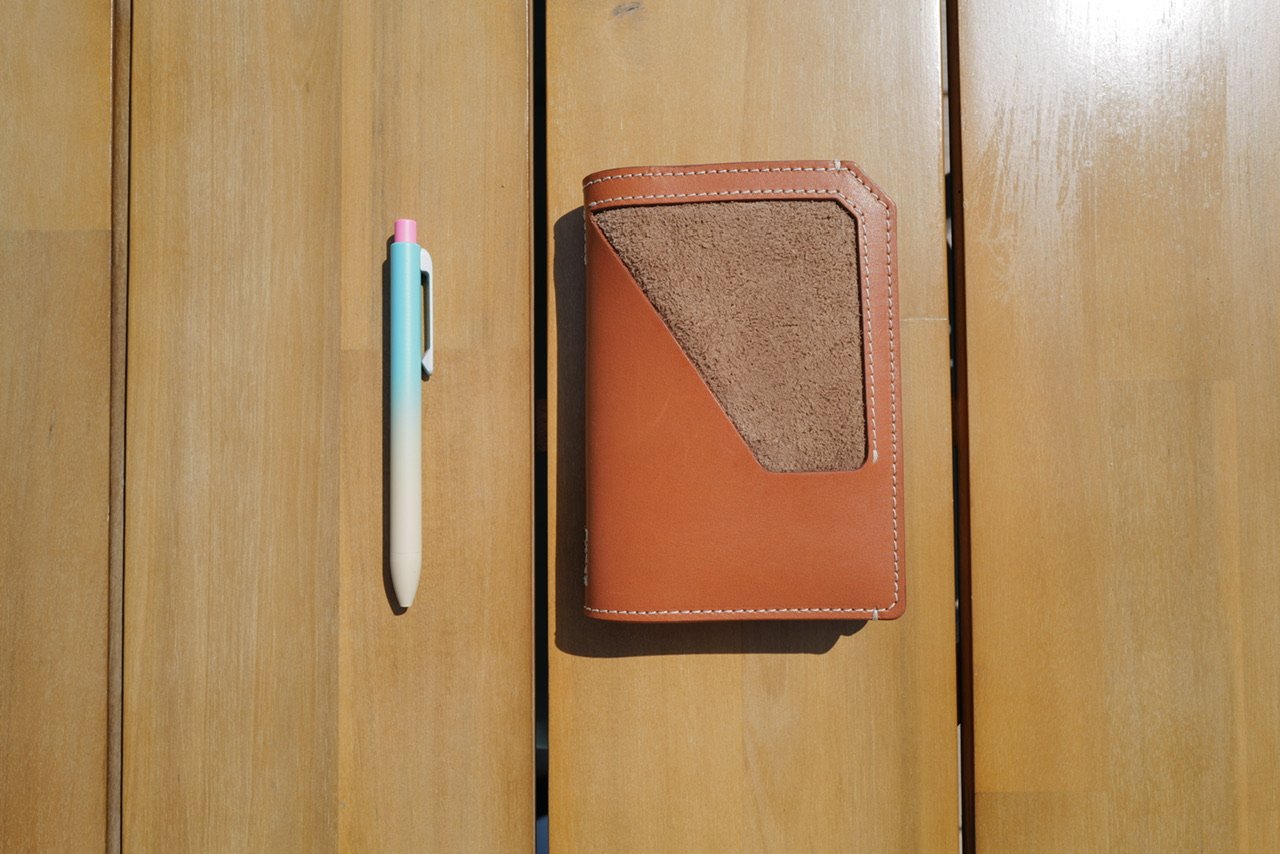
Whatever it is, you must — must — find the experience of using your notebook to be describable as ‘lovely’. That is your only benchmark, the only thing which matters.
I use a Travellers Notebook when I want something larger, and the Papa with Travellers inserts when I need to be more nimble, more discreet.
The Phone
You can’t think if you get buzz and pops of alerts on your phone. I’ve found the best way to fill a page in a notebook, is without any devices in sight. Sometimes this isn’t practical given our modern age, so I have a custom focus mode I can quickly toggle on to gain more focus without losing important contact.
At the very least, turn it face down, and put it on silent — do your best. The phone is the enemy of thought.
The Watch
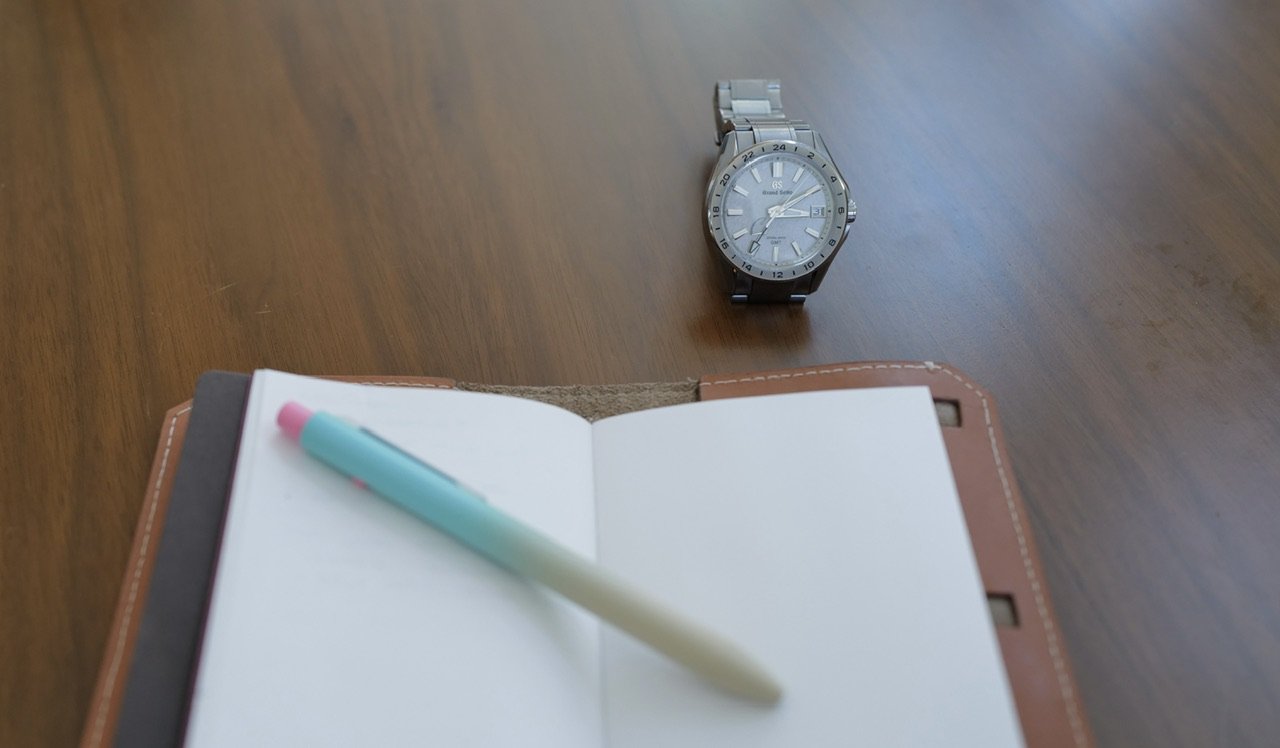
Removing your phone from the equation adds risk. It’s easy once you find your flow to lose track of time, and thus you need a way to track it. The Japanese like to take their wristwatches off, and place them propped in front of them with 12 o’clock positioned up (which is why Grand Seikos are regulated in that position, unlike the imperfect Swiss measurements) so that they can keep track of time.
A nice analog watch, or even a digital non-smartwatch, is a guardrail to keep you from being late. From getting lost. It’s also a reminder: the longer you stare, the only thing happening is time passing. Best to get to it.
It seems clear that Casio and Seiko is where you should head here, perhaps at some grandness if you want to make a splash.
The Drink
Whether it’s energy boosting, mental relaxation focused, or simply for hydration — put a glass of something to drink in front of you. There’s something visceral about having a drink in front of your notebooks when you are thinking.
It’s not even that you need to consume it, but the very presence is something I have found to offer an invitation for you to relax and get to work.
For the Love of Tools
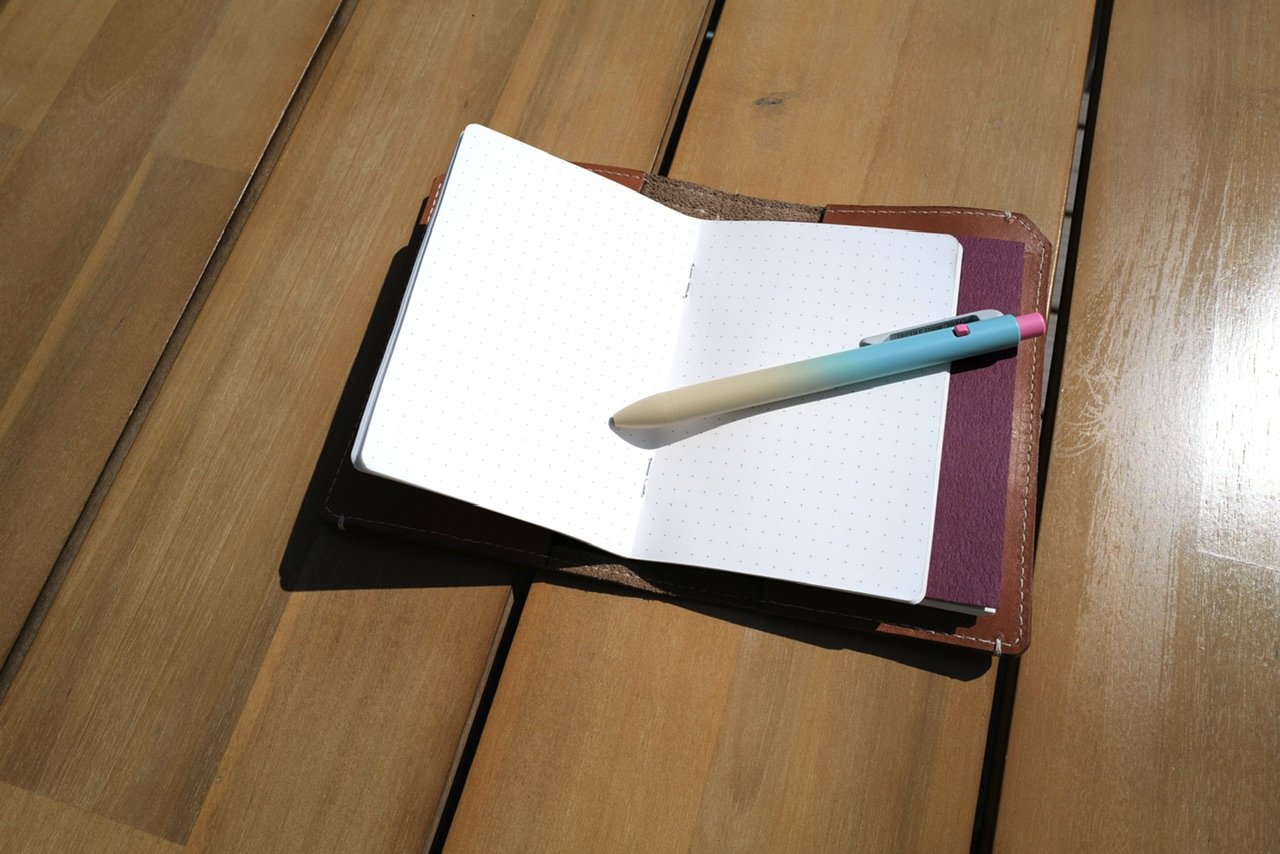
None of this is about having the best. It’s not about spending a lot of money. You can do this with stuff you already have at home, I am sure. The focus here, is your focus, but in order for you to gain that you have to embrace the idea of loving the tools you use.
Becuase if you love the tools you are using, or about to be using, you are far more likely to actually use them. And that’s the end goal.