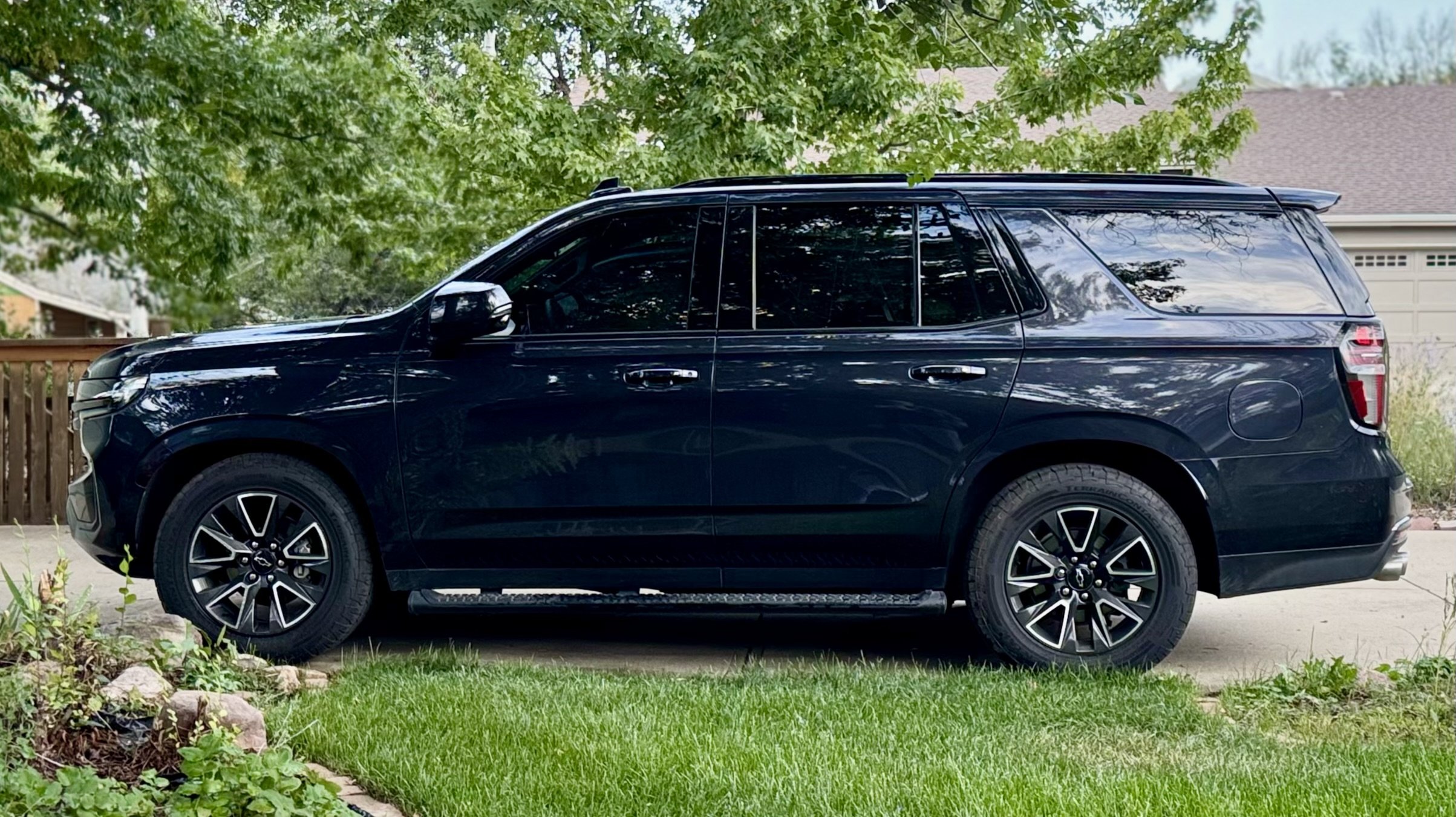
When I last wrote about my Tahoe, my mindset was that this was one of the best SUVs I’ve owned — it was simple where it needed to be, and capable all around, while having a good balance of tech. There are some odd things, and some things you should know. I picked up the car in January of 2022, and have shy of 60,000 miles on it as of this writing.
So I want to run down some things I would have liked to know going into it. All of this is for the 2022 Chevrolet Tahoe with the Z71 package and the 6.2L V8.
The Good
Let’s start with the good stuff, which I want to highlight the five best things of this SUV:
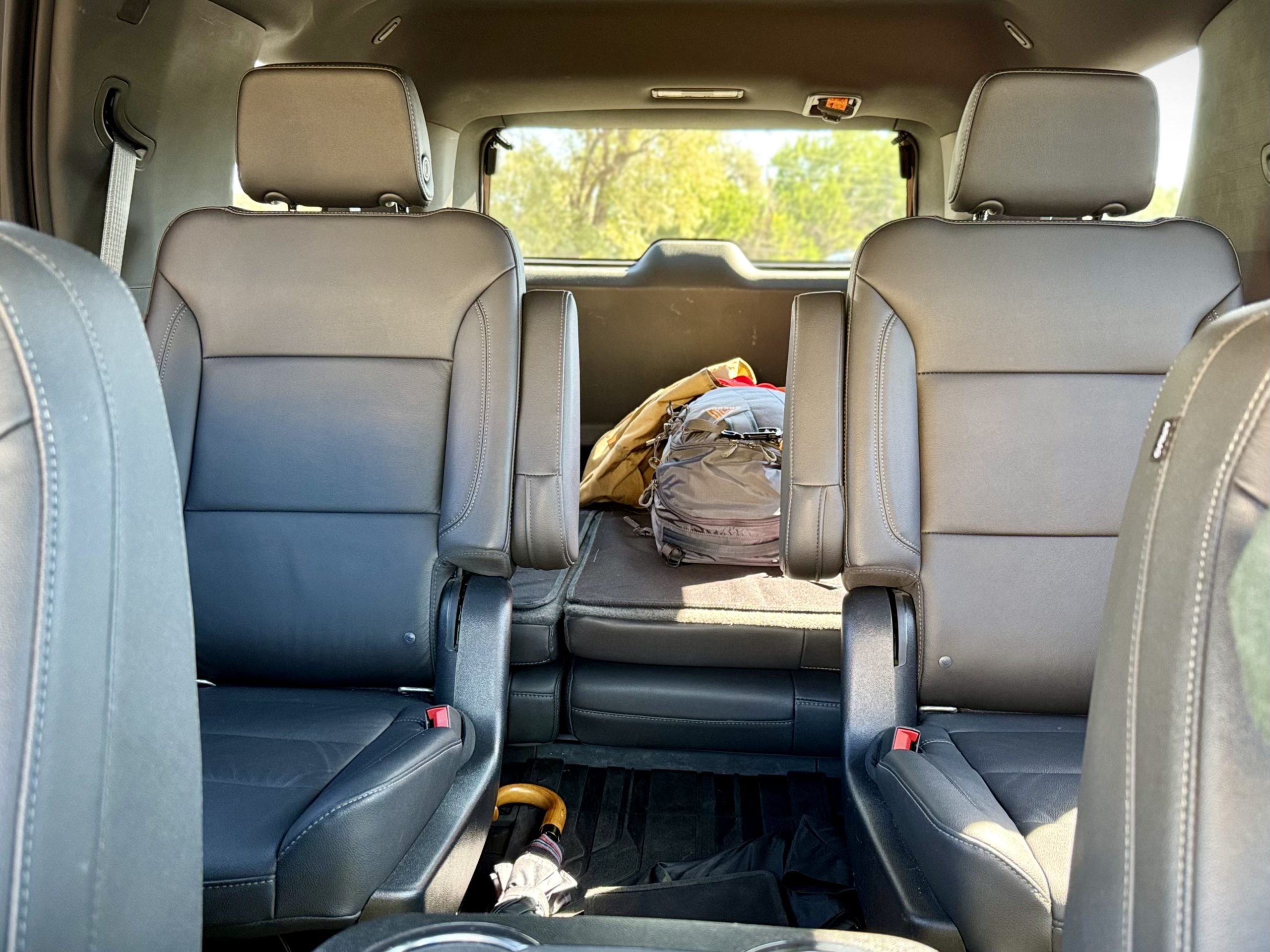
- Capacity for people: my Tahoe has the second row configured as two captains chairs, which means I have a total seating capacity of seven. You can get a second row bench seat to make it eight people. I went with the captains chairs in the second row so that you can walk to the third row of seats without having to move or fold any seats. That’s been awesome — I have no regrets. Six grown men can easily fit in my Tahoe. I’ve had seven and it works for a short work lunch trip, but I don’t know that anyone would want to do more than that. If you need to carry people, I have no complaints. As of this writing, the Tahoe/Suburbans have among the best third row leg room in the market, certainly large enough for 6’ plus people to sit back there.
- Capacity for gear: this use to be a huge tradeoff with Tahoes, if you put up the third row you had no room for gear in the back — so you needed to get the Suburban. If you are used to smaller SUVs, you know what I mean. This model of the Tahoe resolves that issue in an impressive way. With the third row in use, you have room for about four carry on sized suitcases in the back. You can get creative and fit more, but that’s what fits easily. That’s not huge, but it’s also not nothing. Put the third row down, and you have an impressive amount of cargo space, easily accessible from the second row or back hatch of the car. Fold the second row flat, and you’ll run out of money at Costco before you fill it — or at least I would.
- Air ride: I’ve had a few cars with air suspension systems before, and there’s a lot of benefits to them. The one in the Tahoe is fantastic. It adjusts quickly, and it levels the car quite well. There’s an impressive amount of ground clearance you can gain (which has come in handy on more than one occasion) while also bringing the car low enough that it’s not awful to get in and out of. I say not awful, because one inch lower and it would be pretty nice. This suspension system has worked without issue the entire time (not true of the Range Rover system I had) and is much quicker to adjust than the BMW air suspension in our 2022 X5.
- Magnetic shocks: one big upgrade (aside from independent rear axels) the Tahoe received was the ability to have the magnetic shock system for the suspension. This is a dynamic system which responds to the road conditions, as well as being adjustable by the user. I have no baseline to sort out how well it adjusts to road conditions generally, but practically when you toggle between the ’Normal’, ‘Sport’, and ‘Off Road’ modes the ride feel changes drastically. In normal on road speeds you have a comfortable but responsive ride — a fantastic balance. At times it can be a bit soft, but generally it is great. Flip over to sport mode and the suspension firms up and the stance feels much better on off ramps or large bends at 60+mph. Interestingly, moving over to the off road modes will turn bumpy dirty roads into a tolerable ride without needing to air down your tires or any other shenanigans. The car responds nearly immediately to the adjustment, which means you can often see me flick the mode to sport when going up hills in the Rockies, or slaloming around bends at speed, only to quickly go back to standard and smooth ride once those parts pass. It’s fantastic.
- Powertrain: I went with the 6.2L as I had read that the 5.3L felt a little under powered. I have no complaints with the power provided. The transmission mates up nicely with the larger V8 and gives me enough power to get up and get moving, or to accelerate to pass on the highway. While having a large amount of gears in the transmission helps to keep the gas mileage reasonable. I think you could get away with the 5.3L and not worry, but you’ll be much happier with the 6.2L when you have six guys in your vehicle and you try to pass on the freeway.
Those are my tops in the good section…
The Bad
Not everything on this car is good, so here are the bad things…
- Quality Control: there’s been a bunch of smaller issues with the car which are maddening. The camera system tends to error a lot, to the point where one of the cameras doesn’t turn on, or are glitching in some way. Typically, this resolves the next time you go to use the cameras (without even turning the car off) so it’s clearly a software issue. There’s been a couple of times where the car battery was dead when there’s no way it should have been. But perhaps the biggest quality control issue is that Chevrolet had to completely replace my engine. Yes, at about 49,000 miles my engine seized up and left the car stranded for a week in a parking garage in downtown Houston. The car would not start, which means it would not go into neutral. It took me days to convince the local dealership (Chevrolet roadside assistance was literally useless to help me, and really shame on them) to send someone out to crawl under the car, and shift it manually into neutral and disengage the parking brake controls (but they did, thank you). Chevrolet told me there was a QC issue at one factory making the 6.2L V8s, the cylinders were too narrow, and so the engine was shot. I got a new engine, and a new warranty on that engine, in about 4 days — not bad. But if I had not been in my home city when that happened, wow. This should be resolved now as it was a small window on the 2022 year Chevrolets, but it doesn’t bode well.
- The Front Passenger Seat: this seat is not comfortable for long drives. The seat doesn’t adjust as much as needed, and the foot well is narrow and slightly askew. My wife says it is the least comfortable ‘front seat’ she’s sat in, and claims the second row seats are superior for comfort. I fixed this mostly by adding a leg bolster from Amazon to the front of the seat when we go on long drives, but this is very disappointing.
- Aftermarket support: there’s essentially no aftermarket support for popular overlanding accessories — even from major brands. So while you can easily find floor mats and the like, the rest of it will need to be generic in nature. It’s simply not a vehicle, even years after it came out, which is drawing any attention from the aftermarket community. I am really bummed by this.
- Cargo Cover: the stock cargo cover is a joke. You cannot use it in any way with the third row seats up, and it stows no where when those seats are up. When the third row is folded down, there’s a good 14” gap between the back of the second row seats and the start of the cargo cover. What in the world is this madness? It is trash, I don’t even bother with it, and I typically love cargo covers.
The Drive Quality
I wasn’t able to test drive a Tahoe before I picked this up, so I relied heavily on what professional reviewers had to say, and extrapolated for how the car might be with the larger engine. One of the things I like the most with this car, is how well it drives. There’s no sports car feeling here, it drives like a big car, but it dries nicely.
It’s susceptible to winds. It has a lot of roll in the body. But there’s nothing terrible about how it drives, while there are things that are exceptional. As I mentioned the sport mode really makes the car a lot more stable in corners at speed, but it also quickens up the response to the pedals, so it is easier to make quick changes and have the car respond. In sport mode the car holds gears well, without destroying gas mileage if you leave sport on for most of a road trip.
But perhaps the best is when you move the car into an off roading mode. Here the electronics not only soften the shocks, and raise the height of the vehicle, but the pedal response is softened dramatically. In a lot of ways it reminds me of the older Range Rovers where you had to move the pedal several inches to get the car to accelerate. Here you have a similar feeling, so whether it’s driving down bumpy dirt roads, or in soft sand, the car helps you drive a lot smoother than you otherwise would.
We’ve taken this car on several very long road trips, and with all four of us and our gear in the car, we all have the space we need to stay comfortable and not lose our minds. Couple that with the smoother ride quality in the back half of the car, and you have a really great family road trip car. But also a car where once you get to where you are going, or even along the way, there’s very little worry that adverse conditions are going to slow you down. We plowed through 40+MPH head winds for several hours and the car was able to drive at whatever speed I was willing to pay for (man it destroyed MPGs).
There’s been a lot of random conditions I’ve taken this car through:
- Taking the kids to school one day I ended up on a couple roads with over a foot of standing water. The Tahoe didn’t even flinch moving through it, and raising the height of the car also meant I was able to keep overspray off my windshield so I could see better as cars passed by me — that was a nice save.
- In Galveston I found myself on a sandy and flooded road, before needing to drive through a soft and wet sand beach parking lot to turn around. Raising the height clearance and opting for four wheel drive made easy work of a situation which saw a few Wrangler owners eyeing whether they wanted to proceed as I blissfully went by them.
- In Durango we found ourself on unexpected icy switchbacks coming out of a national park and the Tahoe stayed composed and handled the slick surfaces with ease up and down and very little drama. The four wheel drive system has proven as effective as you’d want.
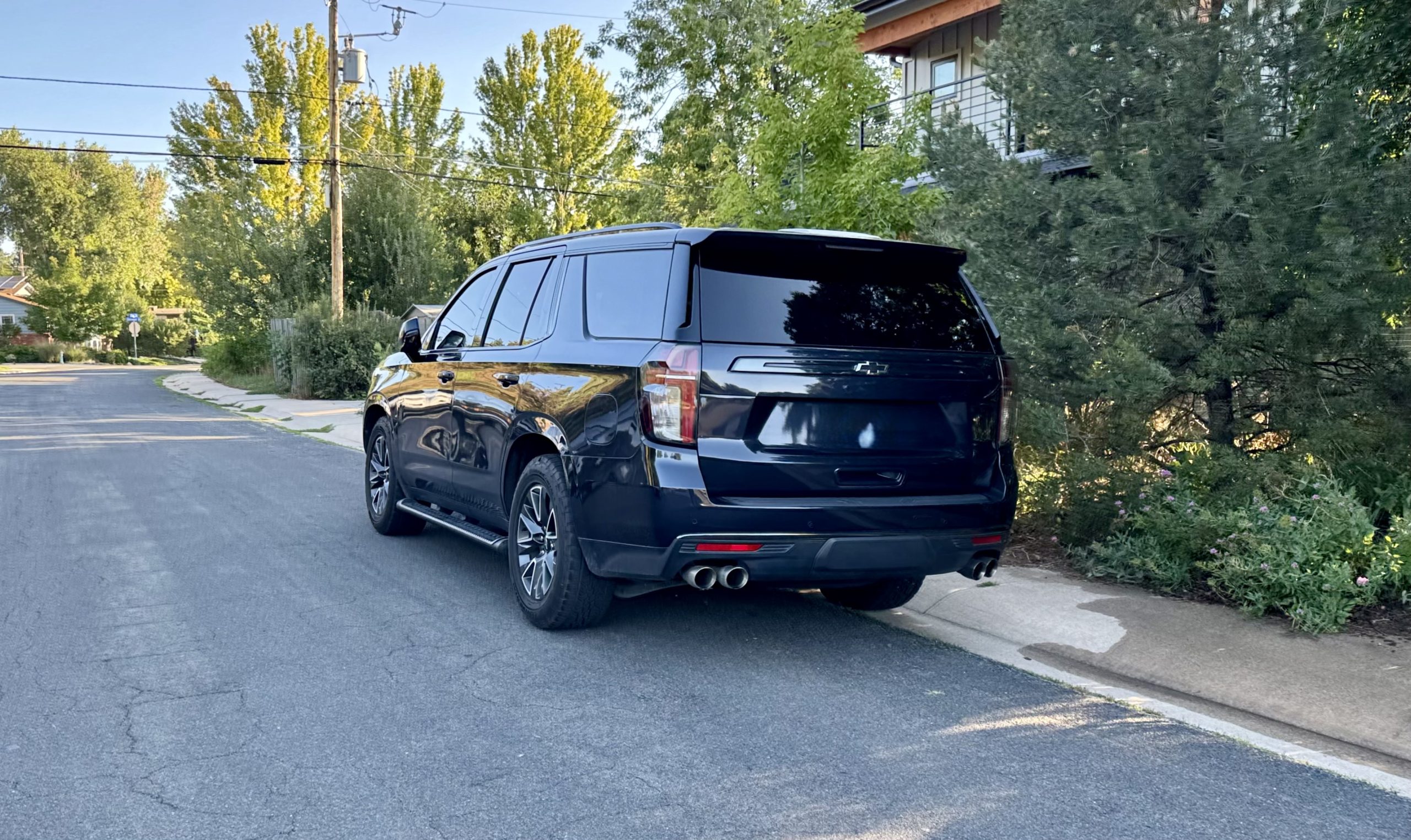
I am not saying this will out perform more dedicated vehicles off road, or even on road. But the all around versatility has been very impressive and old-school 90s era Range Rover worthy. Which is why I am labeling this as ‘Drive Quality’ — it’s a fantastic car to drive in every condition I have put it in, and I can’t ask for more.
And even though the car is large, the sensors and camera system has made it trivial to navigate tight areas. In fact, it’s a vastly better camera system than is in my wife’s 2022 X5, thus I find her X5 a little trickier to weave in tight spots than my huge Tahoe.
Side Note on Tires
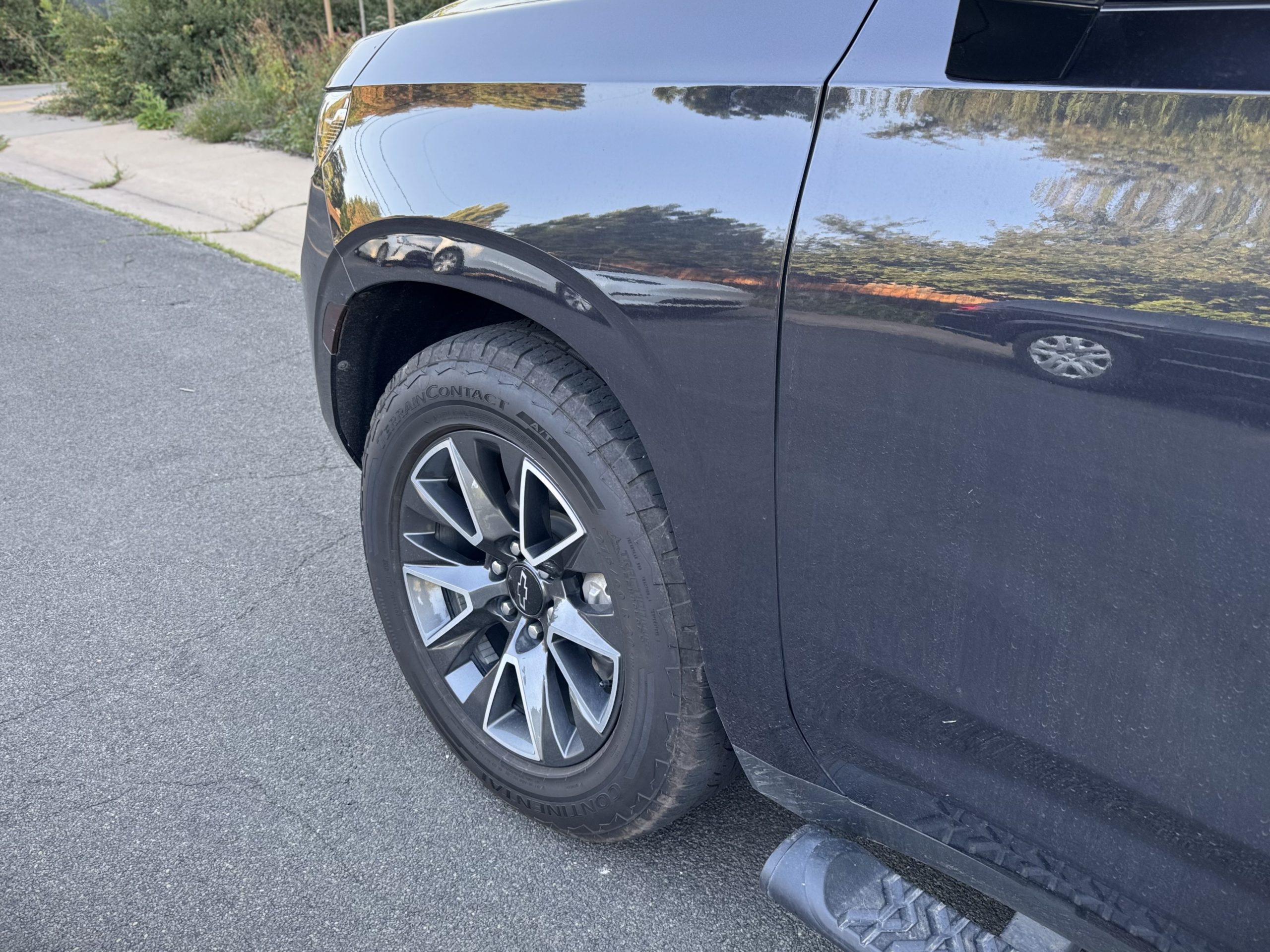
The tires the Tahoe comes with are pretty shit, as they are the standard Goodyear ‘Wrangler’ tires. I found these tires to be pretty atrocious to drive with. They had poor wet weather traction, they ride very firm, and they are rather loud. They are a harder compound, so they do last a good while, but you’ll break down before then.
I swapped my tires out pretty quickly and I went with Continental’s TerraanContact AT. I’ve always been a huge believer that upgrading your tires pays dividends on your vehicle. That’s the case here, as these TerrainContact tires are fantastic. The ride is much softer and quieter all around, and the handling performance is fantastic.
I’ve taken both sets of tires off road in mild conditions, and do find the TerrainContacts to handle slightly better. They also maintain a slightly more AT look, which is something I was wanting as well.
Two Year Thoughts
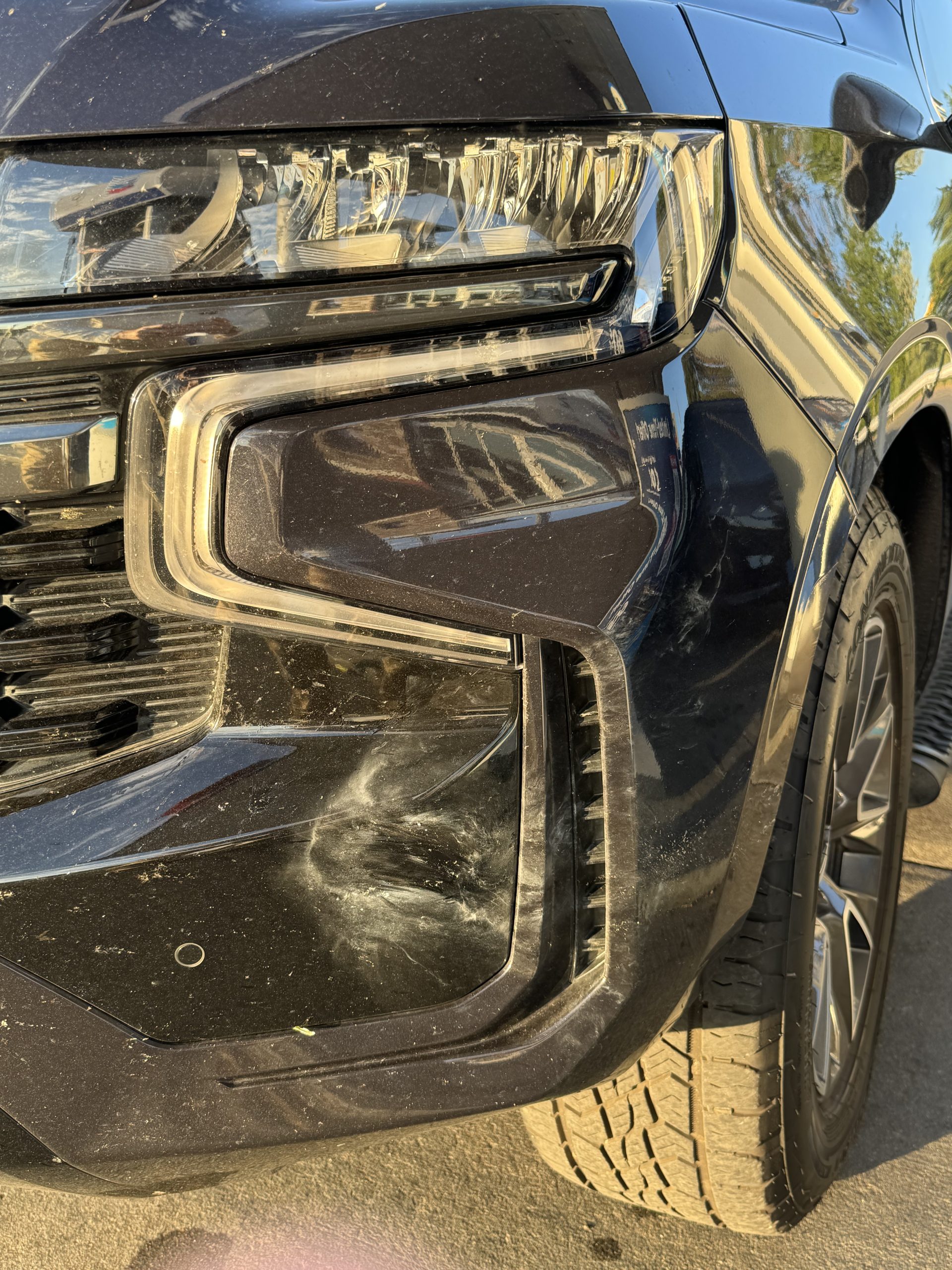
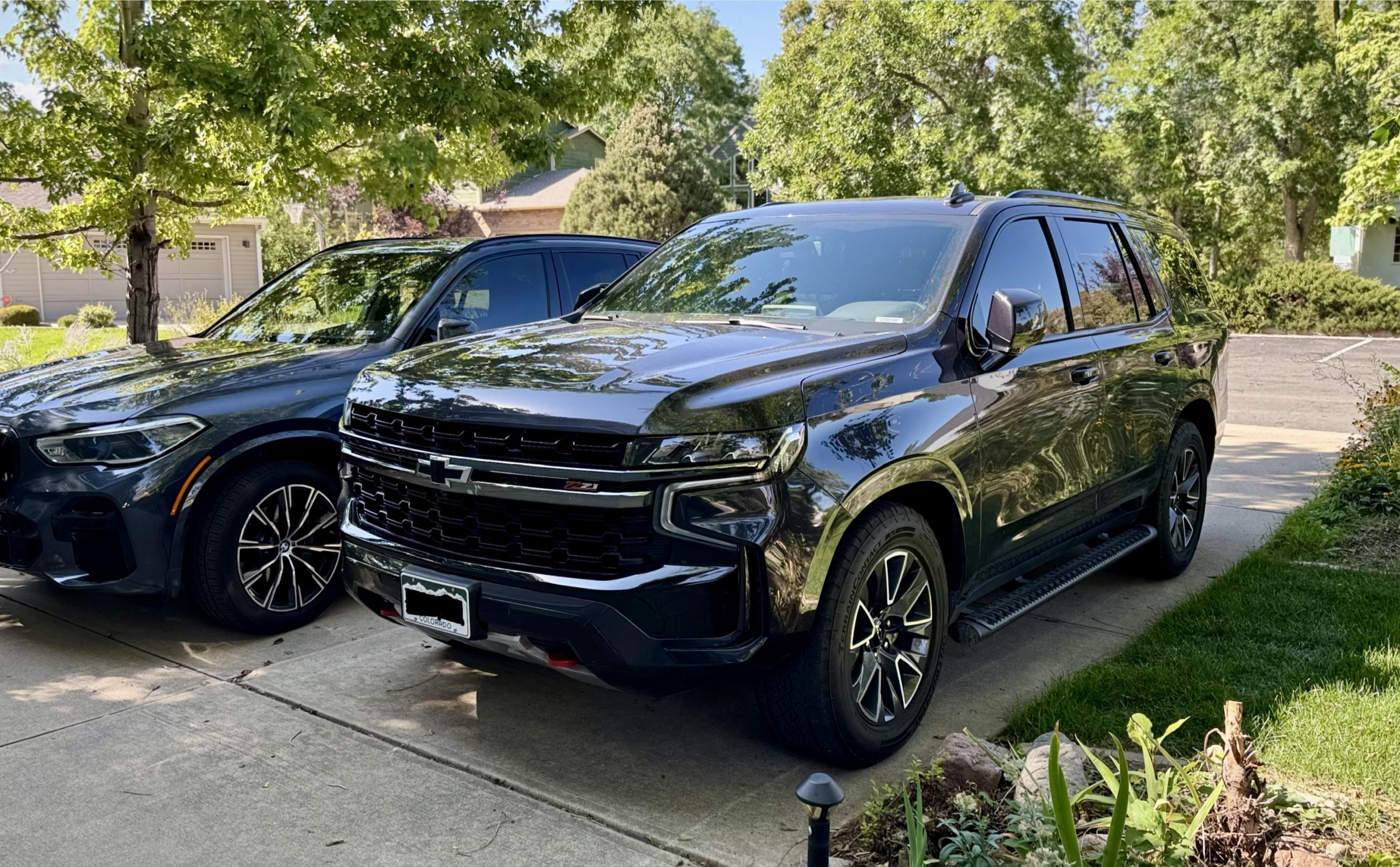
That mark is what remains of a bird which met the front of the car at 75mph.
I have no regrets, even with the engine failure. I am not sure there’s a better three row, full six adult capacity, SUV you can buy which you could still take on modest off road trails. The Defender 130 is probably the closest, but the prices are far from close. So yes, I would buy this Tahoe again.
But, I will say, with what is on the market today, if you don’t need that third row, it’s not likely I would be buying a Tahoe.