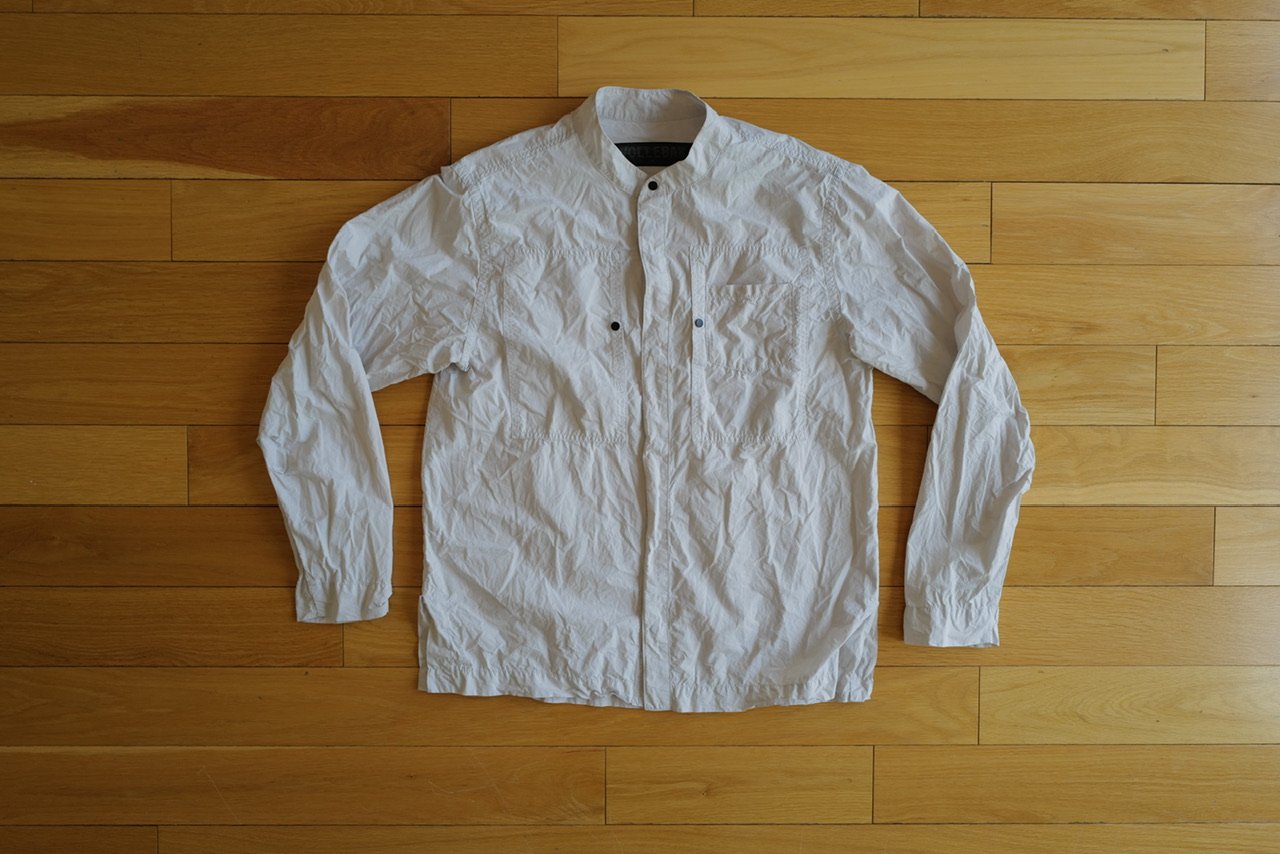
One of the gems of my summer hiking in Colorado has been the Vollebak Off Grid Shirt, which is a very odd shirt that excels at keeping you cool. It is my go to warm weather hiking shirt, and something I’ve come to really love.
Your great-great grandfather lived off grid. Your children’s children will live off grid. So the question is, could you? If you had to start from scratch, build a house, generate your own energy, plant crops, find your own water, and raise a chicken or two? (Vollebak.com)
Probably not the chicken or crops part, but I could build a house for sure. Is this the shirt I would do that in? Possibly.
Materials
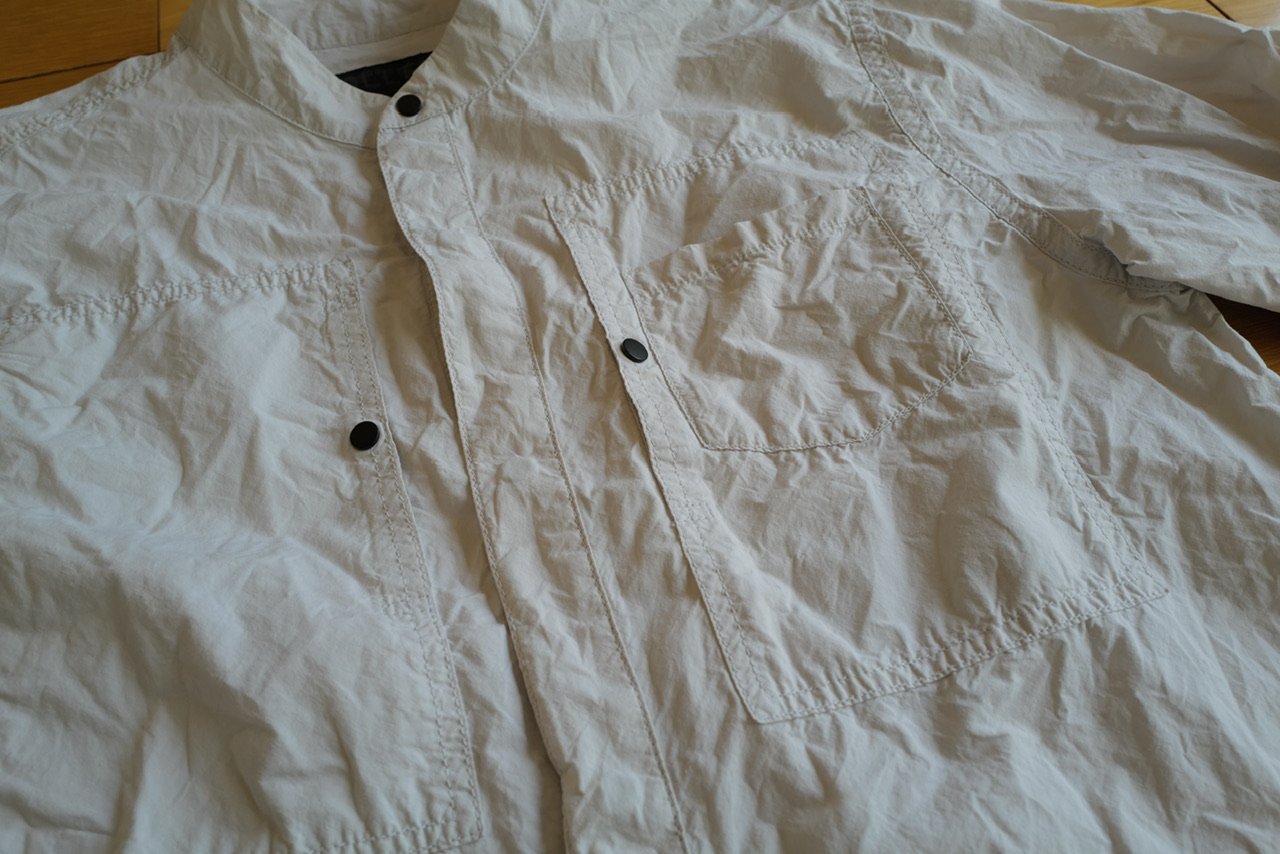
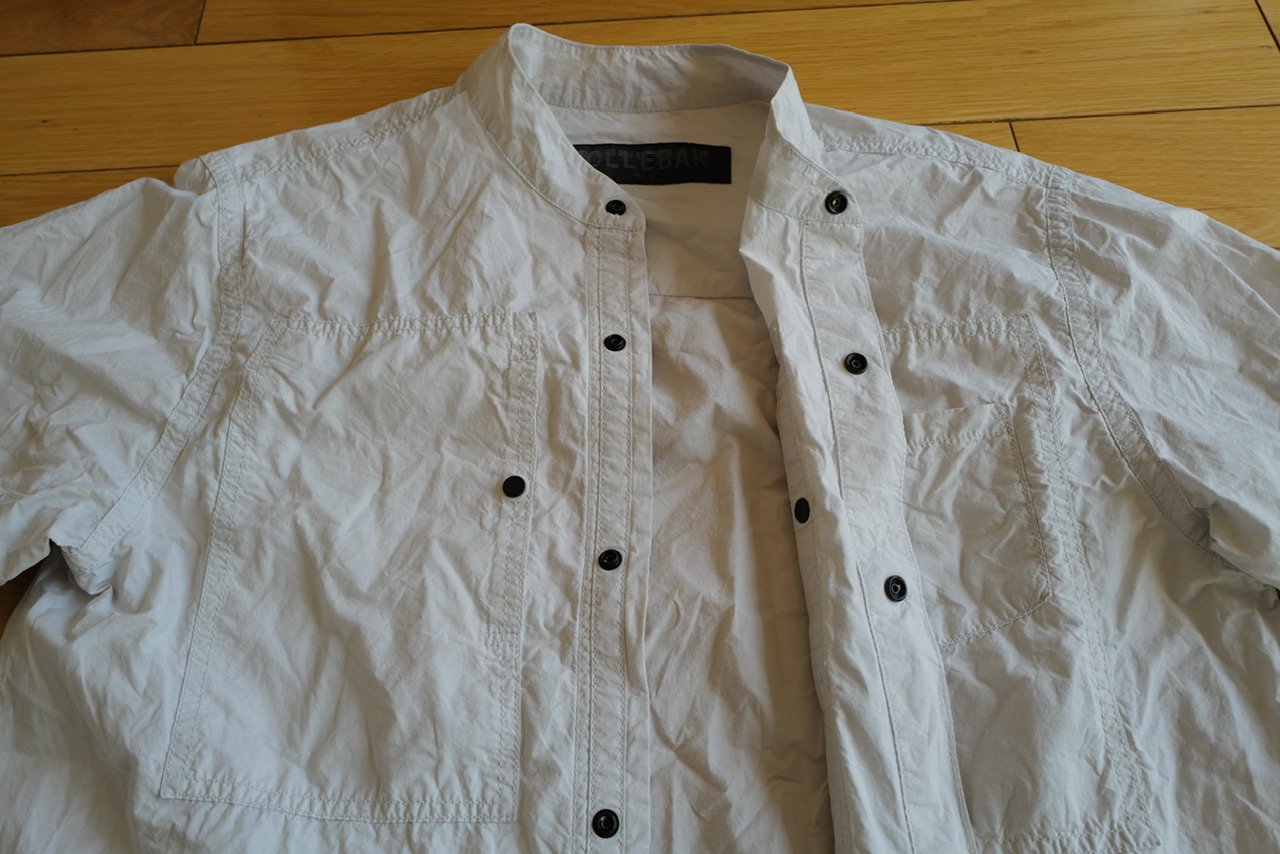
Like all things Vollebak the finishing and build quality is top notch. The materials are often the magic sauce with Vollebak and here they are using two: 90% cotton, 10% ramie. For this ‘turnip’ color (it’s light grey to my eye) the died it with red turnips.
All of this comes in at 115gsm — pretty light in weight. It feels a bit like a smoother, lighter, linen-poplin hybrid. Ramie is a material which loves water, and excels in hot and humid climates. That there’s only 10% doesn’t seem to impact the performance of this shirt, as it feels more Ramie than cotton.
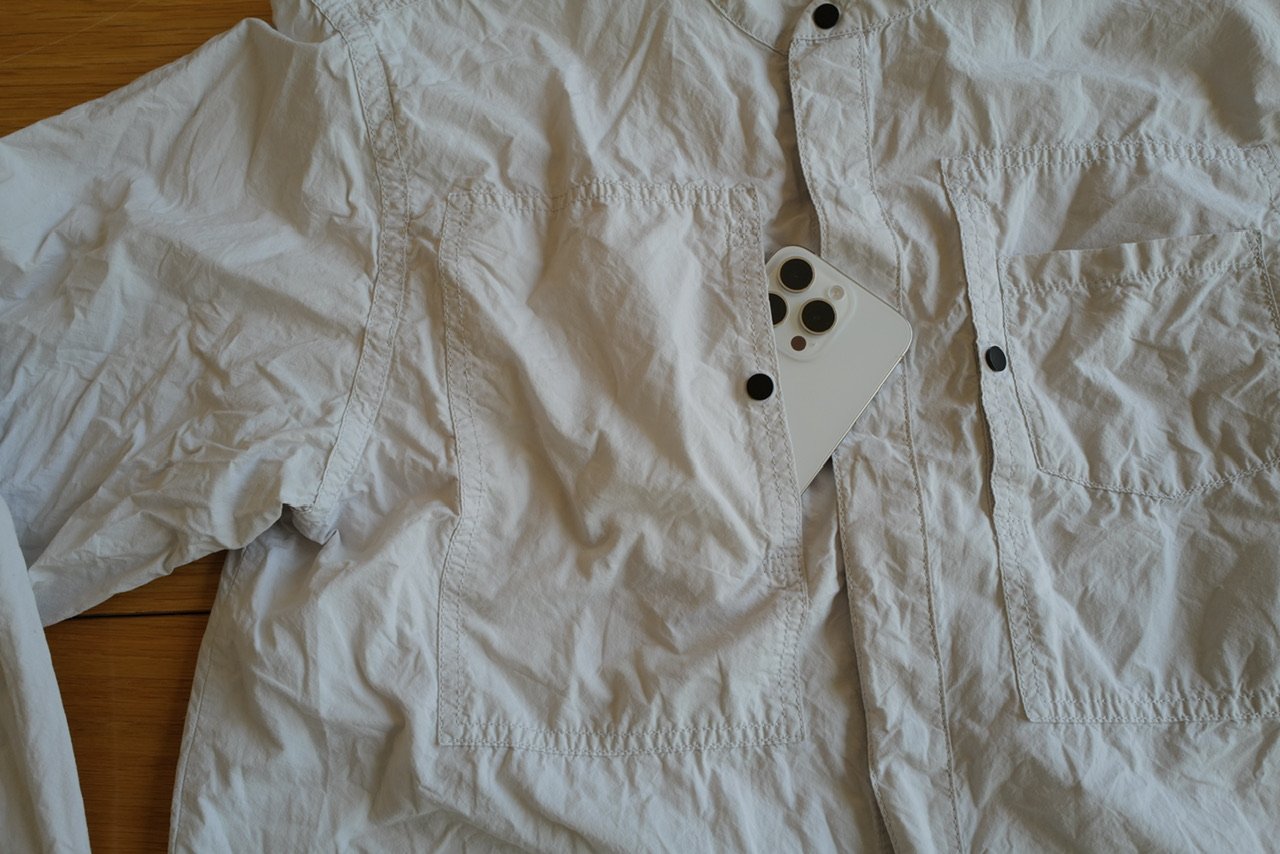
The shirt has a band collar and a straight finished hem — it’s not necessarily made to be tucked in, but tucks in just fine if needed. The entire shirt uses hidden snap buttons to close it, and to secure the large chest pockets. The cuffs are barrel, shaped with darting at the elbows, and otherwise not designed to be rolled up.
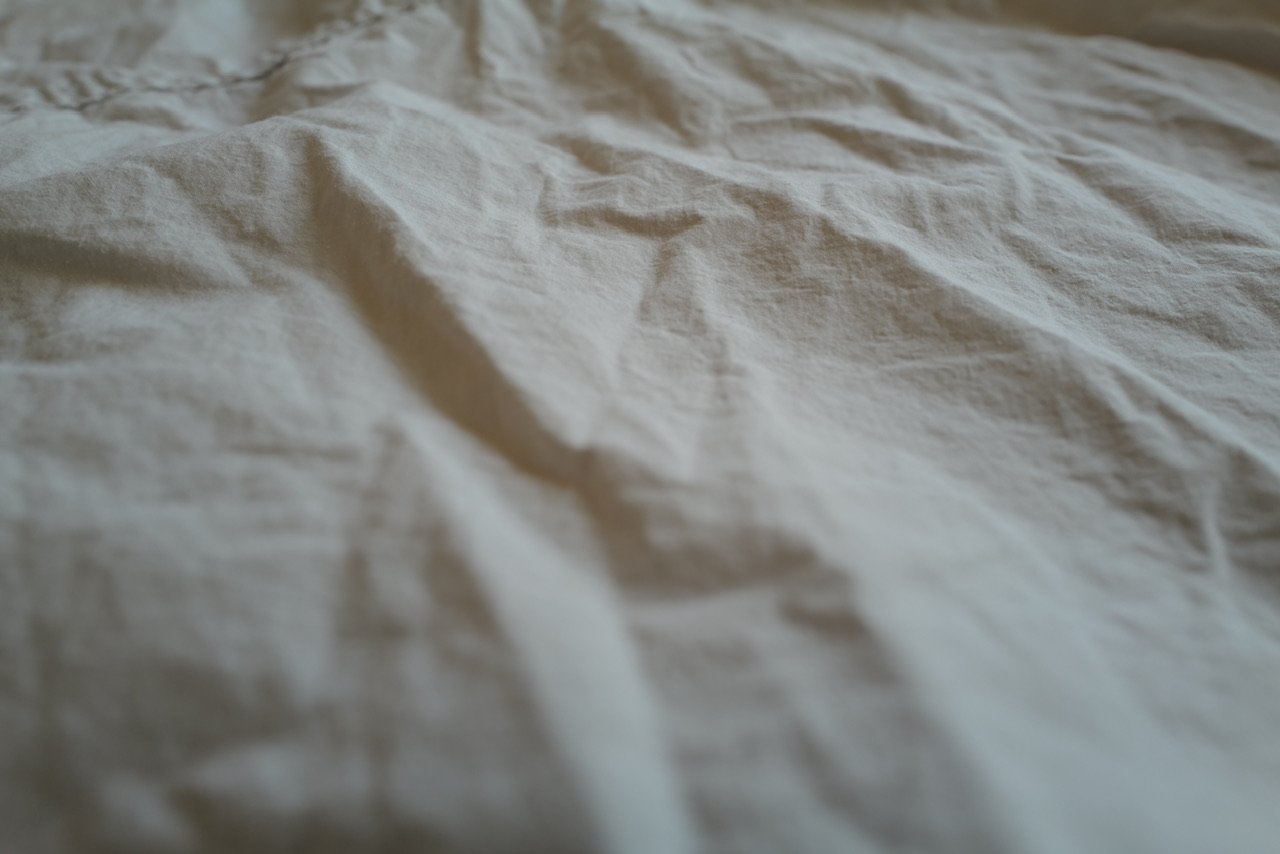
The material feels cotton adjacent. The design feels futuristic, but understated. It is very odd.
We start with high-strength fibres stripped from nettle stalks that are resistant to bacteria and mildew, get stronger as they age, and even get stronger when they’re wet. We combine them with lightweight and cooling Pima cotton fibres, before finishing the material with a Japanese kneading technique called Ōmi sarashi that makes the fabric ultra-soft.
I don’t, honestly, know what to make of that — and yet I don’t disagree that this is what Vollebak have made.
Wear & Performance
Let’s start with what Vollebak says this shirt is for:
Like all our Off Grid gear, the Off Grid Shirt focuses on toughness, comfort and utility to help you survive off the land, and it’s built with materials and techniques that were around long before the grid existed. Every shirt comes with two giant storage chest pockets, tough metal detailing, and is dyed with red turnips left over from the production of Japanese Sunki pickles.
This is a shirt made to be outdoors, and made to comfortably do stuff in. It’s part of the reason why I picked this as a hiking shirt. While it’s a very good shirt, it’s also quite an odd shirt.
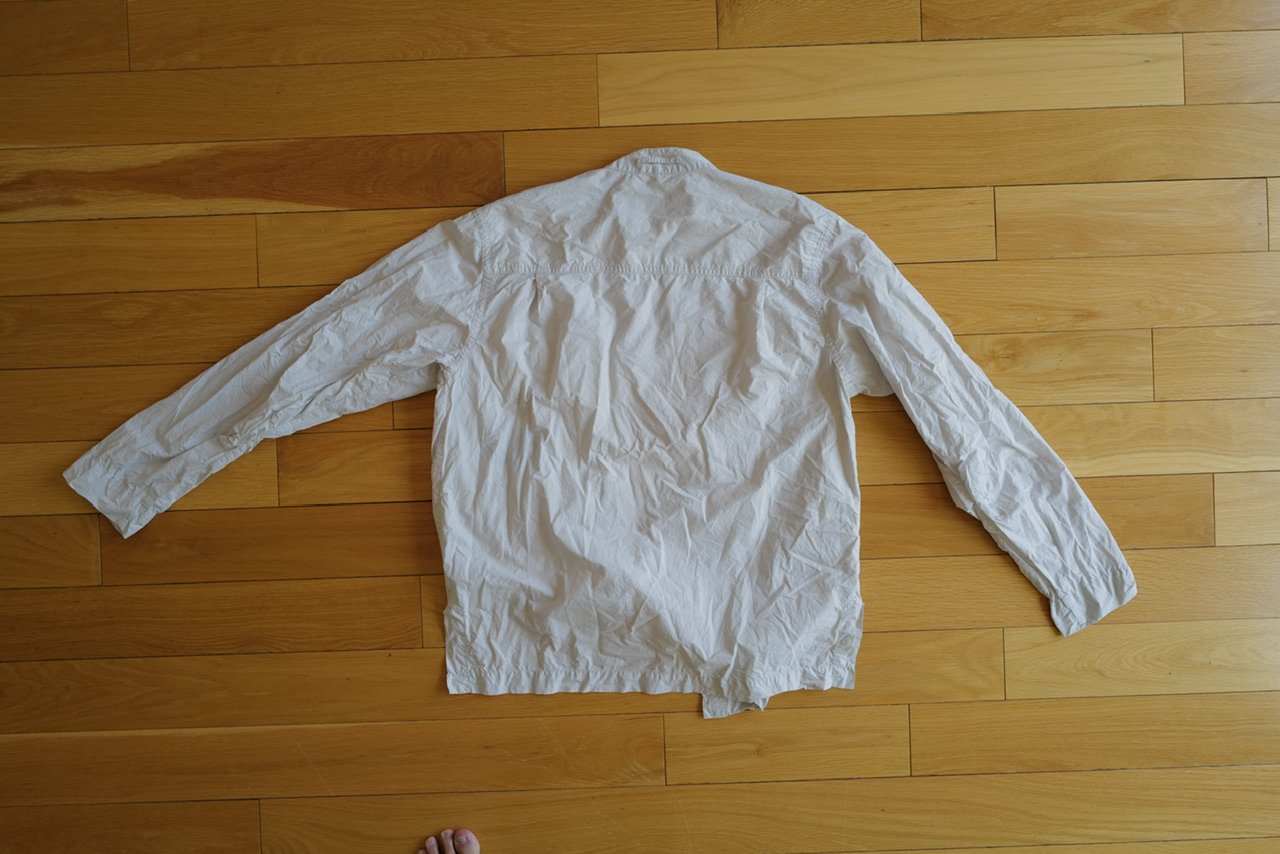
The style is very much over shirt and boxy. There’s a lot of room in this, as I sized up one from my normal Vollebak size to allow for a little more range of motion when wearing this under a backpack (Vollebak tends to be a touch trim and short in the sleeves for me, so I am between a L and XL). From a style standpoint, this shirt is not going to blend in well, it’s purposefully styled and while it looks cool, it’s not something I could see myself wanting to wear in town.
Switching over to the performance aspects of this shirt — that’s where things start to shine. I’ve often talked about how Vollebak can make “cotton” perform in ways where you don’t think it is “cotton”. That’s the case here. The low gsm of the fabric, coupled with the Pima cotton and ramie make for a shirt that is very breathable and very quick to dry.
The best way I can compare this is to talk about one of the larger downsides of hiking with a backpack: back sweat. I’ll compare this shirt to a few others, in terms of what it feels like when back sweat builds up:
- Polyester or Nylon: I like to refer to these shirts as feeling slimy. As the sweat builds on your back, it tends to slide in an unnatural way against your back or the backpack. Take off the backpack and put it back on, and the back of the shirt feels cool.
- Merino Wool: wool tends to load up with wetness, but mostly not feel slimy or otherwise uncomfortable, though it does tend to cling to your body. It mostly stays put when the backpack rubs against your back. Take off the backpack and put it back on, and you have a slight cooling effect, but not too bad — much less than the poly or nylon. Leave the pack off for long enough, and the slight cool becomes colder as the time passes.
- Cotton: here you feel the wetness, you feel the build up, and it sticks badly to your skin. Take off the backpack and put it back on, and you are going to feel something cooler against your skin. The shirt also feels heavy.
- High Performance Poly Mesh: you mostly lose that slimy feeling, while not feeling the weight of the water (think something like this hoodie I reviewed). When you take off the backpack and put it back on, you’ll find that it’s cool to cold, and typically drying faster than you can believe.
- Off Grid Shirt: this shirt never feels that wet, or slimy. It mostly doesn’t cling to your skin. When you take off your backpack and put it back on, it’s outright cold against your skin. It starts drying quickly, but not that quickly.
That’s the key difference, and why a lot of people worry about cotton (inclusive of linen and ramie) for outdoors: it is cold when wet. This is fine in the dead heat of summer, and dangerous at other times. That’s not the entire picture of this shirt though, but it is something unexpected and uncomfortable about the shirt.
While hiking, even in 90°F heat, I found that the shirt never felt stuffy like steam was building between my skin and the shirt. That’s rare unless I am wearing a more mesh-like shirt. This shirt breathes better than all of my synthetic summer hiking shirts with the exception of the Atlas Hoodie.
When I wash and hang dry the shirt, it dries through in about 2-3 hours. Move the shirt to the outdoors to hang it, that’s under an hour to fully dry. I suspect this is the thinness of the fabric, but it’s impressive how fast it dries. When wearing the shirt and the back of it is wet with sweat, I found that it persists for at least 20 minutes before you start to notice the shirt drying out.
All of this is why I’ve come to prefer hiking in the Off Grid shirt in warm weather. It’s exceedingly comfortable to wear for this in all aspects, and more so than even the most technical shirts I own. The big downside for this use is that it is a one trick pony: summer only. I wouldn’t try to wear this on a day when I suspect I might hit some weather, or if I were hiking above the tree line.
Overall
You cannot talk about Vollebak without also talking about the price. This shirt retails for $445, is on sale (at time of this writing) for under $160. I picked mine up for $150 secondhand all the way from Ukraine. I would pay $180 for this shirt all day long, above that and it seems like too much.
This is a different feeling than I have with my other Vollebak gear, where I would very much pay the discounted sale price, and if I could I would pay full price. With this shirt it’s quite good, but it’s not that much better than a lot of the other options, and the style limits how much I can wear it.
Or to put it another way, I am not searching to add another one of these, nor would I seek to replace it if this one were damaged. Luckily, this shirt shows literally no signs of wear and washing, which is pretty impressive on its own, so this is a worry I don’t need to deal with. It’s going to be around for a while.
If you want the best hot weather outdoors shirt I’ve tried, this is it.