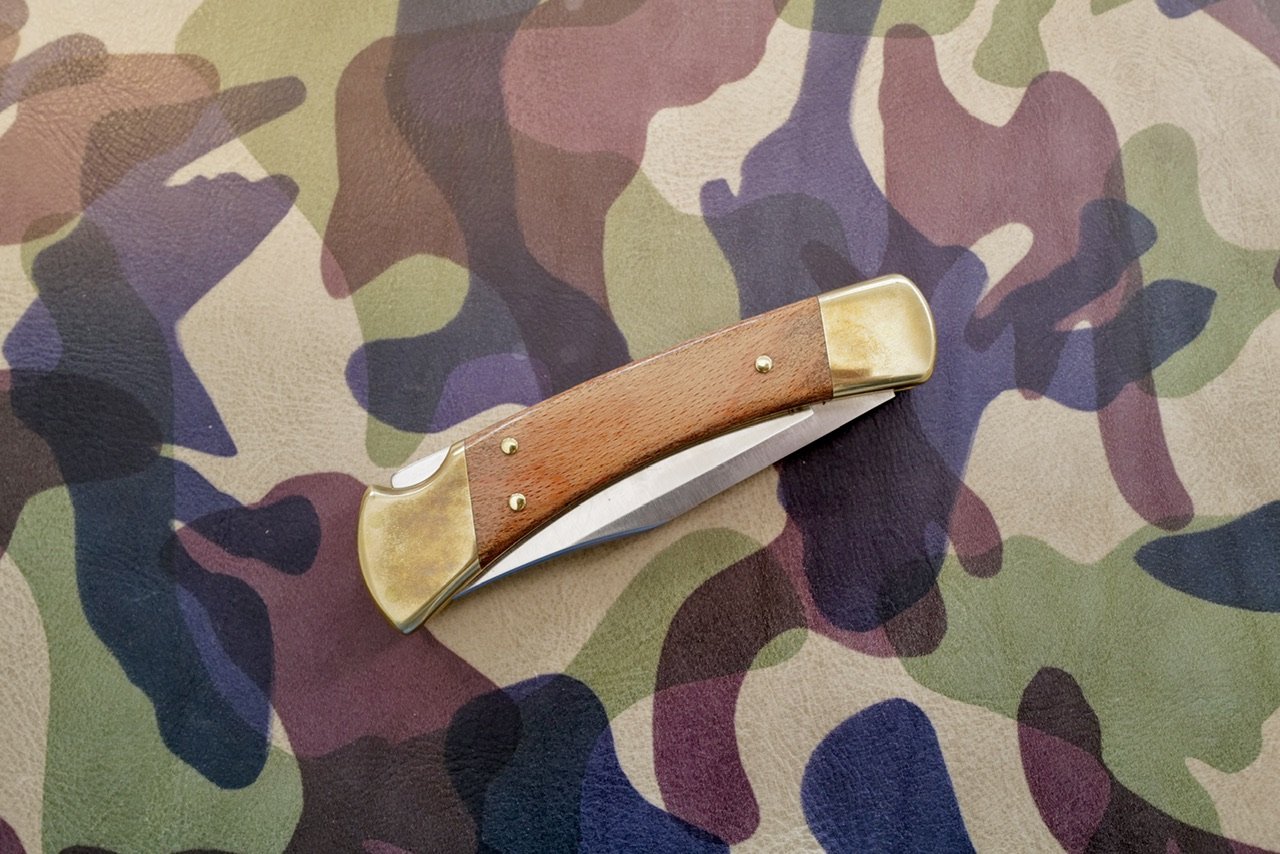
When I think of pocket knives, there’s two iconic blades which pop into my head: a Swiss Army Knife, and a Buck 110. Those are also the first two knives I used growing up, getting my first Swiss Army knife at the ripe old age of five. And handling the Buck 110 not too long after that.
I’ve had a Buck 110 for 7 years now, an item of my grandfather’s I inherited. It’s Damascus steel with a horn handle scale and nickel bolsters. I never use it, I treasure it too much. I’ve bought variants of the 110 since then, the Slim and others to try out more modern takes on the classic. They are all not that great, and not really a Buck 110.
Then, Buck added magnacut steel to the custom shop for the 110, and I bought myself a 110 of my own. It’s amazing, overbearing, and well worth it.

Materials and Blade
The 110 is a big knife. With a 3.75” blade coming in at 0.120” thick. Buck weighs the 110 in at 8oz (I get 7.8oz). I went with Magnacut and walnut for my wood choices with brass for the bolsters.
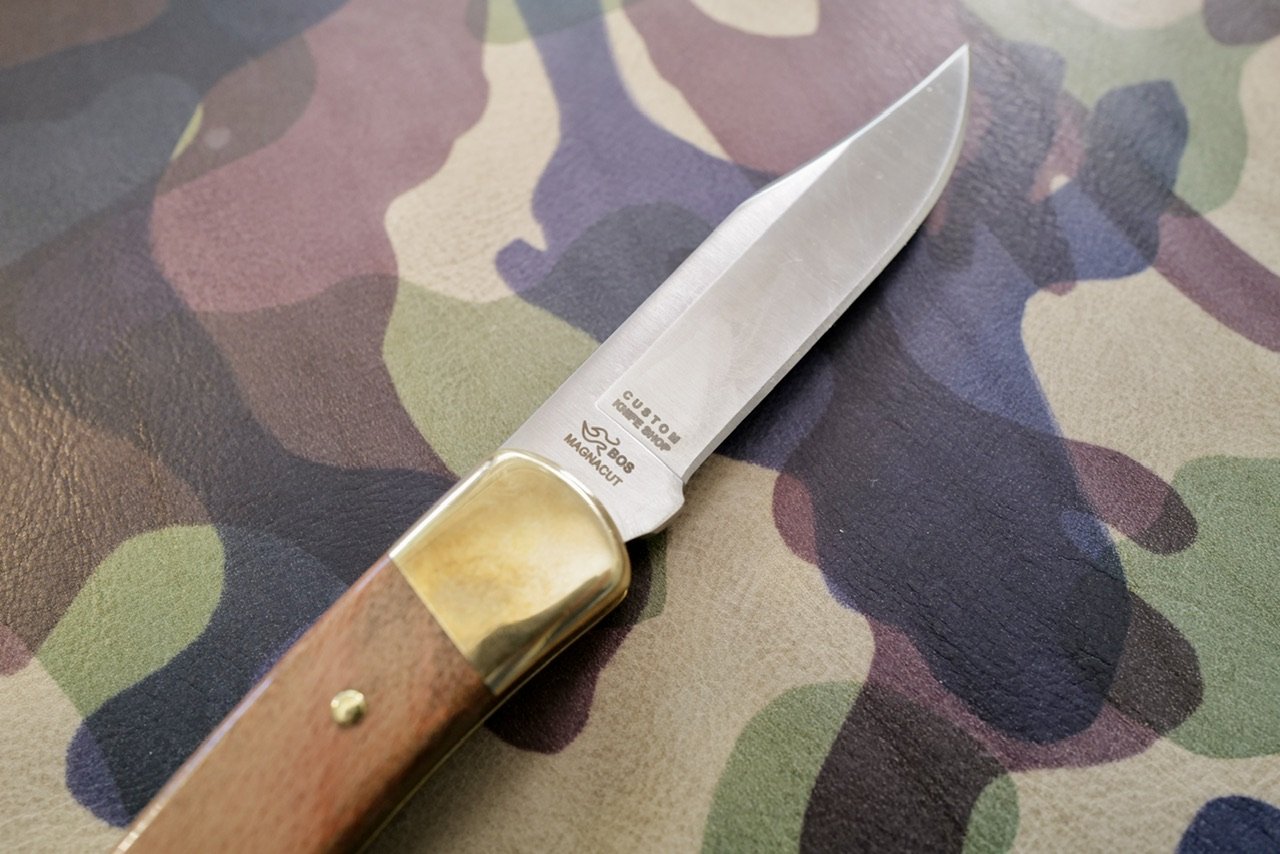
Buck has been making these knives for a long time, and it shows. Everything on this knife mates up to each other perfectly. The blade opens smoothly, and locks up with a strong snap. The grind is good, and even. The blade is a clip point with a machined finish. There’s only a nail nick to open it, and a lock back. Simple, tried and true, nothing fancy.
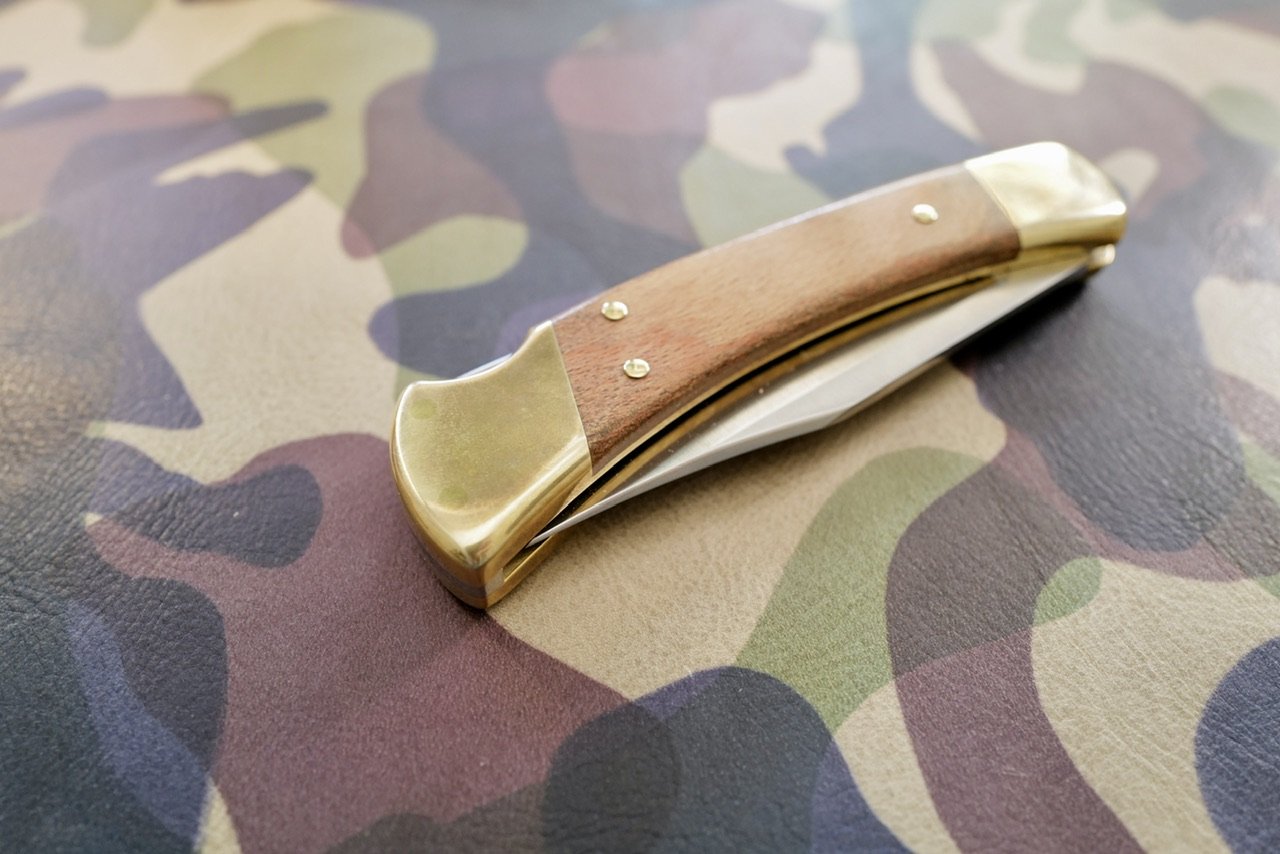
The design of the blade allows it to be a slicer, mostly to be used as a hunting knife, but certainly something where you’ll see story after story of it being someone’s only knife for everything. The biggest downside is the weight. The biggest upside is everything else.
In Use
The first thing to know is that this knife comes with a leather belt holster. You need to know this, because that’s also how it’s designed to be carried. Meaning it is rather shit to carry this knife loose in your pocket. It’s large, and it’s heavy. There’s no pocket clip, there’s no one handed opening.
This knife is the epitome of a tool. You deploy it not to be stealth or fast, but becuase you need a blade. Whatever the need is, you know of this need ahead of time. If you carry something like this in a leather pouch on your belt, the weight becomes a non-issue as that’s a rather easy way to carry things. But if you are dropping this in your pocket, it’s going to be noticeable, bulky, and largely not great.
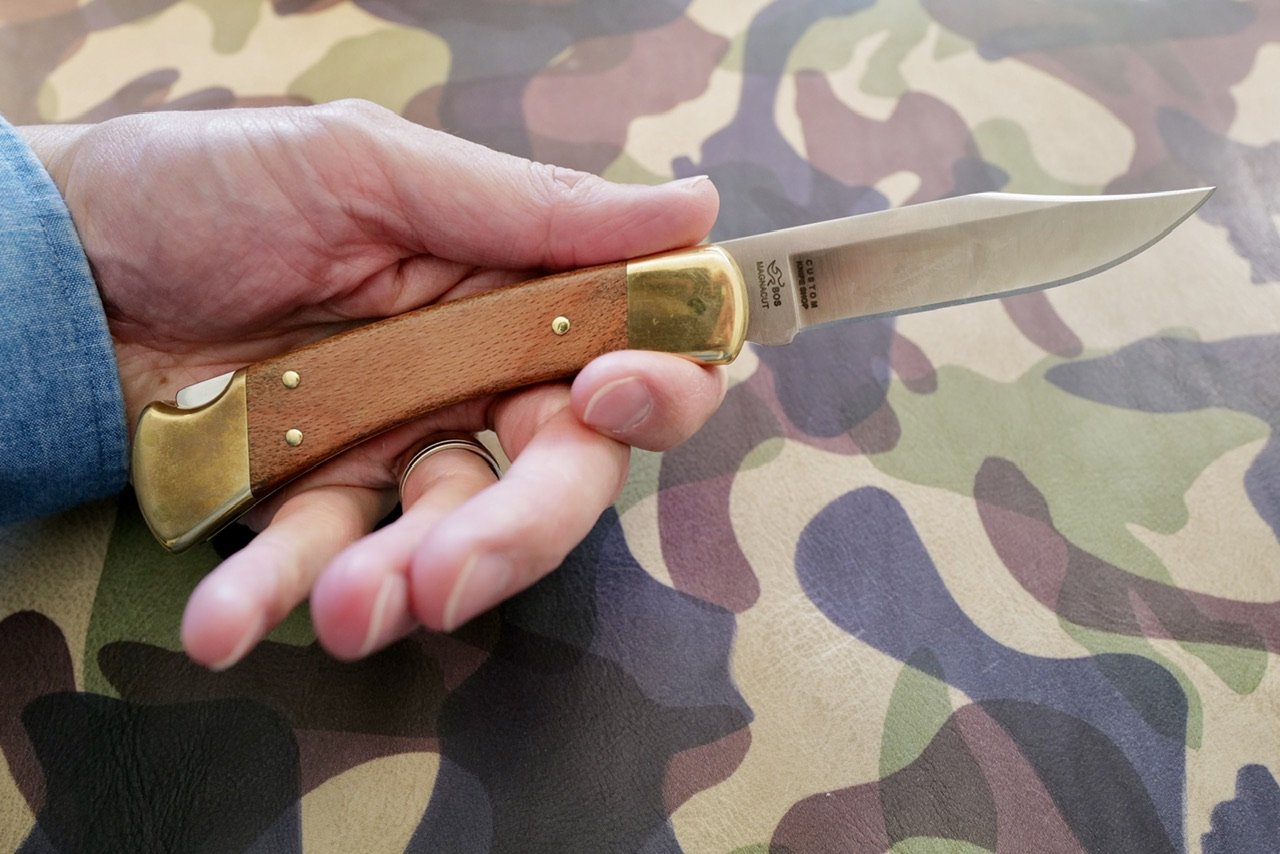
Which brings me to what this knife really is like to carry and use: it’s like carrying a hammer in your belt loop. Sure you could find other ways to hammer things, but a hammer really is the best tool for the job, and you need a certain size and weight to really make a hammer good. And like a hammer there’s no hiding that you are using or carrying one, but at the same time, if you are in an environment where hammers are being used, it’s all par for the course.
What I mean is the Buck 110 is really fucking good when you need a knife. But really overt the entire time you are carrying and using it. So if you are trying to dress nicely and stroll through a shopping area, well the Buck 110 isn’t going to blend in. It’s like hammer in the hammer loop of your fashionable carpenter pants. Odd, to say the least.
However, if you are on a ranch, out hunting, or even out hiking — well the Buck 110 makes a lot of sense. Suddenly it doesn’t look or feel too large, it just is.
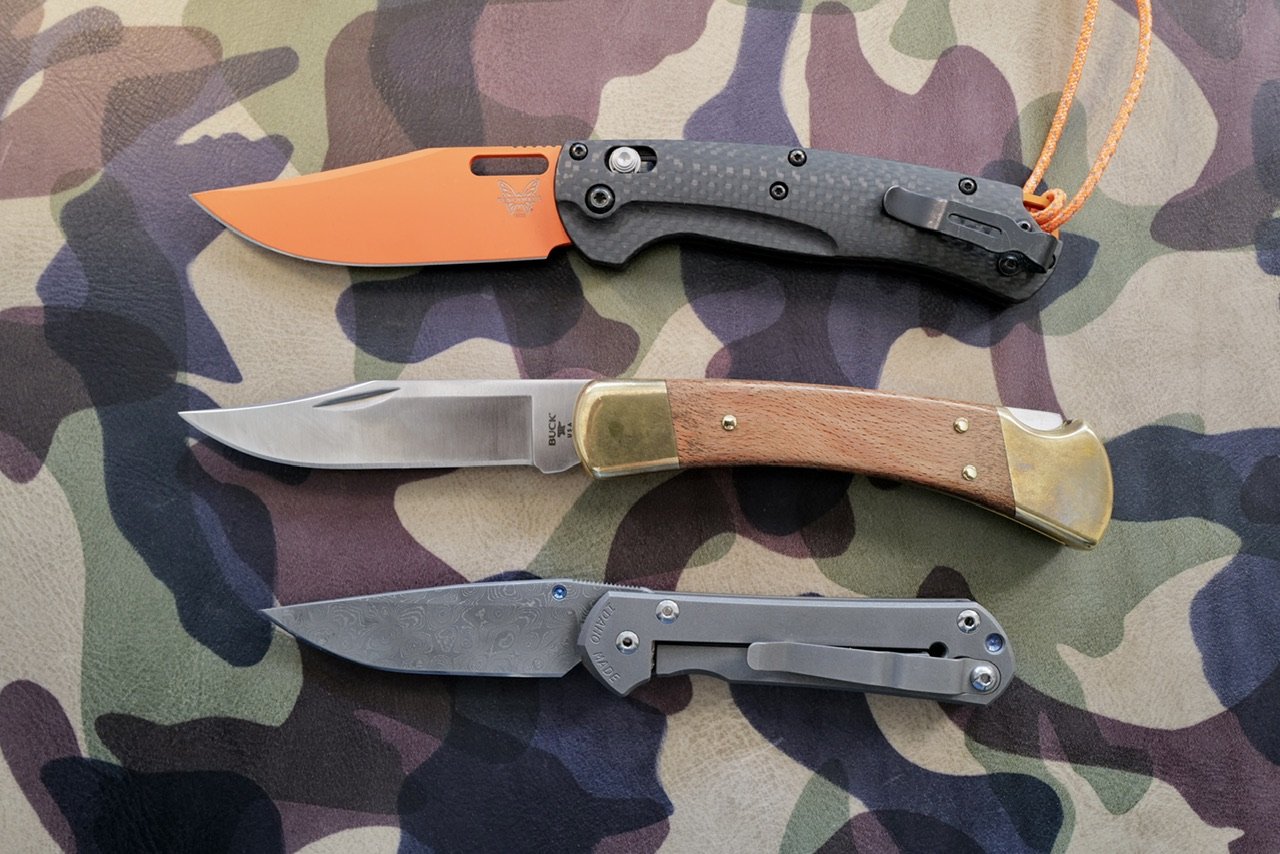
Top to bottom: Benchmade Tagged Out, Buck 110, Chris Reeve Small Sebenza 31.
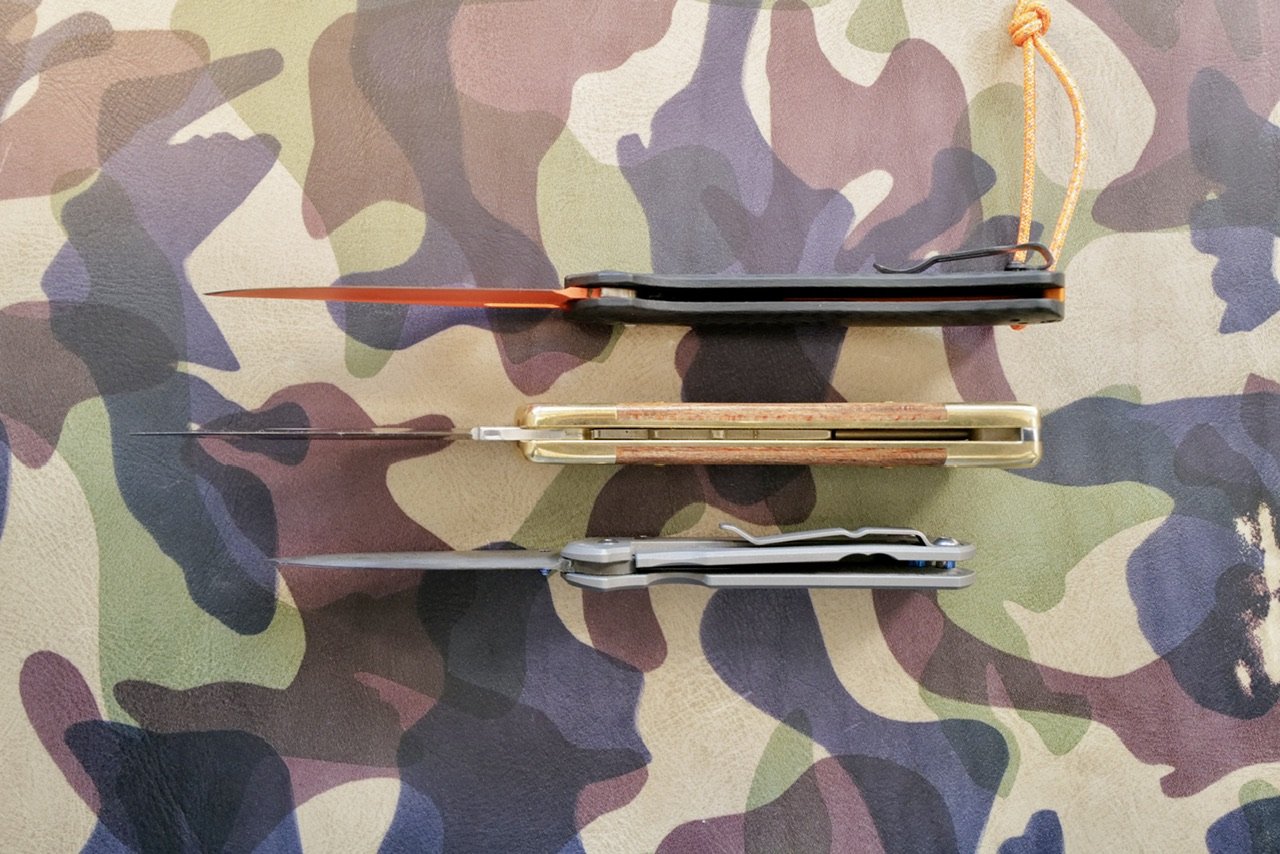
What’s interesting is how well that weight of the handle translates into using the knife. There’s a lot of tasks I do with knives day to day, and the vast majority of my knives are more balanced between the handle and the blade than the 110. Here the 110 is vastly heavier on the handle than the blade.
This translates to two things in practice: first you are going to have more overall fatigue if you are using this constantly all day long; and second you are going to be able to pivot the blade easier without the knife feeling as though it is pulling away from your grip.
For example, I had some cords behind my TV wrapped with little velcro cable ties. I didn’t cut the excess length from those wraps, I simply kept wrapping until they were tidy. Turns out, our cat likes to sit back there, and pick at these velcro wraps, and try to pull them off. Leading to unrolled Velcro that’s been chewed on by a stupid cat. To reach this area, I have to bend forward and stand on one foot and cantilever my body over to them. Cutting the excess off in this position, with most knives, would be tricky because I am already off balance, and force is required, while not dropping the knife is crucial. It’s a fine cut, but likely one where I cuss at least three times.
I went to trim these ties the other day as, the cat was driving me insane. The knife I had on me was the 110, and my only thought was “great, I am going to drop this 5lbs knife behind the TV for sure.” I reached back, positioned the blade, and folded the material over the blade with my thumb, and applied pressure. The 110 went through the tie like butter — even with the blade dirty and gunked up from tape.
I took a bit to try and wrap my head around why that cut felt easier than expected. The blade is as sharp as any other knife I own. The knife is heavier and longer than most I would try to do this with, so it shouldn’t have been easier. But I realized after playing with this more, that the weight of the handle is what made the cut easier.
Instead of fighting against the knife tying to tip out of my hand, I was able to focus on manipulating the blade edge correctly because the weight of the knife was firmly sitting in the palm of my hand, requiring less squeeze on the handle to keep control of the knife, allowing for my muscles to be more agile and to work the slice as needed.
That’s the thing about this knife. The weight of it makes it hard to carry in anything but a pouch on your belt. The size of it makes it hard to fit in pockets or be discreet with the knife. And yet, all of those factors also mean it is a fantastic knife to use, to hold, and to work with.
The blade itself is a gem. The hollow grind of the blade allows it to easily move through material. The clip point is long and pointy, with enough surface to work whatever cut you are trying to make. It slices well, it pokes well, it moves through material like it’s nothing.
The handle is large enough for my entire hand to easily grip it. And while I don’t have the finger groves, they aren’t needed as the curve on the inside of the handle keeps my hand in place easily without worry. So while the knife itself doesn’t feel overly grippy, the design keeps your hand in place, and largely removes the need for more grippy materials.
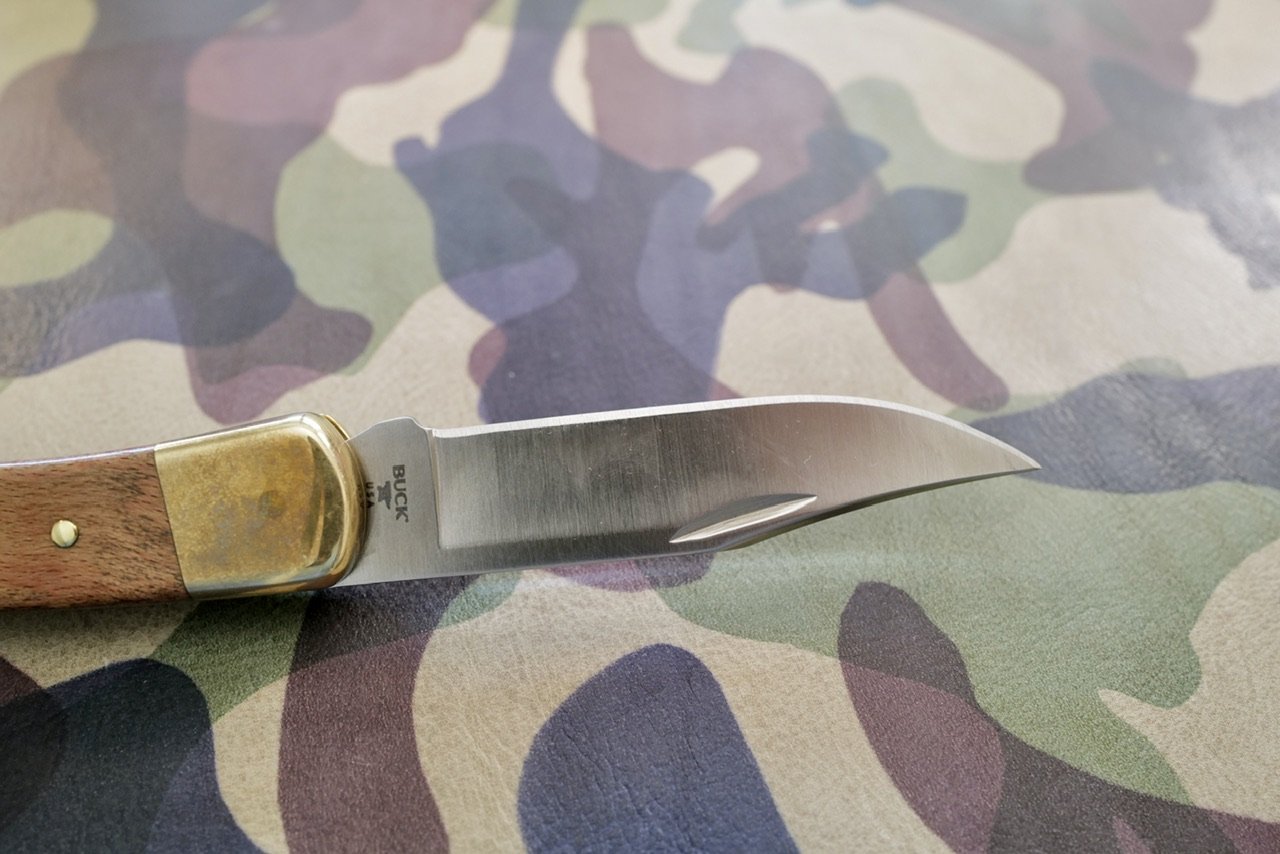
I’ve worked with this knfie while wearing work gloves and found it just as easy to open, close, and hold with gloves on as without — no surprise given the intended uses. It’s been a true gem to use for everything I have used it for.
Overall
In my Gear Report, I mentioned how this knife is all anyone has ever really needed from a pocket knife. I stand by this firmly. This is a working knife, and not something to slip into your pocket. You can, but it won’t be the best there. Carry it in a pouch, and use it as a tool, and you will fall in love with it.
I bought this because I have a lot of nostalgia with the 110 model, but what I didn’t expect is to like using it as much as I have. In all my use, I’ve yet to even need to strop or hone the edge. Magnacut is exceptional knife steel, and Buck has applied it perfectly to the 110.
If you happen upon me at a camp site, you’ll very much see this knife on my belt.
I love it.