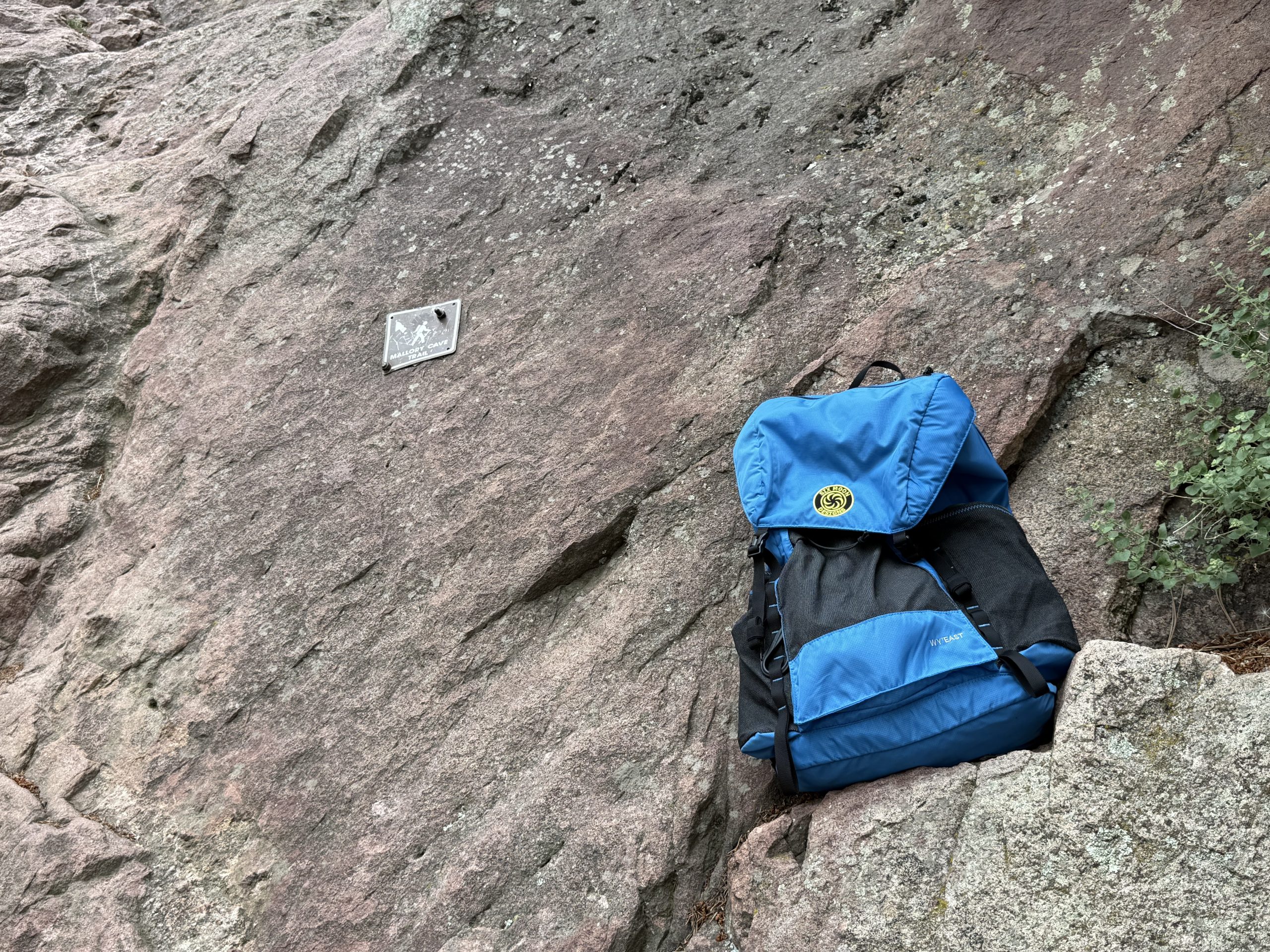
Billed as a versatile backpack for peak bagging, day hiking, everyday carry, and travel — the Wy’east backpack has a lot of ground to cover in a very lightweight and low cost platform. It looks good, and is well reviewed.
In my testing, it falls short, which is a shame for how much promise the bag has — it’s missing a few things which would make it great.

Materials & Specs
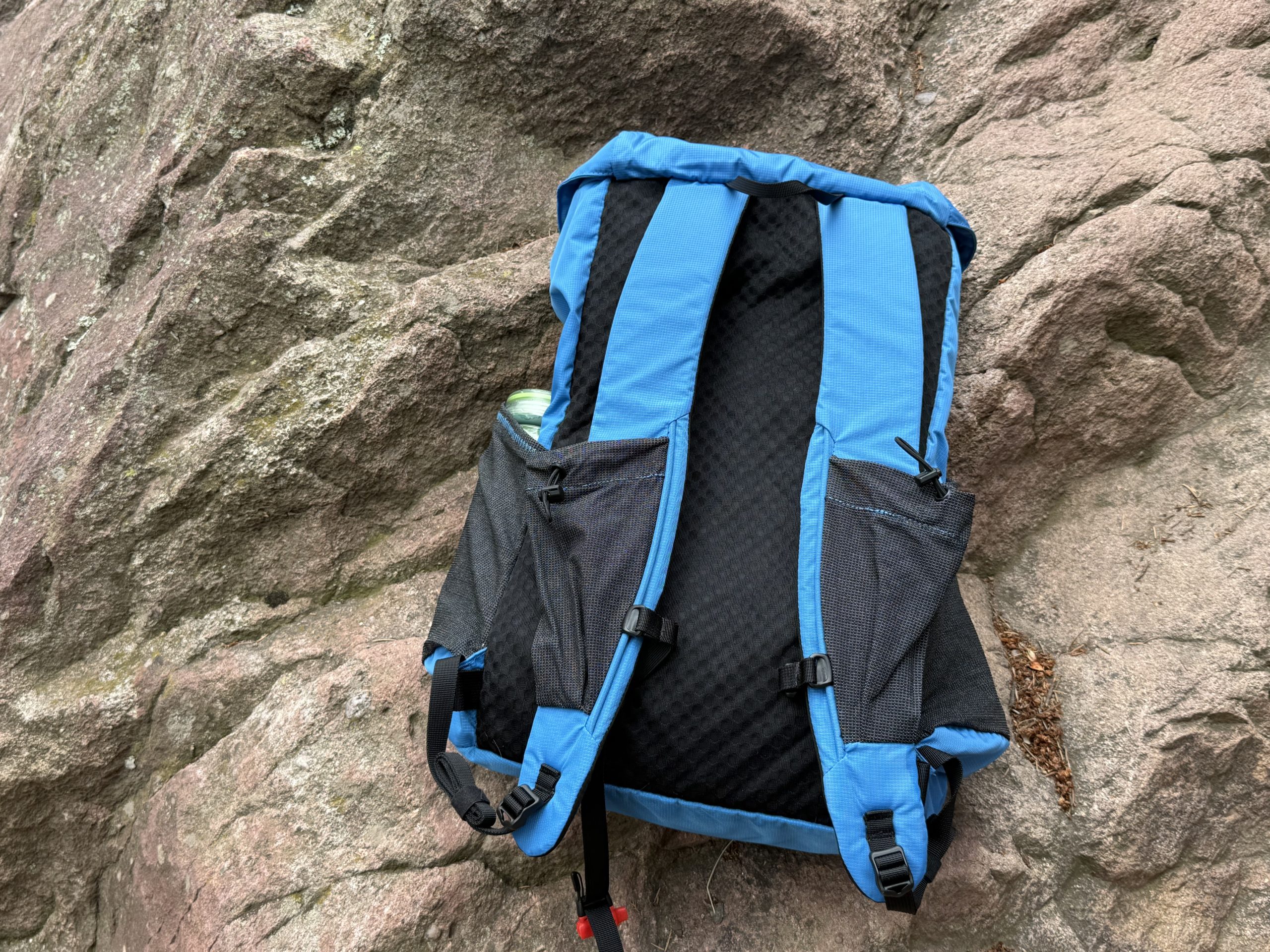
You can select either VX21 Xpac, or 210d Robic Nylon — which I have selected here in blue. Both use EVA padding in the shoulder straps (which are curved) and have an EVA back panel which can be removed and used as a sit pad. There is 3D mesh on the back panel as well, and Ultra Stretch on the front and side pockets.

The bag officially clocks in a 18” x 11” x 7”, and can haul a rated max load of 20lbs. The body of the bag is rated at 24L, with 4L more if you extend up the top cinch collar, and another 2L in the outer pockets (stretch pockets). The Robic model, when empty, comes in at a scant 25oz.
My only quibble is with the measurements. The back panel is indeed 18” x 11”, however the moment you put anything in the bag that changes. Since this is a top loader with effectively no structure, the bag quickly becomes a touch wider no matter how light your load. Something to keep in mind, if 11” is on the large end for you already.

The fit, finish, and construction all appear top notch to me. Well finished, nice materials, and nothing to complain about. When taking the price into consideration, the construction is quite impressive.
In Use
Six Moons Designs has a blurb about this bag worth quoting:
This clean, simple daypack was designed to be the ultimate adventure bag. It is the result of years of traveling, backpacking, and outdoor adventures. Each feature was added with the utmost intention.
The two tall side pockets are deep enough to keep your 1L water bottles safe and secure, even when being tossed into an overhead bin, while being placed at the perfect angle for easy access during hikes.
I agree with all of this. In fact, I’ll really agree with the access angle on the side pockets for water bottles. Usually I contort my arm just enough for it to hurt slightly to get at a water bottle in a pocket like this. On the Wy’east it was a breeze to grab the bottle and stow it again. The bottle stayed put when I put the bag down more than a few times for photos, and when tossing it in the car. The water bottle pockets are perfect.
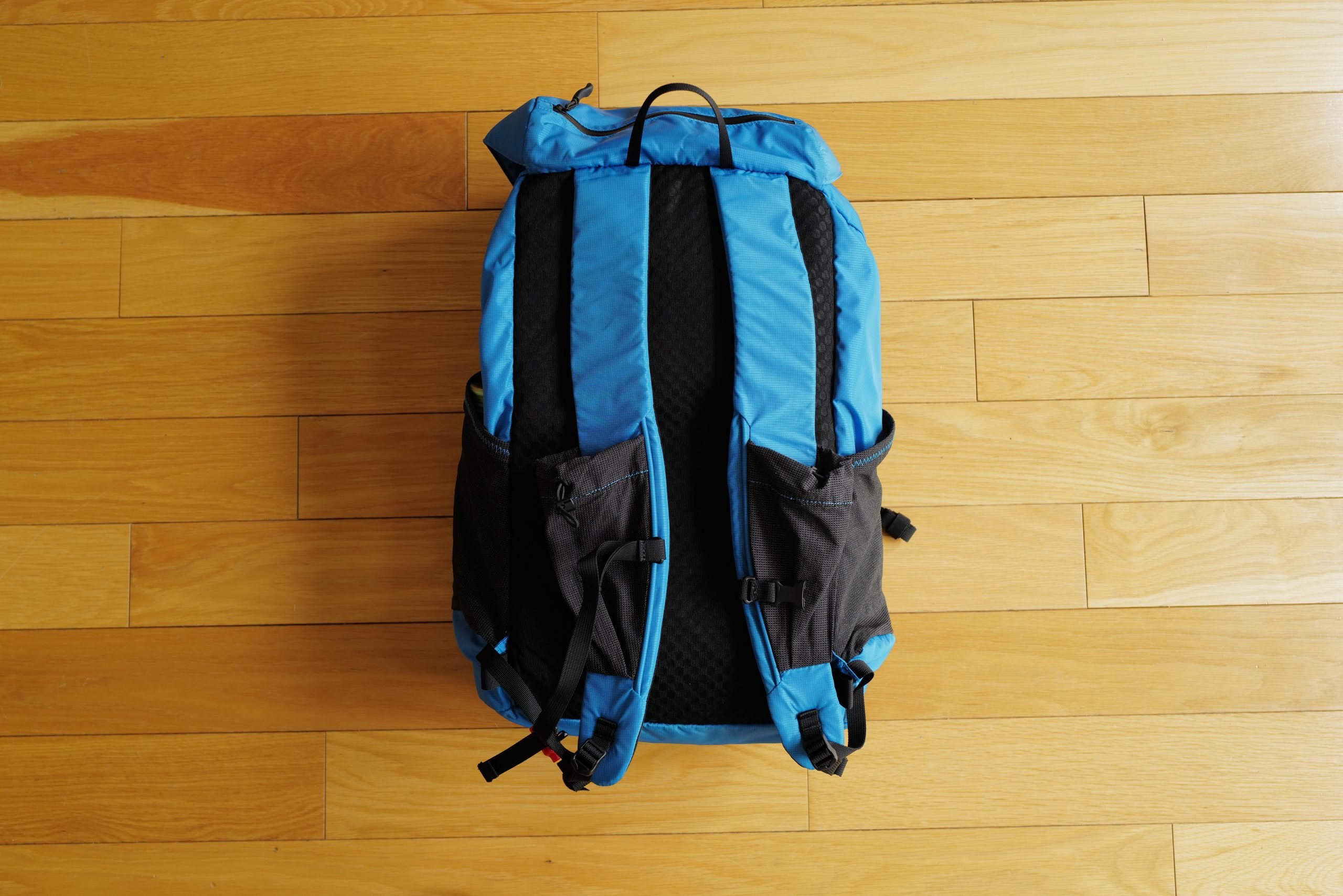
However, they also present the first annoyance I had with the bag. Given the already wide stature of the bag, on steep downgrades my arms often would swing into the water bottle pocket because of the width. I can’t even recall the last time I had this issue on a daypack. It drove me crazy on my hike.
On the everyday carry and travel front, I did attempt to load this pack up as my carryon for a flight, but it quickly became too difficult to manage given the top loader nature of the bag. I can’t fault the bag for this, but I do see this more as a hiking backpack than anything else, which is how I tested it. It’s a black hole of gear, which is largely fine for hiking, but generally annoying for travel and EDC use.
This was also my first go with a backpack that had dedicated stretch pockets on the front of the straps. I found these to be a fantastic place to keep my iPhone while I hiked. It was easy to get the device in and out, and it stayed put securely. I’ll have to start adding these to my bags — I’m a big fan. These are awesome pockets.
My load for testing was rather light at around 10lbs, and took less than a third the volume of the backpack — I added extra gear to fill it a little more at that. Because of the design of the bag everything falls to the bottom and pushes itself to fill the space (causing the bag to lose shape), and because there’s no structure, the bottom of the bag begins to bow downwards. Which means the cut of the bag may be rectangular at the base, but it ends up being an egg shape with the back panel staying flat, and the rest of the sides and bottom of the bag bulging outwards.
I didn’t have anyone hiking with me, but here’s how that looks as best I can show (that was my actual hiking setup):
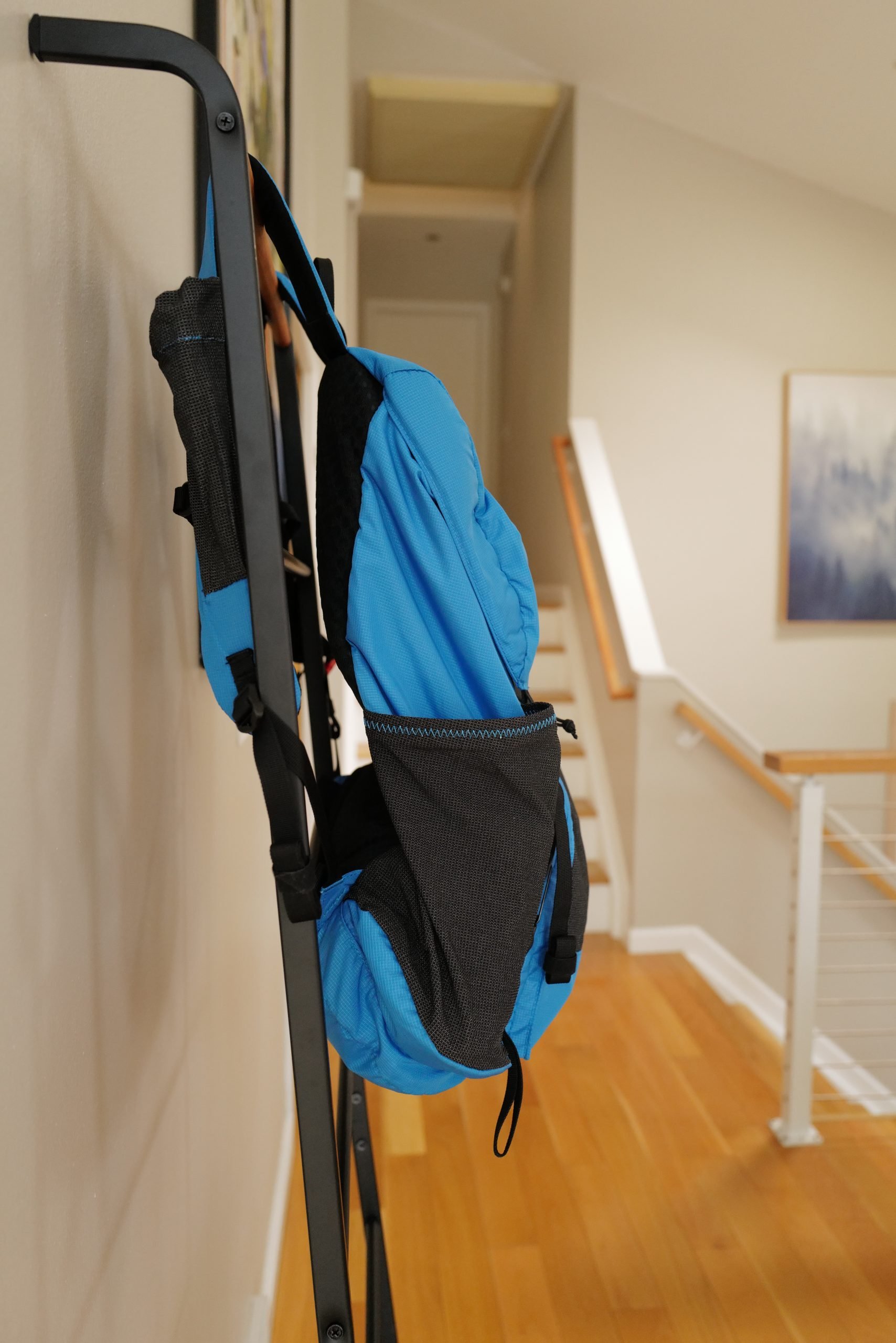
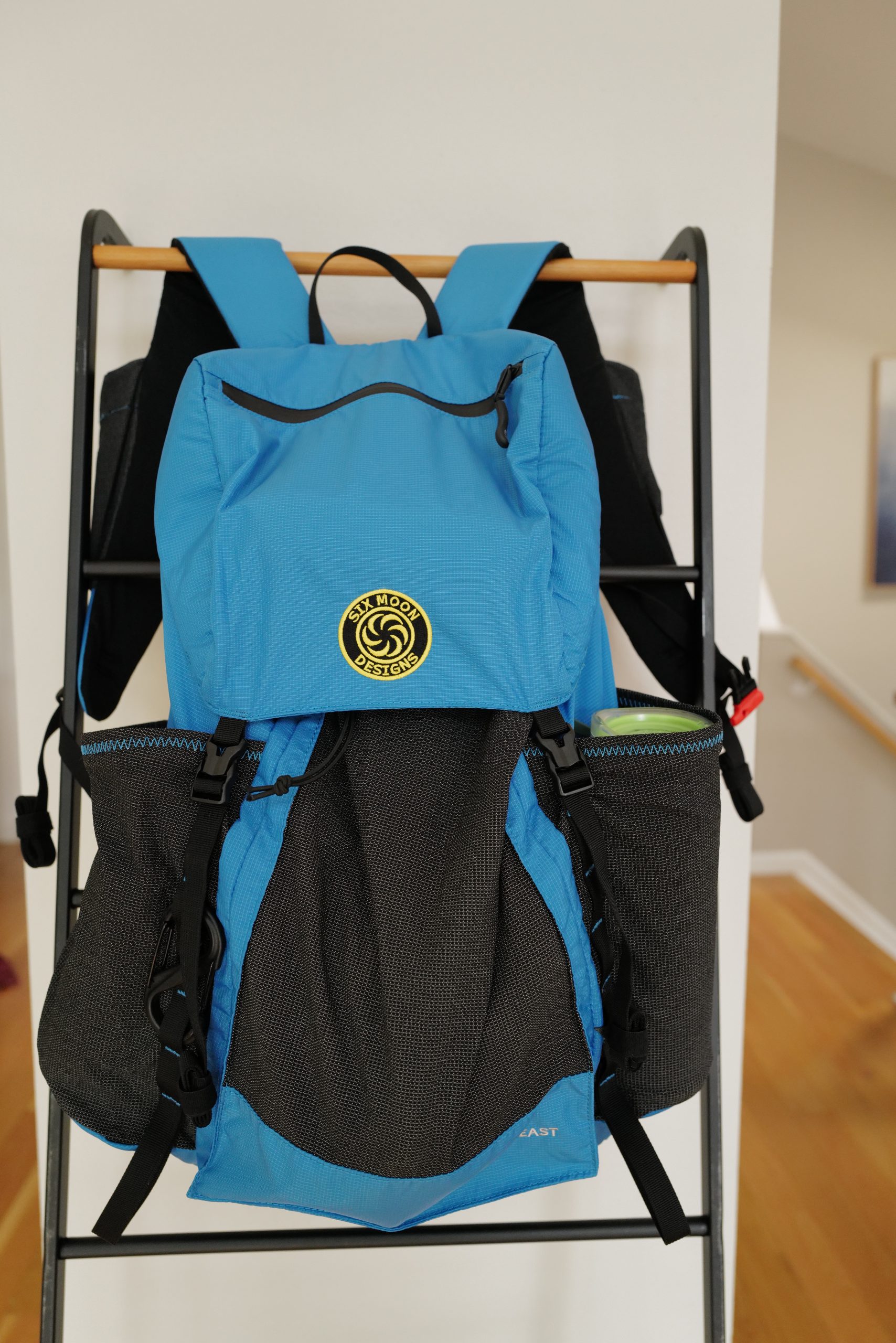
Aesthetically, this looks poor — like a beer belly hanging over some Wranglers. But that’s not the issue, this is a hiking backpack after all, the issue is that this causes two not good things:
- The weight of the bag is very low on your center of gravity. Not an issue for a light load, but it will be for a heavier load.
- It feels like the bag is constantly sitting too low on your back, no matter how tight you cinch it down.
The bag doesn’t have enough structure from the design pattern, or the webbing on the bag, to keep this from happening. It’s a tradeoff for this type of design, and this light of weight, and it’s a bad tradeoff.
I can’t review this bag beyond the single hike I took it on, as I simply do not want to use it again. That’s a shame too, because there’s a lot to like with this bag.
Overall
Those deal breakers are full deal breakers for me, and I’ll be moving on — there’s plenty of fantastic hiking packs which don’t cause these issues for me. There are two small changes I suggest to make this bag a lot better:
- Narrow the pack by 1”. This will greatly improve the bulky feeling of wearing this while using the water bottle pockets. Since the sides of the bag tend to push out, the pockets really start to stick out.
- Add compression straps to cinch the depth at the top of the bag on each side. Further add two compression straps to the very base (underside) of the pack, to keep the gear pushed back up when needed. This will help the bag gain some much needed structure, while staying light.
With those two changes, I’d gladly buy this bag to try it again. As it is, I could see this being good for someone who’s gear consists of down jackets and other light but bulky items — anything small and heavy sinks to the bottom and is hard to get to and there’s better options.