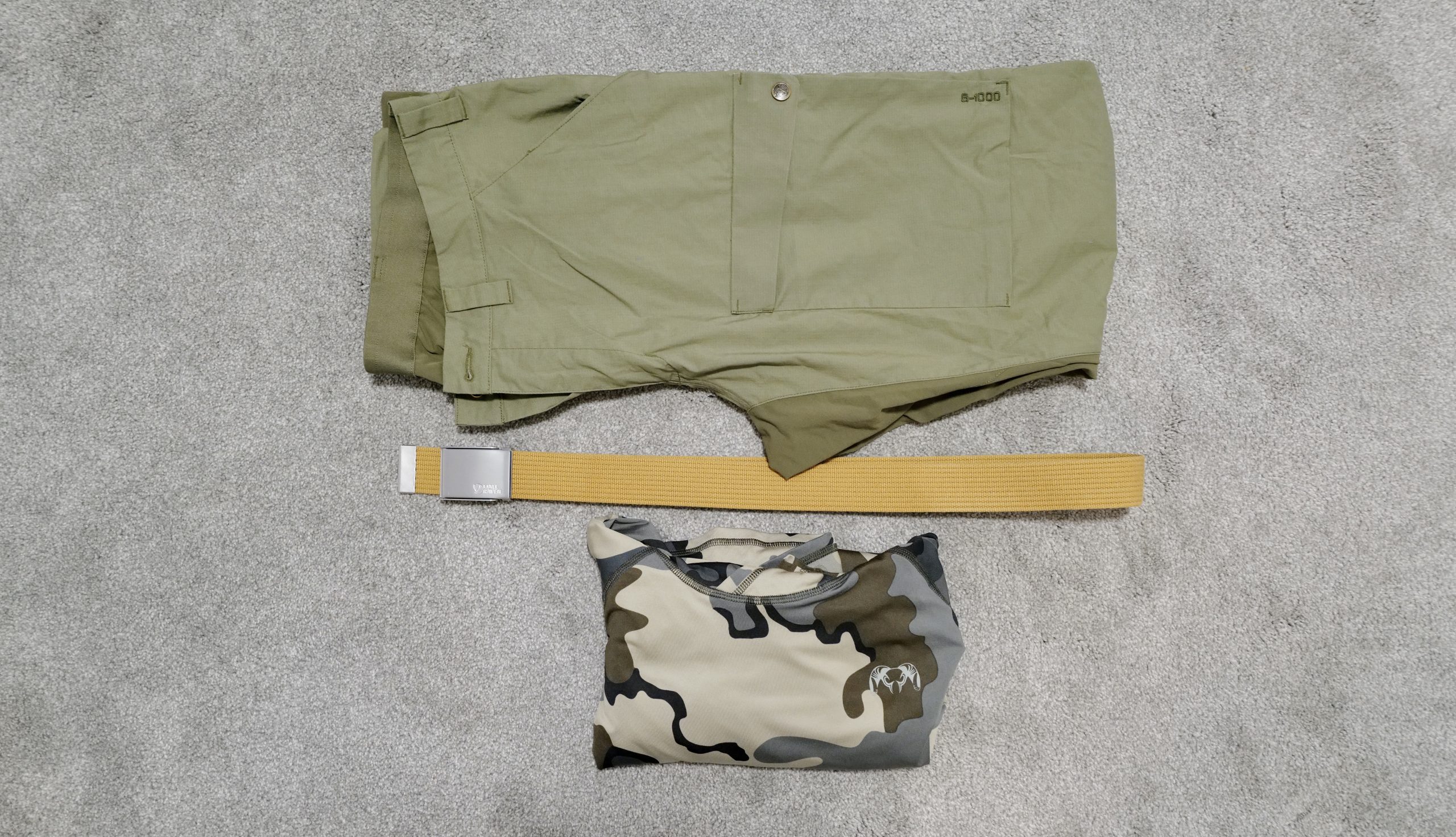
Having gone over the gear I carry hiking, I thought I would dive into the clothing I have come to like. The big caveat to all of this is that all bodies are different and what fits you well, may not fit me well — so I am going to talk both about some specific items, and some types and materials to look for. This might get long.
Also, while Colorado has cold and snow, it doesn’t have a lot of ‘wet’ — so my PNW friends this is going to be less useful for you as I very rarely need rain gear.
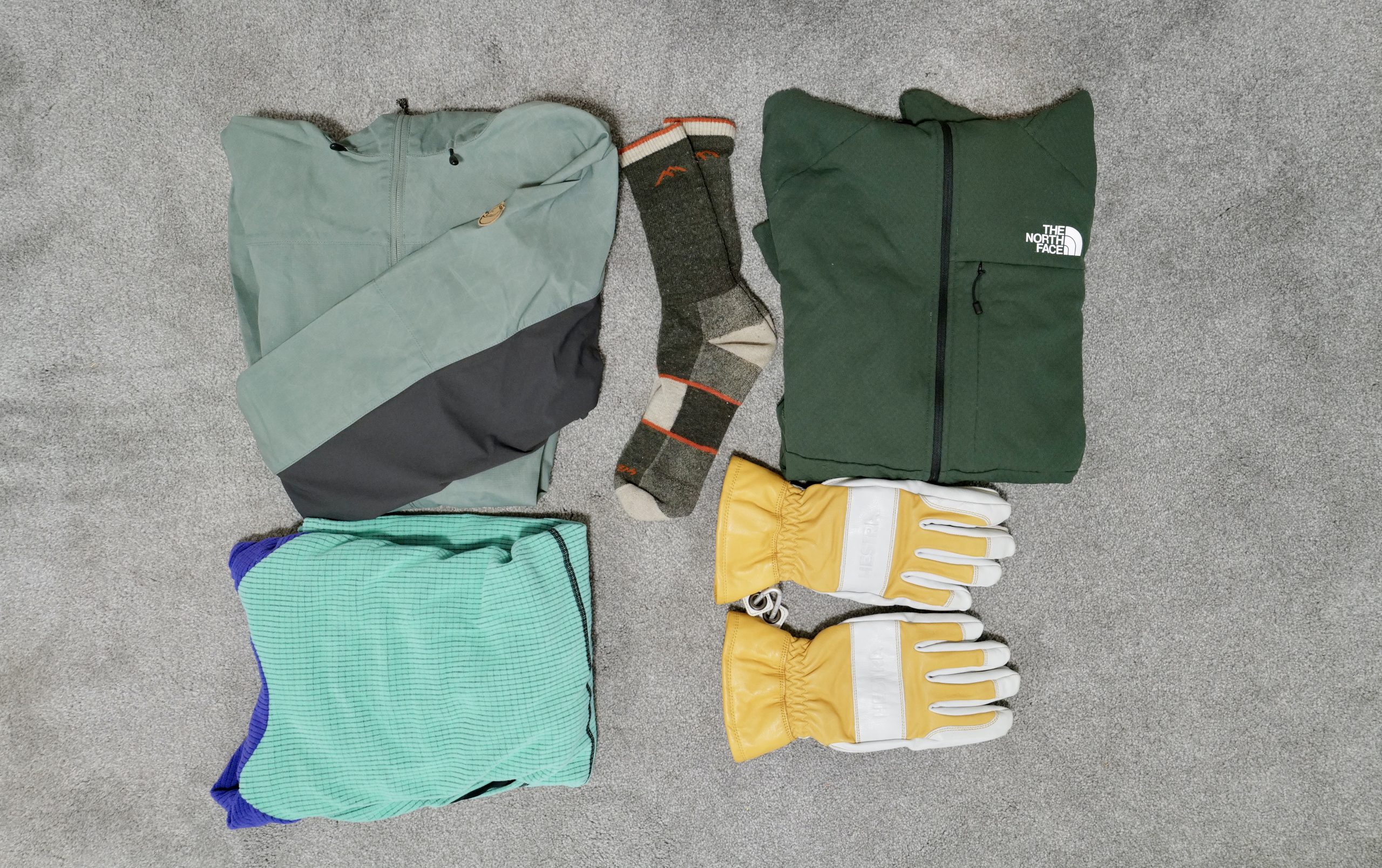
Top, left to right: Abisko Trekking Jacket; Dark Tough Socks; TNF FutureFleece. Bottom, left to right: Melanzana Grid Fleece, Hestra gloves.
Note on Brands
Let’s start by touching on some brands, as there’s no shortage of brands for outdoor gear you can wear. The spectrum is mostly about price, however in most cases, paying more only nets you better styling and sometimes more durability. Often you can get really low cost items with the same quality of materials as the higher priced ones.
At the lowest priced end, you have Columbia. Nothing is going to blow you away with their style, but their gear is really solid, with pretty average to above average materials, and on sale a lot of the time. This is the gear you’ll see my kids outfitted in the most, as it is cost effective while they grow, and it holds up. You could outfit yourself in Columbia and feel really good about it — it’s high value.
At the highest end you have Vollebak and Arc’teryx Velience, which yeah. If you can afford it, this gear is wild, and the style is just as wild. But I can assure you, you will not see many (if any) others on the trail wearing this (unless you bump into me).
Outside of those few, some thoughts I have on some of the bigger brands:
- Fjallraven: you are going to see me talk a lot about this gear, but that does not mean it is the best. It’s simply the best fitting gear for my body. If you are tall and lean, then Fjallraven is going to fit you very well. If you are not, then it’s not going to fit you as well. It’s really high quality gear, with a wide spectrum of types, and a big focus on hard use durability. I love their pants, they are amazing. I love durable items so all of that fits well for me with this brand.
- Montbell: I often tell people “this is the North Face of Japan”. If you are slim but not as tall, then this gear is going to fit you exceptionally well. It’s also some of the lightest weight gear I’ve found. Nothing I have tried from them, nor handled in the store, has been anything but fantastic. If you need a down jacket, try theirs first.
- The North Face: most of the gear from them is overpriced for what it is, except for the “Summit Series” line, which is quite amazing stuff and well worth the money. The North Face does produce nice gear, often on sale, which is designed to fit the average American well — and it does that with a touch more ‘style’ if you will than other brands. It’s a bit iconic, which is where the style aspect comes from more than anything else. This is a really good choice if you want ‘city to trail’ clothing as it blends in both places.
- Patagonia: this is perhaps the best brand to buy from, as it’s genuinely a good company. Their style leans towards “I don’t care, I don’t shower” more than anything else, but the gear is fantastic. They design their clothing to fit the average American well, and it’s generally a really good value, even if it’s not inexpensive. The materials are almost always above average, and if you live in a style-challenged area, it’ll work great in the city.
- Arc’Teryx: almost everything they sell is overpriced for what it is. That said, there’s no denying that they make some really nice stuff. The style is a little more ‘futuristic’ in design, but the materials are all high end. With most of the other brands you’ll find budget lines, with Arc’Teryx there’s not such thing as budget, there’s only more expensive lines. These clothes tend towards the trimmer, highly athletic outdoors people, in fit. They make some of the best hard shells you can get though. They are not very accommodating for the taller folks though.
- Himali: incredibly niche company here in Boulder, with a focus on high-altitude pursuits. Essentially everything they make is category leading. It’s literally tested in the Himalayan mountains and here in Boulder.
- Norrona: this brand answers the question “what if Vikings were hikers” and does so pretty well. The designs are a little more modern feeling, with enough to them that they won’t look out of place in a hiking town’s bar. It’s good stuff, made for trimmer but average height people. The pricing is slightly elevated, but largely worth it for the quality and materials offered.
- Filson: I love this brand, and I also do not think you should hike with their clothing. I mention them often, so I wanted to be clear on this one.
- Amundsen: they have some items which make for good hiking clothing, but not all. There are partially lifestyle, partially technical. They do have interesting materials, like full cotton ski clothing which is also durable and waterproof — that’s cool. They are insanely expensive. The few things we have from them are great, but they are designed for shorter people than I.
- Outdoor Research: if you want insane value and don’t care about style, this is the brand for you. Really good quality, often using materials as they come to market, but very much outdoors in style — and not necessarily in a good way. If you asked AI to dress someone in hiking clothing, then you’d see Outdoors Research gear on that person.
- REI House Brand: if Columbia gear does not fit you well, but you still want to keep the cost down, this is the brand. There’s not going to be anything terrible here, but there’s a wide variety of prices and offerings. The ‘Trailmade’ line is insanely low in price, and totally fine in quality. REI gets credit for being one of the few brands to offer a huge range of sizes, from plus sizes, tall, short, etc — there’s something there for everyone. I’ve never been wowed by anything from them, but I have never been let down by it either.
My takeaway for you is hopefully two things:
- There’s good quality gear to be had at any price point.
- There’s brands to fit all different body types.
Outside of the major brands are tons of small shops producing very niche products, largely related to mid-layers with grid fleece and alpha materials. I’ll vouch and advocate for Melanzana among that lot, but it’s not the easiest to get that gear. Garage Grown Gear is simply a fantastic place to find some of those makers if you want to shop small.
Long versus Short Philosophy
Alright, down the rabbit hole we continue to fall, I want to talk about two general hiking clothing setups you can have. The first is fully covered, or what I call ‘long’ — you wear pants and long sleeves, even (especially?) on the hottest days. The other side is the ‘only what is needed clothing’ type, or ‘shorts and t-shirts’ type of folks (though typically not on the cold days, but sometimes).
Most people I encounter firmly believe you cannot be as cool in long sleeves as you can in shorts. Which isn’t actually true. But, also isn’t the point.
The point is sun protection, and avoiding skin cancer. The secondary point is avoiding ticks and Lyme disease. You gain an advantage in avoiding both of these, by covering more of your skin and hiding it away.
Because of this, most everything I recommend below is going to be a part of the long philosophy I hold. I hike in pants and long sleeves in 90°F heat, not because I am magic, but because if you do it correctly, you won’t be missing your short sleeves. However, please wear sunscreen, it matters — especially on your nose, ears, and back of your hands.
Materials Talk
I am not going to go super deep on materials, but I think there’s some important points to hit here. And understanding materials a little, will help you spend your money far more effectively than it otherwise would.
Let’s first talk about some ‘features’ of different materials:
- Moisture wicking: this is what matters for both cold and hot climates, it’s about moving moisture from your body to the surface of the garment so that it can evaporate. This keeps you feeling cooler in the summer, and reduces the risk of hypothermia in the cold.
- Odor control: this is not about making you smell good. This has more to do with how long you can wear something before the odor is gnarly. Some garments will cause you to stink really fast, others not so fast. But no garment will forever resist stinking, that’s a lie. Remember that if you can smell you, then you have been smelling to others for quite some time.
- Thermo-regualtion: usually a two fold deal, the first being a factor of moisture wicking, and the second being whether or not this item can still insulate you when it is wet.
- GSM: a USA based metric for how thick/heavy the material is. Heavier is generally warmer.
- UPF: how well it resists the sun, more the better.
- Bug/Insect Resistance: there’s two types here. The normal type is that the item has been treated with something that repels, or kills, insects when they contact it. Either way, these all wash out over time and fade. The second type is typically about keeping biting bugs from being able to penetrate easily through the fabric, but that’s far less common.
I ignore everything except for UPF, and how well things wick moisture — the rest of it will be trial and error for what works with your body well.
Ok, let’s talk about some popular materials or brands of materials so that you have a baseline when shopping (this is not meant to be comprehensive):
- Polartec: as company, they lead the pack when it comes to high end fabrics at competitive prices. They have a massive range of materials, but if deciding between two similar items and one uses Polartec, and the other does not, choose the Polartec. That rule of thumb will serve you well.
- Schoeller: as a company they make some really amazing materials, but you’ll pay more for it in general. That said, it’s specialty stuff and largely great no matter how nuts the composition sounds.
- GoreTex: they’ve been challenged by a lot of others out there, but it’s all I would pick if I were hiking in areas where it was constantly damp/wet. But there’s many levels and types of it these days.
- Fleece: this is an all encompassing term these days, but I will say that wind stopping fleece is the superior fleece of fleeces.
- Alpha: there’s some variants of this (North Face has ‘FutureFleece’) but largely this is PolarTec Alpha Direct when the term ‘Alpha’ is used. This is a very open looking shaggy fleece material. It’s designed to keep you warm when you stop moving, but breathe so well such that you don’t need to tear it off the moment you start being active. It also weighs very very little. It’s magical, but not as durable.
- Grid Fleece: this is the middle ground between traditional fleece and alpha fleece. Higher breathability, more durability, slightly heavier, but also a little warmer in equal levels of weight material.
- Cotton: most people have either never heard that you should never hike in cotton, or are scared of hiking in cotton as they think instant death will occur. But I hike in cotton all the time, because if done well, it’s an amazing material. I don’t hike with cotton in rain or cold temps, but you can utilize cotton if you are smart about it. This is a deeper topic for another time.
- Ramie: this is like linen, but for hot and humid climates. When this material gets wet, you actively start feeling cold from it — it’s wild. Which makes it very dangerous to hike with in anything other that pristine hot conditions during the hot day hours only. But, if you do that, it’s pretty rad.
- Merino Wool: you’ve probably heard this is magic material. It’s not, but it’s quite good. Warmer than synthetics by a touch, but exceptional in the winter.
- Alpaca Wool: take merino, and make it better for specifically staying warm, that’s Alpaca. Expensive.
- Polyester: the most common material you’ll see in most hiking clothing. It can be good, and it can be trash. Some of it will make you smell awful the moment you start to sweat. Some of it will feel nearly like cotton. It’s the widest spectrum of quality on this list and almost impossible to know what you are getting from specs alone. That is, unless, it’s from Polartec or Schoeller.
- Nylon: take polyester and make it less soft, more durable, but more willing hold odors. That’s nylon. Excellent when paired with another material to make other stuff more durable.
- Down: feathers to keep you warm, but not when they get wet or when they are compressed. Insanely lightweight to warmth ratio with excellent packing compression. Expensive, some ethical concerns for some people.
- Synthetic Down: fluffy cotton candy looking synthetic shit to keep you warm even when it gets wet or sometimes compressed. Not as expensive, widely varying in quality, and heavy and less compressible.
- Aerogel: a specific type of synthetic insulation that really is magic. Warm when wet or compressed, breathes well. Light weight. Stupidly hard to find.
Like I said, quick hits only, just a primer.
My Favorite Clothing
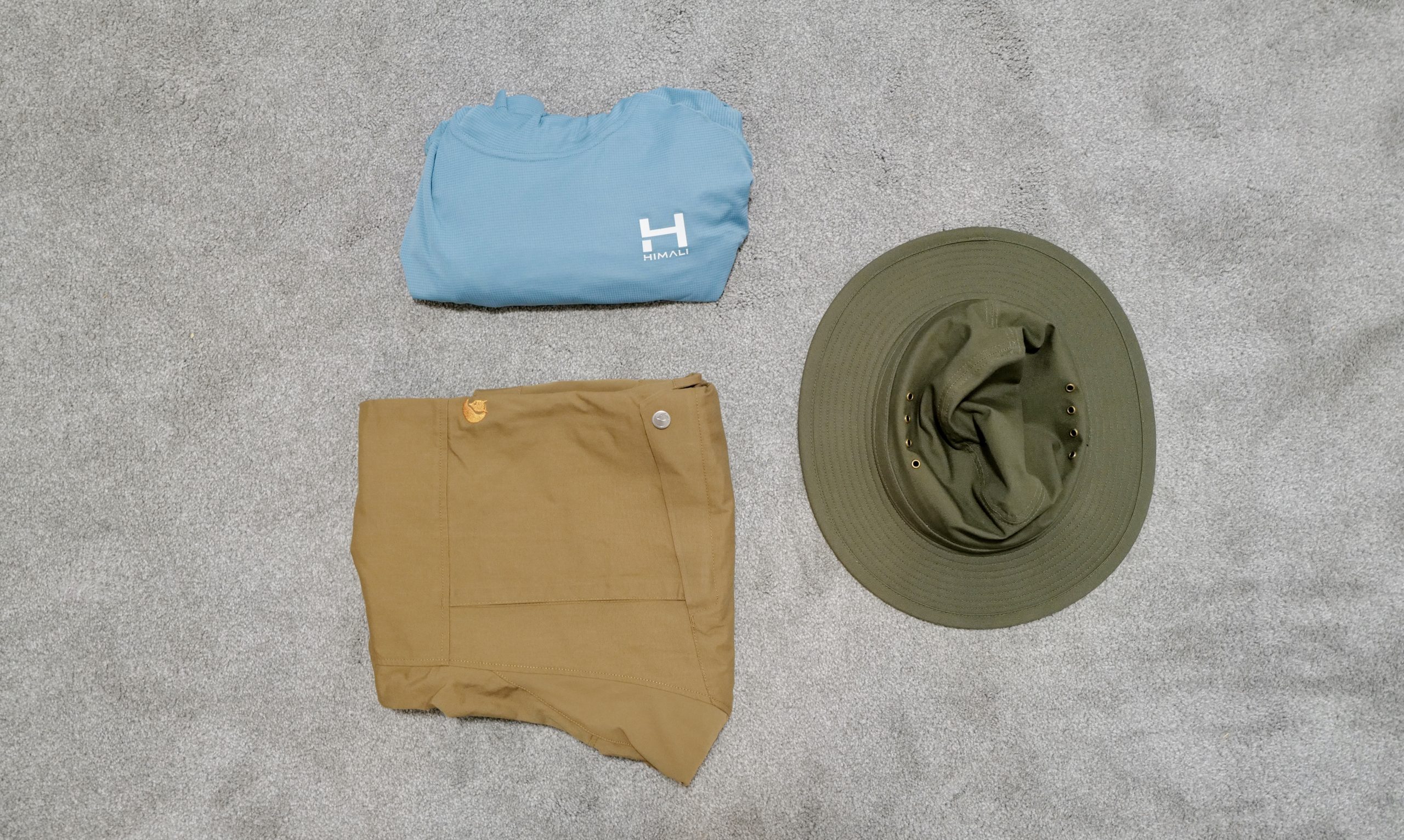
Top: Himali Eclipse hoodie. Bottom left: Fjallraven Singi-X. Bottom right: Filson Summer Packer Hat.
Ok, I change this around based on season, so I’ll group it by seasons, this is only my top favorite items (if I had to pick one) as of this writing:
Winter
- Fjällräven Abisko Winter Stretch Trouser: great cut, and they were all I needed in about 25°F weather, snowy conditions. Under harder strain, I’ve worn these down into the teens, but you’ll get chilly fast when you stop if all you have on is these.
- Melanzana Grid Fleece Hoodie: there’s a serious amount of hype behind this brand, and it’s warranted. I don’t know how, but this is the best fleece I’ve ever worn.
- Minus33 Merino Long Sleeve T-Shirt: near perfect base layer for the winter months.
- Darn Tough Hiking Socks: full cushion, durable, wool, excellent.
- Fjallraven Canvas Belt: I tried a lot of belts before this one, but this is the one.
- Hanwag Alaska Boots GTX: these don’t have insulation but they are so stout that they might as well. I wear them when it’s cold and I love them. They make my feet feel invincible.
- Filson Insulated Tin Cloth Packer Hat: this is so great, still good sun coverage with the brim, good rain/snow protection, but you have insulation and ear flaps. This works so much better than my beanies for the cold.
- Hestra Falt Guide Gloves: I tried half a dozen or more gloves to find something where my pinky would stay warm on 8°F days shoveling snow. These are the ones for that. Hell yes, these are amazing.
- Fjallraven Skogso Padded Jacket: very warm, durable, and designed to be comfortable with a pack over the top of it. There’s not been too many days where it was actually cold enough to wear this, for perspective. The internet doesn’t love this, but I think they are wrong.
Fall & Spring
- Fjallraven Singi-X Trousers: another one the Internet doesn’t love, but I love these are so does the Fjallraven staff. They are a very ideal weight for the shoulder seasons of the year.
- The North Face Future Fleece Hoodie: you can talk about Alpha all you want, but this is better than Alpha. It weighs next to nothing and is insanely comfortable. I often keep it in my pack even on the warmer days, just in case.
- Triple Aught Design Alchemy Half Zip: this is made from Polartec Delta, and it’s really great. Thin with just a touch of warmth, while still being breathable. It has developed a hole I repaired because of how much I wear this.
- Darn Tough Hiking Socks: same socks, same reason.
- Hanwag Boots: these are also waterproof, but a little lighter all around. They have a pretty stiff platform and a really good sole on them. Comfortable and I am coming back around to hiking in boots. They really save my ankles and toes on steep descents.
- Fjallraven Canvas Belt: same belt, same reason.
- Filson Tin Cloth Bush Hat: this is a really stupid looking hat when you wear it, but I love it. Massive brim, stiff, a little warm, but I feel awesome when I wear it. Then I see a picture and I know I look idiotic. Such is life.
- Fjallraven Abisko Trekking Jacket: this is a smartly designed jacket for keeping the chill off. It has G-1000 as the primary material, but then along your back and other areas is a stretch weave material. Which means it breathes well, works great with a backpack, but the areas exposed are blocking wind and such. Clever.
Summer
- Fjallraven Abisko Hybrid Hike Pants: Most people are going to say these are too warm for the summer. And they are warmer. Basically the front facing panels are a G-1000, where the rest of it is an air grid setup. This keeps the high wear areas durable, and everything else breathable. They have vents on the sides, which actually work very well to cool you off. I wouldn’t want to wear these in 90°F+, but they are just fine for 80°F days.
- The North Face Future Fleece Hoodie: same hoodie, same reason.
- Himali Eclipse Sun Hoodie: literally the best hiking top you can buy. This thing is tremendously good.
- Darn Tough Hiking Socks: same reason as above.
- Fjallraven Canvas Belt: same reason.
- Filson Summer Packer Hat: this is the best hat I’ve found for sun, I travel with it too. Smash it, then pop it on, it regains its form. It’s also cotton, so it looks a lot better. I keep thinking I’ll find something better, but I won’t. This hat is the best.
- Nike Zegama Trail Runners: these are the best Nike’s I’ve ever worn. They also excel on trails. Damned perfect.
- Triple Aught Design Astral VR Jacket: go to rain layer, I’ll use it any season, but tossed it on this list. Weighs nothing, takes up no space.
I am stopping myself there. Have a great hike.