If Google’s I/O conference taught pundits anything it is this: Google is out to hurt Apple. Gone are the days when Google and Apple would band together to fight the common enemy of Microsoft. Microsoft isn’t even a thought in the minds of these two giants anymore. They have their sights squarely focused on each other. This is the last scene of a bad action movie, the two opposites had joined together to defeat a larger villain — now that the villain has been defeated they turn on each other.
Just like in the movie, this is when the good stuff starts to happen. The original Mac forced Windows, Wordperfect forced Word, iPhone OS forced WebOS and Android. An increase in horsepower from BMW leads to more horsepower from Audi and Mercedes. This is competition at its finest — this is competition that benefits the consumer.
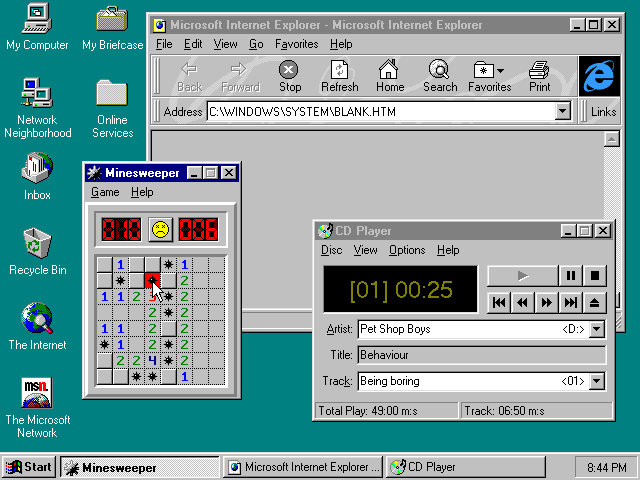
There was a time when I thought Mac users were pathetic — Mac OS 9 looked like crap compared to Windows. Then I got a glimpse of OS X 10.1 and I saw something that was finally better than Windows. There was a time when I sung the praises of PalmOS and RIM’s OS — then there was the iPhone, and the game changed.
Competition is the common denominator in all of these changes. Microsoft knew that DOS was dead when they saw the Mac, so they pushed and innovated. When the iPhone was announced in 2007 a story would pop up just about every week announcing that so and so was creating a new ‘iPhone Killer’, it’s 2010, where is it? Contrary to what most would think, each time I read about an ‘iPhone Killer’ I truly hoped that it would be just that because:
- The iPhone is so good, I would love anything that improved upon it.
- Better competition leads to more innovation.
What this means for Google
I started this whole post to talk about Google and Apple, not to give history lessons — so what does all this have to do with Google? It has a lot to do with Google, they are now stepping up to the plate trying to challenge Apple the same way that incumbents have been challenged in the past. Every example I have shown above was how the incumbent was eventually knocked back (sometimes regaining later), here we have Apple with the iPhone as the incumbent — but can Google knock them back? I am not so sure they can.
This has nothing to do with design and everything to do with hype and marketing. This is where the mythical ‘Reality Distortion Field’ of Steve Jobs comes into play. It is even more than Steve Jobs though, it is a face, an image — a brand. Apple has it and Google doesn’t.
Walk into a room of normal Americans and say the name Steve Jobs, they will know it. Say the name Bill Gates, again they will know it. They may not know exactly who these people are, but they will know the name. Now say the name Eric Schmidt, Larry Page, Sergey Brin — I doubt that 20% of the people in the room will know these names. Normally this isn’t a problem for companies, but in Google’s case they really need this recognition, they have three leaders — and nobody knows them. When nobody knows your leaders, nobody listens to them — you lack charisma, you have no ‘Reality Distortion Field’.
Google’s Challenge to Apple
Google is running with the open source guys, pushing all the features that users say they want and doing it on a wide range of Android devices. If Apple says that they won’t do it (Flash), Google quickly does it. Google is in a people pleasing mode — a dangerous mode to be in. Instead of doing the normal routine of copying all the good and improving upon the bad, they are copying as little as possible and barely improving upon the bad.
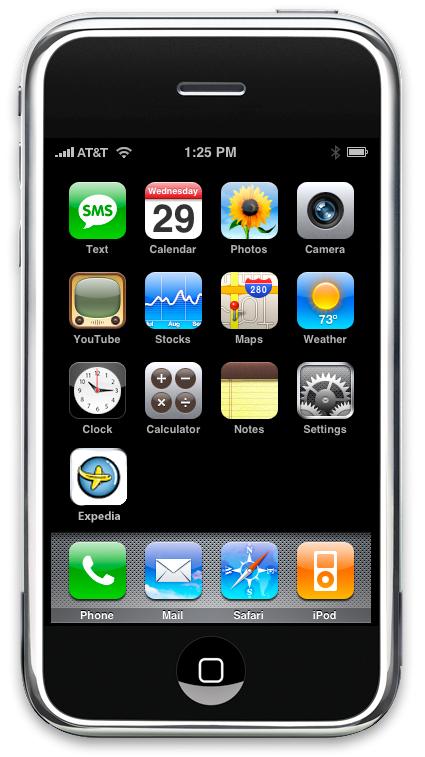
One look at the home screen on the iPhone versus the home screen on an Android phone tells the tale. One looks modern and sleek, the other looks a bit clunky. It is clear which company values engineering more than design. Google has implemented an impressive amount of features and is building quite an App store to compete with Apple, and yet I still think they will fall short.
Google is Missing the Point
As it stands today Google will not and cannot beat Apple with their current strategy. Google is truly missing the point, it is not about features, design, price, openness, flexibility — it is about one thing: User Experience.
This is what SanDisk failed to realize when they tried to compete with the iPod (by all accounts the Zune was decent — just late to the party). People didn’t want expandable memory (even though they complained that they wanted it) — people wanted all their music with them. People wanted better playlists (thank you iTunes) that they could retrieve on their iPods. No one at SanDisk seemed to understand this — now they are good at selling flash memory for cameras.
Google, like SanDisk, is still missing the point that people don’t want all the features they say they do, they just want something that works, and is a pleasure to use. The lack of Flash, the overbearing approval process for iPhone Apps, and the AT&T network are all things that the iPhone lacks. Yet it still is killing Android because you can’t compete with the ease and reliability of the phone that Apple has brought to the table.
User Experience and Grins
The way I like to think about user experience is based on grin factor. Back in 2006 my father bought some new Sea Doos for the lake that he lives on. I, being his son, got to drive them first — they were brand new models with a staggering 215hp on a machine 10’ long. I hit the gas and went from less than a mile per hour (you can’t be standing still on one) to 70 mph in less than 3 seconds. That is scary fast, yet I was grinning with the excitement of a child the entire time.
JUNE 2007
I opened the box and pulled out the sleekest phone I have ever seen, it wasn’t activated, but I still grinned, that same Sea Doo grin, just sliding the unlock slider back and forth. Tapping keys and veiwing the internet smaller than I ever want to view it, yet I relished every second.
JULY 2007
I am checking my email, in the Bahamas when I find my self surrounded by wait staff. They had never seen the iPhone, they had heard about it, but it was not on sale internationally yet. I reluctantly passed it to the waiter and watched as his teeth and those around him lit up the room. They didn’t do a thing on the phone except stare at the screen dumbfounded, amazed.
JANUARY 2010
We all watch Steve Jobs sit on stage and show us his newest creation, the iPad. We are watching a billionaire surf the web, news websites, and we all watch as a grin flushes his face.
APRIL 2010
I opened the box and pulled out something hailed as a revolution, I was jet lagged and yet a grin shown across my face. How could something so simple, inflexible and underpowered be so damned amazing.
I arrived at my office and set my iPad on the desk. The biggest Apple hater in the office came over and asked to see it. I pulled up a racing game (knowing that he races cars for a hobby) and watched as a grin spread from ear to ear — even while he was crashing into every wall.
TODAY
Google has absolutely nothing in their product arsenal that gives people that grin factor. Wave was supposed to, but it turned out to make people even more overwhelmed then they already are. If Google wants to start a real war with Apple they will need to start with grin factor.
Finding the Grins
The question then becomes can Google get the user experience right, and if so, how? Google absolutely can get the user experience right, they already have with Google Maps and Google Earth — what a great set of tools to use. I love street view and flying around in Google Earth is always a lot of fun.
Google needs to add that fun into their Android phones. They need to make a mandate the carriers offer free OS upgrades on phones for two years after they are purchased, making sure that all of their users get the latest and greatest. Further, and more importantly, Google needs to stop worrying about what users want and start making things that users truly want.
Huh?
If you look at what the iPhone offered in 2007 – as a smart phone Windows Mobile had the iPhone out matched (so did Palm and RIM to some extent). Yet the iPhone took off. It took off because even though every other ‘guy’ had a web browser on their phone — no one had Mobile Safari and the amazingness it brought to mobile web browsing. No one had beautiful threaded text messaging — something that if you had asked a user if they wanted it pre-iPhone they probably would have shrugged it off and said “I guess.”
The iPhone of 2007 had visual voicemail — the fact that voice mail is a huge pain in the ass wasn’t even a factor in deciding which phone to get, until the iPhone came out that is. Before the iPhone it was more common for someone to not have a data plan on their phone then it was for them to have one — let alone an unlimited data plan.
Before the iPhone did you think that you would ever want a phone that didn’t have an answer and hang up button on it? I didn’t. Yet lacking those buttons have never tripped me up during the past 3 years.
Google Needs to Think
And by that I mean they need to stop engineering and start thinking about the usability of all their products. They need to find their visual voicemail moment with Android — that is they need to fix something that annoys everyone, even though they may not know it.