Category: Articles

  • Black 5 and Nicking

    I’ve only not purchased a white iPhone two times: the original which came in no colors, and the iPhone 4 because the white version was massively delayed. With the 5 though I went with the black model, simply because the painted aluminum was far more impressive looking than its white counterparts non-painted surface.

    [Dan Frommer wrote](http://www.splatf.com/2012/09/iphone5-firsthour/):

    >Biggest disappointment so far: The “slate” metal edge seems really delicate. Look, it’s already scratched and nicked, just from a light fall — pretty ugly. I never dropped my iPhone 4 or 4S.

    I’ve seen others confirm this too. And, after only having mine for 30 minutes, I too had a nick in the aluminum that shines bright silver. I nicked it right on the edge, and I can’t think of a single thing I did to cause that.

    Aside from the edge, no scratches or nicks anywhere else. So my best guess is that this is a problem with the sharp (it won’t cut you) edge, just as a sharp edge on wood won’t take a stain, I think we have a similar issue here. Where the very acute angles on the outer aluminum band didn’t take the black treatment as thoroughly as the rest of the aluminum leading to a weak point in the design.

    I’m certainly not mad about it, but I am disappointed that I couldn’t even go a day without nicking this new phone.

    All of this to say, if you haven’t bought one yet — I’d seriously consider the white model, that’s what I would get if I could do it over again.

    **Update** (September 23, 2012): I have been told be several people I trust, that Apple is replacing damaged units at no cost and that they are swapping colors from black to white if you wish. Personally I am sticking with the iPhone I have because the buttons on it (home, volume, power, mute) are all perfect and I’d hate to get a lesser phone when I switch — [which has been known to happen](http://hypertext.net/2012/09/iphone-5-fragility).

  • Tip for Journalists

    If you want to be a “fair and balanced” journalist, I suggest you add a TextExpander shortcut that changes “Motorola” to “Google’s Motorola”.

    Why?

    Because if it was an wholly owned subsidiary of Apple, you wouldn’t even bother writing any company name other than Apple — you know, fair and balanced as you are..

  • Paywall Update

    Just a quick update to let you know about a couple new things with the paywall.

    1. I’ve added the ability to subscribe yearly instead of monthly — doing so will net you 2 free months as the yearly subscription is $40/year versus the $4/month monthly subscription. I view your payment for a full year with the time value of money approach and thus it makes sense for me to discount your pre-payments for a year’s subscription. Additionally current users can change their plan by going to https://brooksreview.net/join while logged in and entering their credit card data and choosing the new plan — be sure to cancel your monthly plan first. Get in touch with me if you run into any issues and I can correct those for you right away.
    2. Receipts and payment failure emails. The paywall was launched without members getting a receipt of any kind — this also meant they received no notification if a payment failed. Both of these have now been corrected and you should receive notices as necessary. Sorry that this is increased email, but it’s better than no notice if you ask me. (We’ll see if Google marks these as SPAM too.)

    That is all the housekeeping for today. Thanks to all of you that are members, and if you aren’t but want to know what it is all about — [take a look](https://brooksreview.net/members/).

  • Looking at iPhone

    This morning I was thinking about the iPhone 5 that many of us would soon have in our hands (if not already) and I had a funny thought: I wonder if anyone who bought the original iPhone, on day one, still uses that phone? And if so, I wonder what it looks like…

    [I’ve seen pictures of a well worn original iPhone back, but that was *so* last year](http://designmind.frogdesign.com/blog/aged-to-perfection.html), what does it look like now?

    All of this got me to thinking about the evolution of the iPhone and how stupid it is when people say that Apple didn’t release impressive features, because looking back at it the most impressive features made for the least impressive demos.

    Let’s look at a few of those features.

    ### The Home Button

    The simple home button. Pre-iPhone if you had told me that there would be a phone with only one button to control the UI with — I would have said: “good luck with that”. Pre-iPhone just one button for UI control was a ridiculous idea, post-iPhone more than one button seems downright complicated. Just watch a long time iOS user (has iOS been around long enough to say this?) try and figure out the Android back button and right there you see why the home button is so powerful in its simplicity.

    So while the home button was pretty boring demo material, it has stood the test of time and proven itself as a damned impressive feature — if not an industry shaping feature.

    ### Oleophobic Coatings

    Inventing a new screen coating that doesn’t eliminate fingerprint smudges, but that does reduce them, is also inventing something both difficult to demo and at the same time risky to demo. It’s not impressive to show a phone that gets *less* fingerprints in the same way it would be to show one that gets none. Yet the oleophobic coating Apple has been applying to iPhones and iPads is nothing short of fantastic.

    Any pre-oleophobic iOS user can attest to not only how smudged screens used to get, but more importantly how difficult those screens were to clean. I used to clean my iPhone 3-5 times a day before this coating.

    Now it’s a rare event to clean it, most of the time just the lining of my pants pocket is enough to keep the screen reasonably clean. So yes, it took Bill Nye “The Science Guy” to explain Apple’s feat on CNN, but then again we don’t need to know how it works to appreciate it. We also don’t ever need to think much about how clean our iPhone screens are.

    ### Mobile Safari

    Of these three items though, Mobile Safari is handily going to go down as one of the best features of the iPhone, period. When demoed we thought: “Hey, that looks great.” But in reality the demoes were fairly boring, because watching someone surf the web with ease is typically a pretty boring affair.

    What I think none of us realized at that time was just how altering having a powerful, stable, web browser on our phones would be. For instance I don’t remember bars being particularly worried about people searching for answers on their phones pre-iPhone, but now it seems that an announcement is made every time. A small anecdote for sure, but a telling one nonetheless.

    This web browser not only changed the way users use their phones, but the way the web is designed.

    ### Go Ahead and Whine

    So go ahead and whine about there not being “significant” updates to iPhones — you whine about it every year — but just keep in mind that a year from now things you thought were trivial in the iPhone 5, just may change the mobile world we all live in for the better. Just like the home button, oleophobic coatings, and full-featured mobile web browsers did before.

  • Thoughts on Switching to Verizon from AT&T

    With the iPhone 5, I’m switching to Verizon. I’ve been an AT&T customer since I got my first cell phone circa 1996, and have been loyal to them the entire time, but their lack of actual LTE in my area and insistence that their “4G” *is* 4G [just pisses me off](https://brooksreview.net/2012/03/marketing-bullshit/) so this time around I am going with Verizon.

    I have a few varying thoughts about this, so I thought I would share them here.

    ### Simultaneous Data

    The Verizon iPhone cannot do simultaneous data (where you talk on the phone and use the internet). This sucks, because even though it is not a feature I use often, it *is* a feature that I do use from time to time. I have a ton of questions about this, but the biggest of them is: what happens when you are using turn-by-turn navigation, get a phone call, and need to keep getting directions?

    I have no clue what the answer is, but I hope the answer doesn’t suck.

    ### Non-LTE Speed

    LTE speed on Verizon is fantastic — my iPad is a Verizon LTE iPad — but non-LTE speed on Verizon is no where near as fast as AT&T’s speeds. So the gamble I am taking is that LTE will be expanded fast enough that the times I am not on LTE are far and few between (I hope I am right).

    The flip side is that AT&T actually gets going on rolling out LTE and covers my area faster and better than Verizon — however I think history has shown that staking Verizon is a smarter play.

    ### AT&T Hates Its Users

    I’m more and more convinced that AT&T is greedy as hell and sees the need from its customers for better features and more data as their number one threat. They drug their feet with tethering, and now they sound like they are dragging their feet with FaceTime over 3G/4G.

    While I doubt Verizon is much better, they do seem like the lesser of two evils right now.

    ### Tethering to an iPad for LTE

    A few people have mentioned that they would get an AT&T iPhone and tether to their Verizon LTE iPad when they need LTE speed. I’m going to call bullshit on this one.

    It’s a great idea, but highly impractical. I’ve had that setup now since the iPad (3) came out and have yet to do it once, despite several times when I could have actually used the speed boost. I always just switched to the iPad instead of tethering. I would guess that most people would just switch devices too, rather than tether if they had both with them — it just makes more sense.

    Honestly though, the times that I need the LTE speed on my iPhone are also the times when the iPhone is likely the *only* device I have with me. It’s a convenience factor and I am willing to sacrifice things to have that.

    ### AT&T Family Plan

    Right now my wife and I are on a family plan, and my number is the primary account number — I do wonder what happens when I switch to Verizon. To be safe I am going to call in and try to switch our accounts to separate accounts without signing a new contract — if I can’t do that I will try to assign my wife’s number as primary. Either way I suspect this will be a huge pain in the ass.

    ### Friday

    I’ve no clue how this will all shake out on the 21st, but I’m hoping it goes better than the 4S launch — that was a fiasco for me.

  • Apple’s Brand is Intertwined with iPhone Cameras and Microphones

    While reading the live-blogs for Apple’s iPhone 5 event, I stopped to think about why Apple continues to improve cameras and microphones in the iPhone — and not in little ways, and certainly not in cheap ways. It occurs to me that perhaps Apple improves these factors because they are one of the most outward facing images of Apple’s brand that potential consumers will see.

    In other words: People share photos, and Apple doesn’t want photos from their iPhones looking like crap. Likewise the owner of iPhones don’t really notice better sounding microphones, but the people on the other end of the call *do*.

    So my theory is that Apple wants consumers to always think things like: “Man you can really tell when someone is talking to you from an iPhone — they sound great.”

    Apple wants this as it’s a fantastic boost in value to their brand and something that sticks in your head when you go to buy your next phone.

    The iPhone camera — and it’s popularity on Flickr — is evidence of the power that the quality of the photos taken with iPhones must be good. Apple’s been very good at not focusing on jazzy features for the camera, things like higher megapixels, instead Apple improves the camera in the spot that cameras are weakest in: low light.

    I bet most of you have had this scenario happen to you:

    – You show Uncle Bob a great photo you took.
    – Uncle Bob loves it, and asks: “What kind of camera you have, Neb?”

    Apple wants you to answer, with pride, “an iPhone”.

    Because in the consumer mind it’s not the photographer, but the camera — so if Apple makes the camera really great at the really tough photos, then people will notice and ask the same question Uncle Bob asked. Apple wants to be your answer.

    And consumers will remember this the next time they buy a phone: “Neb’s iPhone takes such great photos, I haven’t seen any photos people take with the `Samsung EEw577 S™ REPPPER`, so maybe I should get the iPhone.”

    The photos you take with your iPhone are, themselves, a lasting marketing tool for Apple to sell more iPhones — so it only makes sense that they spend so much time improving the camera with each version. ((A bit of anecdotal evidence I had never given second thought about, is that my Wife will often say: “Can you take the picture with your iPhone, it takes better pictures.” My wife is always one generation behind with her iPhones.))

  • Ridiculous Statements from the Tech Press Regarding the iPhone 5, After it was Announced

    I got bored during one of the software demos while reading live-blogs about the Apple iPhone 5 press event, so I checked in on my RSS feeds. Surprisingly (or not really) there were posts up about what the iPhone 5 means yadda yadda yadda — yet no one had touched it yet. So I’ve culled together stupid statements people are making maybe even some statements from those that have played with the iPhone 5, we can’t be sure with this level of “journalism”.

    Here we go, let’s start with Consumer Reports. [Mike Gikas](http://news.consumerreports.org/electronics/2012/09/apple-iphone-5-is-the-radical-makeover-that-apple-fans-needed.html):

    >Apple needed to go big this time, and it did.

    Why, because competitors have larger phones? If that’s your basis for this statement, then how do you back up the fact that Apple has not lost any sales by not having a bigger phone sooner — it’s not like this is a new trend? That is, iPhone sales were still excellent-to-industry-leading. So what is the basis for this ludicrous statement? There isn’t one — and who’s to even say that a bigger iPhone is actually better? I’m not convinced, but I am going to wait to have one before I put that down in ink.

    Next is [John Brandon, who writes a true gem for Inc.com](http://www.inc.com/john-brandon/apple-iphone-5-finally-ready-for-business.html), titled: “iPhone 5: Finally Ready for Business?” Well, is it? Brandon goes through a bunch of words, that put together amount to little more than a press release. Here’s a true gem of the article:

    >A new set of earbuds, called the EarPods, should make phone calls a little easier and clearer for business purposes–and maybe even reduce some background noise in the process.

    Did he just write about the new headphones being great “for business purposes” — wow, just wow. Maybe they will be great for music purposes too. Either way, do business people walk around with headphones on? Bluetooth, certainly, but earbuds? I think not.

    Brandon solidly concludes his article with:

    >Whether the business world adopts it as a standard phone for employees, or lets staff members “bring their own” is still undecided.

    Shocking conclusion there Brandon. He then cites an Inc.com poll showing consumers that read Inc.com want the iPhone 5, while his actual conclusion is the pricing info. I get putting a business spin on the article, but why not talk more about VPNs, encryption, security, and Exchange support? He touches on some of this, but that’s the heart of a business article about the iPhone — not the earbuds.

    The Consumerist’s, Chris Morran took to the argument we are likely to hear everyone talk about, [the new connector](http://consumerist.com/2012/09/is-there-anything-special-about-the-iphone-5.html). Morran thinks:

    >Sure to be of annoyance to some people is Apple’s decision to finally do away with the wide 30-pin connectors that have been associated with iOS devices for years.

    Good to know that, I guess. Of course it will make great claim chowder if it turns out to be the best new feature — I guess we will have to wait for actual consumers to use the device, you know, because assumptions are just that, assumptions. If you really wanted to damn this new connector why not talk about the obscene $29 that Apple charges for the adapter. Better yet, why not ask why Apple likes the $29 price point so much. As I said, the new connector is just as likely to be a hit as it is to be a miss, unless you need something to get riled up about before you know the answer.

    To recap:

    – Consumer Reports thinks this is something that will right the iPhone ship that was being bombarded by larger screened rivals.
    – Inc.com thinks there’s a chance the earbuds will be great “for business purposes”.
    – The Consumerist thinks the new dock connector is going to be a real pain in the ass for consumers.

    I can’t wait for tomorrow’s reports…

    **Update**: [GigaOm is blaming Apple’s lack of adoption of NFC as being the reason NFC is floundering](http://gigaom.com/2012/09/12/iphone-5s-nfc-snub-will-keep-technology-out-of-mainstream/). Yeah…

  • Belkin WeMo

    When Shawn Blanc first told me about the WeMo, I was pumped. An iPhone controlled outlet and a web enabled motion sensor sounded not only awesome, but perfect. With Belkin making the project I was even more in love with the idea — because while I don’t think everything that Belkin makes is great, I do think that for the most part they don’t make crap for the sake of making crap.

    I purchased the kit that included the switched outlet controller and the motion sensor device — I had the perfect scenario mapped out. My living room is lit with two tall lamps, neither of which are on a switched outlet and thus must be turned on by hand. I put the switched outlet on one lamp and was amazed at how well the entire thing worked.

    I then started to play around with the motion sensor, and quite honestly am not impressed by it in the least. I can’t seem to find a good use for the motion sensor and this is in part due to the fact that anything it would alert me to, would likely be too late of an alert by the time I was alerted. Even though we are only talking about a seconds type of delay, it’s still significant enough to make the product harder to find a fit for. Since I haven’t used the motion sensing bit very much, this is all I feel comfortable saying about that part of the WeMo.

    The Pros of the Switched Outlet Component

    • It works very fast. In my home there is a less than one-half second delay from the time you tap the on/off button on the iPhone to the time the light turns on and off. (The light has an LED bulb in it, so the delay isn’t some CFL nonsense.)
    • It’s very reliable. My biggest fear was that it would crap out at times and leave me high and dry. It hasn’t once crapped out that I can remember. It did stop working one day, but then I found out the cats had unplugged it somehow.
    • It’s insanely convenient. We can now leave the light on while we walk the hallway to the bedroom at night and wait to turn off the living room light until we are both in bed. That may sound silly to some, but we really love being able to do this.

    The Cons of the Switched Outlet Component

    • You cannot turn on the light without using the WeMo app, which is logical, but you can turn off the light without using the app — and once someone does that it can’t be turned back on with just the app. Do you see where this can get confusing?
    • The app needs to launch faster.
    • The switch makes a very audible click when you turn it on and off. I wish it was silent — that’d be far better.
    • The icon for the app is, well, let’s just say that I keep it hidden in a folder — as inconvenient as that maybe.

    Wrap Up

    The WeMo switched outlet component is a solid device and we will likely be getting another for the other lamp in our living room. I wish the UI was a little better on the app, but it’s not the worst I have seen and is perfectly useable as is.

    The motion sensor is simply not something I can find a use for, but I am certain there are uses for it. ((If you want mine, send me an email — best offer gets it.))

    There’s a bunch of cleverness about WeMo, from the rules you can setup to the WAN support. It’s a solid product all around.

    If you buy it from Amazon, you can support the site: here’s just the switch component and here’s the switch plus motion sensor package.

  • The Pricing of Subscriptions

    I’ve been seeing all of the Read & Trust members link to their new monthly magazine this week, and I made [the following comment on App.net about it](https://alpha.app.net/benbrooks/post/342482):

    >I don’t like the Read and Trust magazine pricing $6 for a single issue, but $5 a month for a subscription. To me that’s says “we want you to subscribe because we know you’ll forget to unsubscribe later” Sends the wrong message.

    I still firmly stand behind that statement, but before I get into it I want to make a couple of disclosures:

    1. I used to be a member of Read & Trust (I think I was one of the first, but I can’t recall) and recently left the network. There’s no big scandal, Read & Trust required me to put a link and/or logo on my homepage linking to them and I was not willing to do that — so I left. I honestly have no ill-will about it. ((I doubt that stops people from writing this off as my being disgruntled, upset, or otherwise. Truthfully neither Read & Trust, or I gained anything from my membership.))
    2. Most of the writers on Read & Trust are people that I would consider pals. However, **every** writer on Read & Trust is someone that I respect.

    Having said that, I am critical of the pricing model of their new magazine, but my criticism is far deeper reaching than just the Read & Trust Magazine — as was pointed out to me on App.net it’s a common pricing practice in the magazine industry, but it is a practice that I really don’t like. So my criticism isn’t directed squarely at Read & Trust, they are just what sparked the thought and for simplicity what I will use as the example in this post.

    I do think, that for $6 or $5, the Read & Trust Magazine is likely worth it (I haven’t read a copy) just judging by the writing talent alone.

    OK, here’s my argument as clearly as I can state it:

    Pricing a single issue at a higher price than the subscription price (a subscription that would also get you the same issue) is a practice that I do not like for a couple reasons:

    – To me it feels like I am being pushed into a subscription, otherwise I am being a fool for paying more for just one issue.
    – Because of that I am left asking what the motivation is for pushing me to the subscription, and there is only one reason that I see: there’s a benefit to having subscribers over single-issue buyers.

    The benefit for traditional magazines and newspapers to having more subscribers has been increased circulation numbers, which would mean that they could sell the ad slots in the magazines/newspapers for a higher rate.

    Circulation is akin to page views in today’s web parlance — meaning cheaper subscriptions were used to entice more page views to up ad rates across the board. With a digital, non-ad laden, goods like the Read & Trust magazine, there isn’t a motivation to pump page views. Therefore the only (business) motivation is to sell as many issues as they can. Again I don’t have any insider knowledge, but this is my best guess as to their motivation.

    So if your motivation is selling as many magazines to readers as you can, why price the single item higher?

    My thinking is that it is simply, as I said at the beginning, in hopes that people forget to cancel their subscription at some point. I see how that sounds vilifying to Read & Trust, but to be clear: people forget to cancel things, I know people probably forget to cancel their membership to my site all the time — I wish there was a better way to alert people, but that’s why I made this site work after you cancel a membership (you can sign up, cancel, and keep viewing until you would have had to renew next). My point is not to say anyone is a “bad” guy, just that this type of pricing sends the wrong message to me.

    Ideally I would think it would be most beneficial to price single issues and subscriptions at the same price. This leaves the only reason for subscribing to be a convenience factor for readers: you buy once and get all the new issues and don’t have to worry about paying each time.

    This is why I don’t like single items being priced higher than subscriptions: I am leery to subscribe if I am not sure I will like it, and eat I feel punished for not subscribing. ((And yes, I know you can twist this to me punishing non-members — but it’s too different to make the same argument. The argument I would have to make is that I’ve devalued the paid membership by making the paid content free after 7 days — which I have. I’m sure there’s more arguments to be made, I’d love to hear them — honestly.))

    So what’s the other side of the argument?

    The arguments that I heard on App.net are:

    – *It’s industry standard practice.* Which as I said above is not really an argument here and moreover it’s a poor excuse if you ask me. This borders on lazy thinking: it’s what everyone does, so too shall I.
    – *How’s this different than charging less for an annual subscription, than you would for a monthly subscription?* That’s a great question, and in my mind they are two very different things. First the annual subscription is actually a pre-payment for goods or services, therefore the [time value of money argument](https://en.wikipedia.org/wiki/Time_value_of_money) is in play. Basically, you can afford to discount a pre-payment because of the value you get from gaining the cash up front and not having to wait for it. But charging more for a single issue, verses a monthly payment, isn’t charging less for a pre-payment — you still deliver the same good at the same time, just for different prices. If I am missing a point here, let me know.
    – The very best argument I heard was related to bulk goods discounts, and I will present it to you as [Matt Flaschen presented it to me on App.net](https://alpha.app.net/mattflaschen/post/343283):

    >@benbrooks how is that different from a bulk discount when you really think about it?

    After I responded with an economies of scale rebuttal [he stated](https://alpha.app.net/mattflaschen/post/343391):

    >@benbrooks yes, it’s more obvious on physical goods. But it applies otherwise too. If a magazine knows they have subscription income, they can be more comfortable offering a writer a six-month contract. If they have one bad issue, there’s still income.

    I honestly hadn’t thought of that, which is why I love stirring this up from time to time — great thoughts come from the chaos. Perhaps this is what Read & Trust is doing, I don’t know, so if it is what they are doing then I can see the reason for the push towards a subscription, I still don’t like it, but the reason makes complete sense.

    However, if this isn’t the case with Read & Trust then I just don’t get why the price of a single issue is higher than the monthly subscription. If it was for two months, makes sense, because then you have pre-payments, but for the same month/issue — that’s hard for me to make sense of.

    Not only do I think consumers are better off with equal pricing, but I think Read & Trust would be too and that applies to any company selling goods without advertising in play.

    **Update** (September 10, 2012): A few people have told that this sounds overly pointed at Read & Trust, and makes too many assumptions. I did not reach out to Aaron Mahnke the founder of Read & trust before publishing this, and have not reached out to him now. I welcome any thoughts on this and have made updates to the post in-line above to clarify a few areas.

  • The Kickstarter Conundrum: Who’s Taking the Risk? You.

    There’s been an uptick in chatter about Kickstarter the past few weeks — most of the chatter has been on the negative side. People are getting upset the projects they backed still haven’t shipped — projects like The Pebble watch. There has been a lot of good things to come out of Kickstarter, to name a few that I backed:

    – [The Glif](http://www.studioneat.com/pages/glifoptions)
    – [The Shape of Design](http://www.shapeofdesignbook.com)
    – [Dark Sky](http://darkskyapp.com)

    I was surprisingly complaint free on these projects, but it seems now that Kickstarter may be too big for their own good. Specifically, it seems, that there is such a thing as over-funding a project. While that is a massively over simplification of what is really happening, it’s worth taking a deeper look at it. I see two main issues with Kickstarter projects right now, and unfortunately I am also seeing little, to no, help from Kickstarter themselves.

    The two main issues:

    – Projects biting off more than they can chew.
    – Promising more things (features, goodies, etc) in the same amount of time if higher funding levels are reached.

    I think what is actually happening is that Kickstarter is suffering from being too successful. Originally the platform was one that artists used to deliver new music and films — to create things that they know how to create already. Now, with the massive success of gadgets on the site, many more people are wanting to create their dream gadgets — the difference is that most of these projects are started by people that have little to no experience actually creating the gadgets they seek to create — the polar opposite of the arts that were previously popular on the site.

    So it’s one thing when two guys get together and prototype a clever plastic tripod mount for an iPhone ((Not to minimize how amazing the Glif is.)) and a completely different thing when a group gets together and dreams up an interactive watch. The Glif was made from low-cost prototypes early on, they just needed money to fund large scale manufacturing. The Pebble isn’t real, the idea is, so not only is manufacturing needed, but so too is R&D.

    And R&D (spoiler alert) takes a lot of time.

    Yet in the project creators minds, the two projects almost seem one and the same. The Glif is a physical good made by two people that had no prior experience, which is basically the same was making any other physical good that happens to be a watch — right? Not quite.

    And that’s what all Kickstarter gadget backers are quickly learning: you cannot simply fund something into existence.

    So while some fault lies with over-ambitious Kickstarter project creators, I think we also have to fault the system. Kickstarter doesn’t stop a project from receiving funding at any point — you can raise as much as you humanly possible — and I don’t think that should change necessarily, but it should be better controlled.

    Here are some simple fixes I would like see put in place:

    1. Allow project creators the option to cap funding.
    2. Require actual estimates of cost and production times from project creators. That would be in the form of an proposal from a manufacturer that states the time required for manufacturing at certain break points and the estimate per unit cost for every X unit run. This would only be required by gadgety type projects.
    3. Automatically delay shipping estimates based on those proposals and the amount of units pre-sold. This gives backers a better understanding at the time of backing.
    4. Change the “backing” terminology. Stop being vague and working in a gray area. If a project says that you backing at X level will get you the item being back — that’s no longer a donation it’s a pre-order. So create two types of backers: donators and pre-orders. Donations are just that, you give them money and get nothing (maybe a sticker, whoopy). Pre-orders are exactly that: pre-ordering a good — this then becomes refundable. That would likely curtail the amount of projects being created, because of the risk associated, but that’s the way it should be. You need project creators to be confident they can deliver.
    5. A reality check. Kickstarter should hire some people that know a thing or two about manufacturing and have them take a look at popular projects to vet them for realistic goals. If the goals aren’t realistic, talk to the creators and give them a reality check, or suspend the project.

    I have more thoughts, but those are where I would start. The risk is actually to Kickstarter on a whole, as [Matt Griffin tells me on App.net](https://alpha.app.net/mattgriffin/post/340294):

    >@benbrooks the fact that I’m still waiting for my pebble is exactly why I won’t fund any more projects right now. I can only place one bet at a time and feel ok about it.

    Which brings me to my last point:

    Why is it that all of the risk with Kickstarter projects falls on the backers and not on the project creators?

    Yes, there is financial risk for project creators if they go over budget, but they could also spend all the money trying to ship, never ship, and I have no recourse because I was just “donating” money with the hope of getting a product.

    That doesn’t seem right and until it’s fixed I’m done backing things on Kickstarter.

  • Little Things: Photo Printing

    It has been a while since I made a ‘little things’ post, but here we go. Since I have a 5-month old that I can’t stop taking pictures of, I thought it pertinent to talk about photo printing.

    I’d guess that most parents my age either: send photos off to be printed, or have a photo printer. I don’t know much about sending photos out to be printed (other than you get what you pay for) but I do know quite a bit more about printing at home.

    Specifically: you get what you pay for. Wait, I just said that.

    There are two things that you need to accept about printing photos at home: good equipment is expensive to buy, and good equipment is expensive to own.

    An inexpensive photo printer is actually just a printer that can print photos — a true photo printer is one that makes you cringe every time you print anything that’s not a photo on it. Personally, I have the [Canon Pro9500 Mark II](http://www.amazon.com/exec/obidos/ASIN/B001R4BTIK/ref=nosim&tag=brooksreview-20), which at the time was $800+. It has a series of ink cartridges that need replacing seemingly every time I go to print, they run about [$120 for all of them](http://www.amazon.com/exec/obidos/ASIN/B000P1BEFE/ref=nosim&tag=brooksreview-20).

    This Canon printer is exceptionally good at color and black and white. It prints very large images and does so quickly. But it is only half the tale and printers actually aren’t the focus of this post (I don’t know enough about them, I defer to my grandfather of all people on photo printers).

    The more I get into photo printing, the more I realize that only half of the quality is from the printer, the other half is from the paper. ((This assumes you know how to properly edit an image for printing, use the drivers correctly, and yada yada. Yes, printing is still a black art.))

    Specifically: glossy paper is horrible ((Ok, it has its uses, but yuck.)) — please stop buying it.

    Go look at all those photos your parents had developed, there will be a few that have a high gloss finish — they probably look like crap. The rest have a pebbled finish, yes this is a photo luster finish. You can buy that paper right now for your printer.

    If all you have is a low-cost photo printer, you needn’t go any further down this rabbit hole, just get a pack of the decent [Epson Photo Luster](http://www.amazon.com/exec/obidos/ASIN/B00006B7P4/ref=nosim&tag=brooksreview-20) and move along.

    However, if you have a serious printer, like mine, there are so many more options — you are about to go broke. Your very best bet is to go on Amazon and buy a bunch of sample packs of papers from different manufacturers — this way you get an idea of which ones you like, without committing to an expensive purchase.

    Here are some sample packs I recommend testing:

    – [ILFORD Galerie Gold & Smooth Sample Pack](http://www.amazon.com/exec/obidos/ASIN/B00822EZV8/ref=nosim&tag=brooksreview-20)
    – [Moab Sample Pack](http://www.amazon.com/exec/obidos/ASIN/B0011NARBW/ref=nosim&tag=brooksreview-20)
    – [Hahnemuhle Sample Pack, Matte](http://www.amazon.com/exec/obidos/ASIN/B0013R7YVW/ref=nosim&tag=brooksreview-20)

    If you don’t care about sample packs and you just want to know which paper *I* use — I can’t tell you, because it changes every time I buy new paper. I can tell you that I keep a stock of two paper types: pearl/luster and some matte paper. Depending on the photo, I oscillate between the two. Generally I like black and whites on matte paper, or metallic paper.

    Here are some really good, cost effective, types of paper that I would consider to be standards for the pearl/luster category:

    – [ILFORD Galerie Smooth Pearl Professional Inkjet Paper](http://www.amazon.com/exec/obidos/ASIN/B008235G06/ref=nosim&tag=brooksreview-20): This is my default paper, it looks good and is very cost effective.
    – [Moab Colorado Fiber Gloss](http://www.amazon.com/exec/obidos/ASIN/B000UKSB9M/ref=nosim&tag=brooksreview-20): I haven’t made it through a full pack of this paper yet. It’s twice the price as the ILFORD and I like it better, but not sure if I like it better for the price. If you are printing 4x6s then you’re wasting money on this paper.
    – [Hahnemuhle Pearl Photo Rag](http://www.amazon.com/exec/obidos/ASIN/B005NCEMO0/ref=nosim&tag=brooksreview-20): If I am going to splurge, this is what I splurge on, love this paper.

    As for matte paper, I am still trying to find one that I really like. Moab certainly has some nice offerings that I have tried. I did get a Moab sampler and [found this metallic paper](http://www.amazon.com/exec/obidos/ASIN/B00913HOWY/ref=nosim&tag=brooksreview-20) — I love it for adding some flare to a B&W print.

    I personally recommend that you go to the pro-level camera store near you and take a look at all the paper — there are tons of options and they usually have sample prints on the various papers. In Seattle, go to [Glazer’s](http://www.glazerscamera.com). In Tacoma/Lakewood, go to [Robi’s](http://www.robis.com). In Portland, OR, go to [Pro Photo Supply](http://www.prophotosupply.com). In New York, [B&H](http://www.bhphotovideo.com/find/HelpCenter/NYSuperStore08.jsp) or [Adorama](http://www.adorama.com/catalog.tpl?op=adorama_inside#Directions).

    Some closing tips:

    – Buying a really great photo printer is a good investment. They last a long time. My grandfather has a couple that he still uses from more than 6 years ago. This is a printer, think about how many you have gone through in that time.
    – Print photos regularly. They are nice to have, but also this keeps the ink from drying up, and you from wasting your money on that ink. Print a couple a month.
    – Keep one extra ink cartridge of each color on hand. There will come a time when you are rushing to print a photo and cannot because you are out of photo cyan, or some other stupid color.
    – Don’t buy an expensive printer and cheap out on paper.
    – Don’t buy cheap paper just because your printer isn’t expensive. You’d be wasting your money.
    – Lightroom gives me the most reliably consistent prints. I always, always, have trouble printing from Aperture.
    – Another advantage of a good printer and good paper is that the print will last a lot longer than your standard inkjet photo print. If you have any photos you printed on crappy photo paper from a few years ago, you likely know what I mean.

    Some of you may be surprised that I would *want* a printer in my home, and truthfully I don’t, but pictures can truly only be enjoyed when you display them and I can’t afford to hang iPads from all my walls.

    (I’d also be interested in hearing your recommendations for photo paper.)

  • This Week in TSA Bumbling

    TSA news is back, please hold your applause until the end.

    ### Body Scanning

    The TSA’s mother, DHS, has admitted now that their porno-scanners are only good for peep shows, and [have asked DARPA to step in and make more bad-ass scanners for them](http://www.wired.com/dangerroom/2012/08/dhs-darpa-body-scanners/). So TSA got all hot and bothered installing these scanners in 2010, now have more than 700 of them in operation, and just two years later they need new ones?

    That’s what I call effective fiscal spending.

    ### Mom, The Courts are Being Meany-heads

    Back on July 15th, 2011 (that’s last year) the TSA was ordered by the courts to hold a public hearing and comment period on the use of porno-scanners. To date, they still have not done so and say that they expect to do so in February of 2013 (that’s next year) — which would be 19 months after the court order. [As David Kravets reports](http://www.wired.com/threatlevel/2012/08/tsa-no-scanner-stonewalling/):

    >The agency said in a court filing Thursday that there was “no basis whatsoever for its assertion that TSA has delayed implementing this court’s mandate.”

    No basis, none at all. 19 months is *totally* speedy compared to airport security lines.

    ### Angry Birds for Angry Screeners

    The TSA is going to fire 6 screeners for, [well here’s what Katie Johnston reports](http://www.bostonglobe.com/business/2012/08/27/tsa-moves-fire-bag-screeners-suspend-logan/XpOcnodDyWaqYK3ZgPUltN/story.html):

    >The action was triggered by a routine audit that showed some officers were not paying close attention to computer monitors that display the contents of each bag as they are screened by an explosives detection machine, according to the TSA. The screeners were distracted by their cellphones and other electronic devices.

    I bet that’s no big deal though:

    >No dangerous materials got through the detection system as a result of these lapses, the TSA said, noting that bags pass through several more layers of checks after they are screened.

    See, not a big deal… wait. Two thoughts:

    1. Once through the x-ray screener there are no more checks on my bag before I take it to the plane. So this is a load of bullshit.
    2. If the TSA truly knows that nothing bad got through, then doesn’t this kind of prove the point that the TSA really is pointless. I mean if the TSA not doing their job results in the same thing as them doing their job would… that’s probably too rational though, never mind.

  • Innovation, Patents, and Drugs (I Assume Samsung is on Drugs)

    [Jim Dalrymple](http://www.loopinsight.com/2012/08/27/the-innovation-argument/):
    >What Apple’s win prohibits Samsung, and others, from doing is blatantly copying Apple’s design. There is nothing in the ruling that says Samsung can’t continue to innovate.

    Great post from Dalrymple that perfectly shows just how far “news” outlets are willing to stretch the truth to craft the perfect anti-Apple headline for their stories.

    As I’ve said, the most interesting part of this verdict is going to be to watch how Google and its “partners” react. So far, here are the reactions I have seen from Google and Samsung.

    [Google](http://www.theverge.com/2012/8/26/3270837/google-responds-apple-samsung-verdict):

    >The court of appeals will review both infringement and the validity of the patent claims. Most of these don’t relate to the core Android operating system, and several are being re-examined by the US Patent Office.

    Roughly translated means: “These aren’t the droids you’re looking for.”

    [Samsung’s internal memo on the case has several interesting points in it](http://9to5mac.com/2012/08/27/youve-seen-apples-internal-memo-to-employees-on-the-verdict-now-heres-samsungs/):

    >We initially proposed to negotiate with Apple instead of going to court, as they had been one of our most important customers.

    To me this opening salvo sounds massively important. “Had been” a customer? So is Samsung cutting off the supply of iOS device parts to Apple, or is Apple shifting to not use suppliers that also compete with them?

    We’re not talking about a few small parts, we are talking about multi-billion dollar business deals. So is Samsung letting it out that not only do they owe Apple a billion dollars, but now they have effectively lost Apple’s business? That would be devastating news to Samsung’s stock.

    >The NDCA verdict starkly contrasts decisions made by courts in a number of other countries, such as the United Kingdom, the Netherlands, Germany, and Korea, which have previously ruled that we did not copy Apple’s designs. These courts also recognized our arguments concerning our standards patents.

    “The U.S. is just being an ass.”

    >History has shown there has yet to be a company that has won the hearts and minds of consumers and achieved continuous growth, when its primary means to competition has been the outright abuse of patent law, not the pursuit of innovation.

    Huh? This seems horribly made up. Further, what’s Samsung’s innovation: being lightening fast at copying the market leader?

    >We trust that the consumers and the market will side with those who prioritize innovation over litigation, and we will prove this beyond doubt.

    To me I read this as: If Apple continues to succeed, then consumers clearly want innovative products, and we will prove this by starting to lose money and make products that are not innovative, and therefore are products no one wants.

    Sometimes it’s just best to keep your mouth shut, or remain vague. Two things Samsung *should* have copied from Apple.

    #### Update

    [Just saw this piece from Seth Weintraub, which argues that this is about more than Samsung](http://9to5mac.com/2012/08/26/can-google-claim-apples-win-doesnt-relate-to-the-core-android-os-when-nexus-s-got-hit-hard/) — it reaches into Android too. As Weintraub notes with the findings against some Nexus phones:

    >These are software patents and there is no Samsung in pure Android software.

    Ouch, if I am an Android “partner”, I am calling Apple and then Microsoft today.

  • The Amazon Retail Domination Strategy

    I have been thinking a lot about Amazon and the future impact that online retailers will have on commercial real estate — an industry that I work in for my “day job.” More specifically, I’ve been thinking about whether or not Amazon is going to hamper the ability to refill vacancies in commercial shopping centers.

    With each passing month, I fall more on the pessimistic side that Amazon is indeed already slowing the commercial real estate recovery. We can see this not only with consumer electronics stores and bookstores, but I think we will begin to see this more and more with any type of store that you would normally “pop” into — meaning a store that you don’t seek out, but rather a store that you stop by because it was on your way. Amazon is the reason I have been shopping in stores less often, I mean the UPS driver knows me.

    The funny thing is, Amazon isn’t really competing on price with traditional stores. If you look at the cost of goods on Amazon and then in a store, Amazon’s prices may look cheaper, but once shipping is added, (yes, a Prime membership changes this aspect) they usually wash out to be the same — often you barely save much buying on Amazon. ((Yes, there are always exceptions.))

    Amazon is not trying to sell consumers on the idea of shopping with Amazon. Instead, Amazon is attempting to make shopping with them a better experience than in a store, and they are doing this by changing your habits.

    Amazon has done this, as best I can tell, by focusing on three key areas:

    1. Impossibly cheap shipping (no periods on a non-sentence list)
    2. Impossibly fast shipping
    3. Consumer trust

    These three things are paramount to the success that Amazon is seeing right now, and that Amazon will see in the future.

    ### Cheap Shipping

    If Amazon shipping wasn’t cheap, people wouldn’t buy from them; it’s that simple. By making shipping inexpensive, Amazon is showing value to consumers who have purchased from any other online retailer and paid for shipping that is either twice the cost, and four times slower.

    By giving “pro” level users the ability to pay a cheap, annual fee for free two-day shipping, and low-priced one-day (and sometimes same-day) shipping, Amazon is compelling users to shop more on their site. Think of it this way: if I am a Prime member and see something cool for $10 on Amazon, there is a high probability I will just buy it right then and there. It is too easy and shipping is “free,” so why not? Whereas, if I don’t shop at Amazon and I see something (or hear about something) cool and I want to buy it, it is rare that I would get in my car and go straight to the store.

    That’s a powerful change in habits: buying right away online because it is easy and fast, versus the hassle of going to a physical place to buy something. Amazon is saving users time, energy, and aggravation — and both Amazon and consumers know it. Of course this is not limited to Amazon, but we’ll get to why Amazon excels at this when others don’t in just a bit.

    ### Fast Shipping

    Amazon doesn’t just use fast shipping services, they fulfill items lightening-fast, using the closest warehouse to ship the item to you. Add to all of this the fact that in certain areas (and Amazon is adding more warehouses in more locations) you can get same-day delivery if you order early enough in the day, and you can see that Amazon is removing any reason a person has to get in his car and hassle with going to a “real” store.

    Again, powerful stuff. Amazon is making everything an easy, impulse purchase — a dangerous thing for everyone’s wallet.

    ### Consumer Trust

    Of the three strengths that I listed for Amazon, I personally think that consumer trust is the most interesting aspect.

    Remembering back to my early days on the Internet, I remember how I desperately wanted to sign up for AOL. My mom was actually OK with me doing so, and her paying for it, **but** she didn’t want to use a credit card. She didn’t trust AOL with her credit card information. I actually had to call my dad, who had an MSN account, and have him convince my mom that it was safe to give AOL her credit card information.

    Fast forward to today and I have three credit cards stored with Amazon, all of my shipping addresses stored, and all that data can be used to purchase just about anything if you know my password.

    I’ve never once felt insecure about that.

    The sheer size and volume that Amazon sells everyday shows that I am not alone in blindly trusting Amazon — everyone I know does. And yet this is only one part of the trust that Amazon has earned with consumers.

    The second facet of trust is ever more fascinating: I trust Amazon to do right by me. I know that I can return something to Amazon and it won’t be a hassle. I trust that the quality of the item is vaguely well-represented in the reviews by other users. But more than all of that, I trust that Amazon has a comparable price for that item, so I don’t need to comparison shop elsewhere.

    As a consumer, as a geek, as a person, I just trust Amazon. How many other retailers can you say that about — physical or otherwise? I can only say that about a handful of other retailers, and that makes Amazon a powerful force — even more powerful than cheaper pricing would be.

    ### Amazon’s Death Blow

    I think all of this trust and shipping Kung Fu is leading to a massive shift in retailing over the next ten years. I don’t think there will be much of a reason for most general purpose stores. Your Best Buy, Fry’s, Gamestop, Radio Shack, etc., aren’t going to make it. They can’t compete with the convenience of Amazon, and they can’t house the items Amazon can. Plus, in my opinion, their employees are annoying — which only further encourages people to avoid shopping in person.

    I don’t think it is all doom and gloom for retailing though — I think we are about to see significant shift to two types of retail stores:

    1. “I need it right now” stores (7Eleven)
    2. “I need to touch it, or be educated about it” stores (Apple Stores)

    Essentially, I think Amazon is going to wipe out everyone that isn’t a niche player, or a store that sells goods that are of the need-it-now variety. What’s interesting is that I don’t think this is necessarily a bad thing on the surface for retailers, but I worry about consumers if Amazon is allotted this kind of power.

    If Amazon is successful in killing retailing, as we know it today (and they are hell-bent on doing so), who is to keep them in check when they are the *only* big online retailer?

    What we need is an Amazon competitor. If for nothing else, so that we can keep Amazon as awesome as it is today.
  • Why I Think This Win for Apple Is Good for Everyone

    I was watching Twitter yesterday when the Apple vs. Samsung jury came back and announced its findings. The overall sentiment on Twitter was one of worry — mostly about the reaffirmation that this gives to litigation and the patent system itself. The worry is that with such sweeping victory, Apple now has massive power over the patents they have and thus everyone should cower if cornered by Apple.

    I think this assumption is dead wrong.

    In order to believe this, you also have to believe that Apple wants to take you to court — they don’t. In fact, all Apple really seems to care about is not being ripped off — and really don’t we all care about this. It doesn’t appear to me that Apple is looking at every obscure patent they have and finding someone to sue, rather they are looking into products that they feel copy theirs.

    [From Nilay Patel at *The Verge*, on the verdict](http://www.theverge.com/2012/8/24/3266571/apple-decisively-wins-samsung-trial-what-it-means):

    >Perhaps most importantly, the jury ruled that many of Samsung’s infringements were “willful” — that is, the company deliberately copied Apple’s patents. That’s how they got to that $1.051 billion damage award; they punished Samsung for doing it on purpose.

    In my opinion, from what I have read, this case was not about patents for Apple *or* the jury (it was for Samsung) — for both Apple and the jury this case was about copying an idea. The question that the jury answered for Apple, and for me, was: did Samsung copy Apple products, [or did they Remix Apple products](http://www.ted.com/talks/kirby_ferguson_embrace_the_remix.html)?

    The jury came back and said: Samsung copied.

    Furthermore, the jury came back and said that said copying *is* wrong. But we all knew it to be wrong the entire time.

    Yes, the patent system is a fucked up mess to say the least, but I still very much believe that what Samsung has done is wrong no matter how you slice it.

    So yes, I would like patent reform, but I am also very happy that *this* jury simplified the matter and handed out the correct verdicts. ((Though, the verdict sounds unlikely to stand, the judgment has more or less gotten the point across in the court of public opinion — something Apple really wanted.))

  • Good Men Doing Nothing

    > “All that is necessary for the triumph of evil is that good men do nothing.”
    > – [Edmund Burke](http://en.wikiquote.org/wiki/Edmund_Burke#Misattributed) (maybe)

    If you want App.net to succeed, that is if you are morally or otherwise opposed to what Twitter is doing with its API, then why are you still actively or otherwise using Twitter?

    I’ve stopped posting new updates. I’m only checking it a couple times a day. And if Twitter doesn’t do an about face I’ll be done with it very quickly. I’m giving them one last chance, but also slowing my usage to a crawl — imagine the power of the entire nerd community doing this. The easiest way to making Twitter take notice, is to remove your eyeballs from their advertising, and devalue the network by reducing the size of it.

    The question is, are you willing to take action beyond just complaining about Twitter, on Twitter?

  • The Elevation Dock

    [The Elevation Dock](http://www.kickstarter.com/projects/hop/elevation-dock-the-best-dock-for-iphone) might be the most public and most delayed project that I have ever backed on Kickstarter. Jokes were that the iPhone would change its shape long before the dock ever shipped, rendering the dock useless to those that backed it.


    It was not a good situation — one of the few projects that I started to regret having backed.

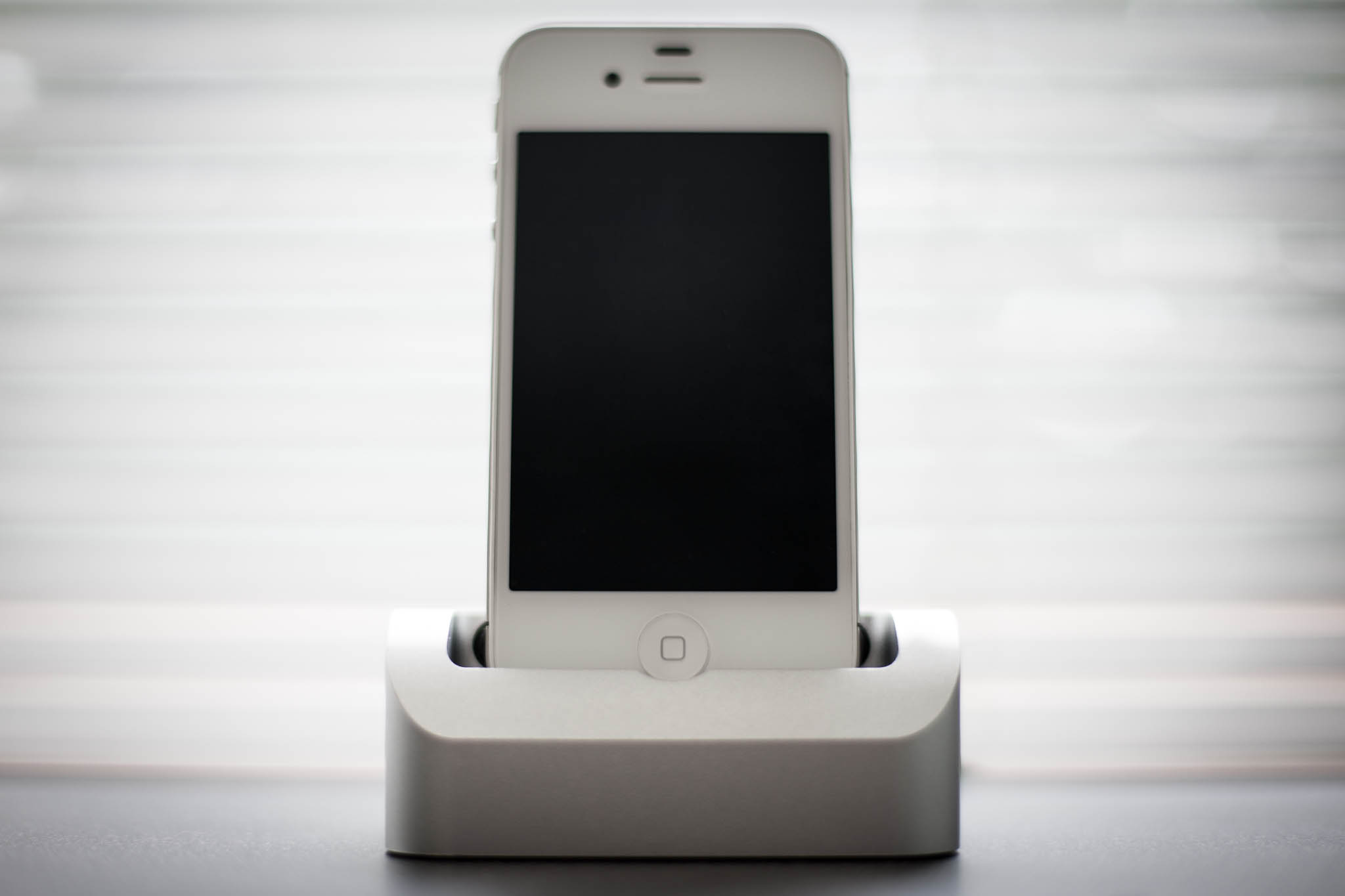
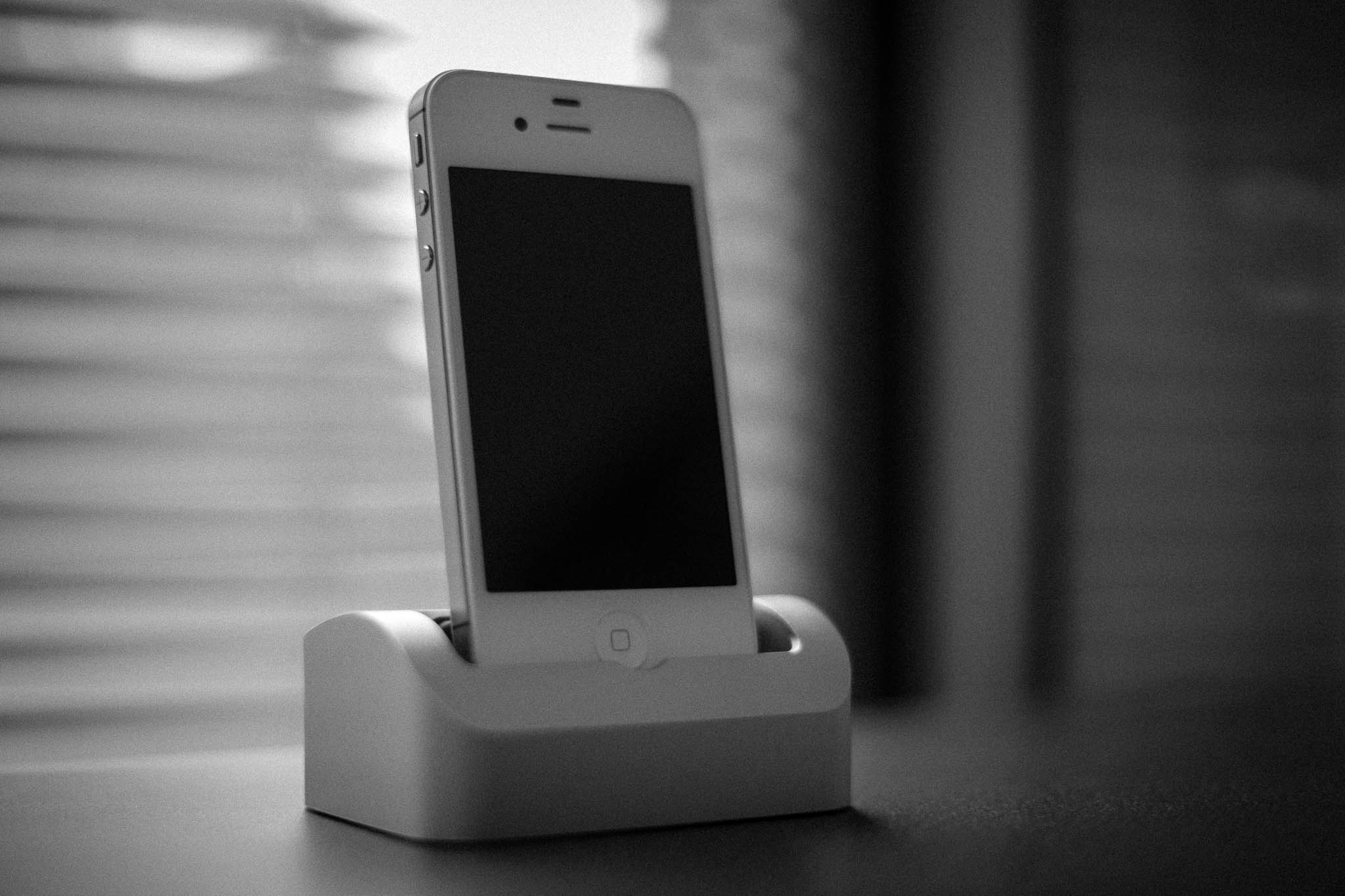
    A little while ago I *finally* [received my dock](http://store.elevationlab.com/collections/frontpage/products/pre-order-elevation-dock). The idea is simple: create a dock that you can pop the iPhone into and out of with one hand. You would think that is what Apple’s dock would do, but you would then be very wrong.

    Now backers are still receiving their docks as far as I know, and non-backers can only pre-order on the companies website, so now is the perfect time to ask: is it worth it?

    The short answer: not really.

    ### Explanation

    The Elevation Dock is everything it promised:

    – Well constructed
    – Friction-free iPhone undocking

    That’s true and so I am not upset having backed this project — I got everything I was promised. In fact I would say the Elevation Dock is one of the highest quality Kickstarter items I have received — right up there with the Glif.

    It’s a snap to put your iPhone into the dock and to remove it from the dock. The line-in I have works well, the compact charger is compact — and does indeed charge.

    I even took a deep look at the design — and I am convinced that so long as a new iPhone is not substantially wider or thicker than the current model — the guys behind Elevation Labs should be able to sell adapters. I mean they made it easy enough to even switch out the dock connector port. Really good thinking on the design and excellent “future proofing” (as much as anyone can) as far as I can tell. (I do not, however, know if they plan on making such adapters. Perhaps they said so in an update, but I never read the updates because of how depressing they were.)

    So, now that I have told you why the Elevation Dock is everything that it was billed to be, you are probably wondering why I don’t think the dock is worth it. The problem with the Elevation Dock is its aesthetic.

    It’s true that the pictures on the project page accurately represent the size and look, but it’s also true I never paid close attention to that. On my nightstand it just looks comically clunky.

    The problem I have with the dock is that it looks utilitarian, it looks like a 3rd party accessory. The dock is bulky, clunky, and pudgy. The opening for the iPhone is too big (thus allowing you to use a case with your iPhone in the dock).


    In short the Elevation Dock doesn’t compliment the design of the iPhone, or any Apple product, very well. About the only thing that it has in common is the use of aluminum.

    Personally, I have come to realize that, while nice, I just don’t take my iPhone in and out of the dock throughout the night enough to justify the ($120) cost of the Elevation Dock and to justify having to look at it.

    I am moving the dock to my office — in hopes I get more use out of it there and that the design bugs me less in my office.


    This is one of those products that is exceptionally good, but is priced far too high to make sense for many (if any) people and whose design just doesn’t fit with the product it is made to compliment.

    Therefore I can only recommend the Elevation Dock to people that take their iPhone in and out of a dock a lot and hate their current dock — even then you have to be a person not planning on upgrading your iPhone in September. If you do plan to upgrade, best to hold off.

    **Update:** Looks like mine is broken now. It refuses to charge my iPhone no matter which cable I use or wall plug. I will be contacting them for repair.

    **Update 2:** Heard back very promptly and am getting a new circuit board. Good customer service so far.

  • Deprecating @BenjaminBrooks

    I posted on Twitter that I was going to “deprecate” my Twitter account and I also included a link to my App.net profile. ((I’d link to the Tweet, but Twitter’s new guidelines and all.)) The implication was that I was ditching Twitter for App.net, and screw everyone that followed me on Twitter.

    I then followed up with another tweet to clarify that all “new” posts that I would normally make on Twitter, was what was going away — with me favoring App.net for those. I would and will, however, still respond to mentions and check my Twitter feed.

    This actually caused quite a bit bigger stir than I had expected — I assumed everyone that follows me saw this coming, but that wasn’t the case. There’s a ton of reasons for this move, I’ll list out the smaller ones, but there is one in particular that I want to dive a little deeper into.

    ### Simple Reasons

    – I like to pay for services with my money, rather than with my attention. (Meaning I don’t like ad-supported stuff.)
    – It’s clear to me that Twitter doesn’t care about the developer landscape — many of whom are people I genuinely like.
    – The SPAM on Twitter drives me nuts.
    – It’s no longer a safe nerd zone — it’s crossed the threshold into mainstream use. That’s not bad, but it changes Twitter and chips away at what initially made me fall in love with Twitter.

    ### Big Complex Reason

    More than anything else though: Twitter has lost its way.

    I outlined most all of what I mean [in this post on Twitter’s API changes](https://brooksreview.net/2012/08/twitter-bullshit/), but to summarize: Twitter has turned it’s back on the very users that not only made the service popular, but that came up with the very features that Twitter is now using to try and profit from. And that bugs me.

    In my mind Twitter took the easy way out: venture capital and eventually paying that money back by slapping ads everywhere.

    A more interesting route would have been to grow slower, have 20% of the members fund the site with pro-level accounts, and love your users. That’s not what happened, oh well.

    Something interesting — something potentially better — *is* happening with App.net. I don’t know what App.net will be a month or even a year from now. What I do know is this:

    1. I like where it is headed right now.
    2. I trust Dalton more than anybody running Twitter. I need no further proof of his commitment than seeing how many of the users he responds to every day on App.net. ((Yes, it’s early — I know.))
    3. I know their business model: I pay them and in exchange they give me a service that I can use.

    App.net isn’t perfect, but it *could* become perfect — whereas with Twitter I feel like it *was* perfect and stands no chance at getting back to that perfection.

    To summarize: I am moving my short “posting” over to App.net because I can think of no better way to continue to support the App.net other than fully committing to using it and so that is what I am planning on doing.

  • Twitter’s API Changes

    *(I am pushing this past the paywall, because I believe this to be one of the bigger news items we will see for a while and thus very important.)*

    The changes Twitter made to their API ([as broken down in this post by Marco Arment](http://www.marco.org/2012/08/16/twitter-api-changes)) are both predictable, significant, and dumb-foundingly stupid.

    Essentially, Twitter is making it so that it is nearly impossible to do anything with their service — including make Twitter apps — that Twitter doesn’t like or approve of. If Marco’s reading is correct, it further takes action against any site that doesn’t want to use the native Twitter embed when quoting a Tweet, which is pathetic.

    I’ve worked all my “I told you sos” out on Twitter — I’d link to them but that would mean using their embed code which includes tracking bullshit that I don’t want to subject my readers to, so you’ll have to take my word for it — so now we need to talk about the future of Twitter.

    The changes Twitter just announced remind me very much that Twitter has some massive problems, both at a service, and at a corporate level.

    1. Twitter has stopped caring about the users that made the service popular, and started only to care about the users that can draw in more users.
    2. Twitter has sold out. They not only don’t care about the original users, but they don’t even seem to care much for the current users — there’s a very real sense that Twitter needs to make money, and they need to make that money yesterday.
    3. The people that really cared have moved on — either to new companies (Square and Medium) or simply moved on to something else.

    We like to make analogies to Apple in tech blogging circles, so here goes: this is the moment in Twitter’s life where they kicked Steve Jobs out of the company and told Sculley to run it.

    Facebook works because Zuckerberg has always been in charge and never pretended to care about user privacy — that allows him to do whatever the hell he wants and users always swallow it. This doesn’t work with Twitter because Twitter’s main features were usually built by its main users, and now Twitter bitch-slapped those users that got the company off the ground.

    Those features:

    – Official Twitter iOS app started as a third-party app. In the same vein of those that Twitter now wants to kill.
    – The now well known @reply that not only is prevalent on Twitter, but the generally accepted across the web, [not invented by Twitter](http://log.maniacalrage.net/post/26935842947/the-real-history-of-the-reply-on-twitter).
    – Oh and those Twitter hashtags that, funny enough, Twitter is now using to monetize Twitter with? [Again, not invented by Twitter](http://gigaom.com/2010/04/30/the-short-and-illustrious-history-of-twitter-hashtags/).

    I could go on, but you get the point. Twitter was built as a community with users trying to improve the service the best they could for everyone’s benefit — and that is now gone. Chuck Skoda (on Twitter, so no link, [instead just subscribe to his blog, it’s great](http://chuckskoda.com/)) commented that he can’t remember the last time Twitter innovated — no one can — because the company has only been focused on two things for the last year:

    1. Big media partnerships.
    2. Making money.

    Wait, that actually is just *one* thing.

    When you are focused on just making money you not only end up screwing people over, but you end up gutting your service. Twitter is gutting the soul from itself and that makes me sad.

    I loved Twitter.

    I hope that App.net can replace Twitter, because [I need a place to post stuff like this](https://alpha.app.net/benbrooks/post/77250):

    >All Twitter will be in a few months is Spammers, people following Bieber, and Kardashians. Yuck.

    If you like Twitter just the way it is today, you’re in luck, because that’s likely to be the norm from here on out — assuming that is that you don’t use a non-official Twitter client. If you loved the way Twitter was a year or two ago, you’re in luck, [that’s what App.net is *right now*](https://alpha.app.net/benbrooks).

    Change happens, but the mistake made with Twitter is that we, as users, thought we had a say and thought Twitter had our backs. At least with Apple, we know we don’t have a say.

  • Retina Font Choices

    [A really interesting article, and quasi-review, of the retina MacBook Pro from John Gruber](http://daringfireball.net/2012/08/pixel_perfect). In it he dives into why (to his eye and mine) text looks so much better on the retina MacBook Pro than it does on the retina iOS screens — especially given the fact that the retina MacBook Pro has a lower PPI count than its iOS counterparts.

    Gruber also brings up an interesting point about font choices, saying:

    >Regarding font choices, you not only need not choose a font optimized for rendering on screen, but should not. Fonts optimized for screen rendering look cheap on the retina MacBook Pro — sometimes downright cheesy — in the same way they do when printed in a glossy magazine.

    The font I use on this site is FF Meta Web, it has been designed to be used on the web, which means it has been optimized for screen rendering. I personally don’t think it looks “cheap,” but I agree that many fonts (like Lucida Grande) do look rather cheap on such a display.

    More interesting is that during a font change on this site a couple weeks ago, I was toying with a lighter font weight to better accommodate retina displays. What [I found in my testing](http://dev.brooksreview.net/blog/2012/07/the-review-of-the-font-choices/) was that the lighter font weight looked perfect on the iPad (3), difficult to read on the iPhone 4S, nice on non-retina screens, and decent but not highly-comfortable on the retina MacBook Pro.

    It was because of this testing that I only use the lighter weights in navigation menus and block quotes. It is also because of the retina MacBook Pro, that for the first time since switching to FF Meta Web, I am thinking about moving to a new font.

    The problem though: *what font?*

    I need a font that simultaneously looks great on non-retina screens, on retina iOS screens, and on retina Mac screens — and I really don’t think such a font exists. So, for as much as I am against “mobile versions” of sites, I am beginning to wonder if each device should have a font specifically targeted for that device. Right now I don’t think retina displays are prevalent enough to worry about this, but I doubt that will be true come 2013.