Top Posts

Leica Sofort 2June 13, 2024
Grand Seiko SBGX261February 23, 2023

Recent Articles

  • ‘Re/code and web design’

    Watts Martin: > All poking aside, the big problem with this design—which is not unique to them—is that it’s awfully hard to figure out what’s important here. If layout is supposed to lead the eye, this is a hedge maze painted bright red. To my eye the entire main page looks like an assortment of…

    Watts Martin:

    > All poking aside, the big problem with this design—which is not unique to them—is that it’s awfully hard to figure out what’s important here. If layout is supposed to lead the eye, this is a hedge maze painted bright red.

    To my eye the entire main page looks like an assortment of advertisements — and not a grid layout of articles.

  • When Anonymous Isn’t Really Anonymous

    Over the past couple of weeks there has been a little website making the rounds. [On the site the user is asked just 25 questions](http://www.nytimes.com/interactive/2013/12/20/sunday-review/dialect-quiz-map.html?_r=0) — each question about word choice. It’s a multiple choice quiz for U.S. residents that seeks to identify where your language most likely comes from — and the questions are…

    Over the past couple of weeks there has been a little website making the rounds. [On the site the user is asked just 25 questions](http://www.nytimes.com/interactive/2013/12/20/sunday-review/dialect-quiz-map.html?_r=0) — each question about word choice. It’s a multiple choice quiz for U.S. residents that seeks to identify where your language most likely comes from — and the questions are innocuous enough: “What do you call that strip of grass between the street and the sidewalk?”

    Nothing about the quiz makes you think they are actually going to be accurate. And yet, the site is stunningly accurate. It reminds me of yet another quiz — a [little electronic toy that plays the 20 questions game with you](http://www.20q.net). All you need to do is to think about something — hell tell the crowd in the room what you are thinking of, the toy can’t hear — and then truthfully answer its questions. I’ve only seen it fail to get the answer once, and that’s because the word was an esoteric Japanese tradition.

    Both of these tools are a bit of engineering amazement, but they also both foretell how powerful computational power can be. If you have a large enough database to query, you only need so many search parameters before you get *the* answer you were looking for — it seems logical, but in practice feels a bit magical.

    So, if a website can narrow down where you likely live, or grew up, by only asking 25 questions about your word choices — then I think you have to seriously wonder how close someone can get to actually identifying you if they are given the “anonymized” data that Google holds on users.

    The question: can we truly anonymize data?

    It seems like it would be a trivial task for Google/NSA to go from an anonymous user ID to ‘Ben Brooks’ if they properly mined my data — and if we can accept that as a given (I think it is hard not to believe that is possible), then the question really becomes: is assigning a user ID truly a means of making something anonymous?

    I’m not sure it is.

    Let’s just take what Google knows about you and strip it down to the bare minimum data that *I* (not having any targeted advertising knowledge) would guess a marketer might want to know to better target their ads at me:

    – Interests
    – Keywords from email
    – Keywords from Social Posting
    – Keywords from Searches
    – Location
    – Age
    – Sex
    – Sexual Orientation (gleaned from correspondence and searches)
    – Occupation
    – Marital Status

    That’s a fairly intrusive list, but I highly doubt exhaustive of all the data points Google is tracking for every user they have — and seemingly innocuous when looked at point by point. I’d wager that given that data set you could match my data with my name and I don’t think it would take long, or be hard to do — even if the data is only shown to belong to user #110923849108234098.

    Again a $20 toy can “read your mind” asking only 20 questions. A website can effectively know where you developed your language patterns from asking just 25 questions.

    How hard do you really think it would be for the computing power of any large company to reverse all the thousands (millions?) of data points they have and find *you*?

    That’s part of the problem with data collection: that no matter what it’s not a truly anonymous data set — it’s just a slightly less _identifiable_ data set. You are effectively throwing a blanket over and object you want to hide instead of actually hiding the object. You can still see the size and shape, so educated guesses are fairly easy.

  • Quote of the Day: Michael Lopp

    “You’re fucking swimming in everyone else’s moments, likes, and tweets and during these moments of consumption you are coming to believe that their brief interestingness to others makes it somehow relevant to you and worth your time.” — Michael Lopp

    “You’re fucking swimming in everyone else’s moments, likes, and tweets and during these moments of consumption you are coming to believe that their brief interestingness to others makes it somehow relevant to you and worth your time.”
  • Long Live the Camera

    Craig Mod, [in an article he wrote for *The New Yorker*](http://www.newyorker.com/online/blogs/elements/2013/12/goodbye-cameras.html): > But I returned with the unshakeable feeling that I’m done with cameras, and that most of us are, if we aren’t already. I was getting all worked up at this point — I am passionate about cameras, photography, and well camera gear —…

    Craig Mod, [in an article he wrote for *The New Yorker*](http://www.newyorker.com/online/blogs/elements/2013/12/goodbye-cameras.html):

    > But I returned with the unshakeable feeling that I’m done with cameras, and that most of us are, if we aren’t already.

    I was getting all worked up at this point — I am passionate about cameras, photography, and well camera gear — but Mod went on:

    > But it seems clear that in a couple of years, with an iPhone 6S in our pockets, it will be nearly impossible to justify taking a dedicated camera on trips like the Kumano Kodo pilgrimage.

    And:

    > In the same way that the transition from film to digital is now taken for granted, the shift from cameras to networked devices with lenses should be obvious.

    It’s hard to read this article and disagree with it at the same time. It’s a smart article, which isn’t talking about the demise of the camera, but the resurgence and rejuvenation of the camera. As a kid I remember hearing: “Did you remember the camera?” But more and more as an adult I am hearing: “Did you post that to Facebook/Instagram *yet*?”

    It’s that distinction — of worrying not about having a camera, but about sharing — that I think really drives home Mod’s point. I can’t agree with Mod’s notion that he doesn’t notice differences in the quality of the photos, or that he finds shooting on the iPhone better, but I do agree that I will pull out my iPhone and snap a few shots so I can share them right away even if I was shooting with a camera already. And I agree that editing photos on a touch screen is far superior and _immersive_ than with a mouse/keyboard.

    Near the end Mod summarizes:

    > It’s clear now that the Nikon D70 and its ilk were a stopgap between that old Leica M3 that I coveted over a decade ago and the smartphones we photograph with today.

    In order to agree with Mod you have to forget the ‘pro’ argument — there will always be pros that need pro level gear — what Mod is getting at is that the average person will be increasingly happy with their smartphone cameras. That’s something I wholeheartedly agree with.

    If I was a camera manufacturer right now I would be looking at creating a platform that works *with* smartphones. Something like:

    1. Snap a photo on the camera.
    2. It is automagically sent to the app on your smartphone/tablet.
    3. Edit and post from the app on the smartphone.
    4. Both original and edited image are sent off to your archive location of choice.

    There’s a few things such a system would accomplish for photography enthusiasts:

    – You would get to take images with a *better* camera, but still get all the benefits of having taken that image with a phone.
    – You wouldn’t ever have to download images to a computer. They are already shared, and archived. If one needed/wanted an image on a Mac then you could grab the archive from a web service and do what you need to do.

    There are some systems that attempt this, but they are shitty. They are shitty because they don’t understand the two aspects that make such system *better*: why the user wants it, and how the service needs to act.

    The user wants this to make their life easier — in other words it should be no more complicated than remembering to shoot with your “good” camera instead of your phone. And of course in order to achieve that level of ease, the service *must* be flawless in its implementation.

    Apple’s Photo Stream works exceedingly well, and effectively what I am talking about is cameras being able to pipe *directly* into a system like Photo Stream. This is where the real challenge comes (getting a web-connection on a camera, getting a universal like system, etc.) and where I doubt this is done without a partnership between a phone maker and a camera company. But, one can dream.

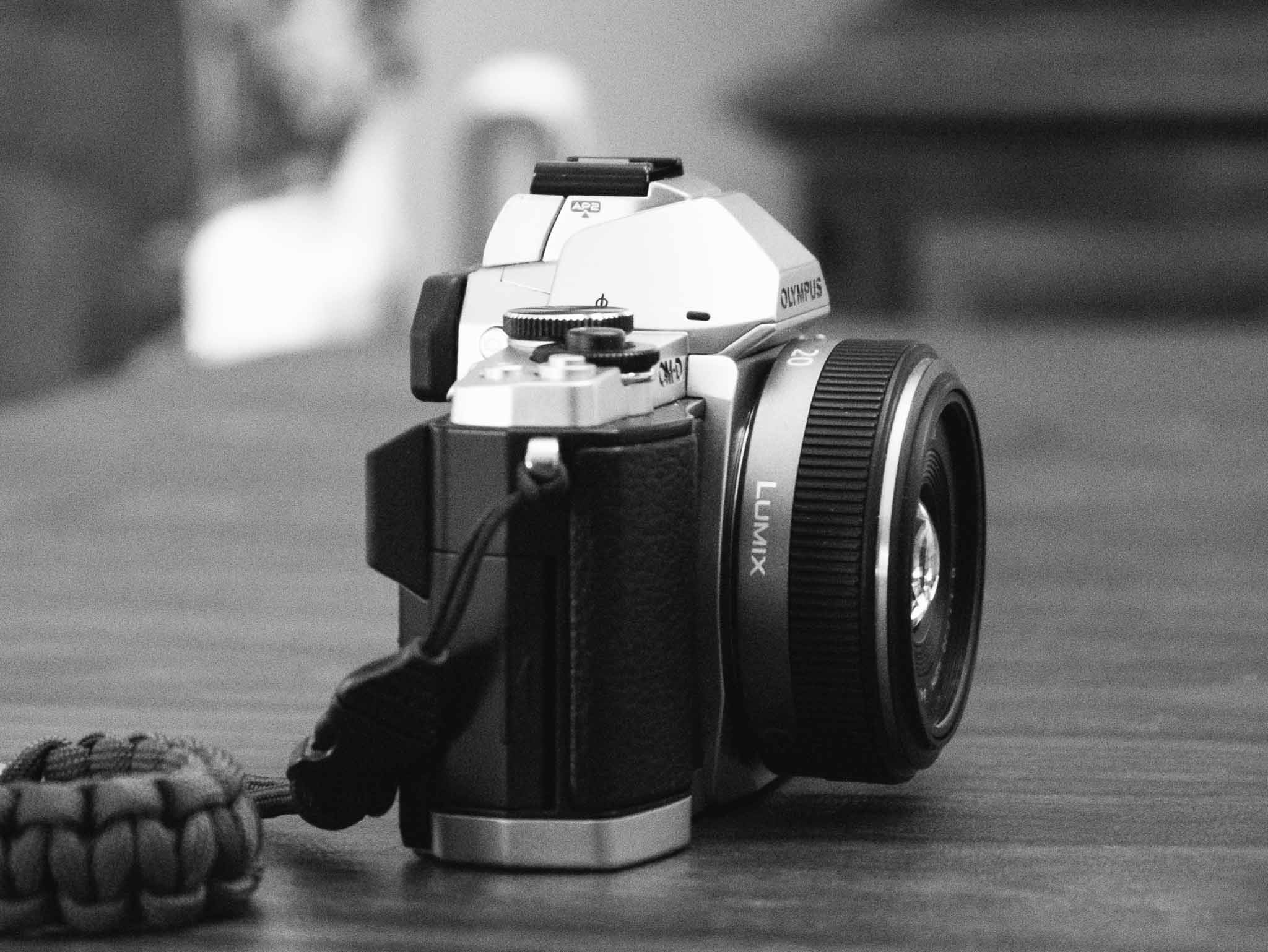
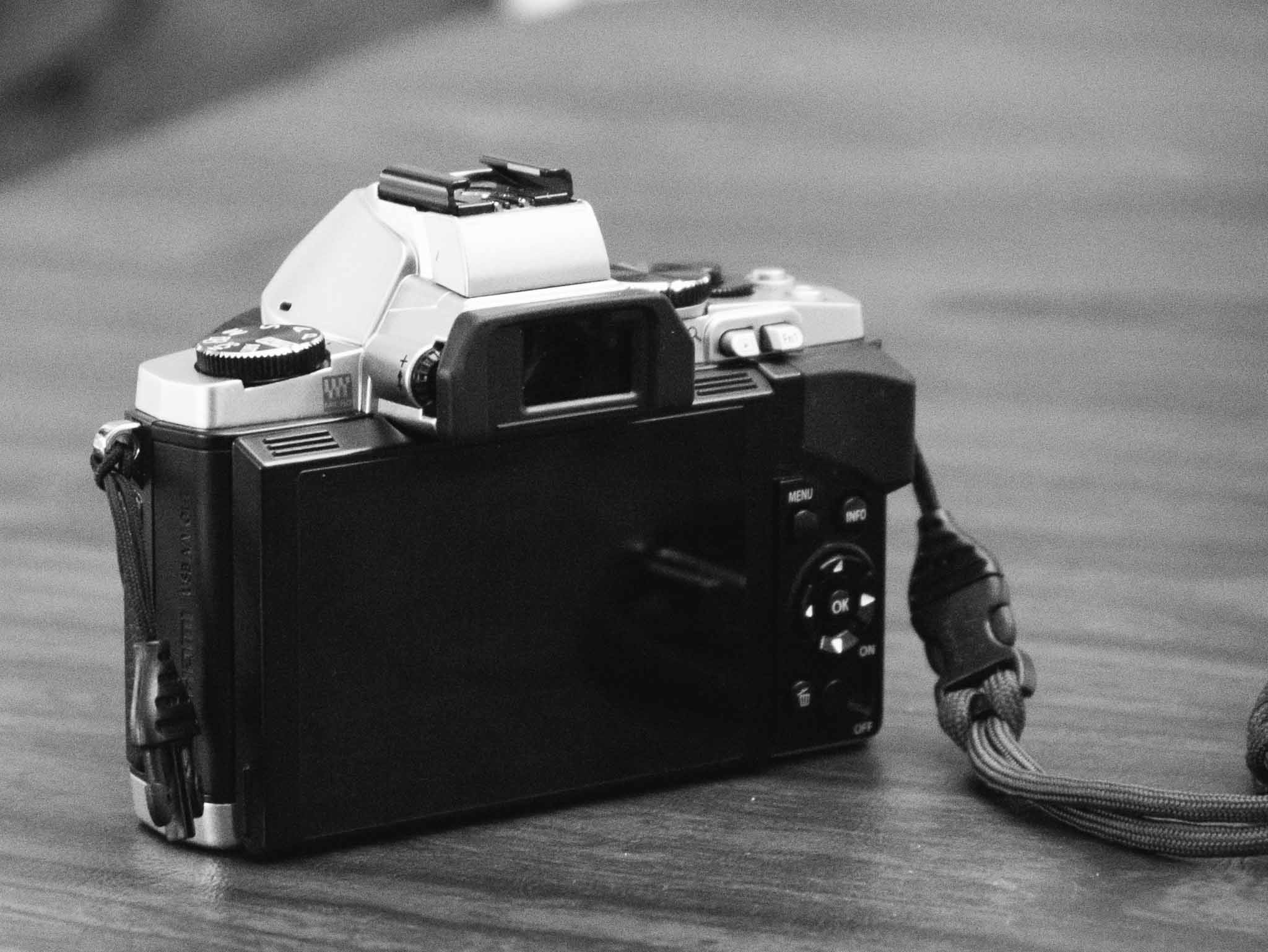
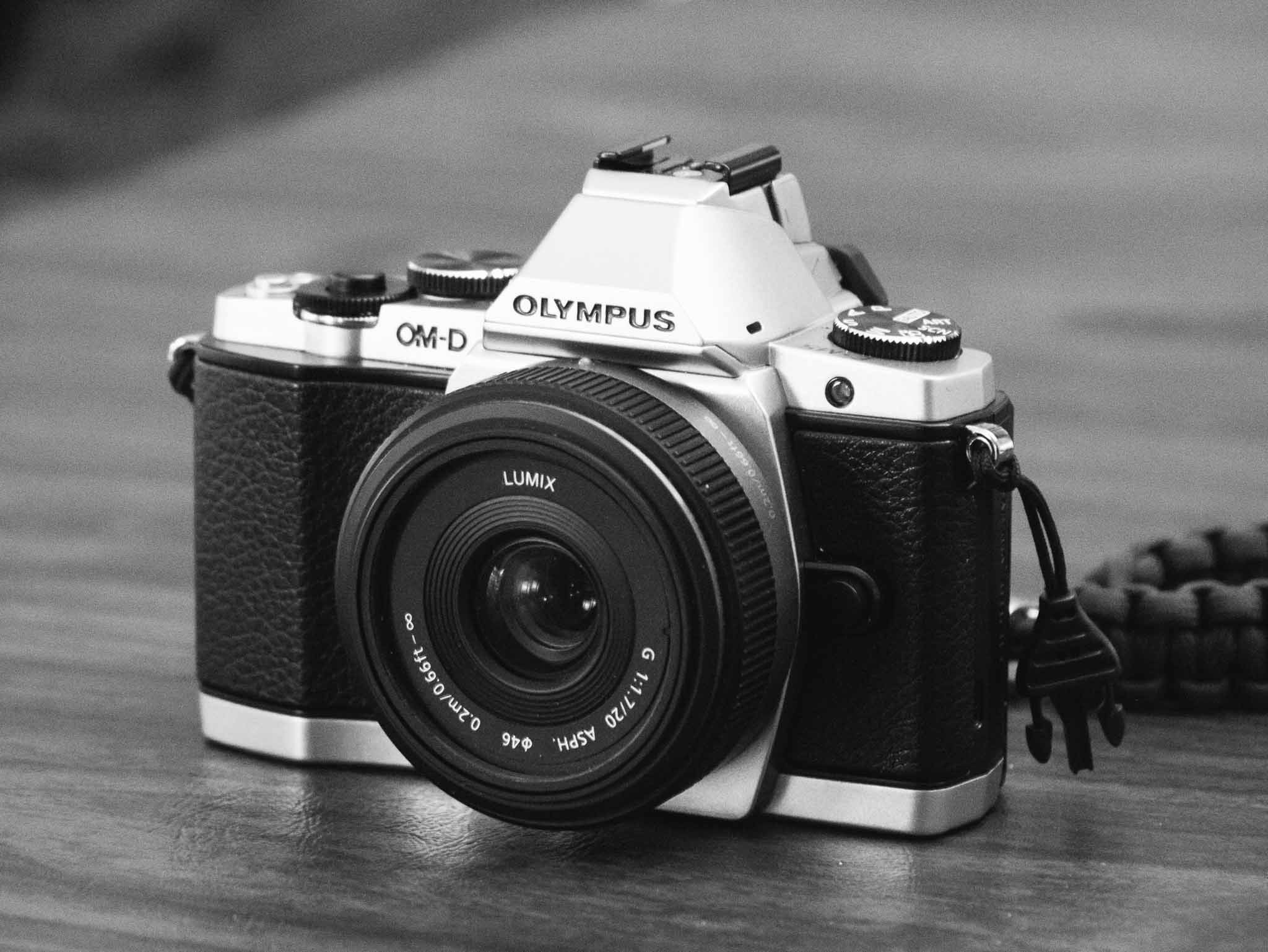
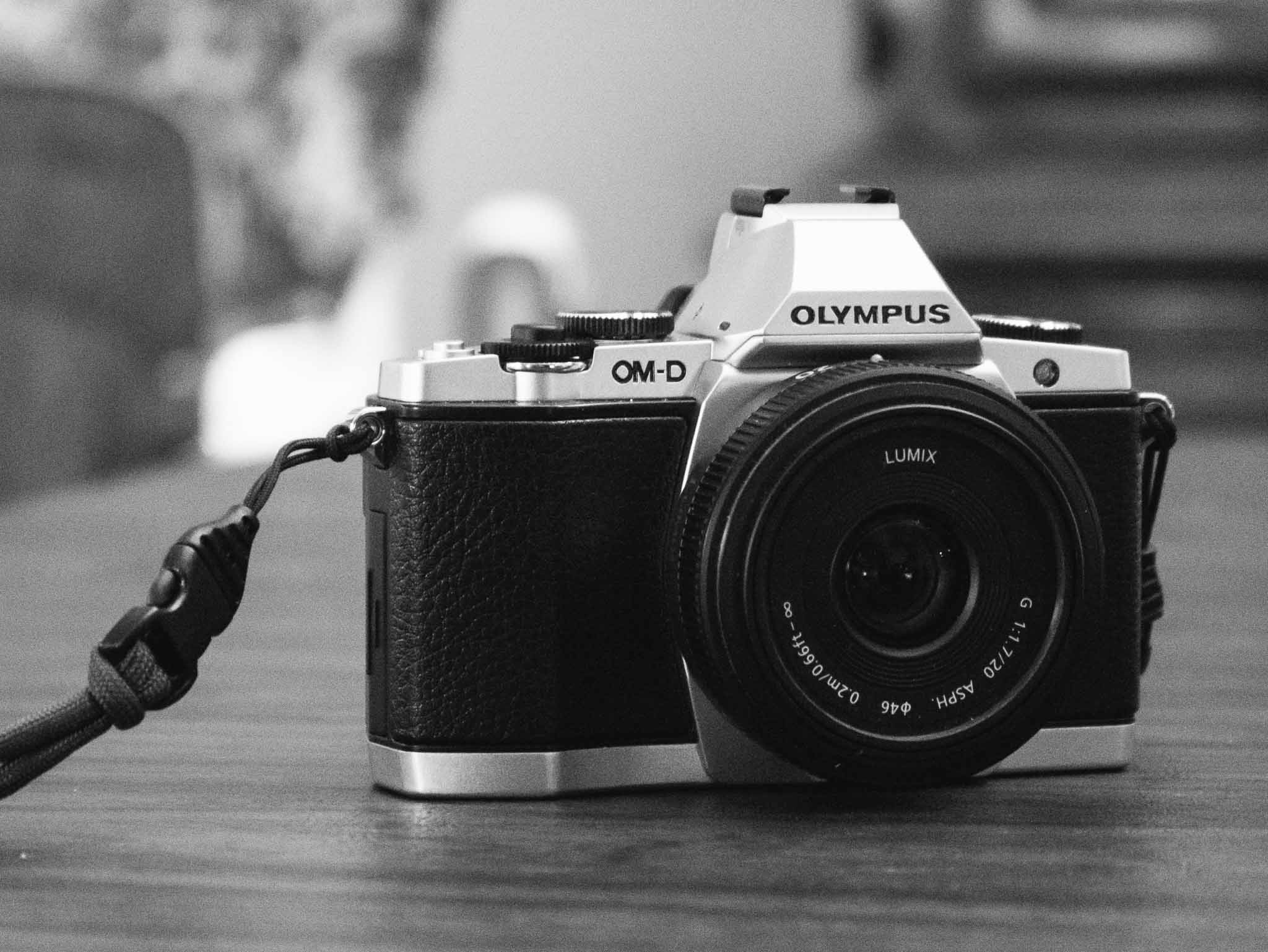
  • Review: The Olympus OM-D E-M5

    The Olympus OM-D E-M5 was released a year and a half ago and is coming up on its second anniversary rather quickly, even so it is the camera I chose to replace my beloved Panasonic GX1. (You can read a great review of the E-M5 from Steve Huff.) ((Also, here’s my GX1 review.)) Shawn Blanc…


    The Olympus OM-D E-M5 was released a year and a half ago and is coming up on its second anniversary rather quickly, even so it is the camera I chose to replace my beloved Panasonic GX1. (You can read a great review of the E-M5 from Steve Huff.) ((Also, here’s my GX1 review.))

    Shawn Blanc and I often chat about cameras, well, actually we send links to each other and drool over new gear — that’s part of the “fun” of photography. A few months ago (maybe?) I told Shawn: “I am beginning to think the best/smartest/cheapest way to buy a new camera is to wait until it’s a year old.”

    At the time I was looking to update the GX1, but it was a half-hearted endeavor as the GX1 works phenomenally well for me and I don’t really need a new camera. But I wanted one, so I kept my eyes out for deals and kept lusting over different options.

    As luck would have it I landed the OM-D E-M5 for a great price, but before I bought the E-M5 I was seriously considering these four cameras:

    Panasonic GX7: This was the natural evolution for me as it is effectively the new model of my current GX1. I won’t lie: this was my first choice. The reviews of the GX7 are only solid and it seems a waste of money to ignore the fact that there are other, more passionately reviewed, cameras to be had. There seemed to be something intangible missing from the GX7 and that seemed reason enough to keep looking.

    Panasonic GM1: This looks like a beast of a small camera. Lots of people like it, and have great passion for it. What turned me off the camera is that this seems like a new venture: insanely small and still fully-functional. In other words it sounds like the original MacBook Air to me — which tells me to wait for the next revision of the camera. Also by the time I researched this camera I was pretty well decided on wanting to get an electronic view finder this time — instead of just an LCD display — and that’s something the GM1 doesn’t have. The one thing I really miss from a full sized DSLR is the viewfinder for composing my images. ((Though I must say, now that I have a viewfinder again I find that I am using it far less than I would have assumed.))

    Fujifilm X-pro 1: I cannot tell you how much I want this camera. By all accounts this is a fantastic camera that boasts an APS-C sized sensor — much larger than the micro four-thirds sensors — which is a huge benefit when it comes to image feel on shallow depth of field photos. While micro four-thirds cameras are getting better, nothing beats a full frame sensor, but APS-C is closer to full frame (most entry level DSLRs use APS-C sensor sizes to put that into perspective) than a micro four-thirds camera and thus the X-Pro-1 is very appealing in this size class. But the X-Pro 1, as great as it maybe, is not great looking (this matters to me) and would set me back almost $1,700, since it uses its own lens mount, requiring me to buy a new lens) and not just a camera body. The price alone was enough to eliminate this camera from the running for now.

    Fujifilm e-x2: Another great camera, but this one newer and better looking than the X-pro 1, and again with a similar large sensor. Still, though, the overall price of buying a new lens made this unrealistic this time around for me — though I still very much would love to get this camera, I had to pick buying this and not having a lens, or finding a cheaper body.

    Side note: One line of cameras I did not consider is the Sony cameras. While many people like them, and they seem to be well regarded, I have never liked them whenever I held/shot them. My father has the NEX-7 and I just don’t like the controls or feel of the camera overall. I can’t explain this better, but it’s just not a camera system that I really enjoy and therefore is not interesting to me.

    As you can see the OM-D wasn’t even something I considered while shopping. The main reason I glossed over the camera was because I thought it was too big, looked to DSLR-ish, and so forth. I thought these other offerings would be better and I came within a click of buying the GX7 — but then I stopped.

    I read reviews, I looked around, and came to the OM-D E-M5 — even with its ridiculous name — and began to see it as a great buy. It packed a bunch of features that I wanted and was missing from the GX1, would be a true upgrade, wouldn’t be too much bigger, and would fit all the gear I currently have. It sounded like a win on paper.

    Why the E-M5

    The first question you may be asking yourself is why the E-M5 and not the newer E-M1? There are three reasons:

    1. The image quality isn’t substantially better between the two as far as I can discern from reading a ton of reviews. The E-M1 is better, but I don’t think the gap in performance is enough to justify the price premium of the E-M1.
    2. The body on the E-M1 is much bigger, and that’s something I’m trying to avoid with this class of camera and the E-M5 is quite a bit smaller in use. If I was to consider the E-M1, I would also be looking at the Canon 5D/7D series as I have many excellent lenses that fit Canons — and once a camera is at a certain size getting a bigger camera isn’t that much of a difference.
    3. Price. The E-M1 is hot and new, and is priced accordingly. This time around I was trying to get the best bang for my buck, while staying as inexpensive as I could.

    The latter two reasons are why I stayed away from the E-M1. It is the better camera, but it likely isn’t the better camera for me. It costs a lot more and is purposefully built larger, and I really didn’t want something substantially larger.

    I have owned a DSLR for years and have found that I tend not to use cameras that are bulky to carry around. I love using them, but I never take them with me so they never get used. One of the reasons I love the GX1 is because it is small enough to stash in a jacket when going out — and I use the camera more because of that. Small is important to me, and it seemed that the E-M5 is in the elite ranks of quality but still small enough to carry around — though not as easy to carry around as the GX1. ((The biggest size difference is in the height, as the E-M5’s viewfinder makes it stick up quite a bit more.))

    Steve Huff, in his review of the OM-D EM-1, lists out the advantages of the EM-1 over the EM-5. There isn’t much said about the image sensor, and a lot said about the physical aspects of the camera and a lot of nice-to-haves. Huff even points this out:

    This [E-M1] is an amazing camera because the E-M5 is amazing the way it is. Add these improvements and you have something special that usually only comes around every 2-3 years.

    Seems like the EM-5 is a fantastic, top-tier camera, but smaller than the EM-1. To me that’s like choosing a slightly smaller computer with slightly lower specs than the bigger version because you know the smaller computer will fit you better.

    Love It

    The E-M5 blew me away on the first day I used it. Not only does the design look great, ((I am a sucker for the old-school looking silver and black cameras that are popular (again) today.)) but the image stabilization on this camera is phenomenal (more on that in a bit). Overall I have found two things to be true about this camera:

    1. It is an absolute joy to shoot with.
    2. It produces surprisingly great images. And I don’t mean that in the way that a person who just bought their first ‘real’ camera means it: “Gee, this DSLR takes way better pictures than my Nokia.” I mean it in the sense that the images feel like they should be coming from a much larger, much more expensive, camera body. They feel like they should be coming from my 5D — except there are many shots I have been taking with the E-M5 that even the 5D couldn’t capture given the relatively low ISO range of my much older 5D.

    The E-M5 is still small, but it is bigger and weighs more than the GX1 so it’s not as pocketable, but what you get in return is absolute top-notch quality. There’s a reason Steve Huff chose the EM-1 as the camera of the year (2013), and not a Lieca, or Sony A7 — there’s a lot to love about the OM-D lineup of cameras. (In case you are wondering the Sony RX1 was his 2012 pick while the EM-5 was in second place, or his “second pick” as he puts it.)

    I’ve found the E-M5 produces excellent images and is a joy to shoot with.

    Image Stabilization

    The one tech-spec that sets the E-M5 leaps ahead of all my other cameras is the image stabilization (IS). I have Canon IS lenses, but my GX1 and most of the primes I shoot with on the 5D lack IS of any kind. The IS on the E-M5 is outstanding, but keep in mind I have nothing to compare it to other than my few IS Canon lenses.

    So instead, something that speaks for itself:

    The above image was shot, handheld, with a shutter speed of 0.4 seconds (by comparison typical logic says I shouldn’t even get a crisp picture with a slower shutter than 1/30th a second). Now, my arms were supported. Basically I had my elbows propped on the arms of the chair, but no other support. The image is just as sharp as an image I shot seconds later at 1/100th of a second.

    That just blows my mind. It’s not a practical application in that most of the time I won’t be able to support my arms in that way — but I truly didn’t think that image possible before I took it.

    Practically speaking you shouldn’t expect to be able to hand hold any camera at that speed, but it’s an extreme example, that helps to show how good the 5-axis IS in the E-M5 really is. For the most part I have yet to find a situation where I got a blurry image because of a slow shutter — this takes yet another “worry” out of photography for me. ((This is not limited to the E-M5, but I am not out to compare it against all the models out there — I value my sanity too much.))

    More serious photographers may balk at this, but let’s face facts: most images that people take are going to be snapshots. Things like phenomenal IS and high-ISO are important for snapshots. The image stabilization alone has made the E-M5 worth the upgrade for me.

    Feel

    I’ve held hundreds of cameras and shot regularly with dozens of DSLRs and 35mm SLRs, I’ve held and tried dozens of small interchangeable lens cameras, and I’ve owned countless point and shoots over the years.

    I speak with experience when I say: the feel of a good camera in your hand is unmistakeable.

    To me, the Canon 5D series (I’ve shot with both my MKI and a MKII) feel absolutely perfect in my hands. Whereas most point and shoots, and cell phones are cumbersome to hold for framing a perfect shot with a steady hand. With micro four-thirds it’s been hit and miss with how these cameras feel in my hand, typically feeling too light or too small.

    The GX1 was very light, but was just about as small as I could hold stable with my hands. The GX1 always lacked good grip spots, and that too has been a complaint on the E-M5 for some. (Note: you can buy an overpriced grip to fix that issue, or just get the larger EM-1 that addresses that directly.) This is one tradeoff with smaller cameras: smaller area for large hands to grip.

    The E-M5 however feels very nice in my hand. While the front grip is shallow, the thumb grip on the rear gives you a strong leverage point over the camera — which is needed as I wouldn’t describe the E-M5 has lightweight.

    The real winner of the EM-5 is that weight. This is a camera that feels solid, well built — it feels like a tank and I love it. The GX1 doesn’t feel bad in general, but it doesn’t feel nearly as great as the E-M5 in comparison.

    Issues

    You’ll find lots of people talking about different issues with any camera. I am going to skip past the tech-spec comparison issues, like battery life (it’s not bad, but not great) and instead focus on three things: an info display issue, button and dial placement/usage, and some high ISO banding issues.

    Shutter Speed Display

    No matter how you compose your image, the camera will show you the shutter speed and aperture. That’s common on any camera, but the way the E-M5 handles this display drives me nuts. No matter the display I look at, it is often not possible to tell if the shutter is 1/4 second, or 0.4 seconds. In either of those two cases the display will simply read: 4.

    Sometimes, SOMETIMES, the display will put something like 2” to denote that the camera is speaking in seconds — otherwise you are left to guess. In time I hope to be able to figure this one out, but for right now it is the single most annoying and frustrating thing about this camera.

    Buttons & Dials

    Every camera — especially every camera manufacturer — has a different philosophy about how and where buttons should be placed. The GX1 had a power button in a very convenient spot, so convenient that I accidentally turned the camera on/off more than once.

    The E-M5 has a similarly annoyingly placed power switch — though it is placed in a bit more DSLR standard location. It’s on the bottom right corner of the back of the camera.

    Here’s the thing: if you use the E-M5 one-handed (which is kind of the de facto way to use it) then you pick it up right handed — making it nearly impossible to turn the camera on with that same hand. It’s a finger contortionist move of olympic-level difficulty.

    If you can’t tell, the power switch is the biggest annoyance I have with the camera. It’s just in a bad spot, with bad switch style, and annoying.

    The dials though, they confuse(d) me a lot. There are two dials on the top of the EM-5. By default the one attached to the shutter sets the exposure compensation, and the larger dial changes settings for the camera mode you are in (e.g. Aperture in Aperture Priority mode).

    The entire dial setup is changeable, but completely backwards out of the box (at least for me). I switched the dials around, and also switched the direction you turn the dials to increase/decrease the settings.

    It’s my opinion that the E-M5 would be incredibly frustrating to use/learn if you couldn’t change around these dials. So if the dials bug you (and this may be due to my Canon background) be sure to change them before you pull your hair out trying to use the camera. It’s nice that I could change these, but a very odd default setting if you ask me.

    High ISO and Banding Issues

    UPDATE: I’ve gotten word this only happens when paired with the Panasonic 20mm f1.7 lens (which was my test lens). I am testing now with other lenses to confirm. Apologies. This is great news though.

    One of the first things I noticed when I started trying the camera is under very high ISO modes (3200+) there is visible banding in the images. You can see it in this photo below:

    (Here’s the same photo edited — you can hardly see the banding once edited.)

    Now, before I talk about this anymore I want to tell you my thinking on high ISO usage/importance.

    I am a photographer that will force my camera to shoot at the lowest possible ISO for as long as possible. I hate auto-ISO. I want control over my ISO. Not too long ago ISO 1600 was considered the upper limit of a useable image, but that above example? ISO 10,000. Yeah, it’s pretty useable.

    So here’s my high-ISO theory/advice: don’t worry about the image quality, because it’s likely an image that you could only get using a really high-ISO on a camera (any camera). It’s great if the image looks like an ISO 200 image, but it’s not necessary because almost every image shot at high-ISO is a snapshot. In other words a picture for documenting/remembering a moment and not a photo for a contest. ((This is my rule, get your own.))

    In a nutshell my feelings about banding on the EM-5 are twofold:

    1. The nerd in me hates that the banding is this obvious, because without the banding the noise is well controlled even at ISO 10,000. The banding is what makes this image less useable.
    2. The practical photographer in me realizes that getting a sharp image, even with banding, is better than getting a blur of unfocused people. Getting the image versus only having the mental picture makes the banding acceptable.

    In short: I am fine with the banding because it allows me to capture an image that I would otherwise likely not be able to get.

    Some will find this banding unacceptable though, so they should get an EM-1 where the issue is fixed from what I have read.

    The Photos

    I have been enjoying the heck out of this camera and I find the image quality to exceed my expectations for the E-M5. Here’s a bunch of photos I have snapped, in no particular order. (Fair warning: I tested over Christmas so there’s many photos of my daughter doing Christmas like stuff.)


    Buy It

    I love this camera.

    If you buy the OM-D EM-5 from this link, you help support the site — and I personally think this camera is worth every penny.
  • ‘I fought my ISPs bad behavior and won’

    Eric Helgeson found that his ISP was redirecting him to merchants using their affiliate links: > When looking at the URLs a little more closely I noticed fwdsnp was adding affiliate ID’s into the URLs. Did I have some malware that was hijacking my requests? I switched to Google’s DNS and the affiliate IDs were…

    Eric Helgeson found that his ISP was redirecting him to merchants using their affiliate links:

    > When looking at the URLs a little more closely I noticed fwdsnp was adding affiliate ID’s into the URLs. Did I have some malware that was hijacking my requests? I switched to Google’s DNS and the affiliate IDs were not injected into the URLs. Then I noticed one of the affiliate’s name was Arvig, which happens to be my ISP. Confirmed. It looks like I’m not the only one[1].

    Read the article for the ISP response, it’s classic.

  • Quote of the Day: Brent Simmons

    “One way of looking at Google Glass: now the surveillance state can see through your eyes. Even when you blink.” — Brent Simmons

    “One way of looking at Google Glass: now the surveillance state can see through your eyes. Even when you blink.”
  • ‘Three things I learned from the Snowden files’

    Jay Rosen: > The point holds for collecting phone records. Even if no one in the government reviews whom I’ve called or texted, my liberty is violated because “someone has the power to do so should they choose.” Thus: It’s not privacy; it’s freedom. But “freedom advocates” would be an awkward construction in a news…

    Jay Rosen:

    > The point holds for collecting phone records. Even if no one in the government reviews whom I’ve called or texted, my liberty is violated because “someone has the power to do so should they choose.” Thus: It’s not privacy; it’s freedom. But “freedom advocates” would be an awkward construction in a news story.

  • ‘Apple Says It Has Never Worked With NSA To Create iPhone Backdoors’

    Matthew Panzarino: > Apple has contacted TechCrunch with a statement about the DROPOUTJEEP NSA program that detailed a system by which the organization claimed it could snoop on iPhone users. Apple says that it has never worked with the NSA to create any ‘backdoors’ that would allow that kind of monitoring, and that it was…

    Matthew Panzarino:

    > Apple has contacted TechCrunch with a statement about the DROPOUTJEEP NSA program that detailed a system by which the organization claimed it could snoop on iPhone users. Apple says that it has never worked with the NSA to create any ‘backdoors’ that would allow that kind of monitoring, and that it was unaware of any programs to do so.

    Click through and read the statement — it’s a pretty definitive statement from Apple (and came quickly, for Apple at least) and encompasses *all* Apple products not just the iPhone.

    This doesn’t mean there isn’t a backdoor — as I understand it the NSA attacks BIOS level software. If that is the case perhaps Apple isn’t writing the BIOS’ on iPhone and therefore the NSA has partnered with an Apple vendor? This is pure speculation though.

  • Côte&Ciel Isar Rucksack

    Andrew Kim has a review up on Minimally Minimal of the Isar Rucksack. While I don’t think this is a bag I would enjoy, it is certainly very unique (and beautiful, no doubt in part due to Kim’s beautiful photography).

    Andrew Kim has a review up on Minimally Minimal of the Isar Rucksack. While I don’t think this is a bag I would enjoy, it is certainly very unique (and beautiful, no doubt in part due to Kim’s beautiful photography).

  • So You Thought DigitalOcean Was Great?

    I’ve never used DigitalOcean (and I’m glad about that), but I’ve been hearing about many people loving their service. There was an issue [posted on GitHub](https://github.com/fog/fog/issues/2525) detailing a flaw in the way user data was deleted from DigitalOcean servers. This flaw lead to data being “leaked” between user accounts. The discussion was then moved over…

    I’ve never used DigitalOcean (and I’m glad about that), but I’ve been hearing about many people loving their service. There was an issue [posted on GitHub](https://github.com/fog/fog/issues/2525) detailing a flaw in the way user data was deleted from DigitalOcean servers. This flaw lead to data being “leaked” between user accounts. The discussion was then moved over to DigitalOcean [here](http://digitalocean.uservoice.com/forums/136585-digitalocean/suggestions/5280685-scrub-vms-on-delete-by-default).

    Essentially all data could be wiped, but it required the user to check a specific box, or call a poorly documented part of the API — in other words it was a bad design decision from DigitalOcean. This isn’t good at all, as Apache logs were being pulled from other user accounts.

    However, [DigitalOcean’s response was horrible](https://digitalocean.com/blog_posts/transparency-regarding-data-security). Instead of owning the issue and making a change, they offered a qualified excuse, committed to changing, and then (if the comments are any indication) lied about data being leaked.

    Here’s what DigitalOcean said in their post:

    > At no time was customer data “leaked” between accounts.

    Jeffrey Paul’s comment on that same post:

    > For fuck’s sake, now you’re just lying.

    > Not scrubbing has been the default – a user doesn’t have to “explicitly not scrub”.

    > If no customer data leaked between accounts, how was I able to read someone else’s stack traces[1], web logs[2], and customer tokens[3] on a freshly provisioned VM? (I am the person who got bitten by this dark pattern, investigated further, verified your error, filed the bug in fog, and then spent half my Monday auditing credentials because you LEAK DATA BETWEEN CUSTOMERS.)

    > What follows is evidence to directly support the claim that you’re lying through your teeth to save face after having been caught being grossly irresponsible with your customers’ data.

    > Please start acting like professionals.

    > [1] http://i.imgur.com/TMp2kdf.png

    > [2] http://i.imgur.com/WLv2qSE.png

    > [3] http://i.imgur.com/fJOxRN9.png

    There’s a few other comments supporting his claim too.

    I’d run away from DigitalOcean if I was using them.

  • ‘The Products Apple Doesn’t Have Time to Improve’

    Marco Arment: > While most of the press demands new hardware categories, I’d be perfectly happy if Apple never made a TV or a watch or a unicorn, and instead devoted the next five years to polishing the software and services for their existing product lines. On this, I am in complete agreement with Arment.…

    Marco Arment:

    > While most of the press demands new hardware categories, I’d be perfectly happy if Apple never made a TV or a watch or a unicorn, and instead devoted the next five years to polishing the software and services for their existing product lines.

    On this, I am in complete agreement with Arment. See also [Arment’s follow-up (of sorts) post](http://www.marco.org/2013/12/29/smart-watches-and-face-computers) on smart watches and Google Glass.

  • Reminder: December Yearly Membership Discount

    Just a quick reminder that you can save $10 on a yearly subscription to this site through the end of tomorrow. This isn't likely something I will do again so now is your chance (as they say). Thanks for your support — it is your support that will hopefully pay the bills one day.

    Just a quick reminder that you can save $10 on a yearly subscription to this site through the end of tomorrow. This isn't likely something I will do again so now is your chance (as they say).

    Thanks for your support — it is your support that will hopefully pay the bills one day.

  • ‘The NSA has nearly complete backdoor access to Apple’s iPhone’ [Updated]

    Jay Hathaway: > According to leaked documents, the NSA claims a 100 percent success rate when it comes to implanting iOS devices with spyware. The documents suggest that the NSA needs physical access to a device to install the spyware—something the agency has achieved by rerouting shipments of devices purchased online—but a remote version of…

    Jay Hathaway:

    > According to leaked documents, the NSA claims a 100 percent success rate when it comes to implanting iOS devices with spyware. The documents suggest that the NSA needs physical access to a device to install the spyware—something the agency has achieved by rerouting shipments of devices purchased online—but a remote version of the exploit is also in the works.

    UPDATE: [Steve Wildstrom reports](http://techpinions.com/apple-iphone-and-the-nsa-a-tale-of-sorry-journalism/26125):

    >If you dig back through the sources here, you find a fascinating dump of documents in Der Spiegel (German original) about the NSA’s Tailored Access Operations including a 50-page catalog of snooping devices worthy of MI-6′s fictional Q. One, called DROPOUTJEEP, claimed the ability to compromise an iPhone by replacing altering its built-in software. “The initial release of DROPOUTJEEP will focus on installing the implant via close access methods,” the 2008 document said. “A remote capability will be pursued in a future release.” In other words, before any snooping took place, the NSA first needed to get its hands on your iPhone and replace its software1 .

  • ‘What I Didn’t Say’

    Paul Graham following up on a controversial quote that was attributed to him from the $400/year *The Information*: > “We” doesn’t refer to society; it refers to Y Combinator. And the women I’m talking about are not women in general, but would-be founders who are not hackers. > I didn’t say women can’t be taught…

    Paul Graham following up on a controversial quote that was attributed to him from the $400/year *The Information*:

    > “We” doesn’t refer to society; it refers to Y Combinator. And the women I’m talking about are not women in general, but would-be founders who are not hackers.

    > I didn’t say women can’t be taught to be hackers. I said YC can’t do it in 3 months.

    > I didn’t say women haven’t been programming for 10 years. I said women who aren’t programmers haven’t been programming for 10 years.

    > I didn’t say people can’t learn to be hackers later in life. I said people cannot at any age learn to be hackers simultaneously with starting a startup whose thesis derives from insights they have as hackers.

    Of all people [Michael Arrington has a good take on the situation](http://uncrunched.com/2013/12/30/the-disinformation/):

    > And really, three sins were committed. The first was changing a quote. You just can’t do that, ever. The second was omitting contextual information which would have made the statement intelligible. And the third was taking a background discussion about Paul’s partner Jessica Livingston and turning it into an “interview” in the first place.

    UPDATE: [Jessica Lessin has posted about this on her personal site](http://jessicalessin.com/2013/12/31/on-the-information-and-how-we-operate/) (not the site in question). It’s a shit defense, and her reasoning for editing his quote makes zero sense — unless of course sensationalism is what they wanted.

  • ‘BlackBerry CEO: Here’s our new strategy’

    John Chen CEO of BlackBerry: > Today, our company is strong financially, technologically savvy and is well-positioned for the future. In less than two months, my team and I have engineered a new strategy to stabilize the company, return to our core strength in enterprise and security, and maximize efficiencies. That’s all you need to…

    John Chen CEO of BlackBerry:

    > Today, our company is strong financially, technologically savvy and is well-positioned for the future. In less than two months, my team and I have engineered a new strategy to stabilize the company, return to our core strength in enterprise and security, and maximize efficiencies.

    That’s all you need to know about the new strategy: it was *engineered*. I think that word alone encompasses why BlackBerry is failing so quickly. They are making data driven decisions, and not decisions that create an emotional connection between the user and the device. In other words: they are trying to accomplish a task, a feature, and not trying to generally make life better for the user.

    This is a concept you either get, and therefore accept, or one you don’t get and flat out reject — there’s little middle ground that I can see in the “make life better” business mindset that Apple is preaching.

    But, since we have extra words in Chen’s post, allow me to point out two more things:

    > When it comes to enterprise, we’re still the leader. Don’t be fooled by the competition’s rhetoric claiming to be more secure or having more experience than BlackBerry. With a global enterprise customer base exceeding 80,000, we have three times the number of customers compared to Good, AirWatch and MobileIron combined. This makes BlackBerry the leader in mobile-device management.

    He plays up security the most, but let’s remember that reports are the NSA has a backdoor into BlackBerry servers (likely all devices). At this juncture in time I think it is highly irresponsible to tout digital security.

    Lastly:

    > In the last 60 days, more than 40 million new iOS and Android users have registered to use BBM. We will continue to invest in this popular service and build out its features and channels, with plans to turn it into a revenue stream in the coming years.

    All 40 million of which *used* to be using BlackBerry devices — not sure that is a “win” there Mr. Chen.

  • ‘US Struggling to Keep Pace in Broadband Service’

    Edward Wyatt: > In Riga, speeds average 42 megabits a second, but many users had service of 100 to 500 megabits as of mid-December, according to Ookla. In San Antonio, broadband speeds average 16 megabits a second. Higher speeds are available through cable TV and phone companies, but the expense is such that many households…

    Edward Wyatt:

    > In Riga, speeds average 42 megabits a second, but many users had service of 100 to 500 megabits as of mid-December, according to Ookla. In San Antonio, broadband speeds average 16 megabits a second. Higher speeds are available through cable TV and phone companies, but the expense is such that many households cannot afford a connection.

    There’s another side that these reports often gloss over: upload speed. When everyone first got on the web download was paramount because the web was mostly consumption. I’d argue that now most people also *add to* the web in the form of photos, videos, etc being uploaded. In the US a standard Comcast internet service account is likely 20mbps guaranteed down, and 5mbps guaranteed upload speeds. That is sad.

    Even my upgraded Comcast service nets me just 50mbps down and 20 mbps up — and I pay a price for that which most people would flat out refuse to pay.

    Faster internet services are among one of the few reasons left to live in densely populated areas.

  • What is the Future of the Open Web?

    Tyler Fisher: > I don’t pretend to have all the answers, but here is a crucial aspect: web services cannot exploit the general user’s ignorance about the web. Even if users do not care about owning their data or understand what owning their data means, the web service cannot take advantage of that and sell…

    Tyler Fisher:

    > I don’t pretend to have all the answers, but here is a crucial aspect: web services cannot exploit the general user’s ignorance about the web. Even if users do not care about owning their data or understand what owning their data means, the web service cannot take advantage of that and sell their data. This is where the social web has failed us. The social web has exploited the ignorance of the average user of the web for profit.

  • ‘Inside TAO: The NSA’s Shadow Network’

    Jacob Appelbaum, Laura Poitras, Marcel Rosenbach, Christian Stöcker, Jörg Schindler And Holger Stark reporting for Spiegel on the NSA TAO operations: > A comprehensive internal presentation titled “QUANTUM CAPABILITIES,” which SPIEGEL has viewed, lists virtually every popular Internet service provider as a target, including Facebook, Yahoo, Twitter and YouTube. “NSA QUANTUM has the greatest success…

    Jacob Appelbaum, Laura Poitras, Marcel Rosenbach, Christian Stöcker, Jörg Schindler And Holger Stark reporting for Spiegel on the NSA TAO operations:

    > A comprehensive internal presentation titled “QUANTUM CAPABILITIES,” which SPIEGEL has viewed, lists virtually every popular Internet service provider as a target, including Facebook, Yahoo, Twitter and YouTube. “NSA QUANTUM has the greatest success against Yahoo, Facebook and static IP addresses,” it states. The presentation also notes that the NSA has been unable to employ this method to target users of Google services. Apparently, that can only be done by Britain’s GCHQ intelligence service, which has acquired QUANTUM tools from the NSA.

    And:

    > Take, for example, when they intercept shipping deliveries. If a target person, agency or company orders a new computer or related accessories, for example, TAO can divert the shipping delivery to its own secret workshops. The NSA calls this method interdiction. At these so-called “load stations,” agents carefully open the package in order to load malware onto the electronics, or even install hardware components that can provide backdoor access for the intelligence agencies. All subsequent steps can then be conducted from the comfort of a remote computer.

    The last quote makes a lot of sense, and is likely the reason why people like Schneier went and bought a computer from a store with cash as it’s not likely to have been intercepted. The first quote block though shows the amazing toolset at the TAO’s disposal.

  • ANT Division

    Jacob Appelbaum, Judith Horchert and Christian Stöcker: > These NSA agents, who specialize in secret back doors, are able to keep an eye on all levels of our digital lives — from computing centers to individual computers, from laptops to mobile phones. For nearly every lock, ANT seems to have a key in its toolbox.…

    Jacob Appelbaum, Judith Horchert and Christian Stöcker:
    > These NSA agents, who specialize in secret back doors, are able to keep an eye on all levels of our digital lives — from computing centers to individual computers, from laptops to mobile phones. For nearly every lock, ANT seems to have a key in its toolbox. And no matter what walls companies erect, the NSA’s specialists seem already to have gotten past them.

    > This, at least, is the impression gained from flipping through the 50-page document. The list reads like a mail-order catalog, one from which other NSA employees can order technologies from the ANT division for tapping their targets’ data. The catalog even lists the prices for these electronic break-in tools, with costs ranging from free to $250,000.