Month: June 2014

  • Secret Wires

    Juliette Garside:

    Vodafone, one of the world’s largest mobile phone groups, has revealed the existence of secret wires that allow government agencies to listen to all conversations on its networks, saying they are widely used in some of the 29 countries in which it operates in Europe and beyond.

    That’s not an NSA thing, thats an, almost every other government thing

  • Update on A6000 Post

    Some odd glitch on my end lead to the photos on the A6000 post not being viewable, apologies. Now fixed. (Thanks to all who let me know.)

  • Maintaining Your Place

    Thomas Brand:

    Instead of re-envisioning how an iOS application should look, Blixt has reinvented how an iOS application should behave. Users are no longer content navigating their apps the same way they browse their address books. Being pulled along a string of endless lists tied together by the Back button. Instead Blixt takes a new approach. Giving users full screen content in stacks they can shuffle using just their fingertips.

    Thinking about it, it is quite remarkable how you never get lost in Blixt. If you are an iOS developer you must download this app, because it just raised the bar.

  • Creating the Office with Walls

    Olga Khazan:

    She has partnered with Steelcase, the office furniture maker, to create new types of office spaces that will allow introverts to both work and respite in peace. Some of the new modules will house desks, others will contain couches, and others still will have yoga mats. All will have walls.

    WOW, walls? What a new and novel concept — taking a desk and wrapping walls around it. Wow, I wonder what a floor of these ‘offices’ may look like.

  • Article Comments

    Adam Felder:

    Respondents who saw comments evaluated the article as being of lower quality—an 8 percent difference. In other words, authors are judged not just by what they write, but by how people respond. The presence of comments did not make a statistically significant difference in a person’s likelihood to read more content by the same author, nor did it make an appreciable difference in respondent self-reported mood.

    The results seem contradictory. Having comments make the perception of the article quality to be less, but not your likelihood to read or enjoy the article? Huh?

  • The Device

    Nate Barham:

    Think, “I am using my Mac,” or “I am using my iPhone.” Unlike Microsoft and Google, for whom the device is a layer of abstraction between the user and the primary product, which is the respective company’s services, Apple’s devices are zero layers of abstraction from their primary product: the device itself.

    Such a fantastic article about the Apple line of thought. “What ever makes users love our devices more.” That’s what it is all about, that’s why iCloud is now front and center and will likely get a lot of resources to be great.

  • More Thoughts on Apple Search

    A little bit ago I published a link to a post about the latest Apple acquisition, which was related to mapping and search. In the post I declared that I think Google should be very afraid of Apple when it comes to search. Unfortunately I barely scratched the surface.

    I’d like to double back to that thought now and dive into the topic a little bit more.

    In a nutshell I see Apple attempting to create a search tool which shows the answer, instead of the search tool that Google has which shows a list of answers. The distinction is linguistically simple, but vastly different in implementation.

    Of course we already know that Google sees the value in showing answers, as they will for some questions already, and we know Apple is building this as we have all used Siri.

    What makes Apple so dangerous is not simple:

    1. Apple has the ability to not be beholden to any one tool. Apple owns very little in the way of search, but because of that they can switch to anything that is better at any time. Apple’s users will never notice, or never need to adapt to a new backend service — because they never saw that service to begin with, all they saw was Siri, or Spotlight. So if you ask Siri what the capital of Kazakhstan is, you’ll never notice or care how Apple gets that answer. If you ask that of Google, and all of a sudden Google just shows the name: ‘Astana’. Well that’s a little jarring. Both provided the same (correct) answer, but because you only expected Astana from Apple, and a list of links from Google, you were off put by Google’s change. That’s a huge problem for Google.
    2. Apple isn’t showing ads. No really. Apple doesn’t need to, and Google must show ads.
    3. Google’s play seems to be to predict what you need, whereas Apple just wants to have the answer you need to you as fast as it can. One is creepy, the other is logical. I don’t remember Captain Picard walking around the Enterprise and upon asking another crew member “where did Earl Grey come from?” having the fucking ship’s computer chime in and say “Charlton & Co. of Jermyn Street in London… Maybe, it’s not clear”. No instead Picard would have had to ask the computer. Why ask the computer? Because having a computer chime in as a know-it-all would be exceedingly annoying.

    In the end Apple is interested in telling you what a research paper concluded, but Google is more interested in showing you the research paper, and the bibliography for it while occasionally, and seemingly randomly, offering a summary as well. And how to you get a user to look at search results long enough to monetize that user if all you show is the one answer?

  • Apple Acquires Spotsetter

    Sarah Perez:

    The end result was a social search engine built on top of a mapping interface.

    Everyone’s watching the visible Apple versus Google battle that is taking place in courts and on smartphone/tablets — but the real war is being waged in search. Apple has been upping its efforts to building a better search solution than Google can offer.

    No, I’m not joking.

    Look again at how Apple is approaching this. You won’t ever go to Apple.com/search you just will pop open Spotlight, or Siri, on your Apple devices and magically get the result you wanted. All the while bypassing Google completely through the use of clever built-in search tools.

    Google wants to give you robust search offerings, complete with highly targeted ads. Apple wants to give you the single right result, without you ever having to visit a web browser.

    That should scare the shit out of Google, because Apple is trying to build the more elegant, and built-in, solution.

  • Delete Your Facebook

    Very well done video. If you think about Google and Facebook as magicians, both trying to get you to look the other way while they collect data on you, Facebook comes in as the master magician to Google’s amateur hour.

    In other words, Facebook is collecting more than Google, and yet you notice them way less.

  • Shooting at Seattle Pacific University

    Kirk Johnson:

    The police are crediting the quick response of students at Seattle Pacific University in subduing a man who opened fire on the campus Thursday afternoon with keeping down the number of victims.

    It’s a sad state of affairs that, like with plane hijackings, we as citizens now know that we must act decisively and quickly to stop those who wish harm on us.

  • Why We Can’t Have Fiber Internet

    Jason Koebler:

    Throughout the country, companies like Comcast, Time Warner Cable, CenturyLink, and Verizon have signed agreements with cities that prohibit local governments from becoming internet service providers and prohibit municipalities from selling or leasing their fiber to local startups who would compete with these huge corporations. 

    This has long been true, but it’s not just the case with internet, as local municipalities have been pull this shit for decades.

    Ever wonder why there is just one garbage company that serves your house? Because the city/town/county decided that was the garbage company, and you are actually not allowed to use a different company in many areas. How stupid is that?

    In a country that is hellbent on ‘anti-trust legislation’ and breaking up ‘monopolies’ we allow our local governments to create these monopolies within their jurisdictions.

    It drives me nuts.

  • Two Days with the Sony A6000

    I had a couple quick days to play with the new Sony A6000, which is replacing the NEX lineup of APS-C sized Sony mirrorless cameras. I’ve used a few NEX cameras in the past and have really not been impressed, so I was a bit biased to not like this camera going into my testing.

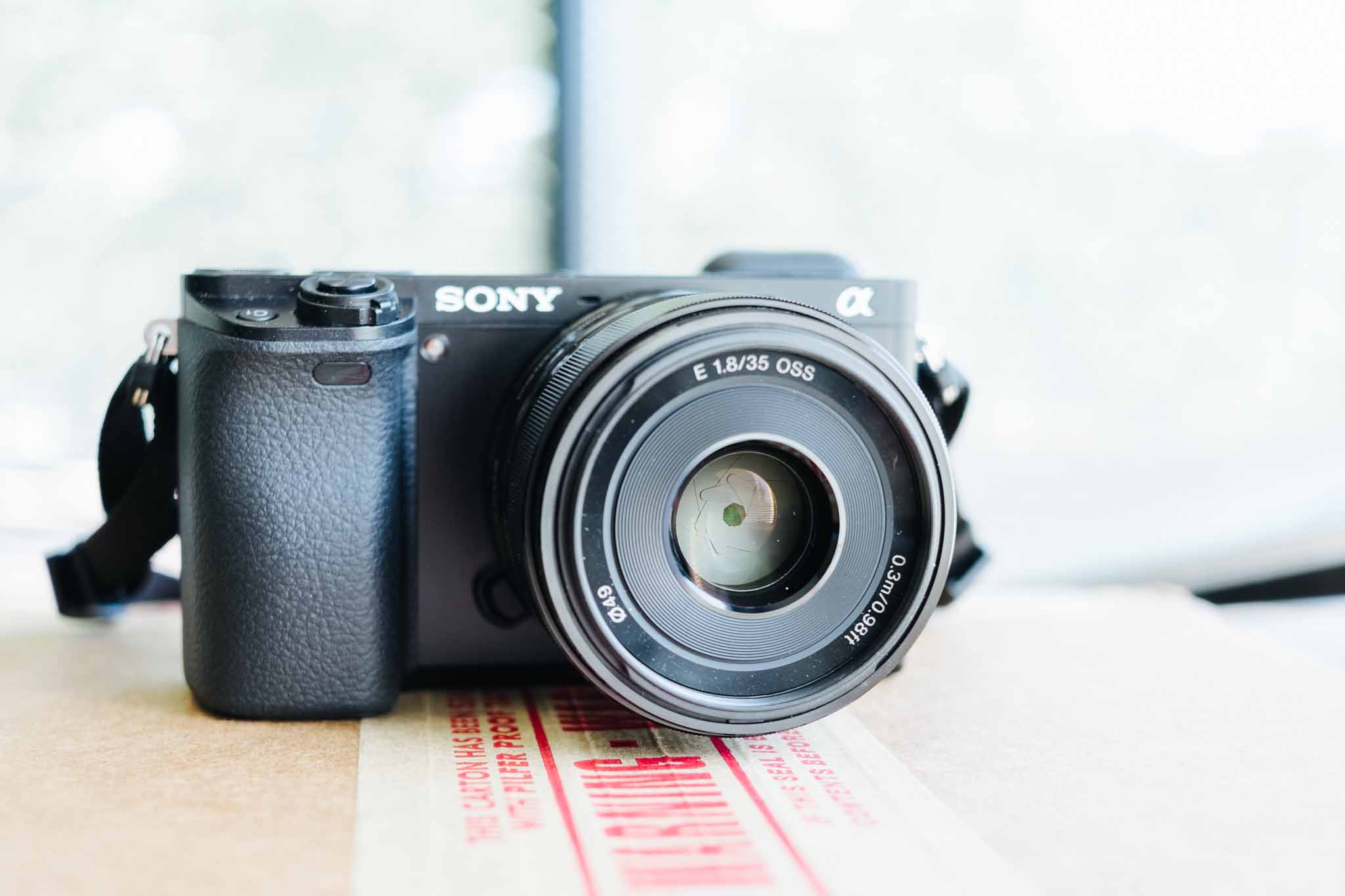
    For the duration of my testing I used the Sony 35 f/1.8 OSS lens (OSS is Sony’s version of image stabilization). What I found with the A6000 surprised me quite a bit, it’s actually quite an excellent camera.

    Handling

    Handling, or how a camera feels in your hand, can make or break a camera experience — this is also highly subjective, as everyones hands are different.
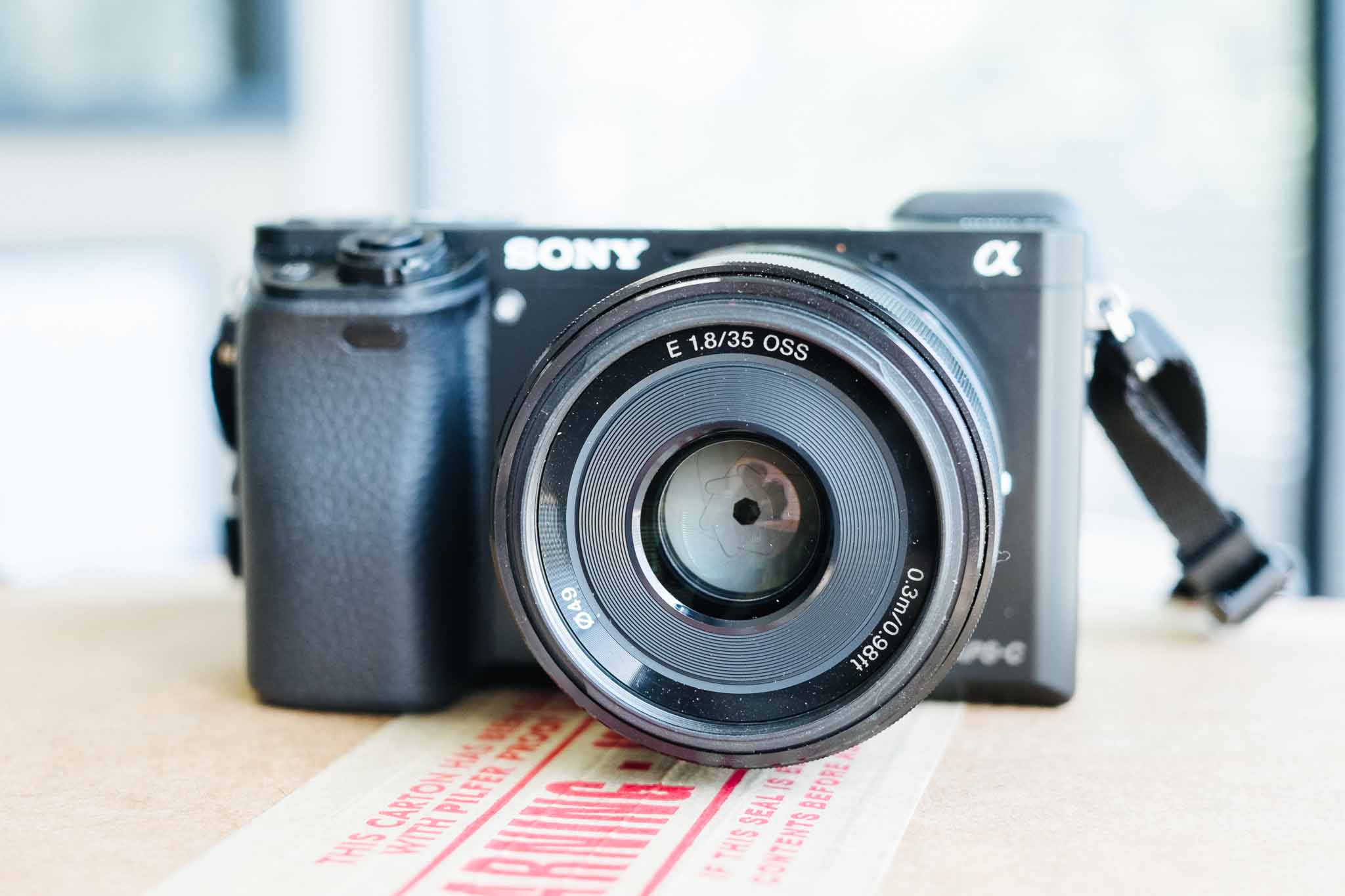
    To my hand the A6000 feels very comfortable with the large grip making the camera easy to hold with one hand, while never feeling like you might drop it.

    With the exception of the shutter button, all the buttons on the camera feel good. Not excellent, but good. The thing to remember is that this is a plastic camera body, with plastic buttons — everything feels like plastic. Nice plastic, but still plastic.

    That’s about where my compliments on the handling end.

    The shutter button is too easily pressed, and there were many times when I intended to half-press the shutter to lock focus, and instead snapped a photo. With longer use, this probably becomes less of an issue, but the feel between half-press to exposing the image is so subtle that I have a feeling I would always end up with a few accidental photos. This is the first time I have ever felt this way about a shutter release.

    The two main dials, one for the mode setting, and the other to adjust controls are backwards. With the mode being in a very convenient spot for your thumb, and the dial where you would actually adjust something like EV, Aperture, or Shutter, being in a very awkward spot for my thumb. Essentially requiring me to hold the camera slightly less securely to use it. This drove me nuts as I felt like I was doing thumb contortions to get at the dial.

    But that’s not the worst handling issue — the dedicated movie recording button is. I’ve been told that this button location used to be worse on the NEX lineup, and so it was moved out of the way. It is now in such an awkward spot that I would not recommend anyone press it while holding the camera with just one hand. Now, for recording movies it makes sense to hold the camera with two hands (for stability), but even so this is a dumb place for such a button.

    Beyond those comments I didn’t get to use the camera long enough to find any other handling issues I feel comfortable making an assessment on.

    Image Quality

    It is top notch, and a whopping 24.3 megapixels. I’m not the right person to ask for someone to dive into the quality, but that’s not what most people want to know. Instead let me answer what I feel are the most common questions:

    • Can this take lovely pictures? Yes. But I do find the pictures to be a soft, and in need of sharpening in post processing. I found this in just about every image I took.
    • How is the noise control? Not as good as Fujifilm, but not too shabby. I wouldn’t take it over 3200 if I wanted a clean image (after noise reduction), but 6400 is fine.
    • How are the colors? Neutral, that’s the best way I can describe them. This camera lacks personality in the image tone, and some people will love that, while others (like me) will feel it looks a bit generic.

    Overall then: images need sharpening and noise reduction above 1600 ISO, and the colors lack personality. That’s not too shabby, and lets not forget you get a very large image from this camera, in a very small package.

    Auto Focus

    The fastest and quietest I’ve used, hands down. Just about every camera I have used I have been able to hear the AF motor (even Canon USM), but I really can’t hear it on the Sony. Even with my ear next to the lens, I have a tough time hearing the motor. It’s a bit unreal — like somehow the camera magically focuses without doing anything at all.

    Add to that the fact that the AF is nearly instantaneous, and always spot on. Then add to that the fact that the tracking can actually track my kid — and wow, just wow.

    This is a truly impressive AF, and I drool over how good it is. I want this in every camera.

    All of this means: AF-C is a no brainer on this camera. After a couple hundred shots I set the camera to continuous autofocus with tracking, I mean why not? I don’t hear thew noise, the camera doesn’t hunt for focus, and it always hits it’s mark. It’s astounding.

    The only complaint I have is that the stock multi-AF point mode didn’t always find what I wanted the focus to be on, and for those times it was far faster to switch to manual focus than to change modes and select the focus point. Now, that is only the case in still life photography, once you introduce people the camera tracks the people exceedingly well.

    This is a people camera first and foremost.

    Miscellaneous

    • Shutter Sound: this is actually a pretty loud camera. So even though the autofocus is silent, the shutter is really loud and higher in pitch. It’s not annoying, but no where near stealth. Everyone in the room will probably hear it. It sounds to me a bit how Hollywood makes ‘silencers’ and pistol sound.
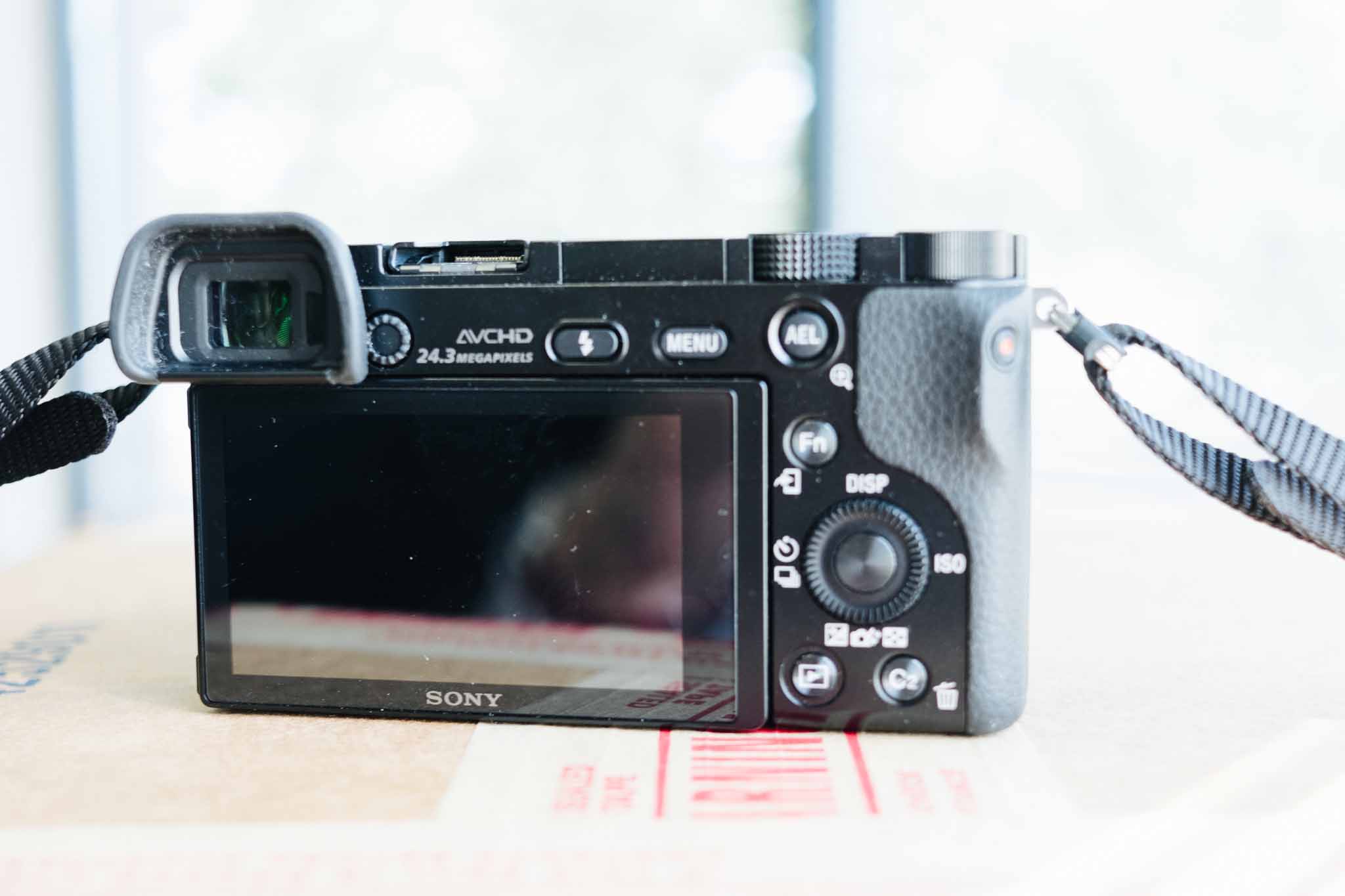
    • There is shit all over camera. One of the worst things about the camera is the excessive labeling and writing. Do I really need the megapixel count etched on the camera? No. Just look at this mess. Way too much going on.
    • The SD card slot, is the worst SD card slot in the history of SD card slots. Look at an SD card, see that indent for your finger nail? That helps get SD cards out of slots, and it is quite nice. That indent, on the A6000, goes up against the battery door, so that one must try hard to pinch the edges of the SD card to remove it. No joke, I had to use two index fingers to get my card out as it does not pop up high enough, nor offer access to the finger nail indent. I hate this so much that it is almost a deal breaker right there.
    • Eye cup: it’s huge. Like really huge. Probably great for bright light, but really kills the ability to compactly stow the camera. It can be removed, but then the glare is terrible on the EVF. For how small the camera is, the eye cup is comically large.
    • Manual Focus isn’t great, it’s not bad, but I had trouble with it unlike I have had with other cameras. This just is not a camera meant to manual focus, and why would you with how great the autofocus is.

    Overall

    This is a camera that is very easy to use and a camera that you can trust. ((WiFi could not be tested because this reviewer was running a beta of iOS.)) What I mean is that you can set this camera to P mode, and hand it to anyone and trust that the camera will do a pretty epic job of making sure you get a decent photo — especially if that photo is of people.

    In other words, close to the opposite of a Fujifilm camera as you can get.

    Because of that, I found myself getting a little frustrated with the camera at times. I felt like I had little control over the exposure even in Aperture Priority mode (my preferred mode of shooting). That has nothing to do with a flaw in the camera, as much as it has to do with a flaw in the photographer. The camera never let me make a mistake, and so I never really felt like the images were ones I was making — as much as images the camera was making.

    So who then is this camera for? Well I can think of two people:

    1. Someone who wants really good images, without having to ‘learn photography’. And I truly do not mean that as a back handed compliment to the A6000 — it’s actually kind of impressive if you think about it. I tried to find something where the camera would screw up, but I couldn’t.
    2. Anyone with kids who want images that are in focus of their kids. Seriously, if you want a small camera that can track sports, and active kids — this is the camera to buy. No joke, I wish I could have one of these just for the times when I know the kids are going to be active (waking hours). This is a beast of a camera for focus tracking.

    Those two categories, unsurprisingly, encompass a large swath of people. Where a person is likely not to enjoy this camera is if they like a bit more manual control. Everything is done with odd buttons and very few dials on this camera. This is a tough camera not to like, and surprisingly (to me) I really do like it.

    This is a people camera and, luckily for Sony, people tend to mostly take pictures of other people. I won’t replace my Fuji for this, but this is a very tempting and very good camera. Perhaps the best people/family/kids camera I have ever used.

    Buy It

    Buy it at Amazon.

    Or buy it from B&H Photo.

    Photos

  • iOS 8 Extensions

    Federico Viticci dives into iOS 8 extensions:

    With less annoyances, faster access to information, and better communication between the apps we use every day, iOS is growing up. Apple put the ball in the developers’ court, and now they have to figure out how they can improve the ways we use our devices every day with more flexible, powerful apps.

    These are going to be very cool. Can’t wait.

  • Leadership and Work

    Michael Lopp:

    The work isn’t hard because of the things you know; it’s hard because of the unknowable. This piece is not an argument for more leaders, it’s a request to appreciate that the unknowable arrives – every single day.

  • Our Favorite Cameras

    Interesting poll results over on The Online Photographer. I was surprised to see the Olympus OM-D E-M5 come in at number 2 overall — though it is a very good camera (even still).

  • Quote of the Day: James Fallows

    “Just as it would have been bullshit a generation ago to say that TV Guide was 20 times better than The New Yorker because it had 20 times more subscribers.”
  • Six-Hour Workday Experiment

    Chris Gayomali:

    The year-long project, set to officially begin July 1st, will divide some workers into two groups. One enviable test group will work shorter days, while their colleagues will work eight hours each day. It is unclear how this will be decided exactly, but it is an experiment designed to test growing assumptions that fewer, more-focused hours could be a boon for employee productivity.

    It will be interesting to see what they learn. A lot of people love working “Four Tens” where you work four ten hour days instead of five eight hour days. However research seems to point to that being a poor choice overall for workers. I’d be a big fan of six hour work days overall, as I am pretty sure that is about the total amount of productive hours I get out of people.

  • Math Victory in Seattle

    Cliff Mass on the Seattle School Board’s vote to remove bullshit math courses from Seattle elementary schools:

    Finally, Seattle students will be spared  fuzzy, discovery math in which senseless group learning, essays, and excessive calculator use have been the rule.

    This makes me happy.

  • Continuity is the future of Apple

    Serenity Caldwell:

    Apple has made a promise here: The future of computing should be free of file limitations and processor speeds, of screen sizes and portability. It should render the hardware invisible and put the focus on the work you’re doing.

    It all comes down to how well the system works. It must always work or people will stop trying to use it.

  • Tobias Frere-Jones on Helvetica for Yosemite

    Interesting thoughts, but nothing that we haven’t heard. I can’t speak to non-retina displays, but for a retina display MacBook Pro, I don’t see any issues with Helvetica.

    Though, I still don’t like to read articles set in Helvetica.