Year: 2014

  • Review: Tom Bihn Founder’s Briefcase

    A few months ago Tom Bihn announced the Founder’s series of bags — specifically creating a backpack and briefcase. Both looked neat to me, but the backpack wasn’t one I was likely to ever use. The briefcase, however, intrigued me a bit more. Tom Bihn sent me a review unit of the Founder’s Briefcase to check out and I have been using it for about a month now.

    This is a really odd bag. Over the course of using it I have gone from being in love with it, to being indifferent about the bag. It’s a clamshell design that has a very large zipper running around it — this allows for the bag to open completely flat so that you can leave your laptop in it as you go through TSA checkpoints, or you can just unzip the top and grab what you need (including your laptop).

    The Look
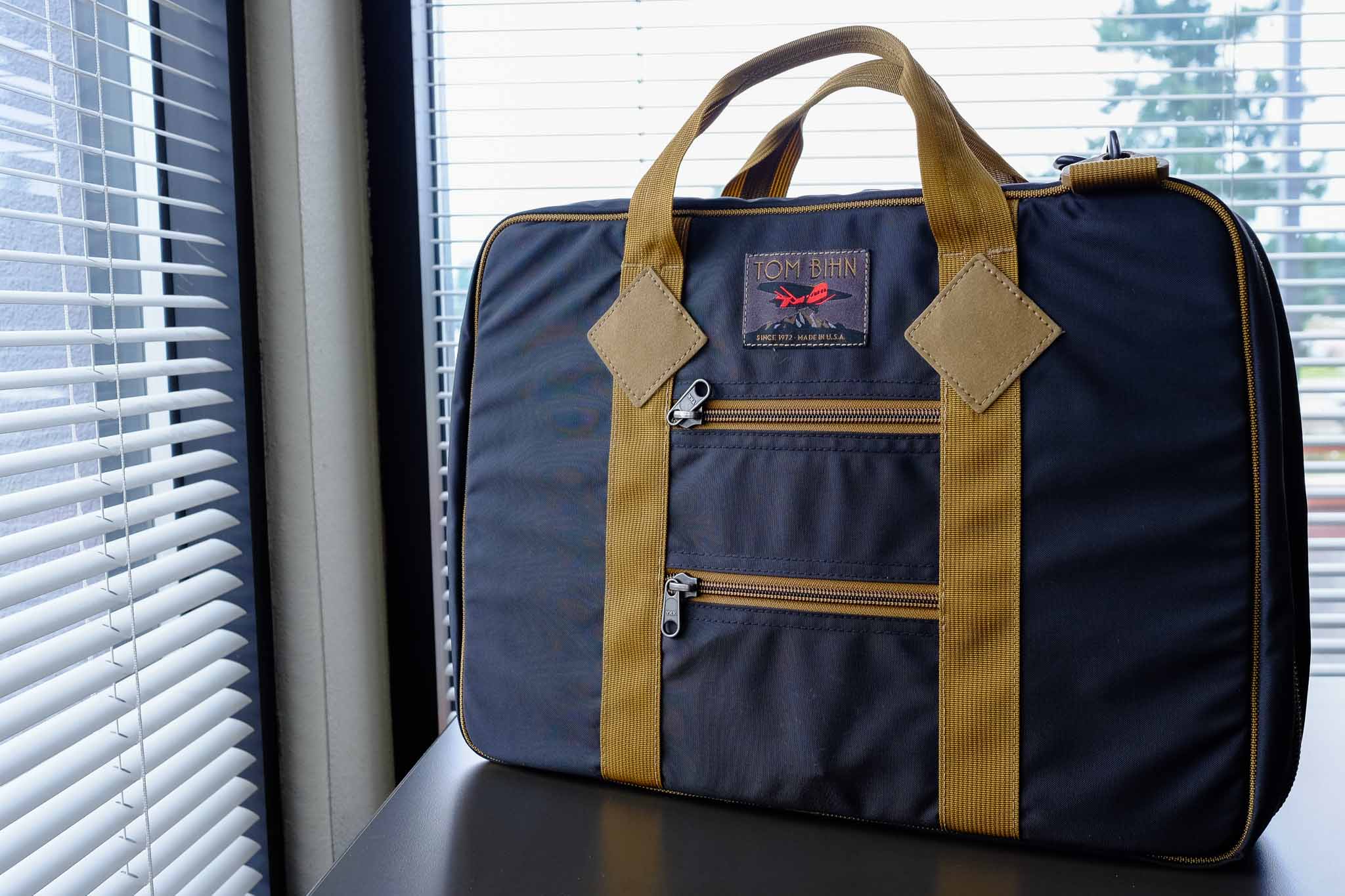
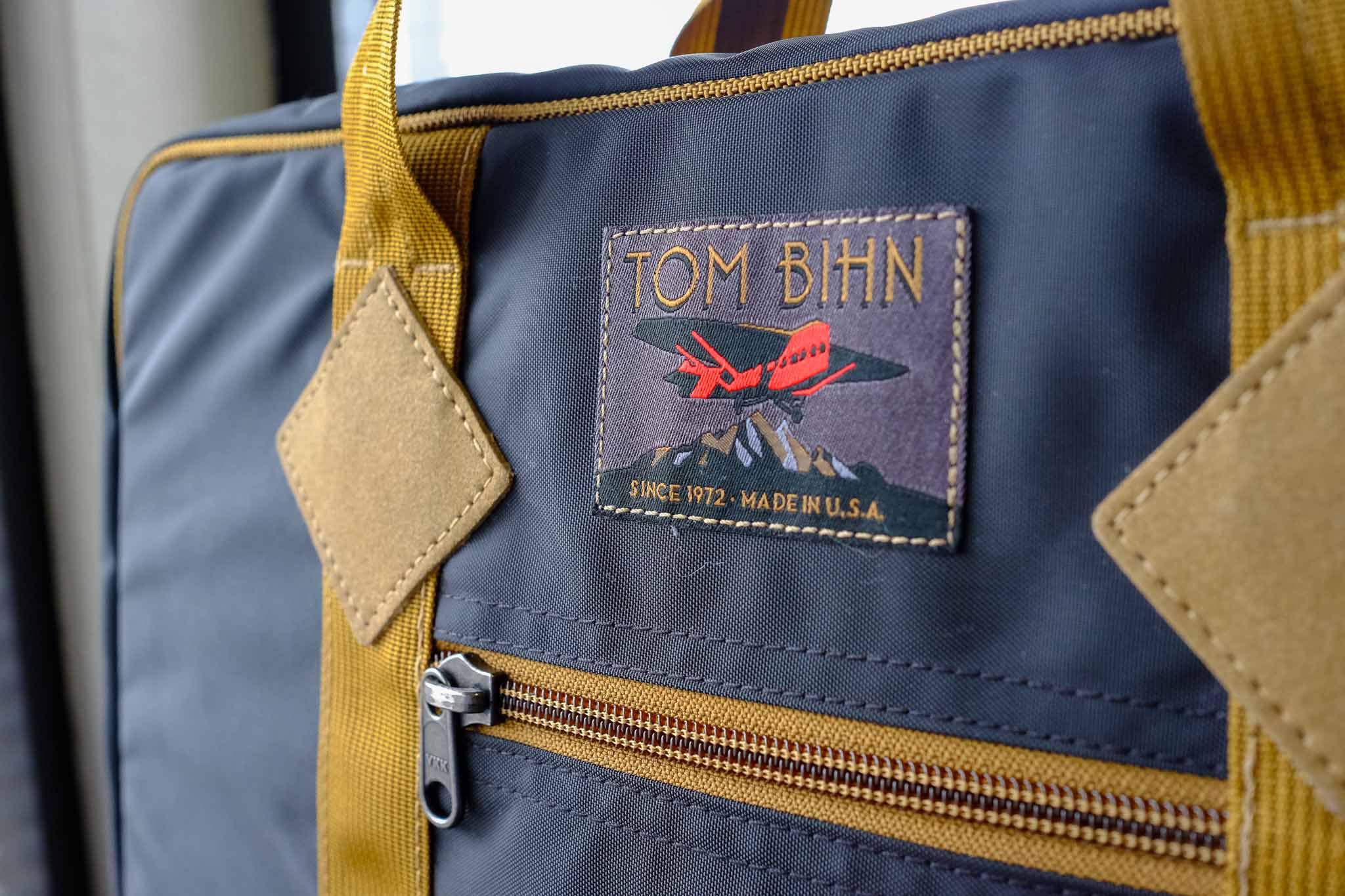
    What drew me to the bag initially was its look. Likely not everyone’s cup of tea, this bag screams Pacific Northwest style to me. You wouldn’t be out of place using this bag in Seattle with your Filson jacket on — it seems designed for the casual northwest businessman.
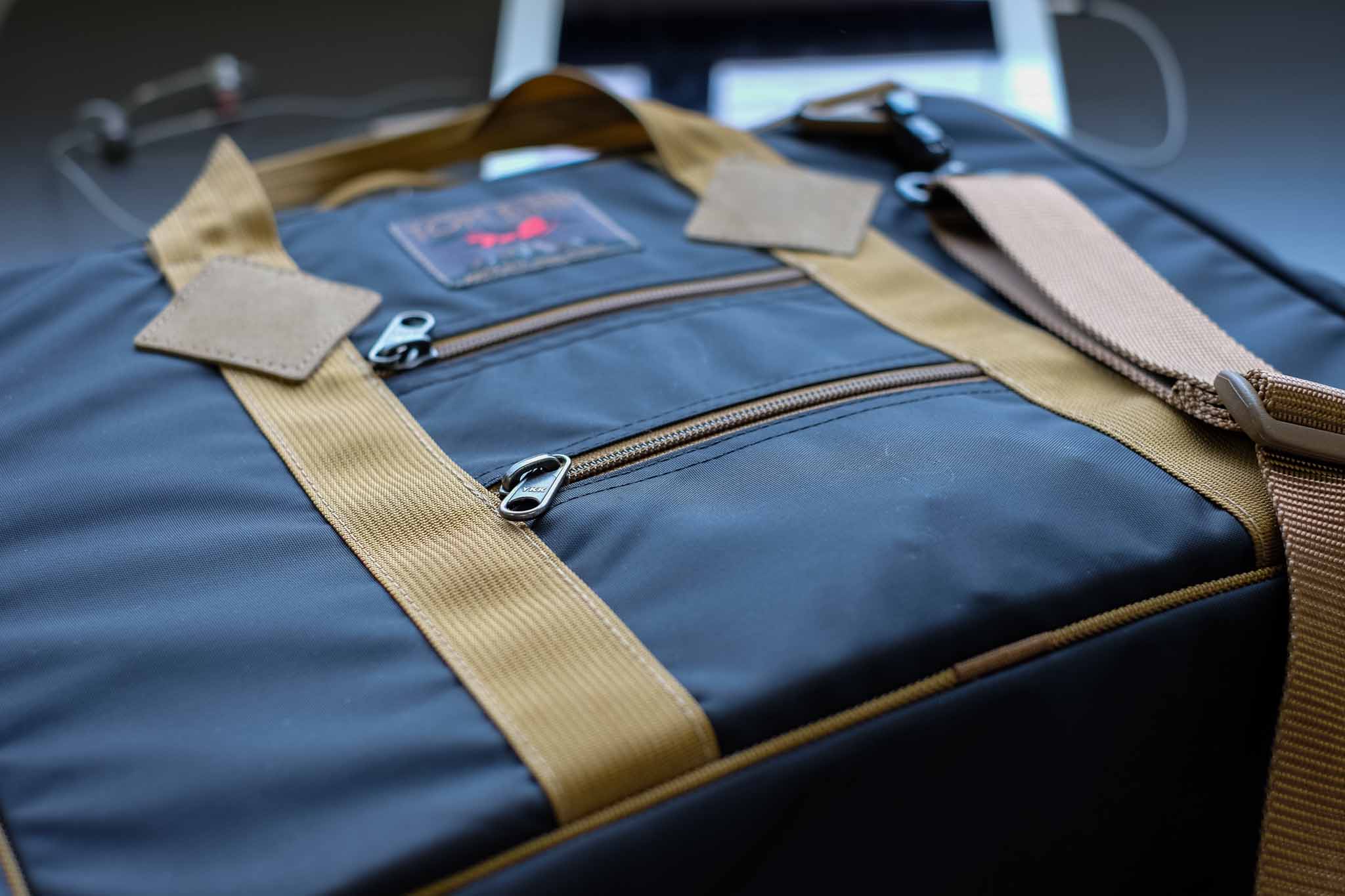
    Surprisingly the bag material had more of a sheen to it than I had expected, as the nylon used is a bit shiny for my liking. It’s not enough to ruin the aesthetic of the bag, but I personally think it makes the bag look too retro (even though that is the point), instead of making it look retro ‘inspired’. ((I really hate having to use that terminology.)) That’s a tough distinction, so you’ll have to judge from the pictures for yourself how you think the bag finishes.

    There’s one other aspect of the design that I love: the clasps on the shoulder harness. They are a bit large and metal — seemingly out of place on the bag — yet they are my favorite part. They are such nice detail and the fact that they mate with plastic means you won’t get that metal squeak.

    I think of this bag like a plaid flannel shirt — it can be very handsome, but can also be woefully out of place. Personally, I have a couple plaid flannel shirts.

    The Function

    So the design is niche, but well done. How about the functionality of the bag?
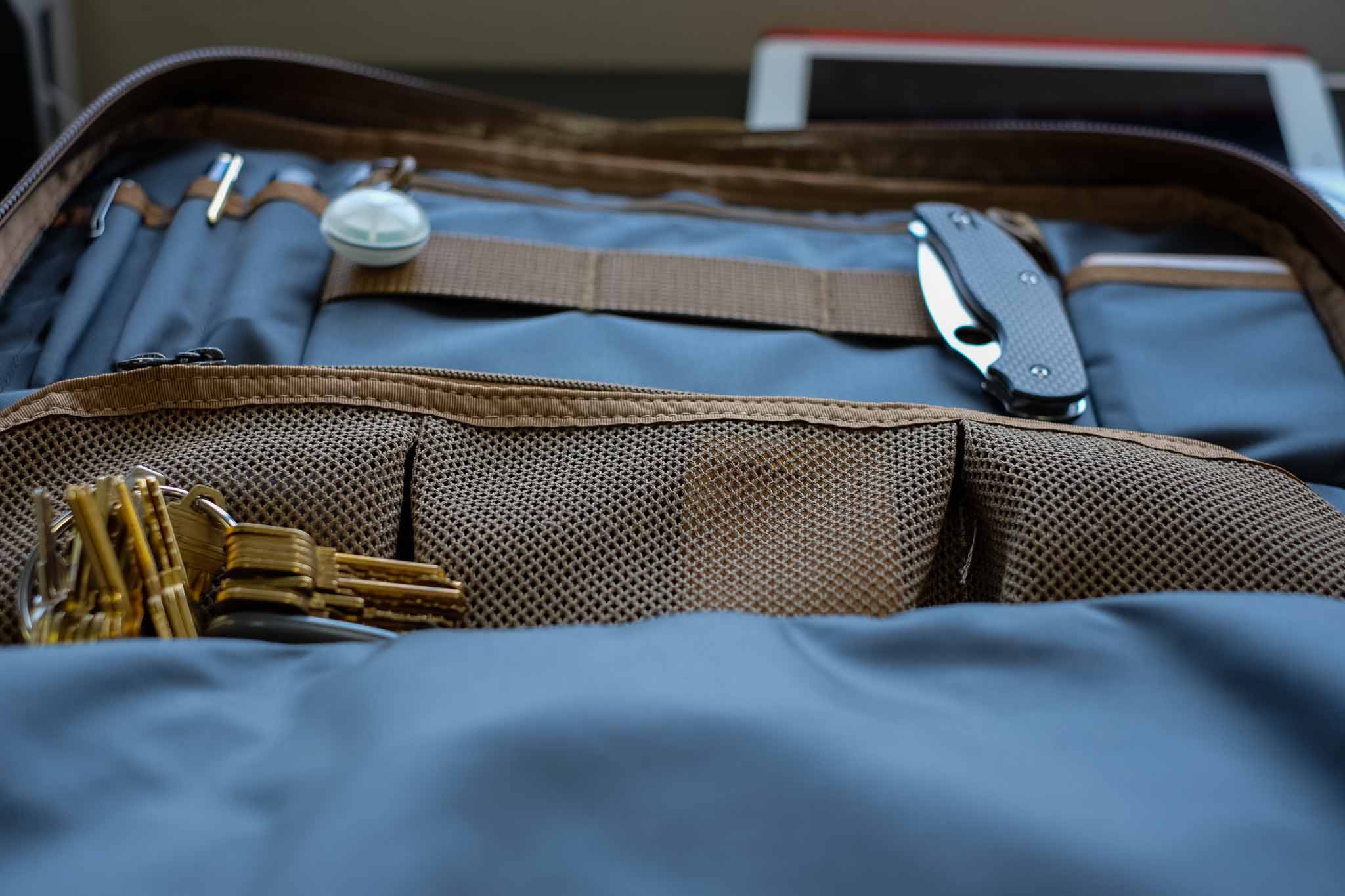
    I hadn’t used a shoulder bag in quite some time, so I was leery that I would enjoy it. I was proven wrong on that account — and while I still think backpacks overall are better, I’m hard pressed to find faults with the bag other than “it’s not a backpack”.

    This briefcase functioned exceedingly well in my day to day usage. There’s an option for an interior packing cube, which Tom Bihn sent to me, that I find rather unnecessary as it seems much too small to be useful and I found it just got in the way for me. The packing cube could be useful if you are prone to carrying a really light weight rain jacket — or a t-shirt — outside of that I don’t see the utility.

    It’s nice to know you can add a packing cube, but I’d rather see the mount used for an iPad sleeve or something of that ilk. Speaking of which, there is a “tablet” pocket in the bag which is fantastic — but only if you own an iPad mini or smaller tablet. It’s a pocket on the inside of the bag that is lightly padded with a bit of rigidity added — overall a wonderful touch. I just wish it fit an iPad Air instead.

    This tablet pocket is a design element I hope to see in more bags.

    There are two things which, functionally, I don’t like:
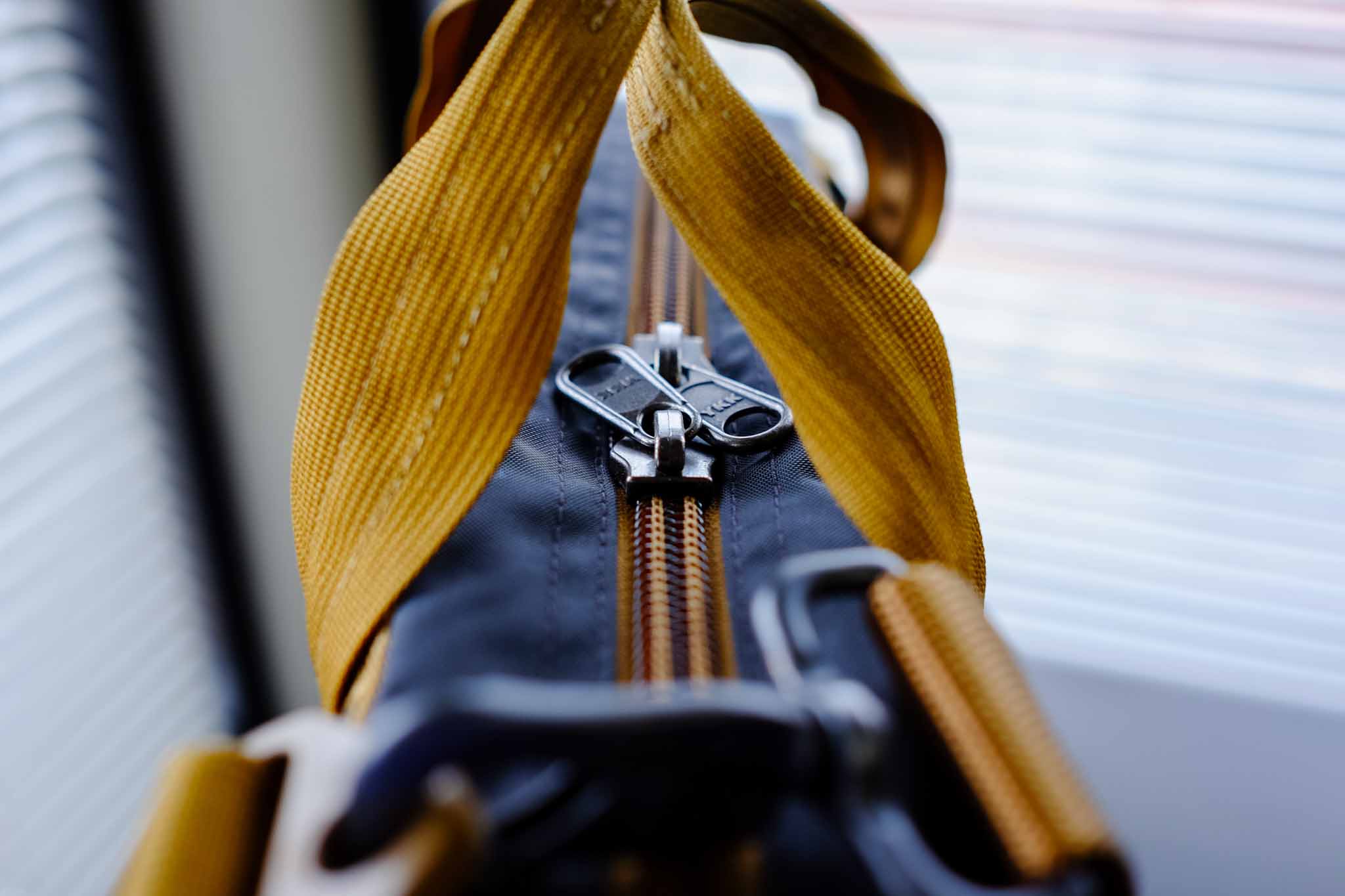
    The hefty zippers.
    Faux Molle straps.
    1. The zippers around the clam shell are large, which makes them tough to get moving, often causing me to lift up the bag from the resistance met with the zipper. The zippers are also pretty loud, and I much prefer quieter zippers for the same reason I hate velcro on my bag — the Goruck zippers are great in this regard.
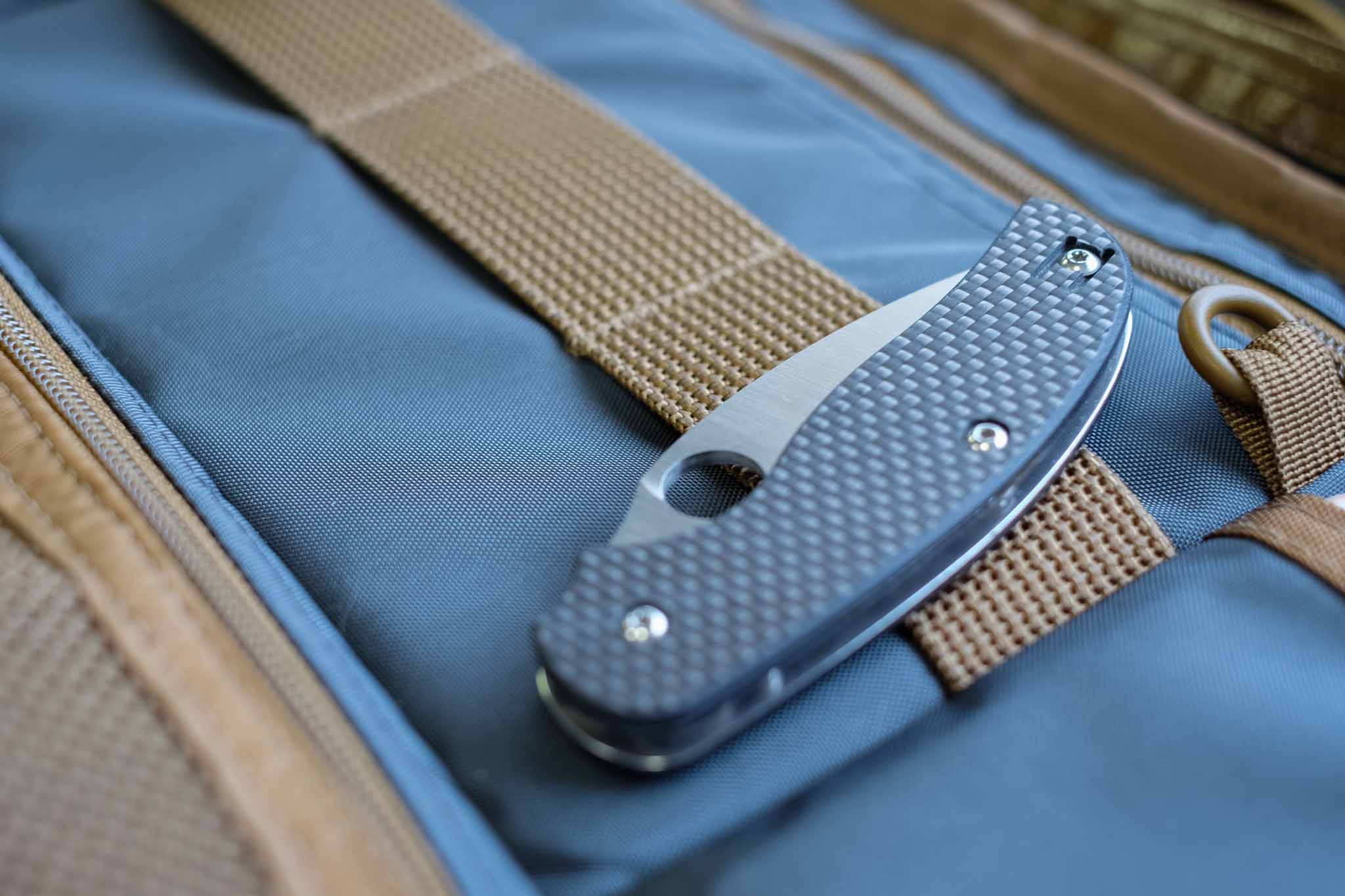
    2. There is a quasi Molle bit of webbing on the interior of the bag, three rather flat loops. They are really thick, and shown on Tom Bihn’s website as holding a great many things. I don’t get them. I think this space could be better served with more pockets instead of this strap system. Really seems like a waste.

    Aside from those two things, I have no other complaints. I like the two small exterior pockets and I really like the mesh pocket strip along the bottom on the interior of the bag — it holds a lot more than I would have guessed.

    Overall
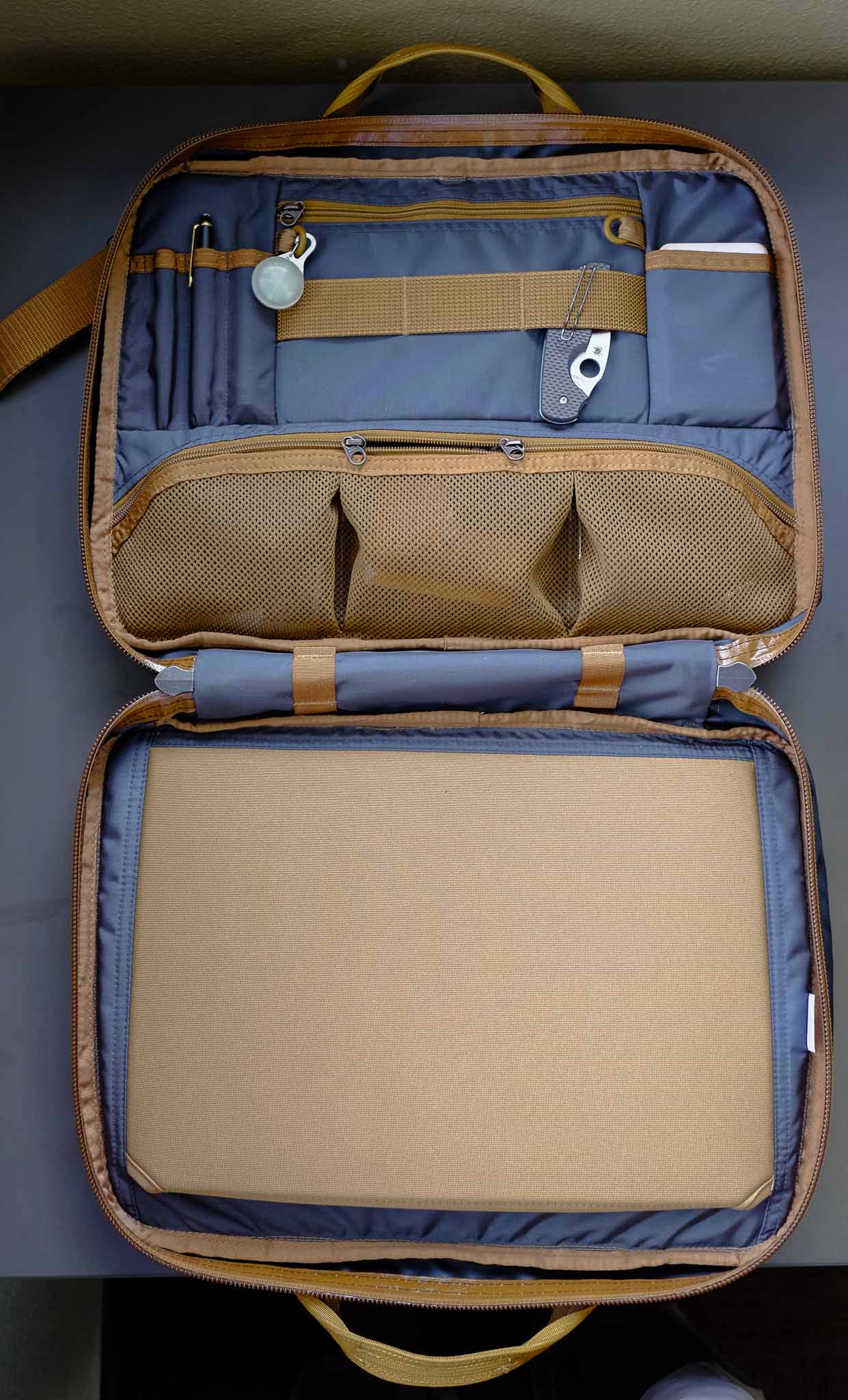
    What I really liked about this bag was the ability to leave it standing (it stands well on its own) and zip just the top open to grab my laptop, or iPad — while reserving the option to lay the bag on its side and open it all the way. It’s a nice compromise in that you can easily use the bag as a top-loader (as I do 90% of the time), but it doesn’t bat an eye lash if you want to open it all the way up and lay it flat. This makes it a solid day-to-day option for the traveling person and excellent for neatly packing away your items for a longer journey.

    I really like the look of this bag when it’s gray and rainy here in the Northwest, it seems to fit in very well, but it stands out just enough to not be boring. I won’t be switching to this bag (since I prefer the extra room a backpack affords), but for those of you not on my backpack bandwagon you will find this to be a very solid alternative.
  • Should iOS7 Be an Embarrassment?

    Gabe Weatherhead:

    Even I consider iOS7 to be a great source of jokes about software crashing. That’s going to be a hard train to turn around.
    I really believe that Apple has harmed their brand with iOS7. It’s more devastating than any Samsung ad campaign.

    Really? That’s not been my experience at all. Yes, iOS 7 has crashed on me more than iOS 6, but Weatherhead’s statement is pretty strong. I wonder what real data can tell us.

    Mind helping?

  • iOS 7.1

    Linking to CNET because they have a screenshot of the new call screen. This is the biggest change for me — that both the active call screen, and the answer screen have been changed. I won’t dive into the design, be it good or bad, but the end button is now something closer to 1/3 the size it used to be.

    That’s going to take a lot of getting used to.

  • A Couple More Fujifilm X-T1 Reviews

    I’ve read a lot of X-T1 reviews, but there are only a couple that I think are well rounded enough for people to read.

    The first is by Michael Reichmann at Luminous Landscape. One part that he dislikes on the X-T1 — which I hadn’t considered — is the lack of custom control settings:

    Many, if not most cameras these days have grouped custom settings. This allow a wide range of desired settings to be combined into a single setting and this then assigned to a custom function button. That’s the way I always work. I have at least two custom settings, one for everyday walk-around shooting and one for a situation such as illustrated above, where I need settings appropriate for fast action. The geese may fly by, there could be a fight across the street, a scaffolding is falling off a construction site – press a single button and you’re ready to capture the shot.

    I think this is a strong point, but the same complaint could be made of using a manual focus lens. It’s a limitation of the style of the camera, not so much the camera — and therefore it is a choice the user makes. I think that just makes his point a ‘thing’ and not so much a detracting feature. Certainly an important ‘thing’ though.

    Steve Huff also posted his review and he is typically hard on Fujifilm, but not so much this time. His review I find to be fairly accurate and nothing sticks out at me as “hey, that’s wrong”. Having said that I don’t like the way he compared the noise between the X-T1 and the E-M1. ((These fucking camera names are going to be the death of us.)) I specifically don’t like that he is comparing the JPEGs and not the RAW files — now the X-T1 isn’t supported yet by a lot of software, so that could be the reasoning, but still.

    Personally I think Fujifilm has the best noise control of any camera on the market today — and I am not the only one. However Huff mentions that the JPEG noise reduction can cause “issues”. I know what he means, as I could only use X-T1 JPGs for my testing, this 1-month photo of our daughter looks overly smooth in the skin because of that noise reduction. So while I personally think the X-T1 bests the E-M1 in noise control by a strong margin, I do agree that I wish noise reduction could be turned off.

  • Apple’s iSight

    I had one of these, and one of the biggest tech regrets I have is selling it off. It was a fantastic design, and the mechanical privacy shutter was light years ahead of its time.

  • Not Being Connected

    John Carey:

    This was just before the hysteria of smart phones took over our lives. If I remember correctly, I was carrying the recently released first generation of iPhone with me which went mostly untouched during the trip. While it was a cool device, my world didn’t revolve around it, I didn’t feel the need to be connected at all times and share constantly to keep everyone in the loop.

    He may be known for his image, but the words accompanying his image is fantastic.

  • Choosing a Good Portrait Lens

    File this in the department of things I didn’t know. Mike Johnston, in talking about the Fuji 56 f/1.2 lens, talks a bit about why a portrait photographer doesn’t necessary want the sharpest lens:

    The texture of makeup and temporary pimples just aren’t needed for recognition purposes, and the brain tends to naturally “throw away” that information. It’s not that we don’t see it, but we overlook it. To be psychologically accurate, portrait photographs should too.

    Worth reading his post, really interesting thoughts.

  • Analysis: Fujifilm X-T1

    This is going to be an analysis, more than review, of one of the ‘hottest’ cameras to come out: the Fujifilm X-T1. It’s an analysis because this camera has been reviewed to death. That said, I wanted to share a few of my thoughts on this new camera and take a practical look at what type of person this is ideally suited for.

    The Appetizer

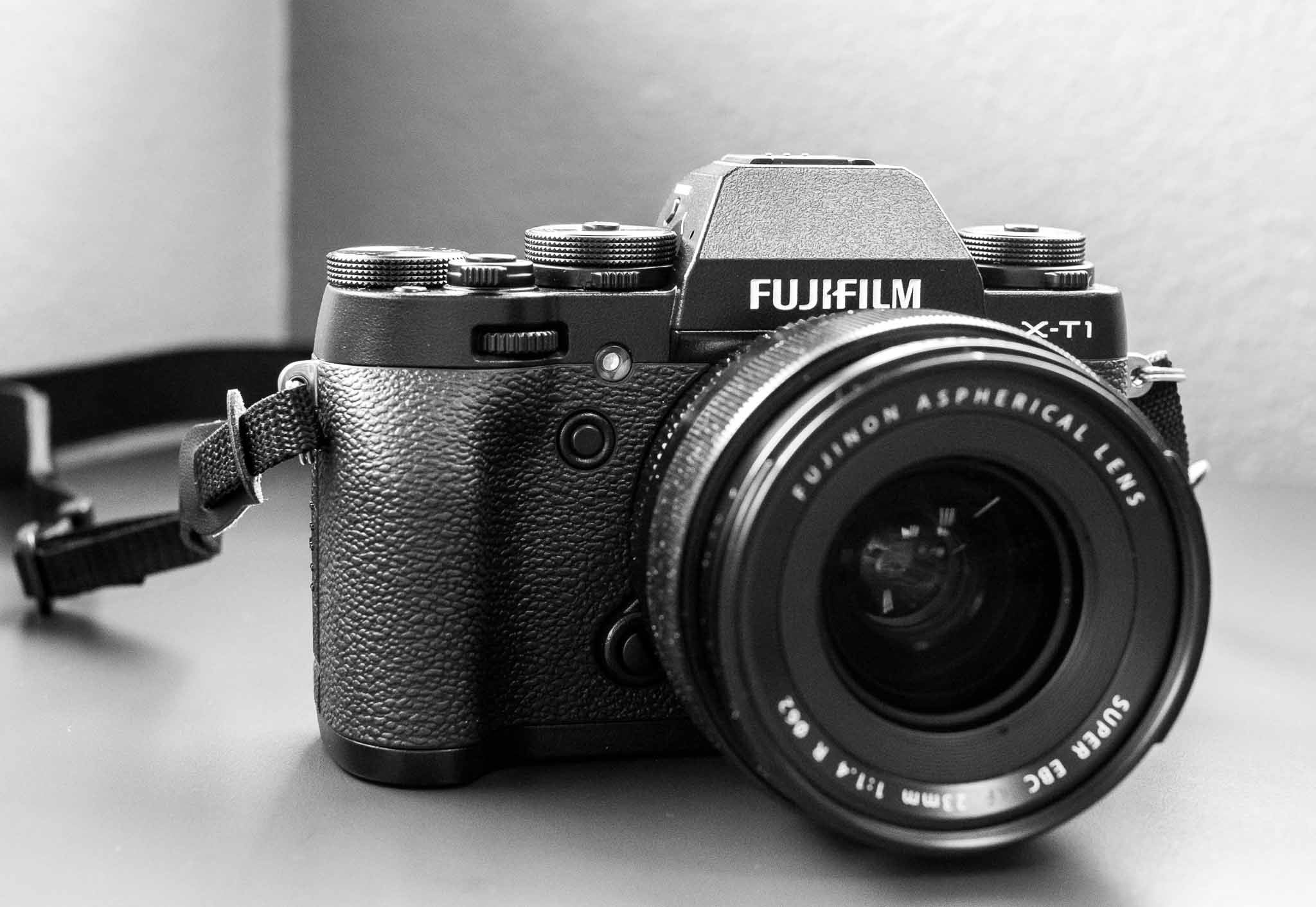
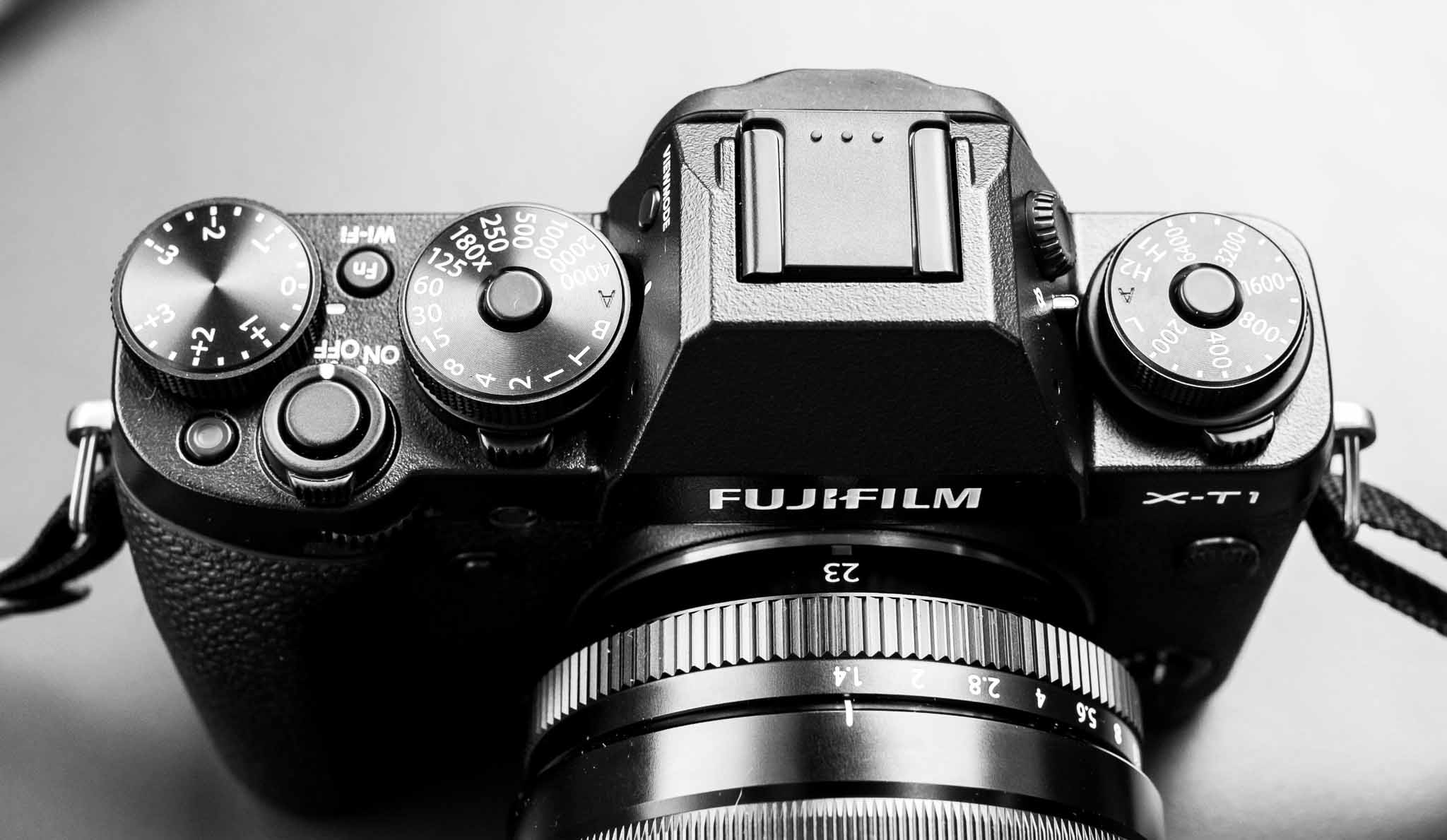
    Overall the camera feels absolutely great in my hand. The balance, grip, and size are very well done. It feels solid too, but also light weight. As far as handling, it is near perfect for me. I personally think the camera balances best with the heavier 23mm 1.4 lens on it, but the 35mm 1.4 makes for a really nice and light setup if weight is of concern.

    The big draw of this camera is the fact that it has more manual dials on it for controlling camera settings. While it is rather overwhelming at first (a lot of what’s this, where’s that), within an hour or so of shooting I became very well accustomed to where and what each dial was — and in fact was really enjoying them.

    I do have a few concerns on the button and dial front:

    • The exposure compensation dial is difficult to turn with just your finger. This is nice because it won’t get as easily shifted as the X-E2 dial, but also hard to use if you want to hold your framing while adjusting it.
    • The ISO dial is a welcome addition, but the dial is locking. Unlike the shutter dial it locks at every adjustment (the shutter only locks when in auto). So you cannot easily change the ISO on the fly. This is very annoying. Even though I have taken to using auto ISO (because the noise control on Fujifilm is excellent), I still wish I could easily spin that dial with one finger while the camera was up to my eye. ((Someone is crowd funding a little sticker to go over the top and keep the button depressed.))
    • The 4-way buttons are atrocious. They are hard to press, mushy, and located very poorly. They are the single worst designed aspect of this camera.
    • Once again the playback button is in an odd spot. I’d prefer it where the Q button is, or at the very least flipped spots with the trash button.

    While I am trashing the camera a bit, there is also a rubber cover on the bottom that the grip connects to — yeah, that is going to get lost.

    Ok, that’s the extent of my complaints — seriously — because I love everything else about this camera. It is very fast, handles exceedingly well, and the quality is excellent (just as the X-E2 is). And that viewfinder is to die for, but you’ve read about that before.

    The Meat

    The big question I had about this camera is where it fits. That is, who should buy this camera? After using it for a week I came to the conclusion that this is a camera I would absolutely love to own, but not one that I would be likely to carry around as much as I do the X-E2 (which goes almost everywhere with me). While the two cameras are almost physically the same size, the addition of the viewfinder hump makes the X-T1 just too unwieldily as an everyday carry. It’s the change that moves the body from ‘kind of svelte’, to ‘you’re not stashing this away’.

    This is a camera that you purposefully choose to carry. When you get into that realm you start talking about Sony A7s, Olympus E-M1s, and of course all of your traditional dSLRs. That’s a huge market, and one that I am not going to tackle.

    Instead, I look at this camera a lot like a prosumer dSLR — and in that light how does the X-T1 stack up?

    I am a big Canon guy, so for me if I was looking to own an X-T1 I would also be comparing it with a Canon. Which brings into consideration the 5D MKIII, 6D, or 7D cameras from Canon — the price difference alone on some of these makes the decision easily in Fuji’s favor. But let’s ignore price for this.

    For me the real question here is whether the X-T1 would be a good option for someone to buy instead of one of those Canons listed above. These are cameras that are a bit too large to carry all the time, and yet are serious about taking pictures. The Canon’s across the board will take better video — not even close — so I want to caveat that now.

    The X-T1, then, offers something that the Canon lineup cannot: fun.

    I shot for many years with a Canon 5D, and I can tell you that I never enjoyed shooting with the 5D as much as I have with the X-T1. Canon’s are made for you to trust the camera, and the X-T1 seems to love you even more when you flip to manual and stop trusting it.

    The Canon wants to do things for you, whereas the Fuji wants you to take charge.

    It’s almost like the difference in car gearboxes. Point and shoots are all automatics for the most part, and SLRs used to be the manuals. That’s shifted, where now I see most dSLRs (certainly the ones I mentioned) as more of the sequential-manual gearboxes (the flappy paddle gearboxes as Top Gear would say). That is, you can still mostly control everything, but there’s a purposeful computer there to make sure you do it right. In that sense the X-T1 truly can be a manual transmission. It’s fun because you can make mistakes with it, but also because when you get it right, you really get it right and there’s a wonderful sense of perfect harmony there.

    Yes the sensors are bigger on some of those Canons, but I can tell you without a shadow of a doubt that you will enjoy taking pictures more with the X-T1 than with any of those Canons.

    Unless you are faced with the most demanding of situations for cameras (either sports, weather, or needing as much image quality as possible) then I don’t see how the X-T1 isn’t the better tool.

    It’s more fun, it’s smaller, and it’s cheaper.

    The Dessert

    We’ve come to a point with cameras where the image quality of the top of the line cameras is so good, that the sensor sizes are mattering less and less. The E-M1, X-T1, A7 cameras all offer superb image quality. You’d have to really look to find issues in any of them for most any shooting circumstance.

    This is excellent news for anyone who loves cameras, because that tech will not only trickle down, but it means you can just buy the camera that you like the best and rest assured it will serve you well even if you want to try and be a “pro” photographer some day.

    I like the X-E2 better, but that is only because the sensor is the same as the X-T1.

    Buy It

    Buy it at Amazon, or B&H Photo and you help support the site.

  • Archiving Your Photos

    Good overview of the problems from CJ Chilvers. I am taking a new approach (which I am just starting) using BitTorrent Sync and my hosted Mac mini. More on that later.

  • Trusting iCloud

    Ben Bajarin:

    Without question, iCloud still has a long way to go. However, I still believe it is one of the more encompassing multi-device synchronization engines I have used in some time.

    If the app supports iCloud, it’s all I use.

  • Focusing on the Words

    1910 Design & Communication on their blog:

    We believe that email is about two things. Reading and writing. And that focusing on these two is what would truly move email to where it deserves to be. What we propose here is not a redesign of any particular email application. Neither is it a suggestion as to how we think an email application should be visually styled. It’s an experiment of how email could be functionally improved through the use of better typography, based on the premise that structure is more important than surface.

    Really great philosophy — and I suspect, especially with iOS 7, that we are going to see more and more apps go down this road. It’s always stumped me how shitty the reading and writing experience is in email clients.

  • ‘The Face Behind Bitcoin’

    Leah McGrath Goodman reporting a conversation with Satoshi Nakamoto’s brother:

    “My brother is an asshole. What you don’t know about him is that he’s worked on classified stuff. His life was a complete blank for a while. You’re not going to be able to get to him. He’ll deny everything. He’ll never admit to starting Bitcoin.”

  • ‘Early Treatment Is Found to Clear H.I.V. in a 2nd Baby’

    Donald G. Mcneil Jr.:

    When scientists made the stunning announcement last year that a baby born with H.I.V. had apparently been cured through aggressive drug treatment just 30 hours after birth, there was immediate skepticism that the child had been infected in the first place.
    But on Wednesday, the existence of a second such baby was revealed at an AIDS conference here, leaving little doubt that the treatment works. A leading researcher said there might be five more such cases in Canada and three in South Africa.

    Awesome.

  • ‘Ukraine: Why didn’t the U.S. know sooner?’

    Sorry, I thought this was the kind of thing the NSA data collection racket was designed to “know”?

  • ‘Soon, Our Robot Coffee Baristas Will Only Brew Certain Brands’

    Robinson Meyer:

    Later this year, the company will release its “Keurig 2.0” product. It will use a whole new type of K-Cup that affords customers “game-changing functionality” and “excellent quality beverages.” To achieve all this quality and game-changery, the company will also stop supporting “unlicensed pods.”

    Won’t be long now before AeroPress models will refuse to brew any beans not purchased from Tonx.

  • ‘Facebook looks to buy drone company for “atmospheric satellites”’

    Fascinating report about Facebook buying a drone company. It’d be easy to make a joke that this takes Facebook privacy violations to the next level, but from the sound of it this a slightly more charitable deed.

    Either way, you have to think that there is a larger risk here of world governments deciding that the drone airspace needs regulation. After all 11,000 drones flying for five years straight from just one company — well it seems like we could have an aerial traffic jam.

  • ‘LA Banned Smoking E-Cigarettes in Public Places’

    I don’t give a shit about this law, but Mike Pearl’s opening salvo is why I will keep reading his articles:

    Last month, in a piece about third-hand smoke being potentially deadly, I said banning e-cigarettes “would be a fucking stupid thing to do.” Well the Los Angeles City Council is officially fucking stupid.

  • Quote of the Day: Don Craig

    “However, with the recent release of the Playboy® + Hello Kitty® Leica C camera, I feel that there is nothing I can write about the company which shows less respect than what they are doing themselves. “
  • ‘Surveillance by Algorithm’

    Bruce Schneier explaining why collecting data that you don’t look at is still dangerous:

    Computer algorithms are intimately tied to people. And when we think of computer algorithms surveilling us or analyzing our personal data, we need to think about the people behind those algorithms. Whether or not anyone actually looks at our data, the very fact that they even could is what makes it surveillance.