Top Posts

Leica Sofort 2June 13, 2024
Grand Seiko SBGX261February 23, 2023

Recent Articles

  • Daedalus Touch 1.7

    The Soulmen released Daedalus Touch 1.7 today(isn) and while I still am not in love with the app it has a really awesome feature: custom fonts. No, not custom fonts built into the app — you can add your own fonts. I’ll say that again: you can add *your* own fonts. So how do you…

    The Soulmen released Daedalus Touch 1.7 today(isn) and while I still am not in love with the app it has a really awesome feature: custom fonts.

    No, not custom fonts built into the app — you can add your own fonts.

    I’ll say that again: you can add *your* own fonts.

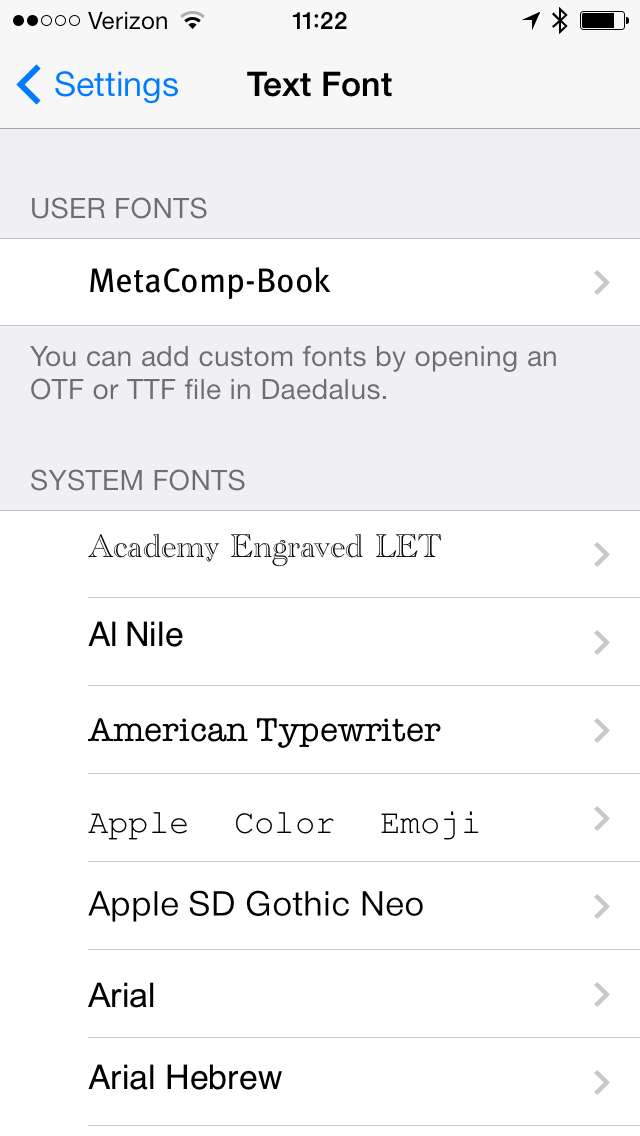
    So how do you do that? Well according to the app: “You can add custom fonts by opening an OTF or TTF file in Daedalus.”

    So I tried it with Meta by grabbing the file from the BitTorrent Sync app and opening in Daedalus. And it worked, as stated.

    *Awesome.*

    I hope more iOS apps do this, this is fantastic.

  • So This is Writer Pro

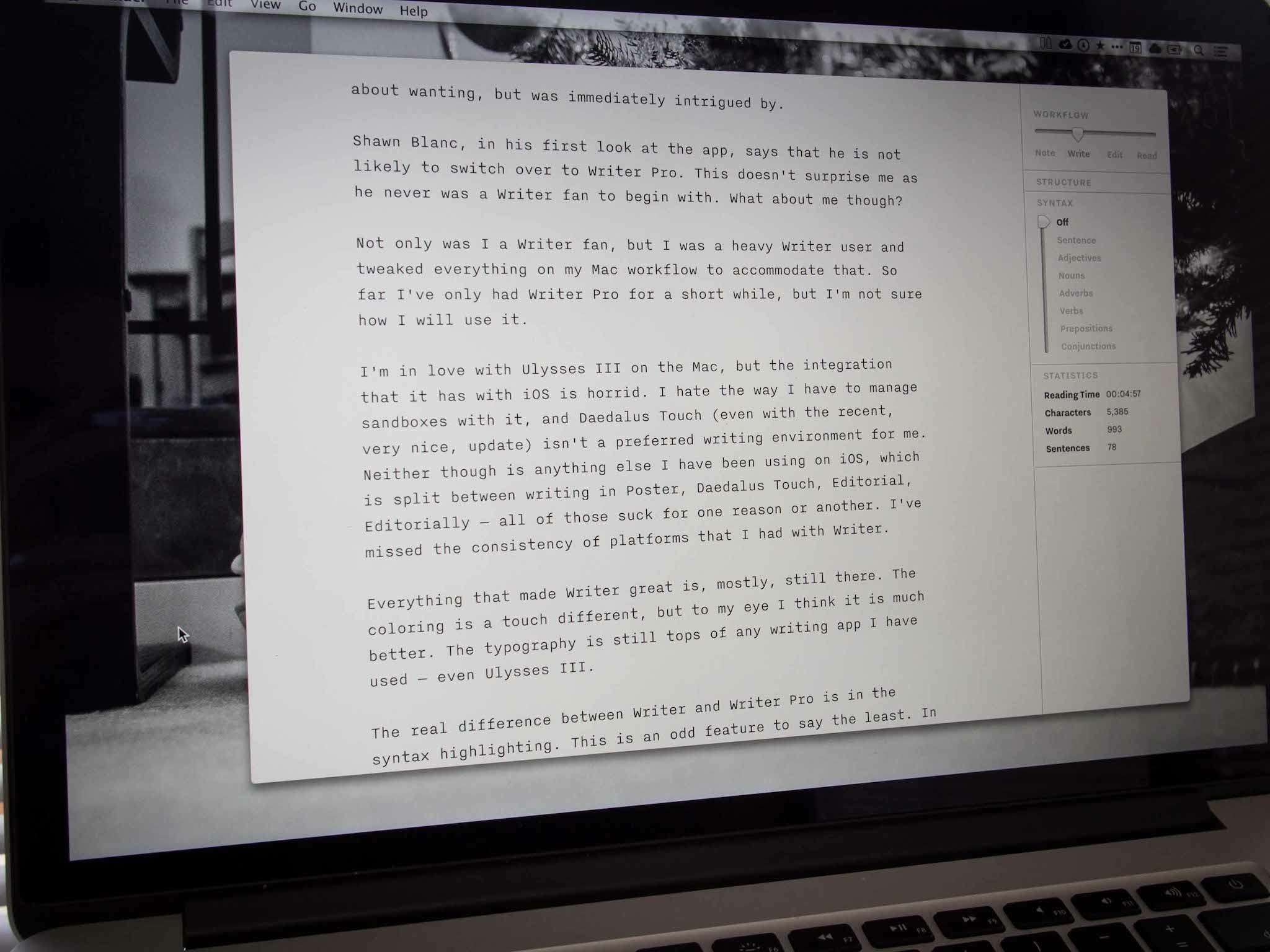
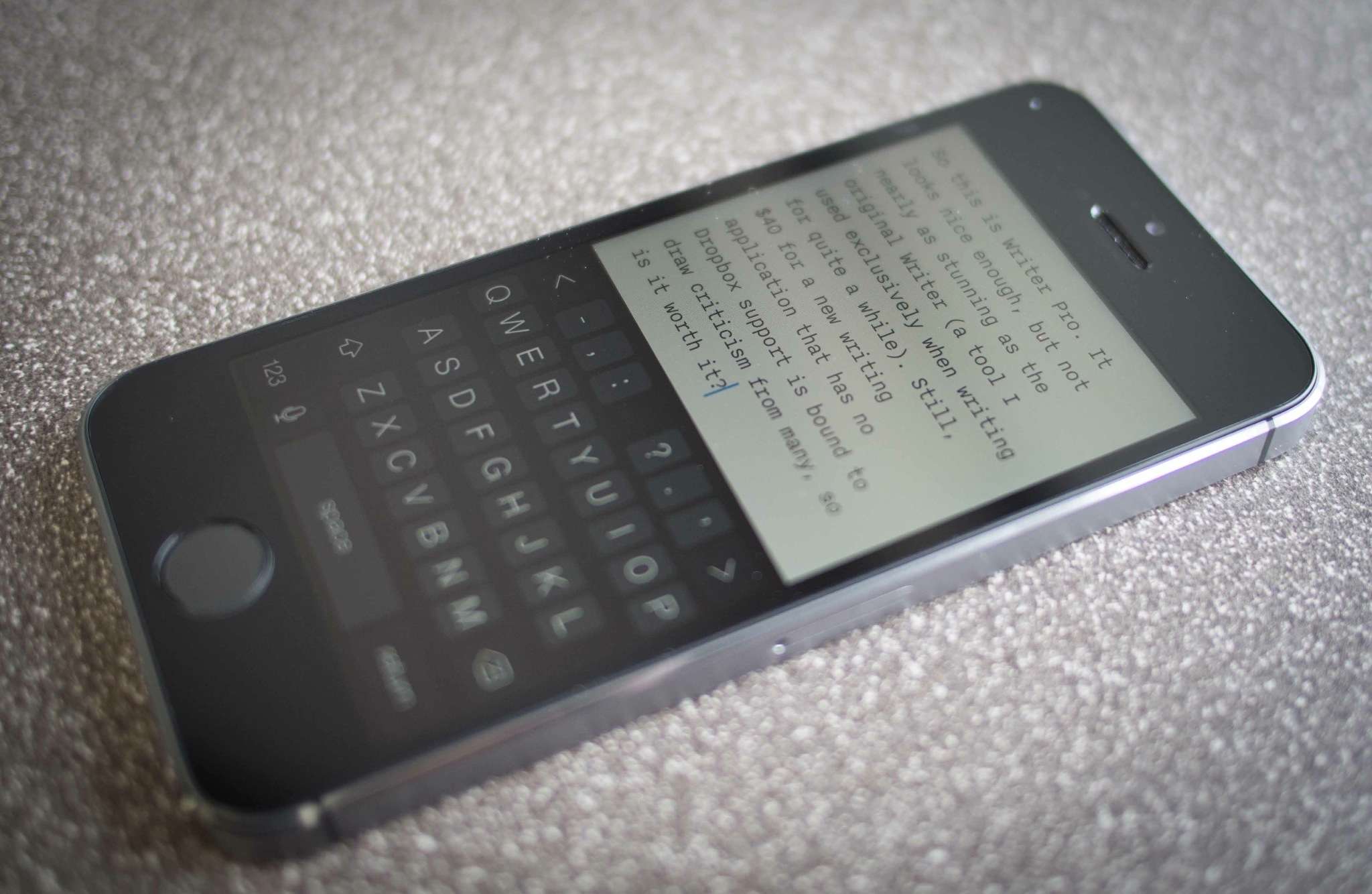
    So [this is Writer Pro](http://writer.pro). It looks nice enough, but not nearly as stunning as the original Writer (a tool I used exclusively when writing for quite a while). Still, $40 for a new writing application — one that has no Dropbox support — is bound to draw criticism from many, so is it worth…

    So [this is Writer Pro](http://writer.pro). It looks nice enough, but not nearly as stunning as the original Writer (a tool I used exclusively when writing for quite a while). Still, $40 for a new writing application — one that has no Dropbox support — is bound to draw criticism from many, so is it worth it?

    There’s of course new features, the hallmark feature being the syntax highlighting mode. (Something I’ve never even thought about wanting, but was immediately intrigued by.) But otherwise it looks the same…

    Shawn Blanc, [in his first look at the app](http://shawnblanc.net/2013/12/first-thoughts-writer-pro-ios/), says that he is not likely to switch over to Writer Pro. This doesn’t surprise me as he never was a Writer fan to begin with, but what about me?

    Not only was I a Writer fan, but I was a heavy Writer user (and tweaked everything on my Mac workflow to accommodate that). So far I’ve only had Writer Pro for a very short while, but I’m not sure how I will use it long-term. I’m not immediately enamored or blown away by it like I was with the first Writer.

    I’m in love with Ulysses III on the Mac, but the integration that it has with iOS is horrid. I hate the way I have to manage sandboxes with it, and Daedalus Touch (even with the recent, *very nice*, update) isn’t a preferred writing environment for me. Neither though is anything else I have been using on iOS, which is split between writing in Poster, Daedalus Touch, Editorial, Editorially — all of those suck for one reason or another. I’ve missed the consistency of platforms that I had with Writer.

    Everything that made Writer great is, mostly, still there in Writer Pro. The coloring is a touch different, but to my eye I think it is much better. The typography is still tops of any writing app I have used — even Ulysses III.

    The real difference between Writer and Writer Pro is in the syntax highlighting. This is an odd feature to say the least. In Writer you could enter a focus mode where all text except the sentence you are currently working on is faded back a bit. This is now part of the new syntax mode and is labeled as “sentence” (shocker). However Writer Pro brings some additions (as you have likely seen), adding: adjectives, nouns, adverbs, verbs, prepositions, and conjunctions to the mix. Toggling between them effectively does the same trick as with sentence mode, but highlights *all* words in the selected categories.

    Clearly I am not a trained writer or journalist. I couldn’t tell you the last english class I took. ((Makes sense now, right?)) But honestly I am not sure if there is some underlying logic I am missing with these highlight modes, or if it is all marketing. I have been flicking them on and off to see what I can discern and I am still not sure of the value.

    I *assume* the benefit is to help show how stuffed and repetitive you may be, but again this is lost on me. So if syntax highlighting is the premier feature of Writer Pro, then I see no reason to be enamored — certainly I will use it to see if it makes my writing better, but I still don’t get it (and I won’t pretend to get it either).

    ## The Greatest Feature

    For me the best feature of Writer Pro is the four states of working that it offers: note, write, edit, read. From the videos I thought this was a way to keep versions of the same document, and then in someway move between them, but that’s not the case. When switching between these modes you are actually just toggling a view/style change in the app.

    Each mode has a different font (though I think Edit and Read are the same fonts) and a varying cursor color. And if that was all these modes did it would be another underwhelming feature, but it does a bit more that I find pretty neat.

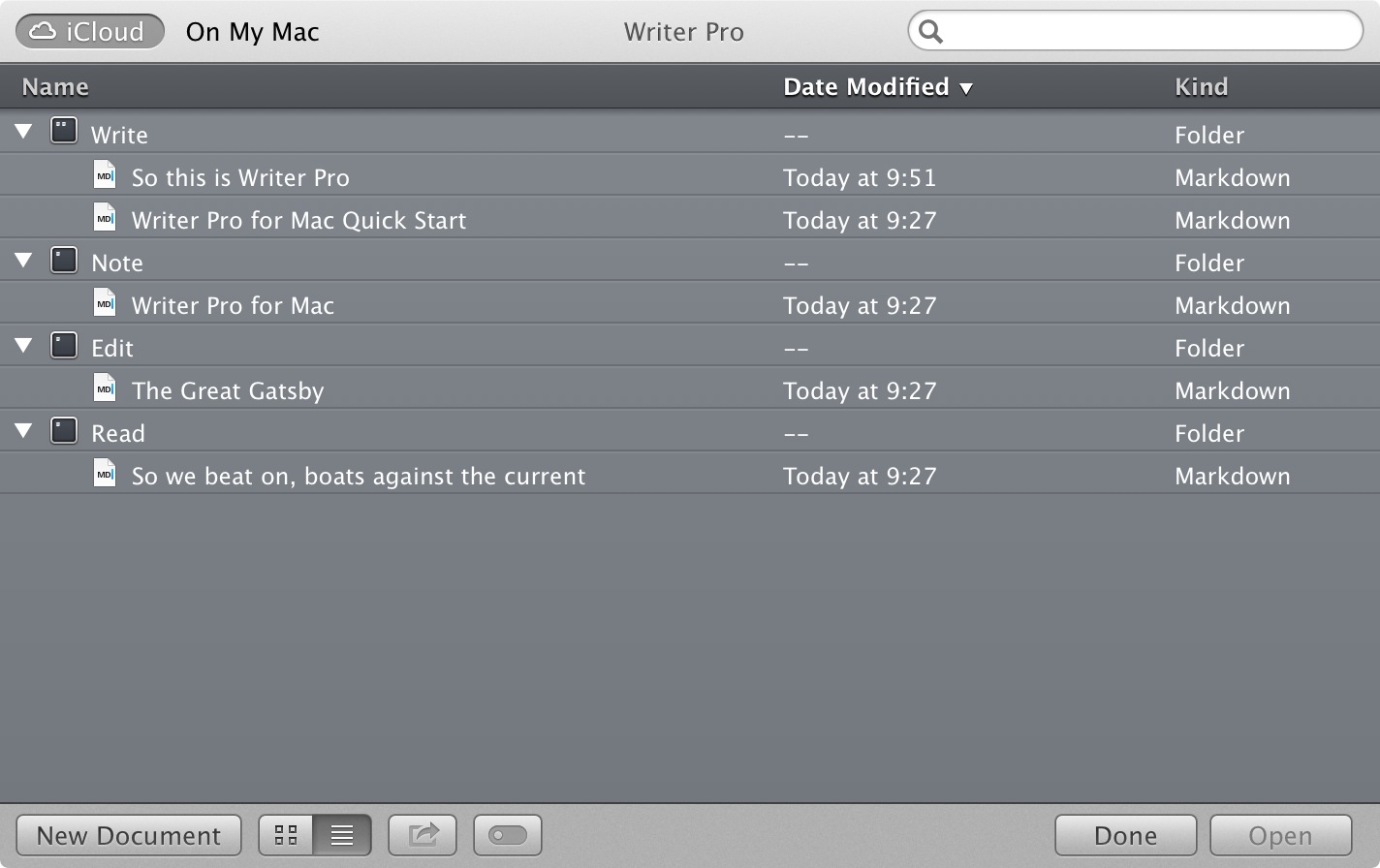
    A lot of people have been, and will be, complaining that Writer Pro lacks Dropbox sync. In fact, Writer Pro lives in iCloud — I am a big fan of iCloud over Dropbox — so for me this wasn’t an issue. The documents are nicely presented in iOS with the four workflow states acting as lists of sorts, which allow you to view all documents in note mode together, while stashing away those you may have in edit mode. It’s a nice way to keep your app from overflowing with documents — something that I have always had trouble with. It seemed like Writer Pro was just attaching some metadata to detect which file was in which state, but that’s actually not the case.

    It wasn’t until I installed the Mac app that I saw the power of this tool — and saw how this is a great feature. When you open Writer Pro on the Mac you get the standard OS X iCloud file picker — except you will see four “folders” in your iCloud account labeled: Note, Write, Edit, Read.

    Ah ha.

    Managing files in folders, and using tags, has always been cumbersome for any user, but what Writer Pro has done is exceedingly clever: they have created a slider for each document that moves the document location for you. While the user moves a documents from note workflow to write workflow — the app moves the document to the corresponding folder in iCloud. To me, that’s a bit of magic — and the outside the box thinking that I expect from iA.

    These moves are seamless and unseen to the user so effectively iA has recreated the hidden folder system that they use on iOS, on OS X. It’s a very slick setup.

    ## Until I Use It More

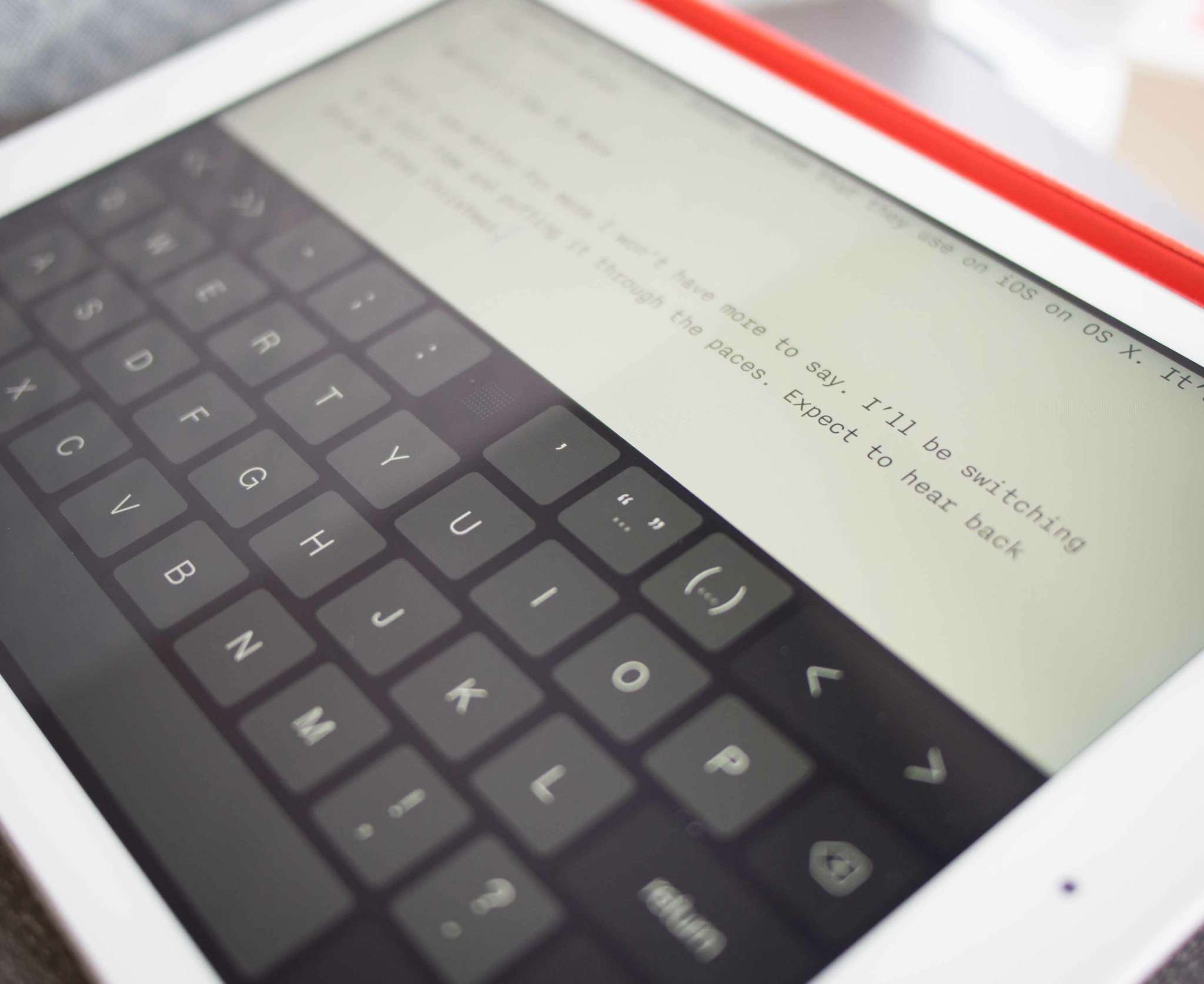
    Until I use Writer Pro more I won’t have more to say. I’ll be switching to it full-time and putting it through the paces. Expect to hear back from me after Christmas.

    ### Notes on ‘Missing’ Features

    – I’d guess that Dropbox support is forthcoming, if I recall correctly they did the same thing with the original Writer app. This is purely a guess.
    – There’s no internal versions within the app, so that’s a major bummer if you were hoping for track changes.
    – Likewise there is no collaboration feature, so Editorially is still your best bet by far.
    – There is no publish feature, which I find silly to omit at this point. What’s the point of a writing app if you can’t do anything with those words once you are done?

  • Glassboard Acquired By Second Gear

    Justin Williams: > From the moment NewsGator announced it was looking to give Glassboard a new home, we were jumping at the opportunity to bring some fresh ideas to one of our favorite apps. We couldn’t wait to let you in on our first steps toward modernizing Glassboard… This is great news. I love Glassboard,…

    Justin Williams:

    > From the moment NewsGator announced it was looking to give Glassboard a new home, we were jumping at the opportunity to bring some fresh ideas to one of our favorite apps. We couldn’t wait to let you in on our first steps toward modernizing Glassboard…

    This is great news. I love Glassboard, but it has been a bit long in the tooth for a while now. Kyle and I used Glassboard almost entirely while collaborating on Begin, and it was a savior for me. Can’t wait to see the updates.

  • ‘The best app for managing, editing, and reading PDFs on your iPad’

    I wrote up an iPad PDF roundup for The Sweet Setup. Go find out why PDF Expert is the best you can buy.

    I wrote up an iPad PDF roundup for The Sweet Setup. Go find out why PDF Expert is the best you can buy.

  • ‘In the Fukushima Fallout, Meet the Hackers Building a Sensor Network for Global Radiation’

    Joseph George: > On the software end they created a platform that allowed the data recorded by the counters to be uploaded via safecast.org to online maps where the readings could be viewable by all. The Safecast iOS app also allows people to find out what the radiation level is at their current position, based…

    Joseph George:

    > On the software end they created a platform that allowed the data recorded by the counters to be uploaded via safecast.org to online maps where the readings could be viewable by all. The Safecast iOS app also allows people to find out what the radiation level is at their current position, based on the 12 million + unique data points they have collected so far.

    What a great program for keeping the government accountable.

  • Photos+

    Justin Williams: > This has been one of the hardest projects I’ve ever worked on. Simultaneously, it’s also the project I am most proud of. My partner in crime Jake Desaulniers and I set out to create a better photo browser for the iPhone, and I think we hit a home run. I downloaded it…

    Justin Williams:

    > This has been one of the hardest projects I’ve ever worked on. Simultaneously, it’s also the project I am most proud of. My partner in crime Jake Desaulniers and I set out to create a better photo browser for the iPhone, and I think we hit a home run.

    I downloaded it this morning, and now I am trying to find out how to make my Lightroom library sync with my iPhone. Nice little app.

  • ‘A Tale of Two Ads: “Misunderstood” vs. “Scroogled”’

    Steve Wildstrom: > Microsoft desperately needs people to want Microsoft products (other than Xboxes.) This is not a problem that marketing can solve–better products have to come first–but ads that drip aggression and hostility are only going to make things worse.

    Steve Wildstrom:

    > Microsoft desperately needs people to want Microsoft products (other than Xboxes.) This is not a problem that marketing can solve–better products have to come first–but ads that drip aggression and hostility are only going to make things worse.

  • Quote of the Day: Shawn Blanc

    “The iPhone can be any of those things and more, so why do we look at someone face down in their phone differently than someone immersed in a book?” – Shawn Blanc

    “The iPhone can be any of those things and more, so why do we look at someone face down in their phone differently than someone immersed in a book?”
  • ‘The Case Against Multivitamins Grows Stronger’

    Nancy Shute: > Three studies published Monday add to multivitamins’ bad rap. One review found no benefit in preventing early death, heart disease or cancer. Another found that taking multivitamins did nothing to stave off cognitive decline with aging. A third found that high-dose multivitamins didn’t help people who had had one heart attack avoid…

    Nancy Shute:

    > Three studies published Monday add to multivitamins’ bad rap. One review found no benefit in preventing early death, heart disease or cancer. Another found that taking multivitamins did nothing to stave off cognitive decline with aging. A third found that high-dose multivitamins didn’t help people who had had one heart attack avoid another.

  • The Silence of Snowfall

    The acoustics effects of Snowfall is one of my favorite parts of, well, snow.

    The acoustics effects of Snowfall is one of my favorite parts of, well, snow.

  • Tor Best Practices

    Digital Era’s step one: > Don’t use Windows. Just don’t. This also means don’t use the Tor Browser Bundle on Windows. Vulnerabilities in the software in TBB figure prominently in both the NSA slides and FBI’s recent takedown of Freedom Hosting. To be fair to Windows, the recommendation is *not* OS X — Macs aren’t…

    Digital Era’s step one:

    > Don’t use Windows. Just don’t. This also means don’t use the Tor Browser Bundle on Windows. Vulnerabilities in the software in TBB figure prominently in both the NSA slides and FBI’s recent takedown of Freedom Hosting.

    To be fair to Windows, the recommendation is *not* OS X — Macs aren’t even mentioned.

  • ‘The end of the Facebook era’

    Chrys Bader on the pending demise of Facebook: > As your Facebook network becomes saturated, it can feel very public. It puts the focus on managing your image, rather than truly bonding with people. Young startups like Snapchat are providing shelter from the institution of Facebook by serving as a place where you can express…

    Chrys Bader on the pending demise of Facebook:
    > As your Facebook network becomes saturated, it can feel very public. It puts the focus on managing your image, rather than truly bonding with people. Young startups like Snapchat are providing shelter from the institution of Facebook by serving as a place where you can express yourself comfortably. A place where you don’t feel like your every move is being watched.

    He has some really good points, which can be applied more broadly than just to Facebook.

  • ‘Judge: NSA Phone Program Likely Unconstitutional’

    Josh Gerstein: > “I cannot imagine a more ‘indiscriminate’ and ‘arbitrary invasion’ than this systematic and high-tech collection and retention of personal data on virtually every single citizen for purposes of querying it and analyzing it without judicial approval,” wrote Leon, an appointee of President George W. Bush. Hope.

    Josh Gerstein:

    > “I cannot imagine a more ‘indiscriminate’ and ‘arbitrary invasion’ than this systematic and high-tech collection and retention of personal data on virtually every single citizen for purposes of querying it and analyzing it without judicial approval,” wrote Leon, an appointee of President George W. Bush.

    Hope.

  • Real Beauty

    Great work from Anna Hill showcasing how deceptive ads are when it comes to beauty (well and probably just about anything other ad). I think a lot of people now realize that *every* magazine type image is photoshopped, but I don’t think many people realize just how much things are photoshopped. Or, more importantly, just…

    Great work from Anna Hill showcasing how deceptive ads are when it comes to beauty (well and probably just about anything other ad).

    I think a lot of people now realize that *every* magazine type image is photoshopped, but I don’t think many people realize just how much things are photoshopped. Or, more importantly, just how easy it is.

    There are countless YouTube videos and NAPP tutorials that you can watch — all that walk you through quick and easy steps to make (usually) women look more “inline” with magazine models. Some common ones that I can think of off the top of my head (ones that would take me no more than 10 minutes to do on a slow day):

    – Disproportionately scale the image size so that you shrink the width of the image by 1-2%. This gives a thinner/trimmer look to the face/body and is hard to perceive even if you know the model well in real life.
    – Add a Gaussian blur over the skin to make it porcelain smooth. (For men you do the opposite, looking to add contrast and sharpness to make more pronounced “manly” stubble.)
    – Obvious: remove any blemishes, moles, and stray hairs.
    – Whiten teeth to match white of the eye, which the white of the eye has had most veins removed from it.
    – Isolate the iris on the eye and boost the vibrancy to get more colors/contrast/pop.
    – Isolate the eyes and make each one bigger.
    – Isolate the lips and make each on bigger.
    – Grab the liquify tool and shape to Barbie like perfection.

    And on, and on…

  • NSA » Some Show With A Stop Watch » And, Well, Ben

    On Sunday night the NSA scored a major PR win in the form on a highly-favorable `60 Minutes` interview with NSA Director Keith Alexander. I did not watch the segment for the same reasons I avoid reality TV centering around people yelling at people for the sake of people yelling at people. Predictably, this `60…

    On Sunday night the NSA scored a major PR win in the form on a highly-favorable `60 Minutes` interview with NSA Director Keith Alexander. I did not watch the segment for the same reasons I avoid reality TV centering around people yelling at people for the sake of people yelling at people.

    Predictably, this `60 Minutes` interview was a waste of time.

    [Dylan Byers at Politco opened his criticism][1] with a look at the failings of the news program:

    > CBS’s “60 Minutes” has had a terrible year: Lara Logan’s now-retracted Benghazi report was the sort of black mark that will take the news-magazine years to live down. Charlie Rose’s interview with Amazon founder Jeff Bezos, about his drone delivery plans, was panned as fawning and promotional.

    He went on to state how laughable John Miller’s interview with the NSA Director came off.

    [Derek Mead at Motherboard was a bit more on point][2], ending his article with:

    > It’s no surprise that a guy who was once the FBI’s PR man would be sympathetic towards the national security world, but by presenting such a soft and one-sided report—literally one-sided, as there wasn’t a single outside source, which is appallingly shoddy journalism for such a contentious story—60 Minutes did its viewers a disservice.

    Mead’s post also can serve as a good overview of the things you *will not* learn from the `60 Minutes` interview.

    [Simon Sharwood at The Register notes][3] how the NSA tried to scare Americans during the program by mentioning a BIOS attack the agency thwarted:

    > A foreign country developed BIOS malware “disguised as a request for a software update” that would have turned PCs into “a brick.” Plunkett said “The NSA working with computer manufacturers was able to close this vulnerability”. 60 Minutes names China as the culprit

    But the [winning take is from Greg Mitchell][4] at The Nation:

    > Here’s the complete transcript of tonight’s show. It’s got something to offend everyone. All that’s missing is an Amazon drone delivering a package of listening devices to an NSA agent in the field.

    Likely to be lost with the coverage of `60 Minutes of Shit` is some more interesting NSA news. Specifically [this report from The New York Times’ Mark Mazzetti and Michael S. Schmidt][5]:

    > In recent days, a senior N.S.A. official has told reporters that he believed Mr. Snowden still had access to documents not yet disclosed. The official, Rick Ledgett, who is heading the security agency’s task force examining Mr. Snowden’s leak, said he would consider recommending amnesty for Mr. Snowden in exchange for those documents.
    > “So, my personal view is, yes, it’s worth having a conversation about,” Mr. Ledgett told CBS News. “I would need assurances that the remainder of the data could be secured, and my bar for those assurances would be very high. It would be more than just an assertion on his part.”

    The basic problem for the NSA is that they have no clue, *no clue*, what Snowden took from them. All that why they maintain the company line that *we* should feel safe trusting them to monitor everything. The intentions of the NSA and most of its employees are no doubt noble, but do you really feel safe knowing that not only is the NSA able to spy on you, but that they would have little to no idea if another person was spying on them (thus someone else is siphoning off documents about you)?

    That’s an issue.

    [Offering another pro-NSA point over the weekend][6] is Loren Sands-Ramshaw a former NSA employee (worked in the elite TAO group it sounds like). Sands-Ramshaw’s post seeks to allay concerns over NSA employees being evil, but as I said above that’s not the real issue here. Still, a good read.

    Here’s the problem: even with all the shit being slung from each side, nothing is fucking happening. There’s no real open debates from our lawmakers. There’s rhetoric flying, but no change. There’s decreasing public outrage, and increasing government officials burying their heads in the sand hoping we all forget it over the holidays.

    Don’t forget it.

    Any agency that actively works to subvert privacy is focusing on the wrong mission. We as a nation are letting it stand that institutions like [Yale can decide not to expel rapists][7] and just let them go about their schooling.

    We as a nation have decided that, well, torture is fine if it yields results, but if you fail to get results then we will have your ass. Which, of course, only leads to harsher torture and more hate lobbed at Americans.

    We’ve failed a lot.

    Let’s try not to fail on the one thing that has risen up to give the oppressed the voice that they so often disparately need. Let’s protect online privacy by telling agencies like the NSA we will not stand for them subverting encryption and spying on *everyone*.

    Too often, change for the betterment of society starts off looking like terrorism. [Imagine where we would be as a country today if Paul Revere had been silenced][8].

    [1]: http://www.politico.com/blogs/media/2013/12/whats-wrong-with-minutes-179692.html
    [2]: http://motherboard.vice.com/blog/seven-crucial-questions-that-60-minutes-failed-to-ask-the-nsa
    [3]: http://www.theregister.co.uk/2013/12/16/nsa_alleges_bios_plot_to_destroy_pcs/
    [4]: http://www.thenation.com/blog/177598/sad-decline-60-minutes-continues-weeks-nsa-whitewash
    [5]: http://www.nytimes.com/2013/12/15/us/officials-say-us-may-never-know-extent-of-snowdens-leaks.html?pagewanted=all&_r=1&
    [6]: http://lorensr.me/nsa-an-inside-view.html
    [7]: http://www.huffingtonpost.com/2013/08/01/yale-sexual-assault-punishment_n_3690100.html
    [8]: http://www.kottke.org/13/06/prism-in-the-18th-century

  • Why ‘Positive’ Reviews Are More Prevalent than Negative Reviews (Hint: $$$)

    If you look at almost any ‘popular’ review blog you will likely notice a lack of outwardly negative product reviews. “EVERYTHING IS GREAT!” The reason should be obvious: readers want to learn about great products, not bad products. But there’s more to the story because you’ll notice a lot of side-stepping around anything negative about…

    If you look at almost any ‘popular’ review blog you will likely notice a lack of outwardly negative product reviews.

    “EVERYTHING IS GREAT!”

    The reason should be obvious: readers want to learn about great products, not bad products. But there’s more to the story because you’ll notice a lot of side-stepping around anything negative about major products. Phrases like "not the best", "not for me", "could be better", "not great" — are used to side-step the truth which, if stated honestly, would be a negative statement along the lines of "piss-poor" “shitty", "terrible" "who the fuck thought of this?" "this is a joke, right?".

    How can any site, when reviewing a new gadget, wax on about its greatness, mention a few highly-downplayed flaws in passing, and then give the device only a 7/10 rating? When the reviewer fails to note anything warranting a 3 point penalty and that’s what the device is rated there should be more outrage — three points shy of perfection with no explanation.

    What’s going on here?

    The best that I can surmise is the following:

    • The conclusions and ratings are done haphazardly.
    • The reviewer fears losing access to "free" review units if the review is too harsh.
    • The product’s parent company advertises on the site.
    • No one wants the truth.

    With the exception of the last item, all of the above are likely in play.

    You simply cannot get review units from companies if you constantly say bad things about that company’s product.

    Trust me on this. ((I once got a Samsung Galaxy Tab review unit from Verizon. Remember that thing? I slammed it and the Verizon guy never again returned emails or phone calls.))

    If you are big enough, maybe you can slam one or two things a year, but any more and you will be blackballed faster than Gizmodo.

    Since most website revenue is driven by traffic (page views / ad-clicks), and traffic is driven by constantly reviewing and talking about the latest new things, you need a constant stream of new things. Very few sites can afford to buy all the products they review so most live off review unit handouts. Thus, it is paramount to maintain relationships with companies, lest your revenue dry up from lack of content (or from buying review units).

    You can see this happening everywhere if you look around (not just here). The Verge doesn’t seem to get any Apple review units — likely because of their preachy Android reviewing tendencies. Gizmodo doesn’t get Apple review units either since they bought property Apple believed to be stolen. The next time a major product comes out look around to see who isn’t reviewing it.

    As a blogger you need good relationships, so maybe you massage your language a bit. You still point out a flaw but you bend the truth of the impact of that flaw so as to not piss off the people loaning you the device.

    A hypothetical example massaged message: The battery life is only 90 minutes on this latest Samsung device, BUT it is a glorious 90 minutes. Just buy a few extra batteries and you are set.

    The hypothetical truth: This Samsung device would actually be pretty great if the battery life weren’t a piss-poor 90 minutes. You could buy extra batteries, but having to carry extra batteries around defeats the purpose of life — not to mention the batteries are $40 each and you would need half a dozen to get through a day.

    Watch how writers phrase negatives in reviews and you can start to see the fear of losing their monetary lifeline looming over their words.

    For example, from The Verge’s review of the Toq smart watch (since I am picking on them already):

    In fact, the battery is located in the clasp, which explains why the mechanism is so big and uncomfortable; I invariably took the Toq off when typing.

    What percentage of The Verge readers would you guess use a computer as part of their jobs? Has to be over 90%. Yet, that statement above isn’t a deal breaker — I mean doesn’t everyone want to take their watch on and off all fucking day long? I sure do.

    That should have been the end of the review, but of course it wasn’t, as the Toq went on to score 6 out of 10.

    The web needs more brutal honesty in product reviews. People deserve honesty. Less fluff, fewer videos. Just an honest take on the product. As a reviewer, if you think a product defect is likely to only effect you, then say so and explain why you think it’s not a problem for others.

    This isn’t just a scolding of other sites, but of this site too. I need to be cognizant of whether I am being negative in a helpful manner, or massaging language for effect. I often fall on the side of actively pointing out the flaws while downplaying strengths (the reverse of what most people do). That in itself is erring on the side of caution for readers (as you are less likely to spend money on such a product), but the reverse is erring on the side of caution for advertisers, which I think is far worse.

    A Note About Strictly Negative Reviews

    This post may seem a bit self-serving. In the process of writing what I feel are very candid reviews I have garnered a reputation for negativity in my reviews. I think negative reviews are valuable (where deserved) and play a very important role in the buying decision.

    Obviously a negative review can stop people from wasting their hard earned money, but it can also help to make better products in the end. Often after publishing a negative review I get a response from a company telling me of a future update that they think will address issues with their product. My review is usually not the first time they hear a complaint, but the first time it’s made public. So while I’m certainly not the cause for changes to a product — often a negative review about a known issue can shift company priorities to fixing problems instead of adding shit.

    Aside from financial pressure there are a number of reasons that negative reviews are rarer.

    First: few reviewers seek out bad products to review. Reviewers tend to buy or select things they believe will be good. Even sites like The Wirecutter or The Sweet Setup don’t seek out crappy products to add to their "best of" picks. I would have loved to have checked out every weather app, but there isn’t enough time in my life so I pick the ones I think stand a chance of being good.

    So does everyone else.

    Reviewers also tend to get better at selecting good products from the outset as they gain more experience evaluating, thinking critically and writing reviews. They develop an “eye” for it. That said, experienced reviewers are unlikely to bother writing a negative review for a bad product because they don’t care to use the product enough to form a strong argument and write a review.

    Which can be frustrating.

    I completely understand this mindset and fall into this trap myself. I try dozens of apps, and many are so bad I don’t use them for more than a few seconds, so I don’t review them. To use these apps enough to write a review would turn out to be a colossal waste of everyone’s time. Let’s not waste time on that kind of review

    There is one type of negative review I advocate: negative reviews of popular, well-liked, products that you don’t like. You don’t review it because you "must be missing something".

    Peer pressure is powerful.

    You bought it because it had 4.5 stars on Amazon with 400 reviews, but you think it’s a crappy product. Either you don’t bother writing a review or you massage your review into something that could swing either way in case you did miss something.

    Negative product reviews of popular products are important because they can help money-strapped potential buyers avoid the product.

    If you wonder why I slam some products in my reviews, know that it’s less about controversial writing, or complaining and more about trying to make sure we don’t collectively fall over ourselves, wasting money on things that probably aren’t as great as people say.

    The next time you don’t like a product, try writing something — however short — about why you don’t like it. Maybe we can all benefit.
  • ‘Google Removes Vital Privacy Feature From Android’

    Peter Eckersley: > A moment ago, it looked as though Google cared about this massive privacy problem. Now we have our doubts. The best part about the above, is that you could apply it to any year from 2003 on.

    Peter Eckersley:

    > A moment ago, it looked as though Google cared about this massive privacy problem. Now we have our doubts.

    The best part about the above, is that you could apply it to any year from 2003 on.

  • Logitech Ultrathin Keyboard Cover for iPad Air

    Over at Macworld, [Dan Frakes just updated his comprehensive post on using keyboards with iPads][1] to reflect some of the new options. I picked up the [Ultrathin for my iPad Air][2] when I bought it to help with my ambitions to use the iPad more and my Mac less. I’ve been a staunch advocate for…

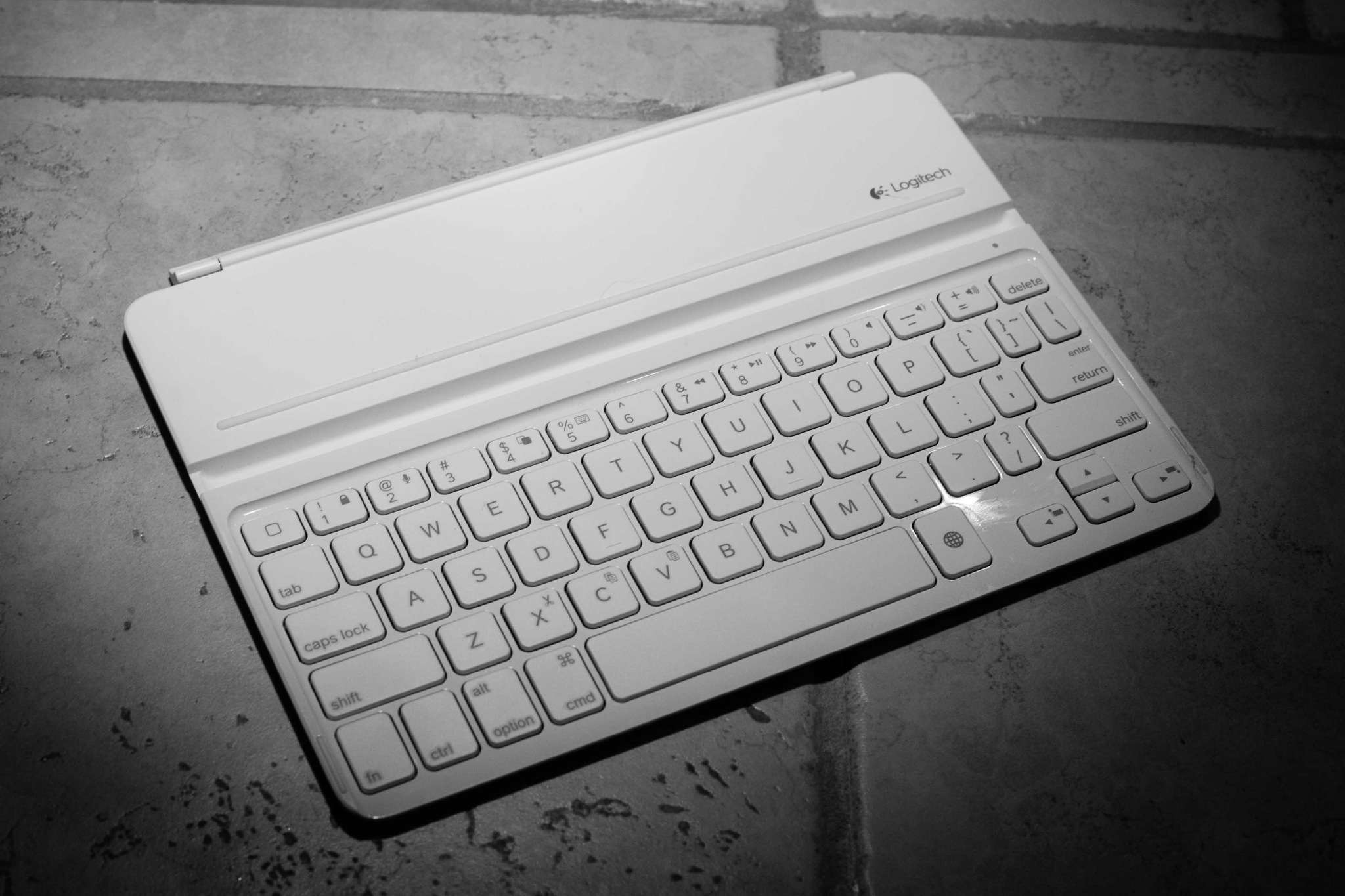
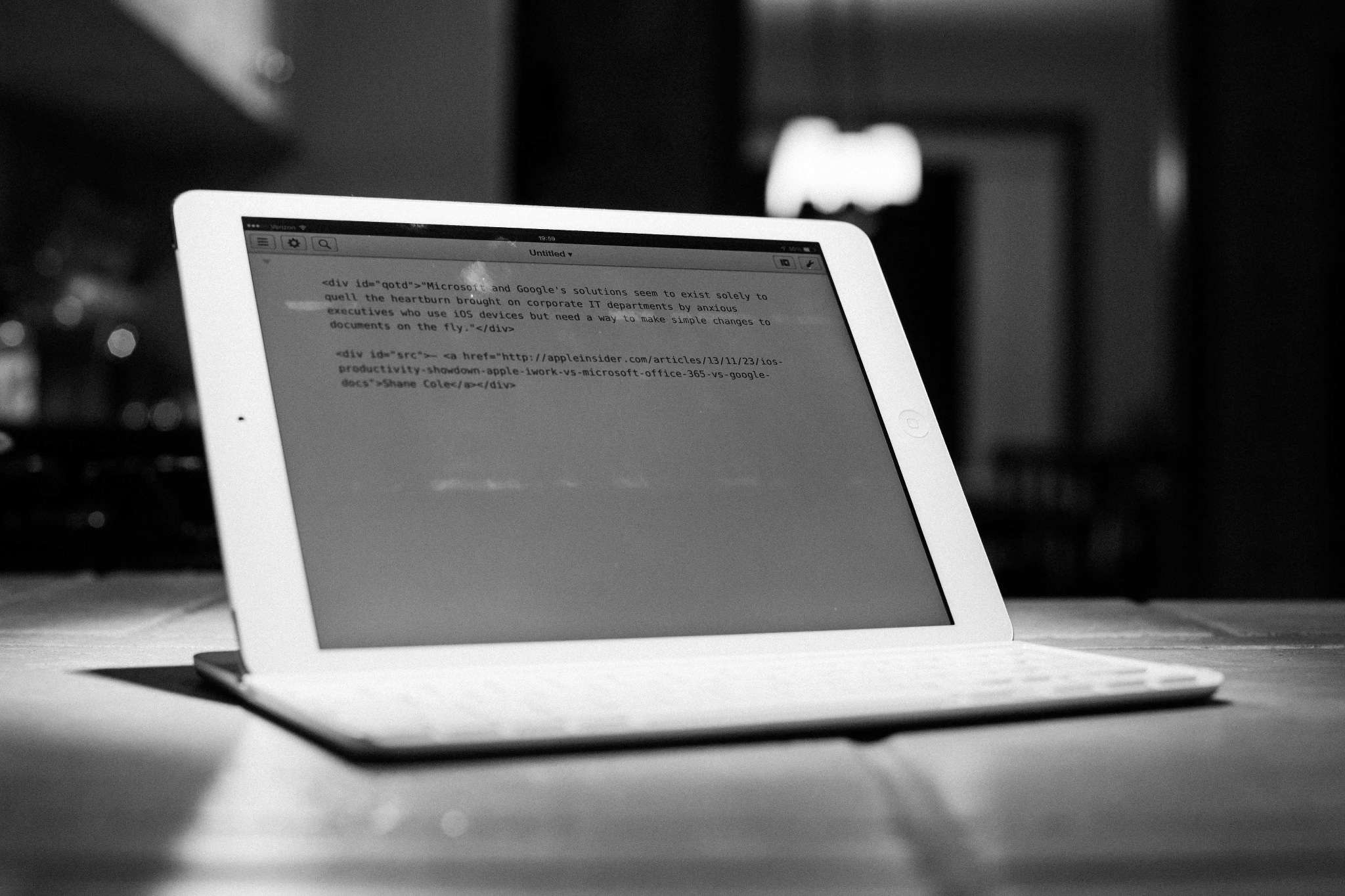
    Over at Macworld, [Dan Frakes just updated his comprehensive post on using keyboards with iPads][1] to reflect some of the new options. I picked up the [Ultrathin for my iPad Air][2] when I bought it to help with my ambitions to use the iPad more and my Mac less.

    I’ve been a staunch advocate for the Origami setup, but now not using the Apple Wireless Keyboard full-time, the consistency of using that same keyboard between my Mac and iPad is less important to me so it was time to try something new.

    I wanted something that was of a smaller profile to travel with.

    ## The Usage

    When the keyboard arrived I set it up and used it for the full work day and evening. That was my “get used to this small thing” primer. From that point forward I took the keyboard with me everywhere my iPad went, but never attached to the iPad Air (it looks stupid attached). I’ve schlepped this thing in my bag for quite a while now.

    And I barely use it. I could, it only takes a few seconds, but I barely do.

    I think the most telling situation was just a few days ago, sitting in Starbucks to write on my iPad — I left the keyboard in my bag for the hour long writing session, opting instead to use just my onscreen keyboard.

    ## The Flaws

    For me, there are three major flaws with this keyboard, flaws that keep me from wanting to use it:

    1. It is not better than the onscreen keyboard to type with. I make the same amount of mistakes typing on either. With time, and with practice it will likely be better, but so too is the onscreen keyboard.
    2. Which brings us to: it is not nice to type on. The keys don’t have much travel (as expected), but the travel also feels like utter crap. It’s mushy, I hate mushy. The MacBook Pro keyboards have a certainly crispness to their action, whereas this keyboard feels like, well, cheap.
    3. It is not that convenient. I thought having something smaller, something that *could* be a case would make me use it more. I truly don’t feel the weight carrying it, but when it comes right down to it, it is barely more convenient than the Origami setup — and at least in that case the keyboard feels decent.

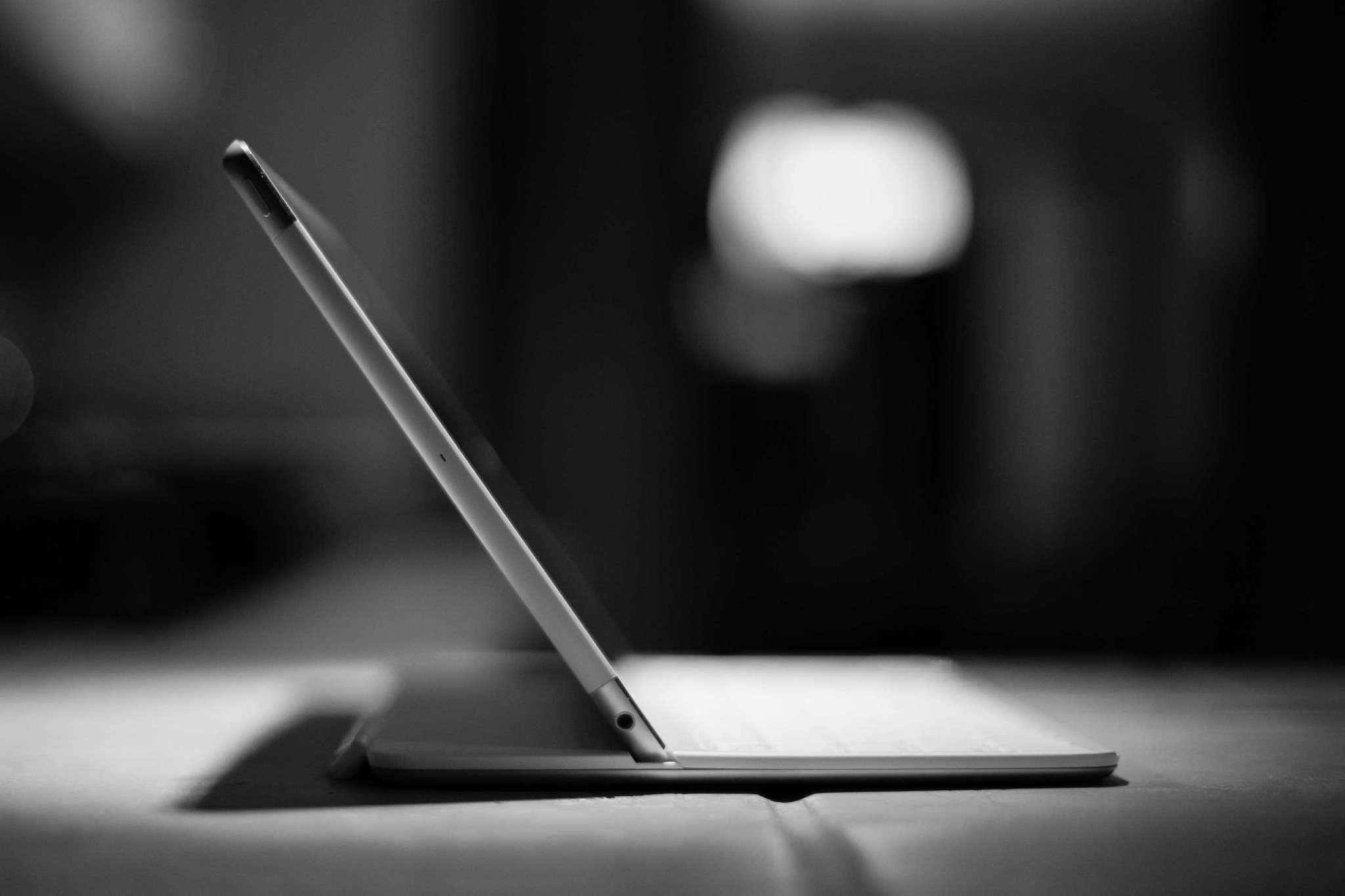
    I’d take this keyboard with less battery life if the width was lopped off behind where the iPad rests and the thickness was significantly reduced (even at the cost of battery life).

    ## The Good

    The nice things about this keyboard are plentiful:

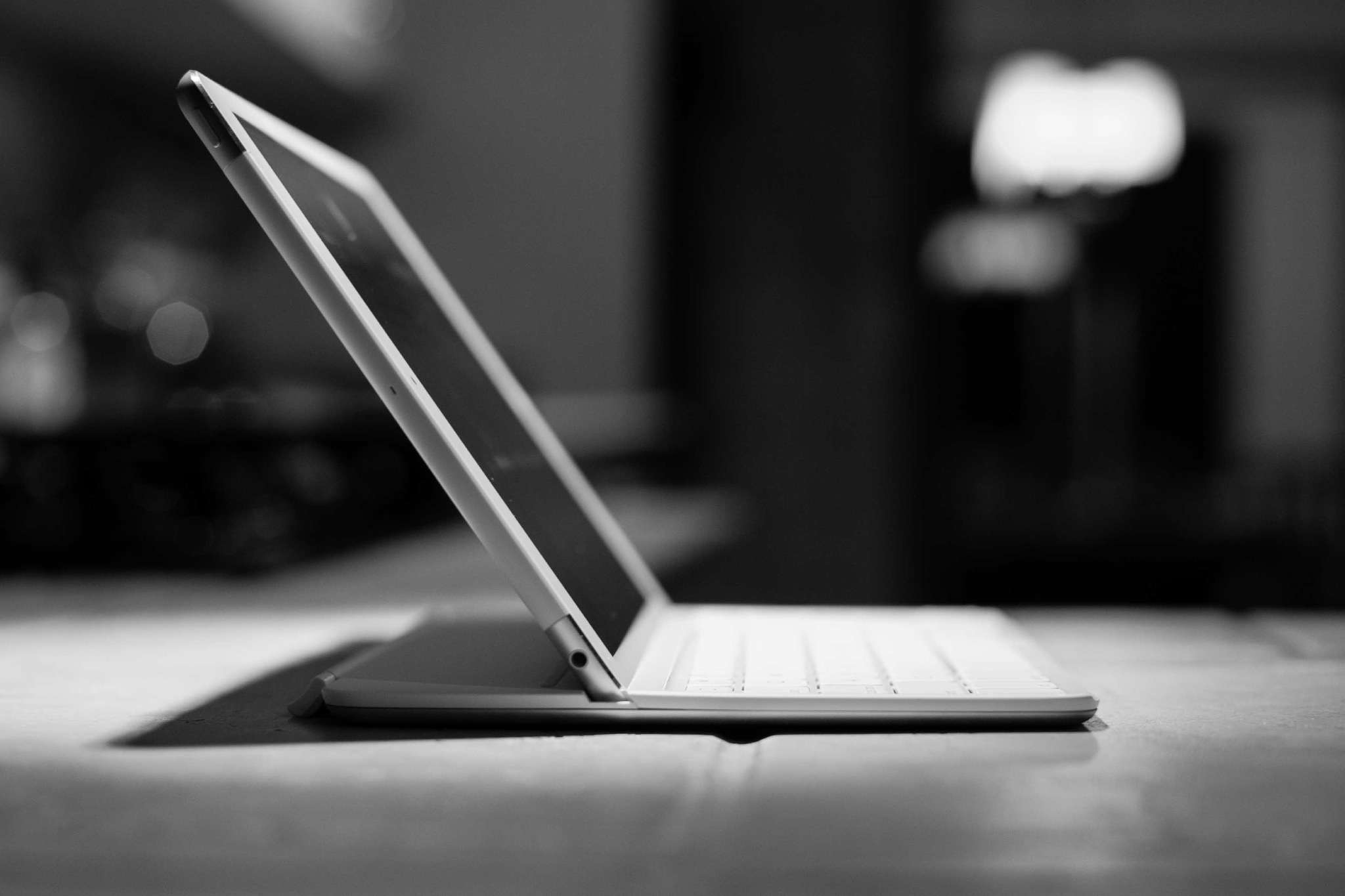
    1. Looks good, I’ve had people ask me about when I used it because they simply like the looks.
    2. The angle is spot on for me. I really was worried about this, but love the angle it holds the iPad at.
    3. It weighs nothing.
    4. They key spacing and sizing is mostly fine, it’s only the delete key that I take issue with.
    5. It stays clean and scratch free. Mine has just been kicking around in the bag, but not a mark on it.
    6. Great battery life.

    ## Overall, Then?

    It’s a solid keyboard. Personally I don’t think it is worth $100, I doubt there are many iPad specific keyboards that are worth that, but it is a better option than an Origami if you don’t already have the Origami and Apple Wireless Keyboard.

    I just can’t see any scenario where I would want to use this over the onscreen keyboard. It could be better, if it were substantially smaller, but even then the only real advantage to someone that has no problem using the onscreen keyboard is that you can see more text.

    [1]: http://www.macworld.com/article/1164210/macworld-buying-guide-iPad-keyboards.html
    [2]: http://www.amazon.com/exec/obidos/ASIN/B00EZ9XG62/ref=nosim&tag=brooksreview-20