Top Posts


Recent Articles

  • TV Has Yet to Account for Reality

    As a nerd, you typically watch popular TV shows and think: *come on*. Hey, CSI, you can’t take a low-resolution and blurry security camera image and create a high-definition sharp image of a license plate. And you certainly cannot do that with just a few keystrokes and no mouse movement at all. *So unrealistic.* It’s…

    As a nerd, you typically watch popular TV shows and think: *come on*. Hey, CSI, you can’t take a low-resolution and blurry security camera image and create a high-definition sharp image of a license plate. And you certainly cannot do that with just a few keystrokes and no mouse movement at all.

    *So unrealistic.*

    It’s also fun to look back at old TV shows and movies and laugh at how the entire plot is moot if one or more characters had a cell phone or iPad. And for years nerds have *known* that you can’t just ‘hack’ into XYZ server in a few minutes time — even if you are Chloe.

    But then we found out that maybe if you are the government you *can* hack into these places. Not because you are that good of a hacker, but because the NSA had already spent months hacking into the system in preparation for you needing access at a future crucial point in the plot.

    Which now presents TV and movie writers with a really awkward problem: they know just how powerful the NSA is, and it is more powerful than they thought the public would find believable to begin with.

    This all came to a head last night when I was watching the most recent episode of Homeland (warning: possible spoilers ahead). In this episode the main character, Carrie (former CIA), is trying to escape the watchful eye of the CIA. Now pre-Snowden this episode would have been fine, but post Snowden (and even logically) it had a lot of problems.

    1. Carrie kept her cell phone with her. She called a CIA contact that had the CIA listening in on the call next to him on this phone. Yet the CIA couldn’t find her? Come on. First of all it was an Android phone and we should have every reason to suspect that not only could the NSA/CI,A working together, find her, but that they could tap the mic on her phone to listen in. Yet, the CIA, didn’t find her. Magic phone?
    2. Carrie also went to an ATM and into the branch of the bank only to find her accounts frozen. In reality the NSA/CIA would have known about this about 1 second after it happened, and yet… nothing. Dumb luck?

    Ok, it’s fair to say that (due to the “twist” ending) the CIA really didn’t want to find her, but even still wouldn’t a trained CIA person, well anyone at the CIA, still ditch their phone and stay away from banks and ATMs? That seems like “on the run” 101.

    Even if you don’t buy that, then what do you make of the fact that the kids in the episode who went on the run ditched their cellphones saying “they can track the GPS in these”. Yeah… oops the the former-spook didn’t think to do that, but a couple if dumb-shit teens thought of it? *Come on.*

    This is very likely to be an ongoing problem for TV and movies going forward. In order to make the show based somewhat in reality, writers now have to account for the fact that if the government is after you, you are likely screwed. And that is just going to cause all sorts of problems for future plots, as characters are going to have to go dark and no longer will there be that tense period of “the character doesn’t know the government is after them, but the character manages to luckily escape”.

    Basically all future characters will have to use pretend encryption on everything, thus talking to no “normal person”, and/or go on the run *before* anyone is after them.

  • ‘Experian Sold Consumer Data to ID Theft Service’

    Yes, it’s as bad as the headline implies.

    Yes, it’s as bad as the headline implies.

  • There’s Going to Be a Lot of “New” News Outlets

    [David Pogue, announcing his leaving NYT for Yahoo][1]: > It’s not easy leaving the Times, especially when you admire it as much as I do. No matter what happens to prose on paper, the Times itself, as a gatherer and curator of news, will always be necessary and important. The culture may be changing, and…

    [David Pogue, announcing his leaving NYT for Yahoo][1]:

    > It’s not easy leaving the Times, especially when you admire it as much as I do. No matter what happens to prose on paper, the Times itself, as a gatherer and curator of news, will always be necessary and important. The culture may be changing, and the readership may be shifting, but this paper steadfastly focuses on responsible journalism, ironclad ethics and superb writing. I’ll always be a loyal ally.

    I don’t have any particular interest in this news, but what I find interesting is the overall trend. The trend of, shall we say, “big name” writers for publications leaving larger publications to start their own. We are seeing this right now with Pogue, Greenwald, Mossberg and Swisher, Lessin, et al.

    How many of these sites can the web sustain? I ask that not because I think the web can only sustain a finite amount of web sites, but because the business models underlying the web seem to only sustain a finite amount. As ad dollars need to be spread around more, the overall ad rates drop will drop across the board. Paywalls will become harder to run, ((And that’s saying a lot.)) as the wallet share is being pulled in more directions.

    Advertisers can’t afford to pay high ad rates for every sites, and publishers already struggle to get advertisers to pay enough (and get advertisers to begin with). Readers cannot afford to “subscribe” to every site, and many *won’t* pay to subscribe to even their favorite sites. This doesn’t seem like an industry setup for success to me.

    I don’t like consolidation in general, but it seems to me that if every writer who reaches X level of fame leaves to start their own publication, then pretty soon these small publications will all have to merge, or face overall declining revenue and wages. Having an audience and traffic is only the smallest part of success. Getting someone, *anyone*, to pay is the hardest and most important part. [Trust me on this][2].

    [1]: http://pogueman.tumblr.com/post/64682813641/goodbye-and-hello
    [2]: https://brooksreview.net/members/

  • ‘Apple Patent on Touch Typing, Multitouch Upheld; Allows Ban on Most Androids’

    [Interesting turn of events for Apple][1]. The choice Apple now faces is how to enforce their patents. It seems HTC and Microsoft/Nokia are likely fine due to earlier patent licensing deals, but Samsung and Google aren’t looking to hot. However, I don’t think it is as dire as Jason Mick makes it out to be.…

    [Interesting turn of events for Apple][1]. The choice Apple now faces is how to enforce their patents. It seems HTC and Microsoft/Nokia are likely fine due to earlier patent licensing deals, but Samsung and Google aren’t looking to hot. However, I don’t think it is as dire as Jason Mick makes it out to be.

    Apple was out for blood with Google/Samsung, but that seemed driven more by “hot heads” than by business motivations (i.e. it was personal). It seemed like it was pushed by Steve Jobs with perhaps Forstall encouraging it. The read I have on Tim Cook is that he is a lot more analytical in his operations.

    The smartest move would be to make it *more* expensive to sell Android devices through licensing agreements with these companies. They could still be crafted, like Google does with Google Android apps, that would keep Android hardware companies “in line” but that would also make money for Apple with each handset sold.

    This should be very interesting to watch. ((I’d love for Apple to be a little cheeky and line-item Android patent licensing income. “And this quarter we made $793 million dollars from Android device sales. Off of Android sales of XX million units, note that is not the activation number Google touts, but the real ‘sold’ figure, as calculated by our licensing partners.”))

    [1]: http://www.dailytech.com/Apple+Patent+on+Touch+Typing+Multitouch+Upheld+Allows+Ban+on+Most+Androids/article33580.htm?utm_medium=App.net&utm_source=PourOver

  • That’s Not Enough

    [Thomas Brand](http://eggfreckles.net/notes/preliminary-results/): >My friends Merri and Stephen Hackett have to be strong now. They just got the preliminary results back from their son Josiah’s brain scan, and the diagnosis is frightening. The Cancer is back. It never went away. But now it is growing. >I am not a parent yet, and I cannot imagine the…

    [Thomas Brand](http://eggfreckles.net/notes/preliminary-results/):

    >My friends Merri and Stephen Hackett have to be strong now. They just got the preliminary results back from their son Josiah’s brain scan, and the diagnosis is frightening. The Cancer is back. It never went away. But now it is growing.
    >I am not a parent yet, and I cannot imagine the fear they are feeling right now. Knowing their child might have to go through another sixteen rounds of Chemotherapy. But they have to be strong. If not for Josiah, then for themselves, their daughter Allison Mae, and the rest of their family.

    [He’s raising money for his charity run](http://fundraising.stjude.org/site/TR?px=2008576&fr_id=4820&pg=personal), he needed $2,500, but he is well passed that goal. It’s still not enough, so donate if you can. ((Let me know if you need a refund for your membership here so you *can* donate — I’d be happy to do it.))

  • ‘France in the NSA’s Crosshair’

    Jacques Follorou et Glenn Greenwald for Le Monde: > Amongst the thousands of documents extracted from the NSA by its ex-employee there is a graph which describes the extent of telephone monitoring and tapping (DNR – Dial Number Recognition) carried out in France. It can be seen that over a period of thirty days –…

    Jacques Follorou et Glenn Greenwald for Le Monde:

    > Amongst the thousands of documents extracted from the NSA by its ex-employee there is a graph which describes the extent of telephone monitoring and tapping (DNR – Dial Number Recognition) carried out in France. It can be seen that over a period of thirty days – from 10 December 2012 to 8 January 2013, 70,3 million recordings of French citizens’ telephone data were made by the NSA.

    At this point it would be *far* more surprising if the NSA was *not* recording phone calls in a country — *any* country. (I bet Madagascar is safe…)

  • In Praise of One of the Greatest Concluding Lines Ever Written

    Jens Glüsing, Laura Poitras, Marcel Rosenbach and Holger Stark reporting for SPIEGEL ONLINE on the NSA hack of the email, text messages, and other communication means of the President of Mexico, concludes: >In response to an inquiry from SPIEGEL concerning the latest revelations, Mexico’s Foreign Ministry replied with an email condemning any form of espionage…

    Jens Glüsing, Laura Poitras, Marcel Rosenbach and Holger Stark reporting for SPIEGEL ONLINE on the NSA hack of the email, text messages, and other communication means of the President of Mexico, concludes:

    >In response to an inquiry from SPIEGEL concerning the latest revelations, Mexico’s Foreign Ministry replied with an email condemning any form of espionage on Mexican citizens, saying such surveillance violates international law. “That is all the government has to say on the matter,” stated a spokesperson for Peña Nieto.
    >Presumably, that email could be read at the NSA’s Texas location at the same time.

    *Boom.*

    The part of the article that I think will be far more interesting (and less political) to watch:

    > Brazil now plans to introduce a law that will force companies such as Google and Facebook to store their data inside Brazil’s borders, rather than on servers in the US, making these international companies subject to Brazilian data privacy laws.

    [BlackBerry had to do this to allow *other* governments access](http://crackberry.com/rim-installs-blackberry-server-mumbai) to BlackBerry data back in the day and this is something worth paying attention too.

  • Android Headed Away from ‘Open’

    An [excellent post about how closed Android really is](http://arstechnica.com/gadgets/2013/10/googles-iron-grip-on-android-controlling-open-source-by-any-means-necessary/), and is trying to be, by Ron Amadeo. Amedeo concludes: > While Android is open, it’s more of a “look but don’t touch” kind of open. You’re allowed to contribute to Android and allowed to use it for little hobbies, but in nearly every area, the…

    An [excellent post about how closed Android really is](http://arstechnica.com/gadgets/2013/10/googles-iron-grip-on-android-controlling-open-source-by-any-means-necessary/), and is trying to be, by Ron Amadeo. Amedeo concludes:

    > While Android is open, it’s more of a “look but don’t touch” kind of open. You’re allowed to contribute to Android and allowed to use it for little hobbies, but in nearly every area, the deck is stacked against anyone trying to use Android without Google’s blessing. The second you try to take Android and do something that Google doesn’t approve of, it will bring the world crashing down upon you.

    Well worth reading the entire post to see just how locked in Google is trying to make handset makers and developers. I’m not damning Google for this, it’s an incredibly smart move, I just wish Google would drop the ‘open’ propaganda.

  • An Additional Thought on iMessage

    [John Gruber has a very agreeable post ](http://daringfireball.net/2013/10/imessage_encryption) about iMessage security, but I was not sure of his side note: > My understanding is that Apple does not permanently store iMessage message content on its servers. Even in encrypted form, iMessage data is only in Apple’s hands while in transit. Once delivered, it’s gone. Gruber…

    [John Gruber has a very agreeable post ](http://daringfireball.net/2013/10/imessage_encryption) about iMessage security, but I was not sure of his side note:

    > My understanding is that Apple does not permanently store iMessage message content on its servers. Even in encrypted form, iMessage data is only in Apple’s hands while in transit. Once delivered, it’s gone.

    Gruber later updated to clarify the messages probably are held for a short time. I wasn’t sure I bought this idea, as I thought that the load more messages contradicted the idea. (If you scroll to the top of an iMessage thread you can load more messages.) If Gruber is correct all messages are on the device, but if he is not correct then Apple is keeping a copy for this feature to work — easy enough to test.

    My unscientific testing seems to confirm what Gruber is saying. If you delete a thread off of your iPad, but it is still on your iPhone, then you create a new message to that contact on the iPad, there seems to be no way to load in old messages from the device that deleted the thread. This would seem to ‘prove’ that Gruber is likely correct.

    (The best test would be to wipe a device and set it up as new. If any *old* iMessages are on the device, then Apple is keeping them on a server. That’s just a bit more testing than I want to do on a Sunday.) It would seem, though, that Gruber is correct and no old iMessages are stored on Apple servers. This is good news.

    UPDATE: Based on many readers that tested this out, your iMessages don’t carry over if you wipe to your iOS device and don’t restore from a backup. Additionally, if you have a new device and send and receive iMessages, and then restore from backup, you will lose the new messages. Seems pretty conclusive that Apple isn’t storing messages for anything longer than “hours”.

  • iMessage Privacy

    [This is a very interesting white paper][1] on the security built into iMessage. The outcome of which, [as summarized by Ars Technica][2], is that Apple theoretically *could* engineer iMessage in a way that it captures messages. [Not surprisingly Apple has responded to AllThingsD][3]: > “iMessage is not architected to allow Apple to read messages,” said…

    [This is a very interesting white paper][1] on the security built into iMessage. The outcome of which, [as summarized by Ars Technica][2], is that Apple theoretically *could* engineer iMessage in a way that it captures messages.

    [Not surprisingly Apple has responded to AllThingsD][3]:

    > “iMessage is not architected to allow Apple to read messages,” said Apple spokeswoman Trudy Muller in a statement to **AllThingsD**. “The research discussed theoretical vulnerabilities that would require Apple to re-engineer the iMessage system to exploit it, and Apple has no plans or intentions to do so.”

    Once again, this all comes down to trust of the company. Do you trust Apple to evade pressures from, say, the NSA for Apple to thwart this? For as big as Apple is, I trust them to do just that — flip off the NSA. Why? There’s lots of reasons I have, none of them particularly good, or worth sharing.

    I do want to point out, that Apple’s argument sounds a lot like [Ladar Levison of Lavabits][4] argument. The “yeah, we *could* do that, but it ain’t gonna happen” argument.

    [1]: http://blog.quarkslab.com/imessage-privacy.html
    [2]: http://arstechnica.com/security/2013/10/contrary-to-public-claims-apple-can-read-your-imessages/
    [3]: http://allthingsd.com/20131018/apple-no-we-cant-read-your-imessages/
    [4]: https://rally.org/lavabit

  • ‘Siri Response Times’

    [John Gruber][1]: > I think the single biggest improvement Apple could (and really must) make to Siri is to make it faster. And that’s exactly the sort of thing Apple has never really shown the chops for. I agree with the idea that Siri needs to be a lot faster, but it is the last…

    [John Gruber][1]:

    > I think the single biggest improvement Apple could (and really must) make to Siri is to make it faster. And that’s exactly the sort of thing Apple has never really shown the chops for.

    I agree with the idea that Siri needs to be a lot faster, but it is the last sentence that I find odd. Because it seems to me that long-time Apple fans are incredibly skeptical that Apple will *ever* be able to have good “cloud” offerings (e.g. Siri, iCloud, sync, file storage, etc.) for the same reasons the Wall Street is skeptical of long-term Apple success.

    These Apple-fans tend to point to past Apple failings as evidence of Apple will likely have future failings in cloud offerings — while at the same time these Apple-fans are mocking others that point to past Apple failings as indications of likely future failures in, well, anything. ((Notwithstanding the fact that I admit that .Mac and MobileMe were pretty crappy by general web standards.))

    Seems a bit *off* to me.

    [1]: http://daringfireball.net/linked/2013/10/17/siri-response-times

  • ‘Twitter’s Theoretically Temporary URL Messaging Ban Due to Massive Wave of DM Spam’

    This is simply an amazing bit of customer hate, as reported by [Matthew ‘The Panzer’ Panzarino at TechCrunch.][1] As I mentioned, Twitter is now rolling out the ability to DM people that don’t follow you. This, sounds like it is an unrelated problem, but proves my point that Twitter is *going* to have a DM…

    This is simply an amazing bit of customer hate, as reported by [Matthew ‘The Panzer’ Panzarino at TechCrunch.][1] As I mentioned, Twitter is now rolling out the ability to DM people that don’t follow you. This, sounds like it is an unrelated problem, but proves my point that Twitter is *going* to have a DM Spam problem. What arose last night is a bunch of “hacked” accounts sending spam via DMs containing URLs.

    Any smart service would have taken user reports and been all over this like white on delicious steamed sushi rice, but according to The Panzer, this is how it played out:

    > What we’re hearing is that the rise in DM spam ended up garnering attention inside Twitter up to the point where an executive inside Twitter’s C-suite got DM spammed. Hence the abrupt ban on URLs inside DMs until the issue can be sorted out.

    To many that seems reasonable. But here’s how I read this: Twitter wasn’t overly concerned about DM spam in the higher ups, until one of the higher ups received the spam. Then they squashed it by banning URLs in DMs. That’s not really a company working in the user best interest, but rather self-serving. It makes you wonder: if that executive hadn’t been spammed, would Twitter have done anything?

    “Ok, Ben, but you are reaching here.”

    Am I?

    > The inconsistencies that we noticed with regards to the sending and receiving of URLs is due to the fact that Verified users and advertisers are exempted from the ban on sending links in DMs. This would impede, of course, the efforts of marketers using Twitter’s legitimate advertising platform to send DMs {…}

    It makes sense to allow verified users to keep sending them, but advertisers? That’s just self-serving — advertisers (granted non-paying ones) were the ones sending the spam. Here’s what we have learned (or been reminded of):

    1. Twitter addresses the problems that bug them first.
    2. While “average” users will suffer from sweeping changes, verified “celebrities” and *braaaaands* won’t suffer, ever. EVAR.

    Enjoy that.

    [1]: http://techcrunch.com/2013/10/17/twitters-theoretically-temporary-url-messaging-ban-due-to-massive-wave-of-dm-spam/

  • ‘Calorie burner: How much better is standing up than sitting?’

    BBC: >We wanted to see what would happen if we took a group of people who normally spend their day sitting in an office and ask them to spend a few hours a day on their feet instead. More fodder for my pro-standing agenda.

    BBC:

    >We wanted to see what would happen if we took a group of people who normally spend their day sitting in an office and ask them to spend a few hours a day on their feet instead.

    More fodder for my pro-standing agenda.

  • ‘Receive direct messages from anyone, even those not following you, on Twitter’

    Luke Edwards: > On the plus side this could be really helpful for companies to converse on specific problems with the public. Or, more sceptically, it allows them to deal privately with problems, taking away the user’s power t publicly embarrass them when an issue arises. Of course the option to talk publicly is there…

    Luke Edwards:

    > On the plus side this could be really helpful for companies to converse on specific problems with the public. Or, more sceptically, it allows them to deal privately with problems, taking away the user’s power t publicly embarrass them when an issue arises. Of course the option to talk publicly is there too.

    Another great move by Twitter to help braaaaaands and spammers. App.net was setup like this from day one, never had or heard of any abuse. I doubt that is going to be the case for Twitter users.

  • Weather Line

    You are likely to hear a lot about a new weather app called [Weather Line][1] today. It’s making the rounds and a lot of people (rightfully) love it. I was one of the people that can brag that they got early access — though I think I may have been the last one added, doesn’t…

    You are likely to hear a lot about a new weather app called [Weather Line][1] today. It’s making the rounds and a lot of people (rightfully) love it. I was one of the people that can brag that they got early access — though I think I may have been the last one added, doesn’t matter.

    I’m personally still a bit undecided about the app. I like many things about it, but I have yet to have that moment where I feel the “yep, this is it”. That said here’s a few general thoughts on the app:

    1. My sentiments are pretty closely reflected by what [Shawn Blanc said about the app][2]: “So, is Weather Line the best new general purpose weather app you can buy? I don’t think so (because of its lack of radar). But it is a fantastic app nonetheless.” (Great photo on his review too, if I do say so myself. And I do.)
    2. Truly fantastic icon.
    3. The more I use the app, the more annoying I find looking at other weather apps that don’t show hourly forecasts as pretty lines on a graph. That said, I am not sold on these pretty lines being the best way to display *current* weather conditions. When I want to check the weather right now, I just want to glance at the screen and that is hard to do with Weather Lines.

    Overall, this is a solid weather app. I personally think it is more geared to weather nerds than, say, my parents.

    [1]: http://weatherlineapp.com/
    [2]: http://shawnblanc.net/2013/10/weather-line/

  • Quote of the Day: Ian Bogost

    “If anything, Google’s motto seems to have largely succeeded at reframing “evil” to exclude all actions performed by Google.” — Ian Bogost

    “If anything, Google’s motto seems to have largely succeeded at reframing “evil” to exclude all actions performed by Google.”
  • GoDaddy Buys Media Temple

    [Ingrid Lunden for TechCrunch][1]: > Domain registration and hosting company GoDaddy is continuing on its acquisitions roll, with the announcement today that it acquired Media Temple, a premium domain hosting and website services company based out of Los Angeles that targets website development professionals. Financial terms are not being disclosed. [From the Media Temple FAQ…

    [Ingrid Lunden for TechCrunch][1]:

    > Domain registration and hosting company GoDaddy is continuing on its acquisitions roll, with the announcement today that it acquired Media Temple, a premium domain hosting and website services company based out of Los Angeles that targets website development professionals. Financial terms are not being disclosed.

    [From the Media Temple FAQ on the acquisition][2]:

    > **Will you be sharing my personal & financial information with GoDaddy?**
    > Your personal and financial information stays securely in our system. No third-party vendors will ever have access to it, which has always been our practice.

    Translation: yes.

    Media Temple *used* to be such a great company.

    [1]: http://techcrunch.com/2013/10/15/godaddy-buys-media-temple-to-build-up-its-business-with-web-professionals/
    [2]: http://weblog.mediatemple.net/2013/10/15/faqs-about-the-godaddy-acquisition/?utm_source=mtemail&utm_medium=text&utm_content=faq&utm_campaign=gd

  • ‘What Stuck and What Didn’t?’

    Shawn Blanc: > Well, over the past three days I went through every single review and recommendation I’ve written in the past 6 years in order to take inventory of which products I still use and which I don’t. I don’t agree with him on a few of these picks, but that doesn’t mean they…

    Shawn Blanc:

    > Well, over the past three days I went through every single review and recommendation I’ve written in the past 6 years in order to take inventory of which products I still use and which I don’t.

    I don’t agree with him on a few of these picks, but that doesn’t mean they aren’t great apps/tools.

  • ‘NSA Collects Millions of E-Mail Address Books Globally’

    [New report from the Snowden leaks by Barton Gellman and Ashkan Soltani][1]. The main points are: > During a single day last year, the NSA’s Special Source Operations branch collected 444,743 e-mail address books from Yahoo, 105,068 from Hotmail, 82,857 from Facebook, 33,697 from Gmail and 22,881 from unspecified other providers, according to an internal…

    [New report from the Snowden leaks by Barton Gellman and Ashkan Soltani][1]. The main points are:

    > During a single day last year, the NSA’s Special Source Operations branch collected 444,743 e-mail address books from Yahoo, 105,068 from Hotmail, 82,857 from Facebook, 33,697 from Gmail and 22,881 from unspecified other providers, according to an internal NSA PowerPoint presentation. Those figures, described as a typical daily intake in the document, correspond to a rate of more than 250 million per year.

    And:

    > The NSA has not been authorized by Congress or the special intelligence court that oversees foreign surveillance to collect contact lists in bulk, and senior intelligence officials said it would be illegal to do so from facilities in the United States. The agency avoids the restrictions in the [Foreign Intelligence Surveillance Act][2] by intercepting contact lists from access points “all over the world,” one official said, speaking on the condition of anonymity to discuss a classified program. “None of those are on U.S. territory.”

    They want the contact lists so that they can do network analysis, as they do with PRISM collection. What’s interesting is that this is a bulk sweep that is rather indiscriminate and only approved by the President. Not even a faux-court here, just the office of the President.

    At the very least, the NSA could take care of the SPAM problem for all of us:

    > Spam has proven to be a significant problem for NSA — clogging databases with data that holds no foreign intelligence value. The majority of all e-mails, one NSA document says, “are SPAM from ‘fake’ addresses and never ‘delivered’ to targets.”

    They took out a nuclear reactor with code, and they can’t take out the fucking spammers for us?

    [1]: http://www.washingtonpost.com/world/national-security/nsa-collects-millions-of-e-mail-address-books-globally/2013/10/14/8e58b5be-34f9-11e3-80c6-7e6dd8d22d8f_story.html
    [2]: https://www.fas.org/irp/agency/doj/fisa/

  • Review: The CODE Keyboard

    I am, decidedly, not a keyboard geek. I don’t know anything about the different switches used in keyboards. And up and until the past few years I would have thought it a joke for anyone to prefer a mechanical keyboard. This, then, is not the review that a keyboard nerd wants to read about a…

    I am, decidedly, not a keyboard geek. I don’t know anything about the different switches used in keyboards. And up and until the past few years I would have thought it a joke for anyone to prefer a mechanical keyboard. This, then, is not the review that a keyboard nerd wants to read about a hot new mechanical keyboard. This is the review for those that just don’t understand what all the hubbub is about — which is exactly where we begin this review.

    What’s the big deal with Cherry MX Blue/Red/Pink/Purple/White/Clear switches?

    In the past I experimented with the Matias Laptop Pro keyboard and [concluded][1]:

    > The Matias made me a worse typist, with a worse looking desk. That’s the worst.
    > Maybe I’m just not nerdy enough for a mechanical keyboard, so I typed this on one of my six Apple Wireless keyboards instead.

    Then I vowed not to try another mechanical keyboard because I simply cannot stand cords. This is not solved with the [CODE keyboard from WASD Keyboards](http://codekeyboards.com), but there was something about the way this keyboard was marketed that hooked me. Maybe it’s the backlight, maybe the removable cord, maybe it’s the DIP switches for changing settings, or maybe I’m not as happy with the Apple Wireless keyboard as I thought. I don’t know the reason, but I wanted to try it.

    With the Matias I became a worse typist. After a substantial amount of time using the keyboard at my office I was still missing keys, making errors and feeling fatigued after typing. It drove me nuts. I have been typing most of my life, I should not have to “learn” a keyboard.

    When I first plugged in the CODE I typed my complex, lengthy OS X password and, to my surprise, nailed it on the first try. There has certainly been an adjustment period but as I write this sentence, two days into my testing, I feel comfortable using the keyboard. I’m currently typing below my normal speed, however, I don’t feel that the keyboard’s design is forcing me to make errors.

    ##### Fast-Forward A Week

    I’ve now had the CODE for about a week, and I like this keyboard even more. In fact I like it so much that I often bring it home with me after work — I just don’t want to use another keyboard.

    And then, as I finished typing that sentence I picked up the keyboard to adjust it and the USB cable came loose. Upon inspection, the port itself had come unsoldered from the board.

    Crap.

    ***

    ##### While We Wait

    While I waited for a replacement to the CODE, I went back to the trusty old Apple Wireless. I immediately hated it. The key travel was too short, and everything started to bug me. So I went ahead and grabbed a [DAS model S Professional from Amazon][2].

    This section of my CODE review will be about the DAS, while we wait in “real time” for the replacement CODE to arrive.

    There’s three things you immediately notice about the DAS that doesn’t stand out on a keyboard like the CODE:

    1. It’s huge. With the ten key off to the side this keyboard is substantially wider. Add to that the overall bulkier look and you feel like your mouse hand is reaching off to China.
    2. It’s really loud. I’ve only ever tried the “silent” version of clicky keyboards, but man is this DAS loud. The part the gets me is that the sound is more treble than bass and I am not sure I will be able to stand it while I wait for a new CODE.
    3. The lettering on the keycaps is quite different. I’ve yet to decide if it is different good, or different bad.

    The real question is how does the CODE compare to the DAS. In that respect the CODE blows the DAS out of the water. There is a lot to like about the DAS, but the added noise is just too much for me, the pigtail USB port is ugly and cumbersome, and the overall size of the DAS is obscene.

    I think the DAS is a solid keyboard, but had I started part two of my journey into mechanical keyboards with the DAS, I don’t think I would have become a convert.

    ***

    ##### Return of the Code
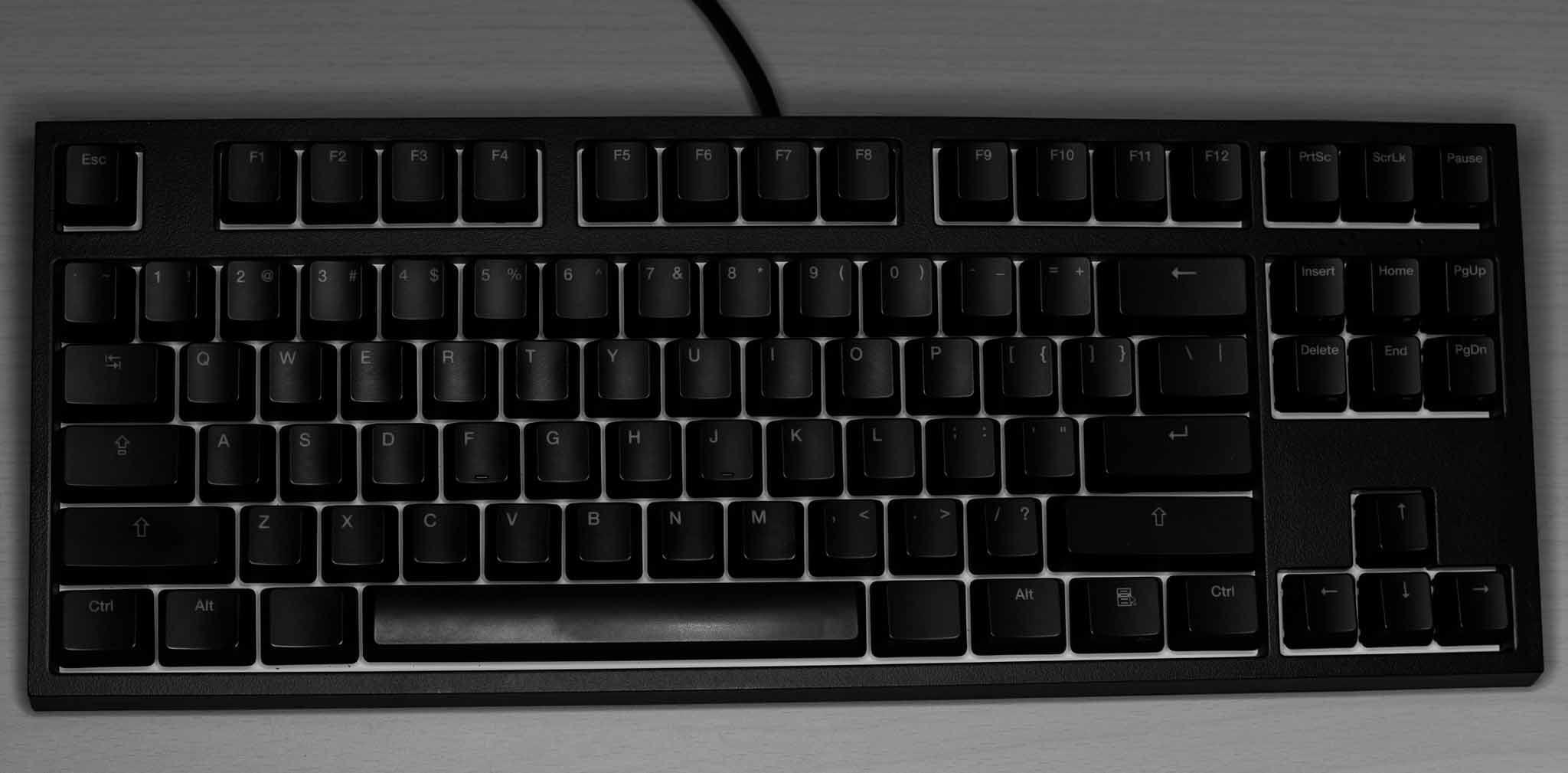
    WASD keyboards repaired my CODE (they are currently running 4–12 months on backorders for them) by replacing the dislodged port and sent it back to me looking perfect. The repair took about a week with shipping times.

    ##### Noise

    Now that the CODE is back I can run the test that a ton of people have been asking me about: noise. A lot of you asked that I record the noise from the CODE and the other keyboards I have, but I don’t get why. The reason being: you can turn the volume up and down on a sound file.

    Instead I put a decibel meter to each keyboard. Actually, I downloaded a decibel meter app on my iPhone 5S, taped my iPhone to the shock mount of my podcast mic, and stationed the iPhone microphone 16 inches above they keyboards and recorded the peak dB reading. ((The test was typing the same sentence three times in a row on each keyboard.)) Here are the results:

    – CODE: 99 dB at peak
    – DAS: 104 dB at peak (Cherry MX Red switches)
    – Apple Wireless: 90 db at peak

    In other words the CODE is 10% louder than the Apple keyboard, while the DAS is 15.5% louder. (The DAS is 5% louder than the CODE for those not wanting to grab a calculator.)

    Update: Sorry, I was not aware decibels are measured on a logarithmic scale, and thus my math above was not correct — not even close.

    For the most part, the Apple Wireless keyboard is silent in an office. The CODE can be heard, but I don’t think it’s an annoying sound. The keystrokes are more bass than treble and they sound solid.

    The DAS, however, has a much louder, higher pitched sound than the CODE. The sound of the DAS sounds a bit cheap if you ask me, almost plasticky. I find the DAS sound annoying but after a couple of days I got used it enough and was no longer bothered.

    While I prefer a nice and silent keyboard, the sound of the CODE isn’t enough to dissuade me from using it. The DAS is likely to annoy people around you if are in remotely close proximity.

    ##### The End

    Of the keyboards I tested recently: the DAS, that crappy Microsoft thing Marco likes, the Apple Wireless Keyboard, and the CODE, the only keyboard I absolutely adore is the CODE. It’s unfortunate that they are on back order because I’d like to have two of them.

    [Here’s what WASD said on `9/24/13` about the order status][3]:

    > More CODE keyboards will be available in approximately 4-6 months. Our next batch will include Cherry MX Blue, Brown, and Green switches. We do have Clear switches on order, but due to long lead times from Cherry, we do not expect another batch of Clear CODE keyboards for another 12-14 months.

    A YEAR OUT! Crap.

    The Apple Wireless will still be my go-to when I need a keyboard for the iPad. For everything else, I’d be very sad to type on anything except the CODE.
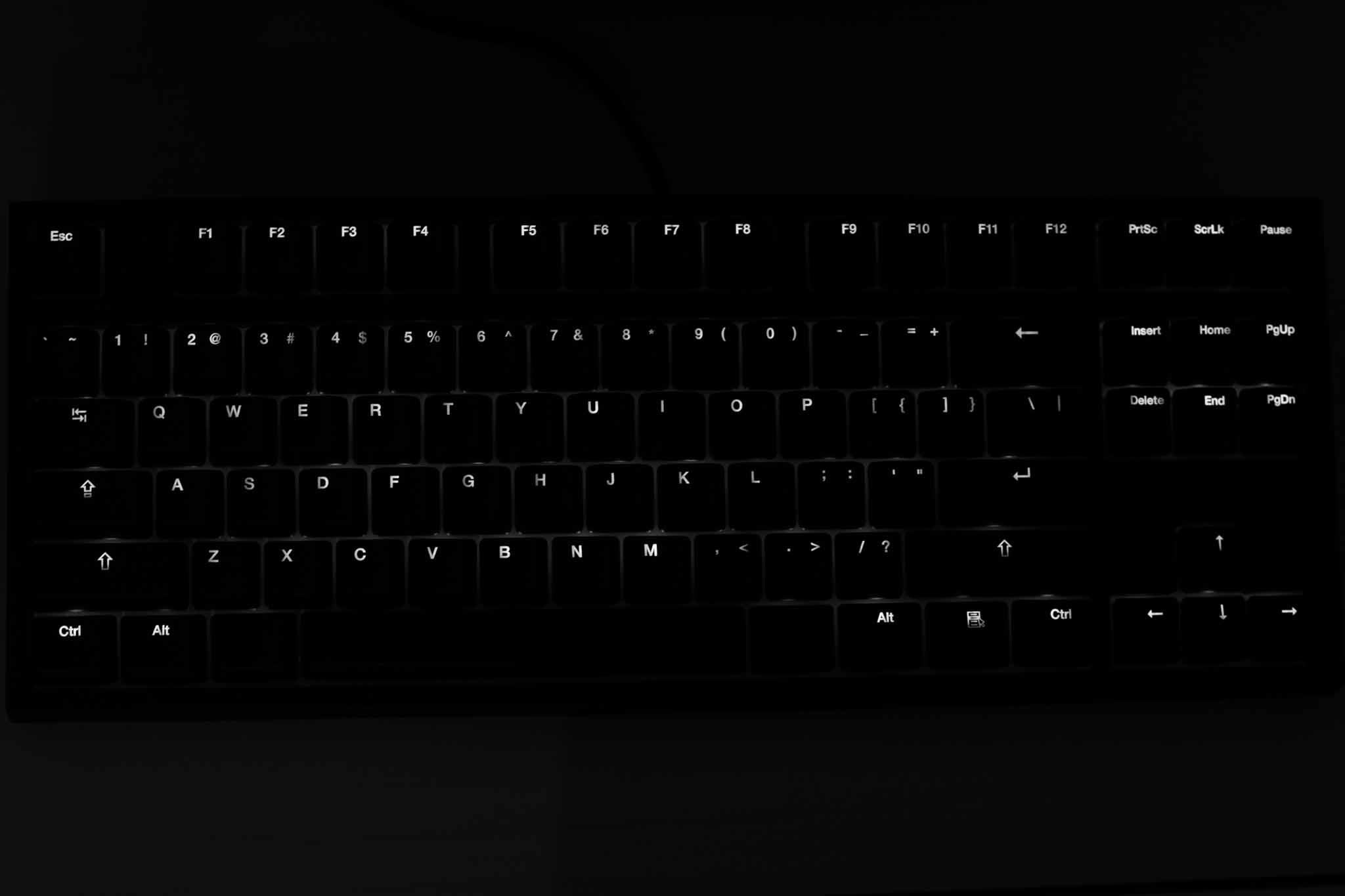
    Very sad, indeed.

    [1]: https://brooksreview.net/2013/04/mechanical-keyboards/
    [2]: http://www.amazon.com/exec/obidos/ASIN/B003ZG9T62/ref=nosim&tag=brooksreview-20
    [3]: http://codekeyboards.com