“Sony is doing it all wrong, all wrong. Fuji is doing all right. So far.”
Month: June 2014
-
Facebook’s Explanation: We Wanted to Make Sure You Weren’t Turned Off By Facebook
Adam D. I. Kramer, an author of the research, writes on an incredibly ugly Facebook page:
The reason we did this research is because we care about the emotional impact of Facebook and the people that use our product.
Ok, I can get behind that, you care about users. That’s nice.
We felt that it was important to investigate the common worry that seeing friends post positive content leads to people feeling negative or left out. At the same time, we were concerned that exposure to friends’ negativity might lead people to avoid visiting Facebook.
Oh, you were so close then you had to go and be all honest. So let’s boil down the ‘why Facebook did this’ to just this: we were worried people may stop visiting Facebook because of what they see in their feed. Or, alternatively: we need to know if we should show more or less positive feed postings to users so that they keep coming back more.
Yeah, that sounds about right. Not really about the user, so much as about how much the user drives page views.
Nobody’s posts were “hidden,” they just didn’t show up on some loads of Feed.
Ummm… Let’s try that again:
Nobody’s posts were “hidden,” they just didn’t show up on some loads of Feed.
Hmm, pretty sure not showing up on some loads of the Feed is the definition of “hidden”, but I’m not an expert here.
And at the end of the day, the actual impact on people in the experiment was the minimal amount to statistically detect it — the result was that people produced an average of one fewer emotional word, per thousand words, over the following week.
Hold the fuck up now. You found a correlation between seeing negative posts and posting negative things. The research, if I understand it correctly, shows that the more negative stuff people see the more negative they become.
Two parallel experiments were conducted for positive and negative emotion: One in which exposure to friends’ positive emotional content in their News Feed was reduced, and one in which exposure to negative emotional content in their News Feed was reduced.
Meaning Facebook caused users to feel better or worse at random, but on purpose. So instead of allowing for natural balance (seeing both good and bad posts) this “experiment” limited some peoples feeds to showing more good, or more bad. That actually does have a fucking impact on people.
The goal of all of our research at Facebook is to learn how to provide a better service.
Wait, that contradicts what you opened with when you said:
The reason we did this research is because we care about the emotional impact of Facebook and the people that use our product.
I guess goal and reason are different at Facebook?
The experiment in question was run in early 2012, and we have come a long way since then. Those review practices will also incorporate what we’ve learned from the reaction to this paper.
Translation: We are still at it, but now we believe we are on moral high ground.
Facebook, taking UX design to a whole new level of fuckery.
-
Seven Years of Magic
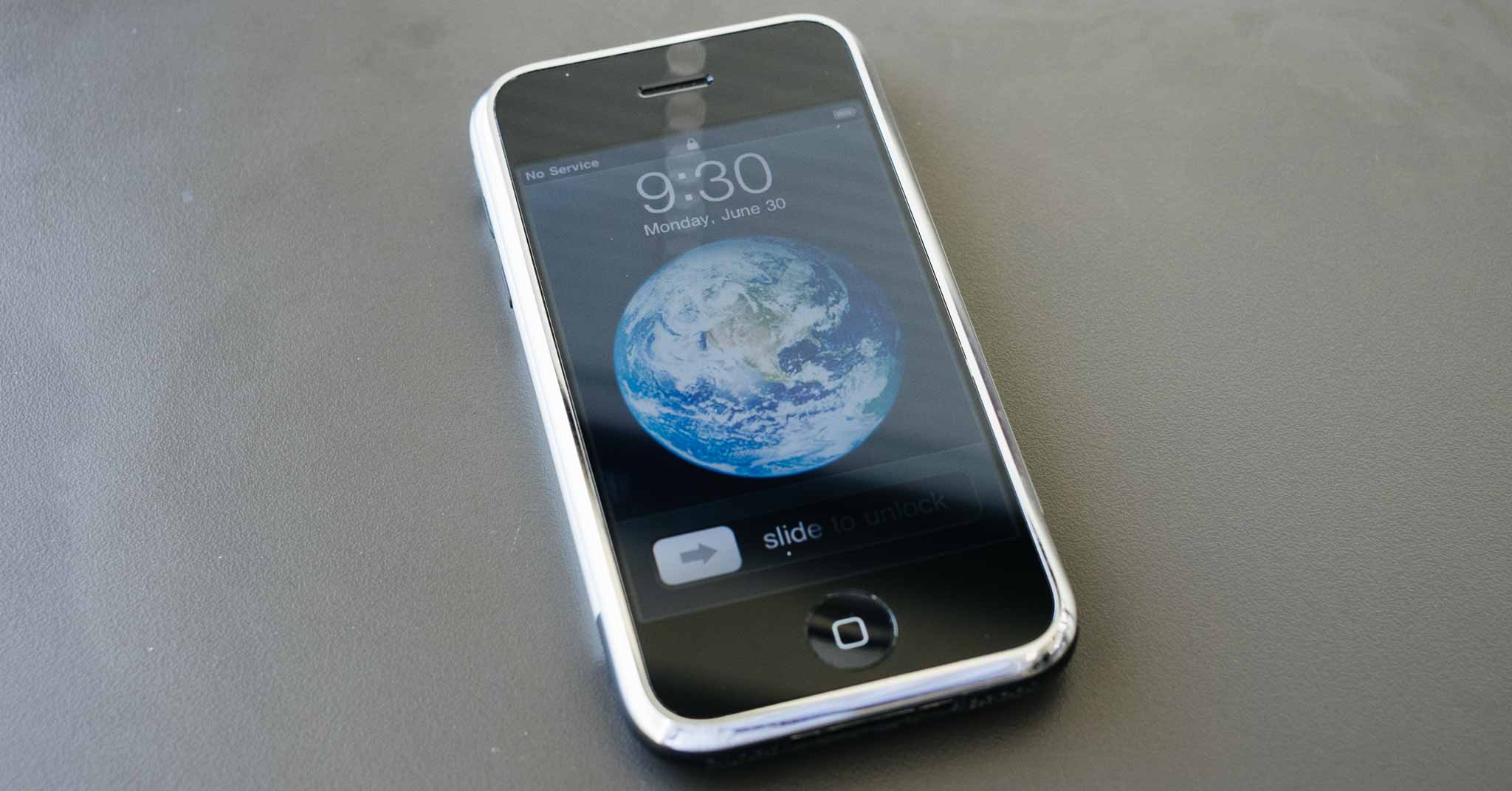
When I watched the first iPhone keynote, I was in awe. I was pumped it was coming out on my carrier.
I was getting one for sure.
There wasn’t much information about how to get one. So I ordered online. Others lined up, but I ordered. And then I tried talking to Cingular reps I knew in the days leading up to launch to make sure I got one.
I don’t concretely remember that day. But what I do know is I had only been dating my wife a couple of months, and she lived in Portland and would be driving up later that night to see me. I remember my car was in the shop (my car was always in the shop at that time). I remember the Apple website said August would be when I got my phone.
I remember that ship date being completely unacceptable to me.
I remember David Pogue’s review and how it made me lust for this bit of magic called iPhone.
I needed to get to the store, and to get an iPhone.
I called my wife (remember girlfriend then) and asked her a simple question: “hey, you close?”
She was 20 minutes away.
What happened next was one of the most awkward moments, I said: “so, how much do you l… uh, like me?”
Her: “Huh?”
“I mean when you get here would you mind driving me to the store so I could get an iPhone?”
“Really? Ok, I guess, but would you drive?”
I literally stood waiting for her at the end of the driveway. Recalling this now, it’s amazing my story with her goes on.
We first went to the local Cingular store, they knew me there, but no luck. I was on a business plan and thus couldn’t buy one for some asinine reason I’ve yet to comprehend, furthermore they were asses about it.
On a whim I drove to the Apple store, 35 minutes away on a Friday evening, while my girlfriend sat tired in the seat next to me after driving a long ways to see me for just a couple of days.
At the Apple Store I bought two iPhones, then went back in a bought a third (one for me, one for my dad, and another for a friend — none for my girlfriend, not smooth Ben).
Once home I quickly learned I couldn’t activate the iPhone (done through iTunes back then). I had a business account and Cingular wouldn’t allow it.
Fuck. Me.
I took a break to see my wife. (Smartest thing I did that night, but only after I slid the iPhone lock screen for emergency calls no less than 50 times.)
The next morning I called Cingular. They were up to speed and quickly moved the three iPhones I purchased from a business plan to a family plan. Jackpot. Activated.
I’ve owned every iPhone since then, and I still have them all. My original iPhone is gone, but we still have Erin’s original iPhone. All the iPhones still get used everyday except that old original phone. On a whim I pulled it out last night, charged it, and updated it.
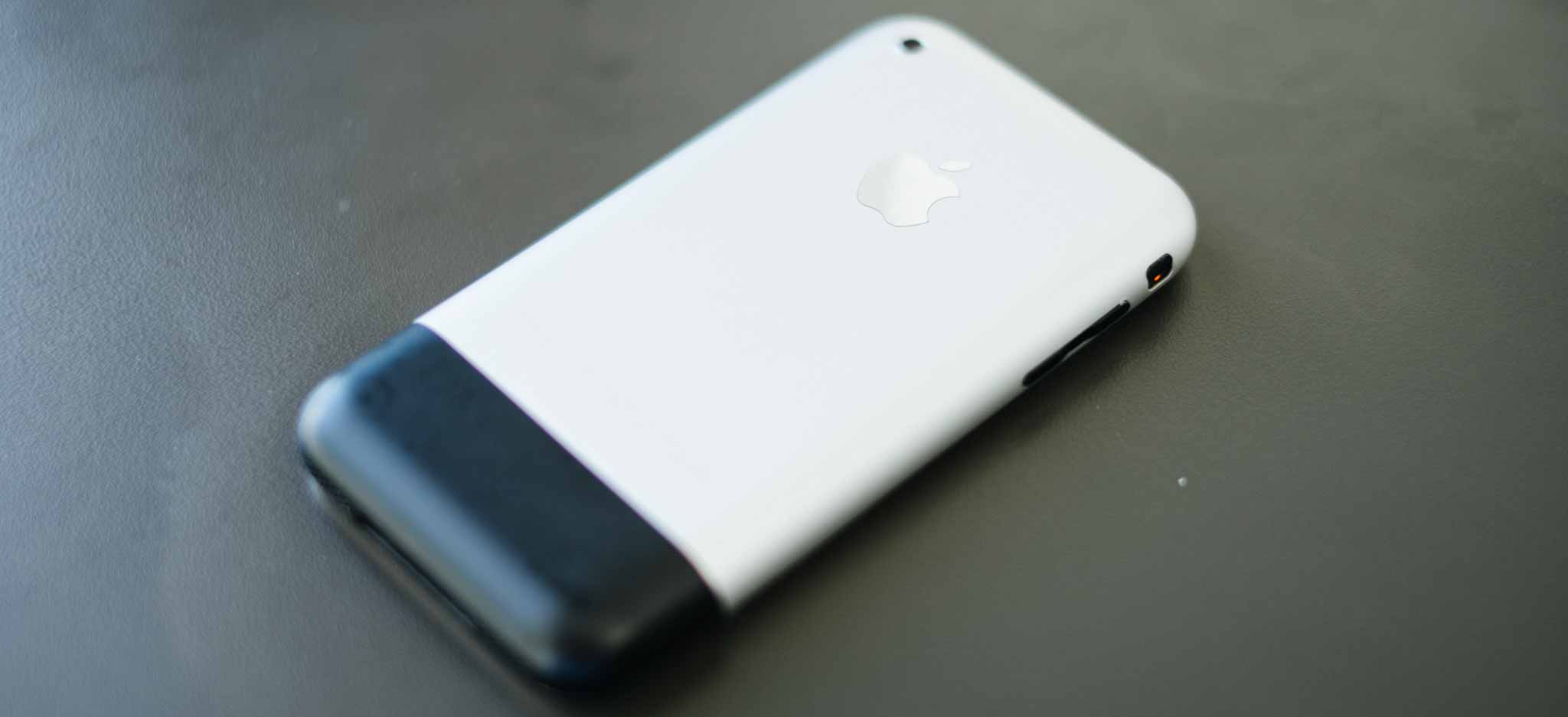
It still works fine, and even though it is quite a bit slower than my current iPhone, it doesn’t really feel that much slower.
The camera though, oh boy are we lucky we still don’t have that clunker.
Original iPhone:

iPhone 5s:

Here’s to another seven years.
-
BlackBerry Passport “Review”
I could write 10,000 words on why this is poorly done, but instead I think I'll just convey the deftness in two words: hardware keyboard.
-
Some Good Safari Extensions
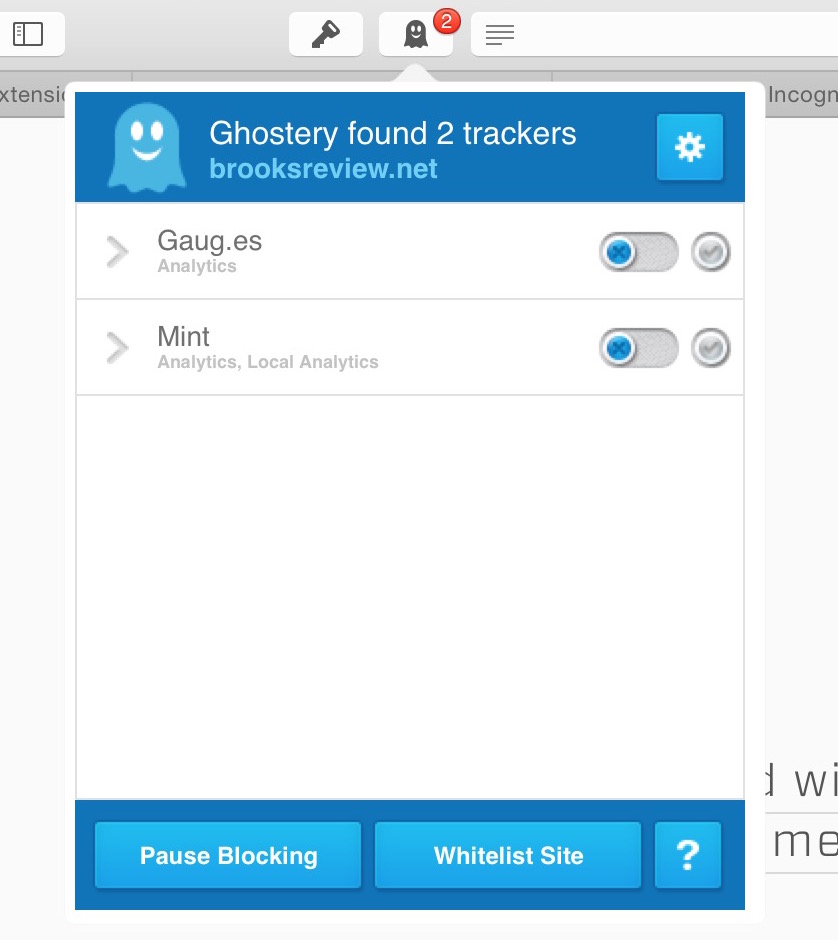
I have two Safari extensions installed both with the purpose of blocking trackers. Now, my site does have trackers too — you should see one for Gaug.es and one for Mint.
Here’s the plugins that I use to do my best to keep myself from being tracked:
It might be redundant to have both running, but I’ve yet to experience a problem having both running.
Two other useful Safari extensions:
- Nomoreitunes: Keeps the Mac App Store from opening.
- TED HTML5 Player
UPDATE: Quick note to let you know that blocking things like TypeKit means those fonts won’t load. Obvious, but still.
-
Facebook tinkered with users’ feeds for a massive psychology experiment
William Hughes:
Scientists at Facebook have published a paper showing that they manipulated the content seen by more than 600,000 users in an attempt to determine whether this would affect their emotional state. The paper, “Experimental evidence of massive-scale emotional contagion through social networks,” was published in The Proceedings Of The National Academy Of Sciences.
This story is incredible and should be the only reason you need to immediately leave Facebook. It's just not worth it.
Facebook is essentially telling people that they care so little about users that they see no reason to refrain from directly trying to control users emotional state. You'd be pissed if anyone tried to manipulate you in this unapologetic way, so don't let Facebook get away with it.
-
Sitting and Cancer
Hannah Newman:
The researchers examined close to 70,000 cancer cases and found that sitting is associated with a 24% increased risk of colon cancer, a 32% increased risk of endometrial cancer, and a 21% increased risk of lung cancer.
-
The Demise of Aperture
CJ Chilvers:
I’m hoping Apple is smart enough to figure out what the majority of photographers need (which is probably 10% of what Lightroom CAN do), and concentrate on making that feature set fast, lightweight and fun. That may get me to switch from using separate apps for everything.
Here’s the features, off the top of my head, which I use in Lightroom:
- Rating
- Develop Presets
- Noise Reduction
- Exposure adjustment
- Print dialog (for ICC color profiles)
- Export Presets
That’s all I need. If Apple wants me to use Photos.app all I need are VSCO presets (or let me make my own) and excellent noise reduction. Lightroom has the best noise reduction, Aperture’s wasn’t even close. Give me those things and I will be very happy.
-
When I get to work, offer to open OmniFocus
Well that is a hell of an IFTTT action.
-
Apple stops development of Aperture
Jim Dalrymple:
Apple introduced a new Photos app during its Worldwide Developers Conference that will become the new platform for the company. As part of the transition, Apple told me today that they will no longer be developing its professional photography application, Aperture.
End of an era. Thank God.
I loved Aperture when it came out, but Lightroom got better exponentially faster than Aperture — right now Lightroom 5 is absolutely great.
I’m excited to see the new Photos app, but I am tempering that.
-
The Amazon Dash Commercial [YouTube]
Reader Joseph S. pointed me to this video from Amazon as a response to my post about Amazon’s terrible marketing.
This video is much closer to what a good marketing video should be, which makes me wonder why the Fire Phone video is so poor. But now I have two questions about this video:
- Why in the world is a little kid narrating it? That makes no sense, adults are using the product. Is this to bang me over the head with the idea that “it’s so easy a kid can use it?” Stupid.
- Why is there even narration? The video would be much better if we just heard the muted sounds of life with a lovely melody accompanying those sounds. Get rid of the narrator.
So close Amazon, so close.
-
Workaholism in America
Bryce Covert:
Former NASA scientists found that people who take vacations experience an 82 percent increase in job performance upon their return, with longer vacations making more of an impact than short ones. Putting in too many hours, on the other hand, does the opposite. More than 60 hours a week will create a small productivity flurry at first, but it’ll start to decline again after three or four weeks. Other studies have found the same initial burst followed, but a worse decline.
A couple people have noted that they have noticed a large change, for the better, with my writing and this site. What could it be?
Well, I’ve taken more time off in the past six months than I have in the past three years combined. I can’t say that is the only factor, but it’s pretty compelling.
(I’m also getting a lot more done.)
-
Google Now
Ben Thompson:
I question, though, if Now will turn out to be as meaningful to most people as Google thinks it will be. In other words, how many people actually want a personal digital assistant? There is an alternative view of computers in which they are more akin to a tool, something you pick up and use to do a job, and then set down when you are done with it. To be sure, that tool is incredibly powerful and capable of doing a great number of jobs, but it still operates in service of something outside of computers.
That’s such a huge question, because as Thompson notes it is a big departure from what Siri is doing. It’s: I know what you want, versus I can answer that for you.
Or, to pull in Star Trek: The Next Generation, it’s Picard walking up to the Replicator and the computer just spitting our some Earl Grey (even though it is the most predictable thing ever the computer never did this), instead (like with Siri) Picard asked for what he wanted and then got it..
In fact, the entire advanced computing system on TNG centered around the idea that the computer knew everything very quickly, but never offered that information — you had to ask. Google sees that as a fundamental problem that needs solving, and Apple seems to see that as the goal.
-
xScope 4
I love it when good apps get even better. I can’t wait for the next project I need this on.
-
Fujifilm X-E2 For $150 Off
Nice deal on a camera that I just love to shoot with. And fear not about it’s age, just today it received yet another firmware update to fix and keep, the camera current. I am thoroughly impressed with Fujifilm’s update regimen to the point where I would buy an older X100 and know I would be perfectly happy.
You can also snag the X-E2 from B&H for the same price if you prefer.
-
The Gmail API
Alistair Barr and Rolfe Winkler:
The move, announced Wednesday at the company’s developer conference in San Francisco, is a first step toward turning Gmail into a platform for developers who want to leverage the contents of users’ email for productivity and other applications. A travel app, for example, could scan your email inbox for booking confirmations and automatically compile them into an itinerary. An expense app can dig through your inbox for receipts and automatically file them to your cloud-based account.
This clearly sounds horrible from a privacy standpoint. Who wants developers sleuthing through their emails? I sure as hell don’t.
In an interesting note about the privacy, WSJ notes:
The new Google API may help with this. With IMAP, developers had to access all of a user’s messages to make their applications work, even if the apps only needed one specific type of data. The new API lets developers access only what they need. For example, if their app just sends mail on behalf of a user and does read mail, developers can limit their request to send-only, DeFriez said.
“There are actually less privacy concerns than IMAP,” Mawani said.I find this statement really odd. The phrasing starts off to make it sound as though you have fine grain controls over what someone can access over the API. I picture something like: “Only emails with Confirmation in the subject line.” That actually would be pretty great.
And then you read the rest of the sentence and it sounds more like the API privacy controls will be more like: “Send only, Scan only, Send & Scan.” Which is really nothing to brag about.
All of that leads me to: how is this less of a concern than IMAP?
Also, why does Google hate IMAP so much? Granted it is not great, but it’s a standard.
-
Court Rules No Fly List Process Is Unconstitutional and Must Be Reformed
ACLU:
The judge ordered the government to create a new process that remedies these shortcomings, calling the current process “wholly ineffective” and a violation of the Fifth Amendment’s guarantee of due process. The ruling also granted a key request in the lawsuit, ordering the government to tell the ACLU’s clients why they are on the No Fly List and give them the opportunity to challenge their inclusion on the list before the judge.
You guys can’t see my face, but it’s what you might call ‘a shit eating grin’.
-
Nest to Share User Information With Google for the First Time
Well, kind of (that’s not my headline). You see Nest is opening up some access to their devices so that other things can tie into the devices (HomeKit envy much?). As part of that Google is getting access to data so that a user can use voice controls to control the Nest devices.
It’s also opt-in, which is good.
So on the one hand you have Nest claiming that Google won’t get their hands on Nest data, and then you have this. Even if we give Nest & Google the benefit of the doubt, this is a case of incredibly stupid timing.
But then as Rolfe Winkler and Alistair Barr reports, Matt Rogers a Nest co-founder had this to add:
“We’re not telling Google anything that it doesn’t already know,” said Rogers.
Well that’s reassuring.
-
Why Apple Really Cares About Your Privacy
Rich Mogull:
With every iteration of OS X, iOS, and iCloud, we see Apple add increasing the privacy protections it provides its users. It has consistently enabled customers to protect their personal information from advertisers, governments, third-party developers, and even Apple itself.
Bottom line: Apple knows that it quickly will matter to consumers to have a privacy conscious company.
-
Cops Can’t Search Your Cell Phone Without a Warrant
Dara Lind:
The Supreme Court just ruled unanimously in two decisions that police officers can’t search the cell phone of someone they’ve stopped or arrested unless they have a warrant. That’s true even if the cops suspect that the phone has data that’s relevant to the crime.
You need to know this, because cops will still try to get you to consent — not a lawyer, just saying.