BBC:
>We wanted to see what would happen if we took a group of people who normally spend their day sitting in an office and ask them to spend a few hours a day on their feet instead.
More fodder for my pro-standing agenda.
Top Posts
BBC: >We wanted to see what would happen if we took a group of people who normally spend their day sitting in an office and ask them to spend a few hours a day on their feet instead. More fodder for my pro-standing agenda.
BBC:
>We wanted to see what would happen if we took a group of people who normally spend their day sitting in an office and ask them to spend a few hours a day on their feet instead.
More fodder for my pro-standing agenda.
Luke Edwards: > On the plus side this could be really helpful for companies to converse on specific problems with the public. Or, more sceptically, it allows them to deal privately with problems, taking away the user’s power t publicly embarrass them when an issue arises. Of course the option to talk publicly is there…
Luke Edwards:
> On the plus side this could be really helpful for companies to converse on specific problems with the public. Or, more sceptically, it allows them to deal privately with problems, taking away the user’s power t publicly embarrass them when an issue arises. Of course the option to talk publicly is there too.
Another great move by Twitter to help braaaaaands and spammers. App.net was setup like this from day one, never had or heard of any abuse. I doubt that is going to be the case for Twitter users.
You are likely to hear a lot about a new weather app called [Weather Line][1] today. It’s making the rounds and a lot of people (rightfully) love it. I was one of the people that can brag that they got early access — though I think I may have been the last one added, doesn’t…
You are likely to hear a lot about a new weather app called [Weather Line][1] today. It’s making the rounds and a lot of people (rightfully) love it. I was one of the people that can brag that they got early access — though I think I may have been the last one added, doesn’t matter.
I’m personally still a bit undecided about the app. I like many things about it, but I have yet to have that moment where I feel the “yep, this is it”. That said here’s a few general thoughts on the app:
1. My sentiments are pretty closely reflected by what [Shawn Blanc said about the app][2]: “So, is Weather Line the best new general purpose weather app you can buy? I don’t think so (because of its lack of radar). But it is a fantastic app nonetheless.” (Great photo on his review too, if I do say so myself. And I do.)
2. Truly fantastic icon.
3. The more I use the app, the more annoying I find looking at other weather apps that don’t show hourly forecasts as pretty lines on a graph. That said, I am not sold on these pretty lines being the best way to display *current* weather conditions. When I want to check the weather right now, I just want to glance at the screen and that is hard to do with Weather Lines.
Overall, this is a solid weather app. I personally think it is more geared to weather nerds than, say, my parents.
[1]: http://weatherlineapp.com/
[2]: http://shawnblanc.net/2013/10/weather-line/
“If anything, Google’s motto seems to have largely succeeded at reframing “evil” to exclude all actions performed by Google.” — Ian Bogost
[Ingrid Lunden for TechCrunch][1]: > Domain registration and hosting company GoDaddy is continuing on its acquisitions roll, with the announcement today that it acquired Media Temple, a premium domain hosting and website services company based out of Los Angeles that targets website development professionals. Financial terms are not being disclosed. [From the Media Temple FAQ…
[Ingrid Lunden for TechCrunch][1]:
> Domain registration and hosting company GoDaddy is continuing on its acquisitions roll, with the announcement today that it acquired Media Temple, a premium domain hosting and website services company based out of Los Angeles that targets website development professionals. Financial terms are not being disclosed.
[From the Media Temple FAQ on the acquisition][2]:
> **Will you be sharing my personal & financial information with GoDaddy?**
> Your personal and financial information stays securely in our system. No third-party vendors will ever have access to it, which has always been our practice.
Translation: yes.
Media Temple *used* to be such a great company.
[1]: http://techcrunch.com/2013/10/15/godaddy-buys-media-temple-to-build-up-its-business-with-web-professionals/
[2]: http://weblog.mediatemple.net/2013/10/15/faqs-about-the-godaddy-acquisition/?utm_source=mtemail&utm_medium=text&utm_content=faq&utm_campaign=gd
Shawn Blanc: > Well, over the past three days I went through every single review and recommendation I’ve written in the past 6 years in order to take inventory of which products I still use and which I don’t. I don’t agree with him on a few of these picks, but that doesn’t mean they…
Shawn Blanc:
> Well, over the past three days I went through every single review and recommendation I’ve written in the past 6 years in order to take inventory of which products I still use and which I don’t.
I don’t agree with him on a few of these picks, but that doesn’t mean they aren’t great apps/tools.
[New report from the Snowden leaks by Barton Gellman and Ashkan Soltani][1]. The main points are: > During a single day last year, the NSA’s Special Source Operations branch collected 444,743 e-mail address books from Yahoo, 105,068 from Hotmail, 82,857 from Facebook, 33,697 from Gmail and 22,881 from unspecified other providers, according to an internal…
[New report from the Snowden leaks by Barton Gellman and Ashkan Soltani][1]. The main points are:
> During a single day last year, the NSA’s Special Source Operations branch collected 444,743 e-mail address books from Yahoo, 105,068 from Hotmail, 82,857 from Facebook, 33,697 from Gmail and 22,881 from unspecified other providers, according to an internal NSA PowerPoint presentation. Those figures, described as a typical daily intake in the document, correspond to a rate of more than 250 million per year.
And:
> The NSA has not been authorized by Congress or the special intelligence court that oversees foreign surveillance to collect contact lists in bulk, and senior intelligence officials said it would be illegal to do so from facilities in the United States. The agency avoids the restrictions in the [Foreign Intelligence Surveillance Act][2] by intercepting contact lists from access points “all over the world,” one official said, speaking on the condition of anonymity to discuss a classified program. “None of those are on U.S. territory.”
They want the contact lists so that they can do network analysis, as they do with PRISM collection. What’s interesting is that this is a bulk sweep that is rather indiscriminate and only approved by the President. Not even a faux-court here, just the office of the President.
At the very least, the NSA could take care of the SPAM problem for all of us:
> Spam has proven to be a significant problem for NSA — clogging databases with data that holds no foreign intelligence value. The majority of all e-mails, one NSA document says, “are SPAM from ‘fake’ addresses and never ‘delivered’ to targets.”
They took out a nuclear reactor with code, and they can’t take out the fucking spammers for us?
[1]: http://www.washingtonpost.com/world/national-security/nsa-collects-millions-of-e-mail-address-books-globally/2013/10/14/8e58b5be-34f9-11e3-80c6-7e6dd8d22d8f_story.html
[2]: https://www.fas.org/irp/agency/doj/fisa/
I am, decidedly, not a keyboard geek. I don’t know anything about the different switches used in keyboards. And up and until the past few years I would have thought it a joke for anyone to prefer a mechanical keyboard. This, then, is not the review that a keyboard nerd wants to read about a…
I am, decidedly, not a keyboard geek. I don’t know anything about the different switches used in keyboards. And up and until the past few years I would have thought it a joke for anyone to prefer a mechanical keyboard. This, then, is not the review that a keyboard nerd wants to read about a hot new mechanical keyboard. This is the review for those that just don’t understand what all the hubbub is about — which is exactly where we begin this review.
What’s the big deal with Cherry MX Blue/Red/Pink/Purple/White/Clear switches?
In the past I experimented with the Matias Laptop Pro keyboard and [concluded][1]:
> The Matias made me a worse typist, with a worse looking desk. That’s the worst.
> Maybe I’m just not nerdy enough for a mechanical keyboard, so I typed this on one of my six Apple Wireless keyboards instead.
Then I vowed not to try another mechanical keyboard because I simply cannot stand cords. This is not solved with the [CODE keyboard from WASD Keyboards](http://codekeyboards.com), but there was something about the way this keyboard was marketed that hooked me. Maybe it’s the backlight, maybe the removable cord, maybe it’s the DIP switches for changing settings, or maybe I’m not as happy with the Apple Wireless keyboard as I thought. I don’t know the reason, but I wanted to try it.
With the Matias I became a worse typist. After a substantial amount of time using the keyboard at my office I was still missing keys, making errors and feeling fatigued after typing. It drove me nuts. I have been typing most of my life, I should not have to “learn” a keyboard.

When I first plugged in the CODE I typed my complex, lengthy OS X password and, to my surprise, nailed it on the first try. There has certainly been an adjustment period but as I write this sentence, two days into my testing, I feel comfortable using the keyboard. I’m currently typing below my normal speed, however, I don’t feel that the keyboard’s design is forcing me to make errors.
##### Fast-Forward A Week
I’ve now had the CODE for about a week, and I like this keyboard even more. In fact I like it so much that I often bring it home with me after work — I just don’t want to use another keyboard.
And then, as I finished typing that sentence I picked up the keyboard to adjust it and the USB cable came loose. Upon inspection, the port itself had come unsoldered from the board.
Crap.
***
##### While We Wait
While I waited for a replacement to the CODE, I went back to the trusty old Apple Wireless. I immediately hated it. The key travel was too short, and everything started to bug me. So I went ahead and grabbed a [DAS model S Professional from Amazon][2].
This section of my CODE review will be about the DAS, while we wait in “real time” for the replacement CODE to arrive.
There’s three things you immediately notice about the DAS that doesn’t stand out on a keyboard like the CODE:
1. It’s huge. With the ten key off to the side this keyboard is substantially wider. Add to that the overall bulkier look and you feel like your mouse hand is reaching off to China.
2. It’s really loud. I’ve only ever tried the “silent” version of clicky keyboards, but man is this DAS loud. The part the gets me is that the sound is more treble than bass and I am not sure I will be able to stand it while I wait for a new CODE.
3. The lettering on the keycaps is quite different. I’ve yet to decide if it is different good, or different bad.
The real question is how does the CODE compare to the DAS. In that respect the CODE blows the DAS out of the water. There is a lot to like about the DAS, but the added noise is just too much for me, the pigtail USB port is ugly and cumbersome, and the overall size of the DAS is obscene.
I think the DAS is a solid keyboard, but had I started part two of my journey into mechanical keyboards with the DAS, I don’t think I would have become a convert.
***
##### Return of the Code
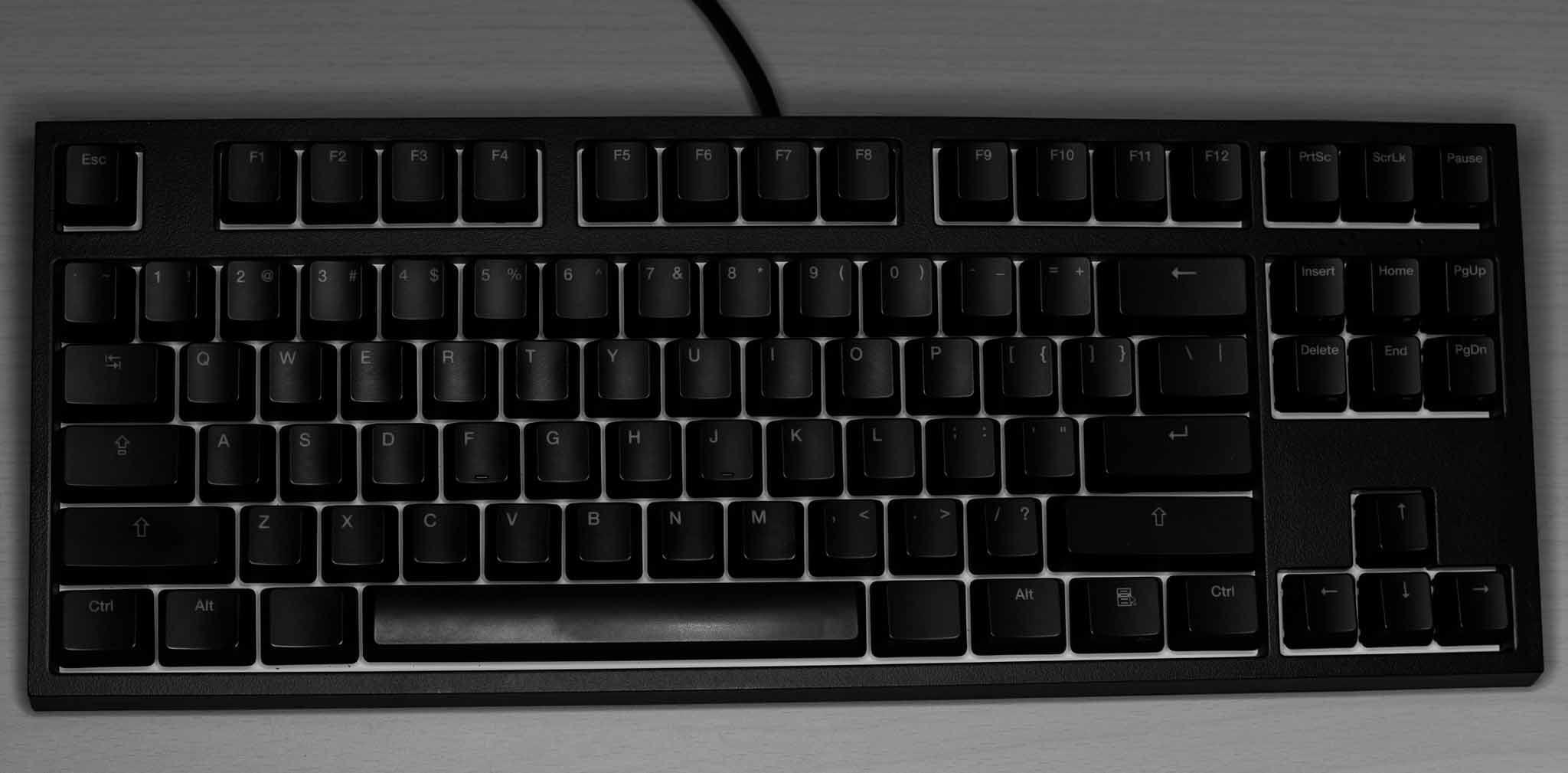
WASD keyboards repaired my CODE (they are currently running 4–12 months on backorders for them) by replacing the dislodged port and sent it back to me looking perfect. The repair took about a week with shipping times.
##### Noise
Now that the CODE is back I can run the test that a ton of people have been asking me about: noise. A lot of you asked that I record the noise from the CODE and the other keyboards I have, but I don’t get why. The reason being: you can turn the volume up and down on a sound file.
Instead I put a decibel meter to each keyboard. Actually, I downloaded a decibel meter app on my iPhone 5S, taped my iPhone to the shock mount of my podcast mic, and stationed the iPhone microphone 16 inches above they keyboards and recorded the peak dB reading. ((The test was typing the same sentence three times in a row on each keyboard.)) Here are the results:
– CODE: 99 dB at peak
– DAS: 104 dB at peak (Cherry MX Red switches)
– Apple Wireless: 90 db at peak
In other words the CODE is 10% louder than the Apple keyboard, while the DAS is 15.5% louder. (The DAS is 5% louder than the CODE for those not wanting to grab a calculator.)
Update: Sorry, I was not aware decibels are measured on a logarithmic scale, and thus my math above was not correct — not even close.
For the most part, the Apple Wireless keyboard is silent in an office. The CODE can be heard, but I don’t think it’s an annoying sound. The keystrokes are more bass than treble and they sound solid.
The DAS, however, has a much louder, higher pitched sound than the CODE. The sound of the DAS sounds a bit cheap if you ask me, almost plasticky. I find the DAS sound annoying but after a couple of days I got used it enough and was no longer bothered.
While I prefer a nice and silent keyboard, the sound of the CODE isn’t enough to dissuade me from using it. The DAS is likely to annoy people around you if are in remotely close proximity.
##### The End
Of the keyboards I tested recently: the DAS, that crappy Microsoft thing Marco likes, the Apple Wireless Keyboard, and the CODE, the only keyboard I absolutely adore is the CODE. It’s unfortunate that they are on back order because I’d like to have two of them.
[Here’s what WASD said on `9/24/13` about the order status][3]:
> More CODE keyboards will be available in approximately 4-6 months. Our next batch will include Cherry MX Blue, Brown, and Green switches. We do have Clear switches on order, but due to long lead times from Cherry, we do not expect another batch of Clear CODE keyboards for another 12-14 months.
A YEAR OUT! Crap.
The Apple Wireless will still be my go-to when I need a keyboard for the iPad. For everything else, I’d be very sad to type on anything except the CODE.
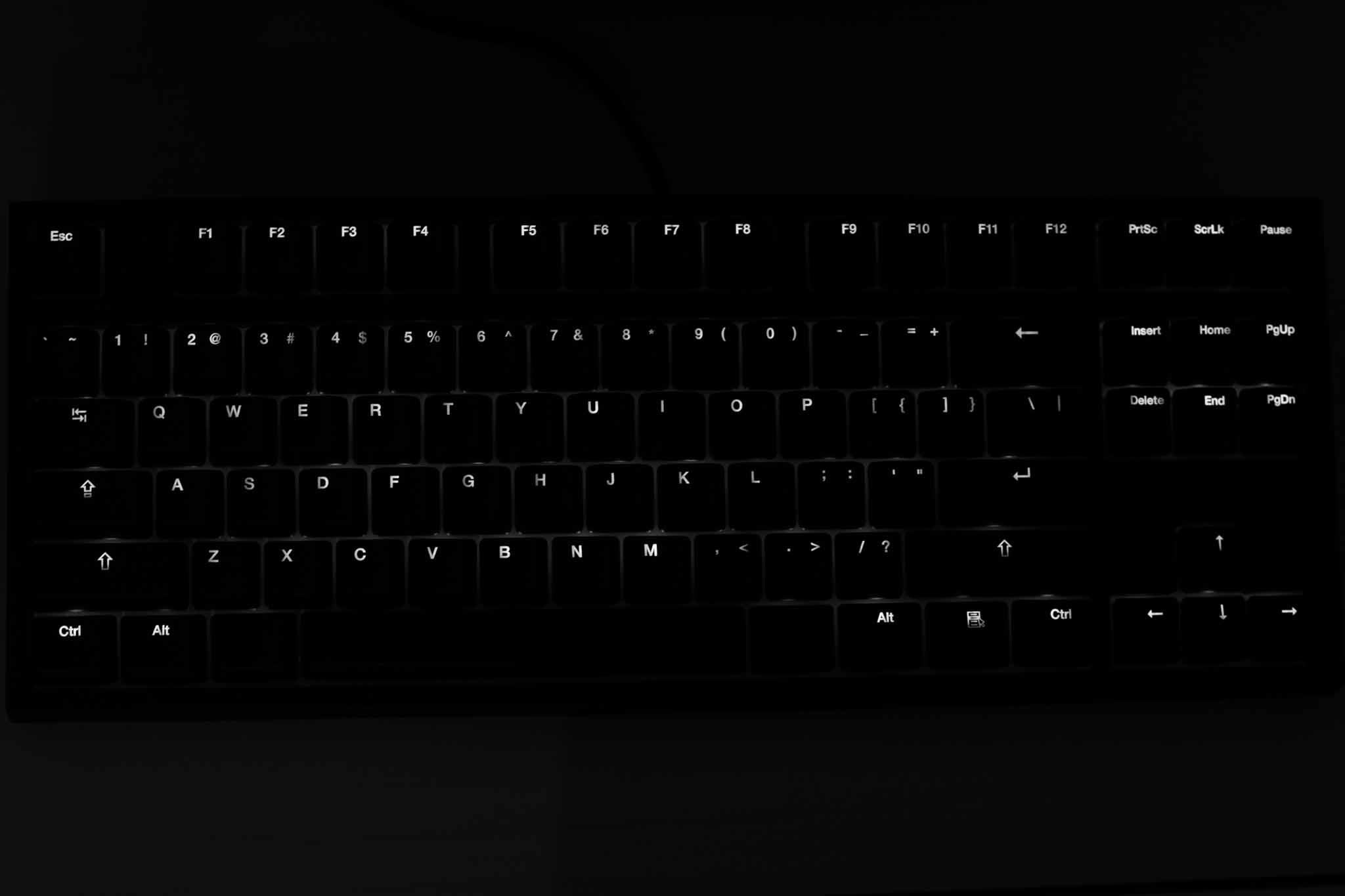
Very sad, indeed.
[1]: https://brooksreview.net/2013/04/mechanical-keyboards/
[2]: http://www.amazon.com/exec/obidos/ASIN/B003ZG9T62/ref=nosim&tag=brooksreview-20
[3]: http://codekeyboards.com
[Thomas Hawk has lost, something, sanity? Maybe. This post is so ridiculous that I am forced to walk you through almost the entire thing.][1] Now, it is fair to say that I am predisposed to disagree with people that would think this is a good idea, but Hawk’s argument is so thin that it’s just…
[Thomas Hawk has lost, something, sanity? Maybe. This post is so ridiculous that I am forced to walk you through almost the entire thing.][1] Now, it is fair to say that I am predisposed to disagree with people that would think this is a good idea, but Hawk’s argument is so thin that it’s just ridiculous.
He begins (after a brief intro):
> Because Google gives everyone an opportunity to opt out of shared endorsements, it’s easy to dismiss a lot of the criticism by simply pointing folks to how easy opting out is.
No, we could dismiss it if it was opt-in, but turning something on after people sign up, and are not expecting it, is a douchebag move plain and simple.
> Some people are very anti-advertising though and certainly this new advertising channel will naturally be met by some with healthy skepticism. It’s also worth noting that these ads are not going to appear on Google+. Google+ will remain ad free. The new ads simply will use Google+ data to advertise in places where Google is already advertising, like search.
Oh, well shit, if they aren’t on Google+ then *no one* has anything to worry about. It’s not like Google Search has more traffic than Google+ — oh it does? So Google is pulling your endorsements from Google+ and *not* showing those endorsements on Google+, instead showing them where the *rest* of the world looks *every* day? Nothing to worry about there.
> Personally speaking, for myself, I embrace change. In general I’d rather see more change, than less. I think change represents innovation (usually) and I probably tend to look for the positive in change rather than the negative. I’m a glass half full sort of guy when it comes to change.
Here Hawk is really saying: you are only against this if you are a negative person. To disagree with Hawk’s points must prove you to be a nasty negative person, because Hawk *is* an “glass half full sort of guy”. Me? I’m a *flask* half full sort of guy.
> I think most of us see how today’s announced change in the TOS is good for businesses who advertise. Personal endorsements by our friends are incredibly powerful motivators. Ads which feature personal endorsements by people we know, trust and respect, will be far more effective than other ads that an advertiser might come up with.
I don’t think anyone disagrees with this.
> I think we can also see where this new product would be good for Google.
Ok, but why is this good for the user? We all get it is good for advertisers and for the people that make money off those ads, we get that. No dispute here.
*(Skipping a bit of redundant shit.)*
> Social media is the future. By increasing the value of our possible endorsements through advertising buys, companies will spend more time, effort and money to court social influencers.
Right, but *most* users, like more than 90%, don’t fit that category of “social influencers”. So why is this good for them?
*(Fast forward through some crap that he loves and want’s to be paid for loving.)*
> If you consider yourself a social media type, this will be one more important reason why you’ll want to devote time to building out your presence on G+.
Uhh, what now?
> There will be a risk of course that some influencers will be bought off by brands for positive endorsements, but I think most of the time this stuff is pretty easy to sniff out.
Bullshit. Utter bullshit. They absolutely *will* be bought off — that’s the entire premise of linking an “influencer” with a *braaand*.
> It’s the true, authentic, natural posts (available for purchase after the fact as ads) that will be most valuable.
He’s kidding, right? There’s no such thing of true/authentic posts in an environment where people know they *could* get paid after the fact for that post. That leads to more favorable posts. It’s why most large media companies separate the writers from the people selling ad spots. Bias would be rampant otherwise.
> I bet brands spend more time showing us their cool new tech and products as the value of these ads become apparent and more of their budgets are spent on promoting products to G+ users.
I forget, do they try *not* to show use cool new products right now?
That was all just point one, here we go on point two.
*(Skip some stuff that is filler.)*
> One of the reasons why I never change my avatar is that I believe having a strong avatar that is consistent over the years with your brand helps you build recognition.
Uhh, ok?
*(Skip some stuff about Robert “Ego” Scoble.)*
> For about 2 months every time I logged into Facebook, I was seeing another brand that Robert liked. Were the brands paying Facebook for that? Probably. But it also constantly reminded me of a good friend and also linked back to him in the like. I have to admit that I ended up liking a lot of the same brands Robert did, when it was something I really liked.
Here’s the point Hawk is missing: did Robert like the brand because he likes the brand, or because he was paid *to* like the brand? Did Facebook take a like out of context, like perhaps because Scoble visited a page for those brands and by default “auto” liked those pages?
In this type of setup, you never know the answer to these things because it is in the best interest of the brand and ad company to hide this truth and make it as favorable as possible.
Point three (two was a real dud):
> Let’s say I’m in the market to buy a new filter for my camera. Wouldn’t it be a positive for me to know that another photographer I respect (like Joe Azure) seems to like his Lee Big Stop Filter? Isn’t that a lot better than just a generic ad? Especially if I see a lot of my friends endorsing one product, this may be a good signal to me that this product is worth checking out more than others.
Now *this* is a strong point. However, if you are in the market, wouldn’t it be far more helpful to see that your pals like this product on the product page instead of an ad? If you are looking for a particular product, do you really look for it in ads?
> I saw a report earlier today that said that by 2014 10-15% of online reviews will be fakes. With all the fake reviews and astroturfing out there, I’m more inclined to trust the word of a friend on a product or service, than a stranger.
And how many Facebook/Google “likes” do you think are fake, or severely outdated?
And lastly:
> Oh, and by the way, if you were wondering whether or not those sea salt and vinegar chips in the dark blue bag by Kettle Chips were the BEST CHIPS IN THE ENTIRE WORLD? Yep, they pretty much are — and if Kettle Chips wants to send a few bags of those over to our place, my daughters and I would totally be down with that. 
*Exactly…*
What should we have expected from someone that has this on their sidebar: “Google+ is for WINNERS!”.
I get that some people don’t mind this. That for “influencers”, brands, and Google this *will* be a good thing. But for the average user this will either be nothing of importance, or shitty. The idea that it would be good is laughable.
[1]: http://thomashawk.com/2013/10/id-plus-one-that-why-i-think-googles-shared-endorsements-are-a-good-thing-for-social-media-influencers-and-consumers.html
[Gabe Weatherhead][1]: > So that seems normal, but it is a discounted price, as promised. FTP on the Go for iOS 7 is $10. This upgrade is $5. That seems pretty good, so I went with it. I use the app several times a week. If I get notified of a typo on this blog,…
[Gabe Weatherhead][1]:
> So that seems normal, but it is a discounted price, as promised. FTP on the Go for iOS 7 is $10. This upgrade is $5. That seems pretty good, so I went with it. I use the app several times a week. If I get notified of a typo on this blog, I usually fix it from my iPhone or iPad with their app. I’m happy to kick them a few extra bucks. But, what the hell is going on here?
Very interesting solution to a tough problem. Ultimately I think it will work for them because their target market is very nerdy people who will not be confused by multiple versions (or more accurately who will *un*-confuse themselves easily). For most apps this would be a disaster. (I would guess, can you imagine three versions of something mainstream, like Angry Birds?)
[1]: http://www.macdrifter.com/2013/10/an-interesting-ios-app-store-upgrade-example.html
Brett Terpstra: > Maybe you haven’t been as lucky. Maybe you haven’t been as careless to begin with. Still, do me a favor and step back to appreciate that you get to be picky about your coffee, snobby about your beer and pretentious about your text editors.
Brett Terpstra:
> Maybe you haven’t been as lucky. Maybe you haven’t been as careless to begin with. Still, do me a favor and step back to appreciate that you get to be picky about your coffee, snobby about your beer and pretentious about your text editors.
[Charlie Stross][1]: > Nor is Microsoft Word easy to use. Its interface is convoluted, baroque, making the easy difficult and the difficult nearly impossible to achieve. It guarantees job security for the guru, not transparency for the zen adept who wishes to focus on the task in hand, not the tool with which the task…
[Charlie Stross][1]:
> Nor is Microsoft Word easy to use. Its interface is convoluted, baroque, making the easy difficult and the difficult nearly impossible to achieve. It guarantees job security for the guru, not transparency for the zen adept who wishes to focus on the task in hand, not the tool with which the task is to be accomplished. It imposes its own concept of how a document should be structured upon the writer, a structure best suited to business letters and reports (the tasks for which it is used by the majority of its users). Its proofing tools and change tracking mechanisms are baroque, buggy, and inadequate for true collaborative document preparation; its outlining and tagging facilities are piteously primitive compared to those required by a novelist or thesis author: and the procrustean dictates of its grammar checker would merely be funny if the ploddingly sophomoric business writing style it mandates were not so widespread.
Fantastic read.
[1]: http://www.antipope.org/charlie/blog-static/2013/10/why-microsoft-word-must-die.html
Alyson Shontell: >Called SnapHack, it lets you save and re-open Snapchat messages you’ve received any time you want. That means, no more disappearing photos or videos, which is the whole reason why Snapchat is appealing in the first place. Simultaneously surprising and not surprising that Snapchat hadn’t thought about this approach before.
Alyson Shontell:
>Called SnapHack, it lets you save and re-open Snapchat messages you’ve received any time you want. That means, no more disappearing photos or videos, which is the whole reason why Snapchat is appealing in the first place.
Simultaneously surprising and not surprising that Snapchat hadn’t thought about this approach before.
Thomas Verschoren, responding to yours truly: > So even when the iPhone is seen as a luxury item, people still oppose to paying for apps. Verschoren offers some anecdotal evidence that in Belgium iPhones *are* expensive, and even still people balk at paying for apps.
Thomas Verschoren, responding to yours truly:
> So even when the iPhone is seen as a luxury item, people still oppose to paying for apps.
Verschoren offers some anecdotal evidence that in Belgium iPhones *are* expensive, and even still people balk at paying for apps.
Alyson Shontell writing for tech-blog equivalent of TMZ: >Facebook’s billionaire founder bought four homes surrounding his current home near Palo Alto, Mercury News reports. The houses cost him more than $30 million, including one 2,600 square-foot home that cost $14 million. (His own home is twice as large at 5,000 square-feet and cost half as much.) He…
Alyson Shontell writing for tech-blog equivalent of TMZ:
>Facebook’s billionaire founder bought four homes surrounding his current home near Palo Alto, Mercury News reports. The houses cost him more than $30 million, including one 2,600 square-foot home that cost $14 million. (His own home is twice as large at 5,000 square-feet and cost half as much.)
He bought those home so he could have privacy. NO, really.
Bruce Schneier’s advice on setting up an Air Gap: >Air gaps might be conceptually simple, but they’re hard to maintain in practice. The truth is that nobody wants a computer that never receives files from the Internet and never sends files out into the Internet. What they want is a computer that’s not directly connected…
Bruce Schneier’s advice on setting up an Air Gap:
>Air gaps might be conceptually simple, but they’re hard to maintain in practice. The truth is that nobody wants a computer that never receives files from the Internet and never sends files out into the Internet. What they want is a computer that’s not directly connected to the Internet, albeit with some secure way of moving files on and off.
In case you are wondering, no I do not have an air gap setup. I wouldn’t mind it, but no, I don’t.
Dan Frommer with the bad news: >The biggest roadblock, for me, is data speed. T-Mobile’s free international roaming is only for 2G data service, which you probably haven’t used day-to-day since the first iPhone. After getting used to LTE speeds at home, it will seem unusably — or at least uncomfortably — slow. YIKES. When…
Dan Frommer with the bad news:
>The biggest roadblock, for me, is data speed. T-Mobile’s free international roaming is only for 2G data service, which you probably haven’t used day-to-day since the first iPhone. After getting used to LTE speeds at home, it will seem unusably — or at least uncomfortably — slow.
YIKES. When I roamed in Canada a year ago I was bumped down to 3G speeds and I thought the world had ended. I’d expect my wireless carrier to pay *me* for using 2G, not the other way around.
Claire Cain Miller and Vindu Goel writing about a sleazy marketing company: >If a user follows a bakery on Google Plus or gives an album four stars on the Google Play music service, for instance, that person’s name, photo and endorsement could show up in ads for that bakery or album. >Google said it would…
Claire Cain Miller and Vindu Goel writing about a sleazy marketing company:
>If a user follows a bakery on Google Plus or gives an album four stars on the Google Play music service, for instance, that person’s name, photo and endorsement could show up in ads for that bakery or album.
>Google said it would give users the chance to opt out of being included in the new endorsements, and people under the age of 18 will automatically be excluded.
[John Gruber, in an excellent article about Apple naysayers, points out][1]: > The point is to show that Apple’s customers are demographically different. The Mac today has roughly 10 percent of the PC market, but it’s not just any randomly distributed 10 percent of the market. Quite the opposite — Apple’s 10 percent of the…
[John Gruber, in an excellent article about Apple naysayers, points out][1]:
> The point is to show that Apple’s customers are demographically different. The Mac today has roughly 10 percent of the PC market, but it’s not just any randomly distributed 10 percent of the market. Quite the opposite — Apple’s 10 percent of the market is entirely comprised of the high end of the market. Mac users are discriminating, willing to pay more for a product they deem superior.
With Macs and iPads, I think Gruber is correct. However, with each passing quarter this is a harder argument to make for iPhone users. A large and loyal segment will always be willing to pay more, but as the market size of the iPhone grows the customer base will be more diluted and thus, become more “cheap” and less high-end.
That’s the shift I think we are seeing with app sales right now in the App Store. The largest group of potential buyers are cheap asses that don’t want, or won’t ever, pay for an app. The lure to iOS used to be “there’s an app for that”. Now I fear the lure being sold (not by Apple mind you) is “there’s a *free* app for that”.
The common refrain I hear when people are recommending apps to each other is: “Is it free?” “No. It’s $0.99.” “I bet I can find a free version.”
Judging by the crappy ad laden apps that sit in the top rankings of the App Store, it seems that consumers with iPhones are willing to endure these ads if that means no money out of pocket. And you know what company is better at making free, but ad-laden products? *Google*.
I highly doubt that iPhone users will jump ship en masse to Android, but you have to stay open to the possibility that sexy Android phones with a lot of free apps is potentially a far bigger draw to the general market than anything the iPhone can offer on any front.
Hell, it *might* even be better for the iPhone long-term to get these users over to Android.
[1]: http://daringfireball.net/2013/10/design_quality_as_a_sustainable_advantage?utm_medium=App.net&utm_source=PourOver
G.K. Chesterton (via Jason Kottke): > It is perfectly obvious that in any decent occupation (such as bricklaying or writing books) there are only two ways (in any special sense) of succeeding. One is by doing very good work, the other is by cheating. Kottke (as always) has chosen some great excerpts from this 1915…
G.K. Chesterton (via Jason Kottke):
> It is perfectly obvious that in any decent occupation (such as bricklaying or writing books) there are only two ways (in any special sense) of succeeding. One is by doing very good work, the other is by cheating.
Kottke (as always) has chosen some great excerpts from this 1915 book — worth your time today.