Category: Articles

  • So, About Hosting Your Own Email

    Two big things in the news today, both are excellent examples of why you want to go ahead and ‘own’ your own email.

    The first event was Microsoft breaking into a Hotmail account of a blogger/journalist to find the source of a leak. While it was stupid of these people to use a Hotmail account in the first place (and the guy was on the wrong side of the law), this shows Microsoft’s true character — they don’t care about your privacy. Just a terrible move, and I hope they get punished for it, both legally and civilly.

    As Marco Arment said:

    If your email contains or ever will ever contain sensitive information, you shouldn’t be using a free webmail service whose entire business model relies on analyzing your mail’s content for advertising purposes.

    The second event is Google mining student email to figure out how to better target ads and such. This is sadly par for the course with Google. (I personally don’t even like emailing people who use Gmail.)

    So, unless you are totally fine with your email being accessible to the government, and the company hosting it, I suggest you go host it yourself.

  • The Impact of Losing of Steve Jobs

    By most accounts a book written by Yukari Iwatani Kane about Apple is more of a hatchet job worthy of Dan Lyons drivel, than of a book presenting a compelling argument — but I haven’t and won’t read it so I reserve further judgment.

    The idea does beg an interesting question, which many critics have sidestepped in reporting on the book: what’s the most immediate loss felt by Apple in the post-Jobs era?

    You can make the rather foolish argument that there is no change, but I think that’s easily disproven. Of course there is change, the CEO changed, but that doesn’t mean that this change is a positive or negative for the company.

    The answer to what immediate loss Apple suffered seems pretty obvious to me: the reality distortion field is gone.

    It’s not just gone, it’s been obliterated.

    The way the news reports on Apple, and its products, is notably worse after Jobs, and I attribute this to the loss of Jobs himself — more so the idea of Jobs than the man himself. The belief was always that it was only the mind of Jobs that could make the ordinary into the extraordinary and with Jobs gone, people are questioning everything instead of blindly believing.

    The followers of the Apple ‘cult’ lost the leader they once followed, and now are skeptical of the new leader(s) — can those people make the amazing things Jobs made? Forget the same people are roughly still in charge as they were when Jobs was around, and forget that Jobs didn’t do everything — people like to believe it was all Jobs. And at the end of the day it is that belief that matters here. People are skeptical because the “new” leaders don’t have the track record and aura that Jobs possessed.

    From the loss of Jobs forward any product Apple makes must be better on day one than the product they would have made with Jobs at the helm — if that product is to survive the press onslaught. It was easy to stand by a product in the past when Jobs held it in his hand, but when someone that is only known for his hair ((Sorry Craig.)) holds it in his hand — well that’s a touch less comforting.

    Think about that for a moment.

    That’s huge.

    Apple has to be better than they would have been with Jobs in order to escape the fact that they no longer have the infamous “reality distortion field”. Put another way: Apple could not get away with introducing a smart phone with no copy and paste in this post-Jobs era.

    Can they overcome this handicap?

    That’s subjective, but to my eye they already are. The new Mac Pro is a huge shift in thinking for that level of computer, and yet I haven’t heard a chorus of pro users damning the machine — most seem to love it. The iPad Air is phenomenal and I have yet to experience a single issue with it. ((But that’s just one data point, so it’s irrelevant.))

    The next iPhone will be the most telling though as we would expect a new design.

    The big question for me is: can Apple, post-Jobs, convince people they need and want Apple in a new product category?

    By that I mean: I can’t imagine how poorly received the Apple TV would be received if it had been launched without Jobs, as it seems like it would be a product ripe for mocking. This is the “Google” problem, they release tons of half-baked products and no one full buys in at first because they are half-baked. Apple has always been fully-baked, but without Jobs people will be skeptical of whether that is true or not.

    Once again, Apple now has the unenviable task of having to be even better than it has been in the past if they want to find success with new products. That’s the real effect of losing Steve Jobs. ((Notwithstanding the intangible value of having someone, by all accounts, that great as your company leader.))

  • Syncing 1Password with BitTorrent Sync

    This post on the BitTorrent blog about how someone is syncing their 1Password file with BTSync sent me down a rabbit hole of creating a similar solution. I had been using Dropbox, then iCloud, then Dropbox. I was a confused man.

    But I have serious privacy concerns with Dropbox, and I wanted the hell out of there. Also, iCloud seems like a good option as I trust Apple a bit (and the 1P file is encrypted), but at the end of the day I wanted something more reliable.

    So I chose BitTorrent Sync. It’s stable, decentralized, and very private. That means, though, that my iOS devices cannot automatically sync and that’s a bit annoying.

    Here’s my workflow:

    • MacBook Pro: I have the 1Password file in a special folder, and syncing via BitTorrent Sync (my SSD on the computer is encrypted, so that’s all I need). All straight forward.
    • iOS: I sync using the WiFi sync option. Amazingly this is far less annoying than I thought it might be. It’s also pretty fast. I only ever update it if I know a password I use a lot has changed. Otherwise things just tend to work.
    • Mac mini @ macminicolot.net: Since this is not in my possession, and acting as a central server, I take a bit more care. I don’t use FileVault on the Mini to reduce potential problems with server operations, instead I keep the 1Password file inside a TrueCrypt vault on the mini. BTSync syncs the file within that volume. If I restart the mini I have to mount that volume again, but otherwise the sync happens perfectly. It’s not fool proof, but I feel pretty good about it.

    That’s my setup, probably not something I would recommend for you.

  • The New Annoyance

    Hot on the heels of ranting about Notification Center failures. Something related that annoys the crap out of me: your non-breaking news blog asking to send me push notifications. Come on…

  • A Note About Transferring Media Temple Ownership

    Let me start off by saying how glad I am that I don’t use Media Temple anymore.

    I recently had a client who is a real dickhead owe me a bunch of money, as part of the dispute he had the reasonable request that I transfer ownership of the Media Temple hosting to him.

    No problem, 7 weeks later Media Temple finally did that transfer (and gave me no notice that it had been transferred). None of that really mattered to me, until I saw that Media Temple went ahead and allowed my client to charge my credit card for hosting fees.

    What? Yep, once the account was transferred my client was allowed to charge my card.

    So just FYI, when you transfer account owners, Media Temple will leave your credit card information in place. Isn’t that swell?

    So what’s going on here?

    Well Media Temple told me that they leave the card in place in the event that it was an employee who left the company, that way a smooth transfer can take place. Ah, perfectly reasonable if you ask me, except that I specifically told them that was not the case when I filled out the transfer form.

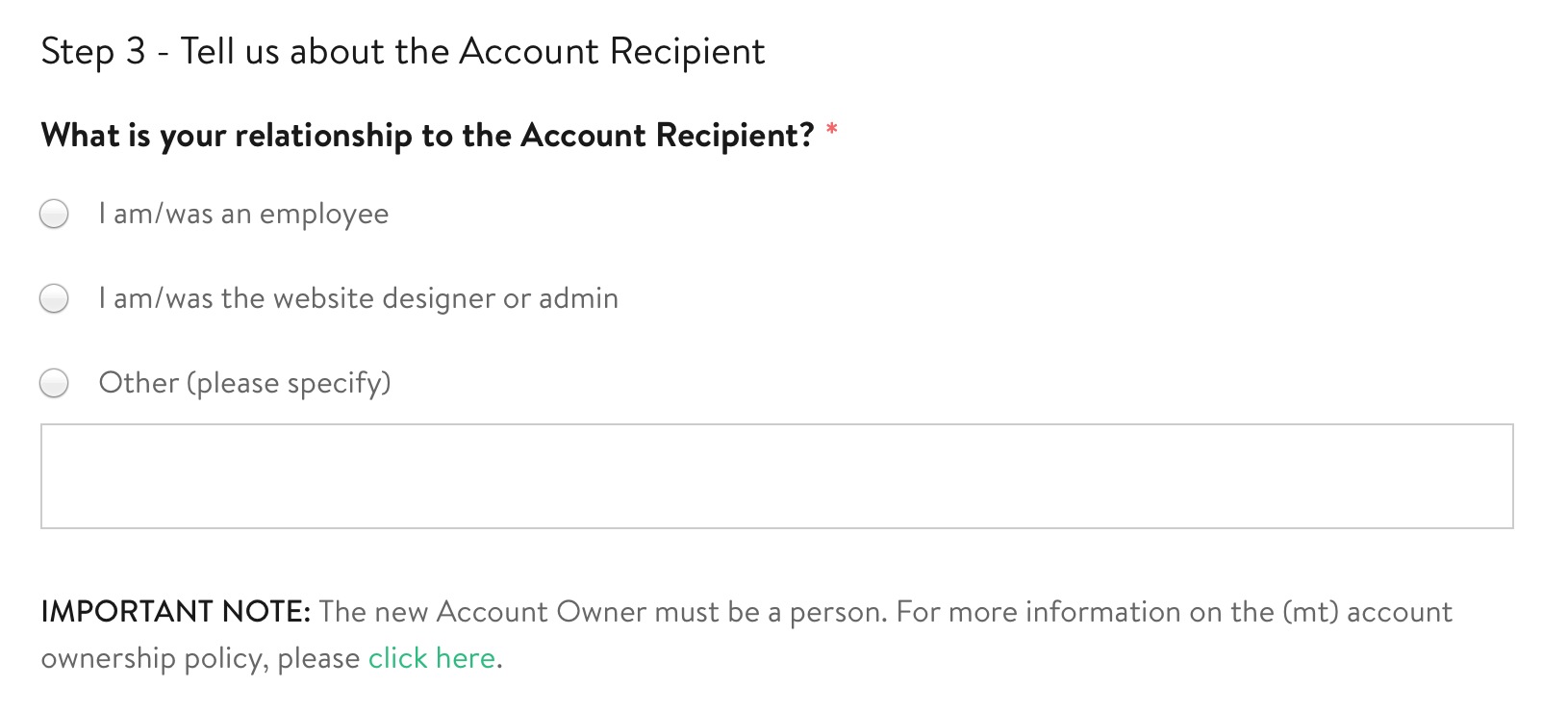
    Here’s the relevant part of the account transfer form:

    Three options, the first is the scenario in which Media Temple says they deem keeping the billing info — which is logical. Except I chose option number two, which clearly indicates that their scenario isn’t in play anymore. No where I can find does Media Temple warn you they keep the billing info — but maybe I have missed it — it does seem like you should be given that option on this form, or it should be stripped by default (the better move).

    This is where my complaint lies. Media Temple knew this wasn’t an employee leaving situation, but still kept the billing info and allowed someone else to make unauthorized charges on my card.

    Come on, that’s not ok.

    That needs to be changed.


    If you want a credit card removed you have to fill out this form. And maybe they will get back to you in one week, I am told. It’s better just to close the account and get a better host if you ask me.

    Oh and don’t bother calling support, they just blame you for not filling out the credit card removal form — because really you should have known. ((Thanks for that Alberto, although you were very calm which impressed me.))

  • Showing the Differences of Iridient versus Lightroom

    I just posted about how Lightroom doesn’t do the Fujifilm X-Trans sensors justice, and in the past I have linked to examples of this, but why not just show it to you here?

    I picked a very uninspiring shot with a ton of foliage in it. The shot itself was taken with the Fujifilm X-E2 at f/1.4 with a 1/110 second shutter sped at ISO 400. I used the Fujifilm 23mm f/1.4 R lens for this shot. To my memory I think I wanted to play with the winding path, but the shallow depth of field which threw the tree out of focus messed that all up. In other words this is a throw away shot, but one that has a lot of fine detail in it.

    Here’s the RAW file for the shot if you want to see the test for yourself.

    Here’s the shot as I would have processed it in Lightroom to get it sharp and the color where I want it:

    Here’s the same shot processed to my eye how I liked it in Iridient Developer:

    Here’s the shot processed in the Camera with the Velvia film setting:

    Right away the color shift is terribly obvious, but so is the detail of the Iridient shot. I like editing in Lightroom a lot better, but that detail is shitty compared to Iridient.

    For better comparison, here is a crop that readily shows the difference. Again, Lightroom:

    And Iridient:

    And out of the camera:

    There’s a huge difference and Iridient seems to do the best job by a large margin. So do keep in mind it’s not just the lens and camera, it’s also the software that makes the shot.

  • Why I Am So Hot on Fujifilm Right Now

    Most of you reading this will notice that I have been posting quite a bit about photography, and specifically Fujifilm, as of late on this blog. I’ve always tried to post only things that are interesting to me on the site, because I really don’t want to fake my commentary in order to seem “up to date” in the tech/Apple blogging world.

    So I’ve been posting a lot about Fujifilm and photography in general, because both have really been on my mind.

    More than anything else I have really started diving into Fujifilm since getting the X-E2. I’ve spent sometime thinking about why this is, why I am so drawn to the brand, and the best I can figure is that the reason is similar to why there are so many Apple bloggers out there.

    I tried, bought, and own a thing that has connected with me in such a way that I want to share, and be shared with, stories of that connection. Maybe in an attempt to convince others, or largely in an selfish attempt to find more products which react with me in this way, but I feel like this connection is worth diving into. Worth exploring.

    The first day I used my first Mac, a 2004-ish 12″ Powerbook G4, I had to setup up my printer on it. This was back in the days of “you dare not plug in your printer until you have installed at least the first 6 CDs of drivers” on Windows. But all I did with my Mac was plug in the printer, and it was ready to go, working perfectly.

    It just worked — like so many people that I thought were brainwashed Apple users had been telling me it would — my did it just work. It was astonishing, and from that moment forward the technology was no longer a tool I fought with, but something I trusted — it became a part of my philosophy for working with technology.

    Things should just work.

    I always loved computers before I switched to Macs, but now I had found a reason to be passionate about computers. This distinction between loving something and being passionate is much larger than people often credit and speaks mountains to why there are so many people wanting to write about it. ((That and the foolish notion you can easily make money doing it.))

    It’s a similar feeling that I had with my X-E2 from Fujifilm. I’ve always loved photography and cameras, and I’ve had tons of them over the course of my life, but it wasn’t until that first hour of playing with the X-E2 that I felt that same thing. The camera became a part of my philosophy — and photography a passion.

    I won’t say that Fujifilm is the “Apple” of cameras — that’s just not a comparison that I think any company can live up to. What I will say is that of the Fujifilm cameras I have spent time with, they have made me far more connected and apart of the photography than I have ever felt before.

    Is that corny? You bet, but it is also the truth. It’s not easily verbalized or understood. Like telling people that Macs just work (or did), you have to experience it first hand.

    With the X-E2 I can ignore the fact this is a digital image for the most part and capture imagery. I don’t have to worry about learning the tool because it just works. I’m not constantly in menus, or fiddling with software controls. I am shooting and trusting my tools.

    Like Apple, though, Fujifilm is full of unexpected surprises. When Apple announces an impossibly good new OS, and then also tells you it is free, and works on devices they haven’t sold in a good long time, people’s loyalty is rewarded and you feel taken care of. Fujifilm updates the camera and lens firmware more than any other company I know of and they add features because they can add them, not withholding them to encourage you to buy new models of their cameras. They eschew profit hungry practices so that they can instead build loyalty and trust.

    In that sense, the comparison of Fujifilm to Apple is apt — but I’d limit it just to that comparison.

    So, in a nut shell, you can expect to see continued posts from me on this matter. I’ve found something that turns my love into a passion once again and I think that is something worth sharing.

  • How Bad Are/Were iOS 7 Crashes?

    When I read Gabe Weatherhead’s post about how iOS 7, and its crash prone nature, should have ruined Apple’s reputation I really wanted to take him to task over it. I agree that iOS 7 crashes, but I don’t think it crashes that much — but the problem is that his argument faced the same flaw as my rebuttal would have: anecdotal evidence only.

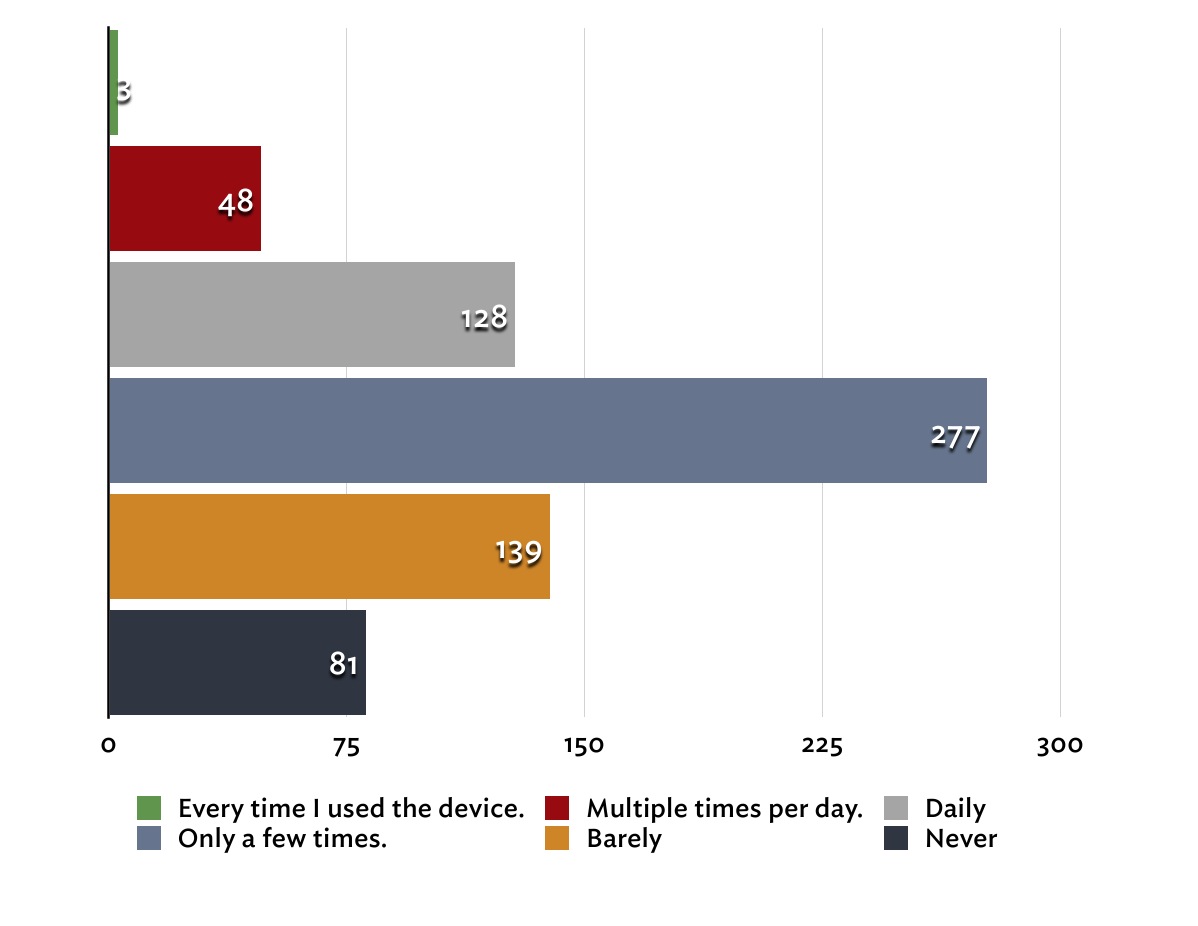
    In other words I needed to poll people to see how bad we collectively thought the crashing was on iOS 7. I created a vague poll with six possible responses. The polling software showed those choices in random order and used cookies to keep people from double voting. ((Not fool proof, but good enough.))

    This is the poll question and possible answers:

    “How often did iOS 7 (pre-7.1) crash on you?”

    1. Mulitple times per day
    2. Daily
    3. Only a few times
    4. Barely
    5. Never
    6. Every time I used the device

    Now, before we get into the results and analyzing them, we need to address fundamental flaws in this poll.

    Flaws

    • I did not specify what “crash” means. I left it open to interpretation. Some would damn the poll because of that, but in my opinion that is the most accurate way to conduct this research. A perceived crash in this case is no different than an actual crash. That is, a perceived crash will equally ‘ruin’ Apple’s reputation as a real crash would. You wouldn’t rebut an anger customer by telling them the device didn’t really crash.
    • I did not specify devices, or limit devices. I only specified iOS 7.
    • I used vague and slightly interpretive terms. I’ll address this more later, but it is of very little difference.
    • I posted this on a tech blog, not say Facebook — so the respondents are naturally more likely to notice a crash.
    • I didn’t ask for an opinion on if the crashes were better or worse than iOS 6. This is because human memory is shitty at recalling annoying things like this — either forgetting them completely or exaggerating them in hindsight.

    Overall is the poll flawed? Hell yes. But so is every poll, but knowing these key flaws can better help us interpret the data.

    The Results

    Here are the raw results in bar chart form, the total number of respondents was 676.

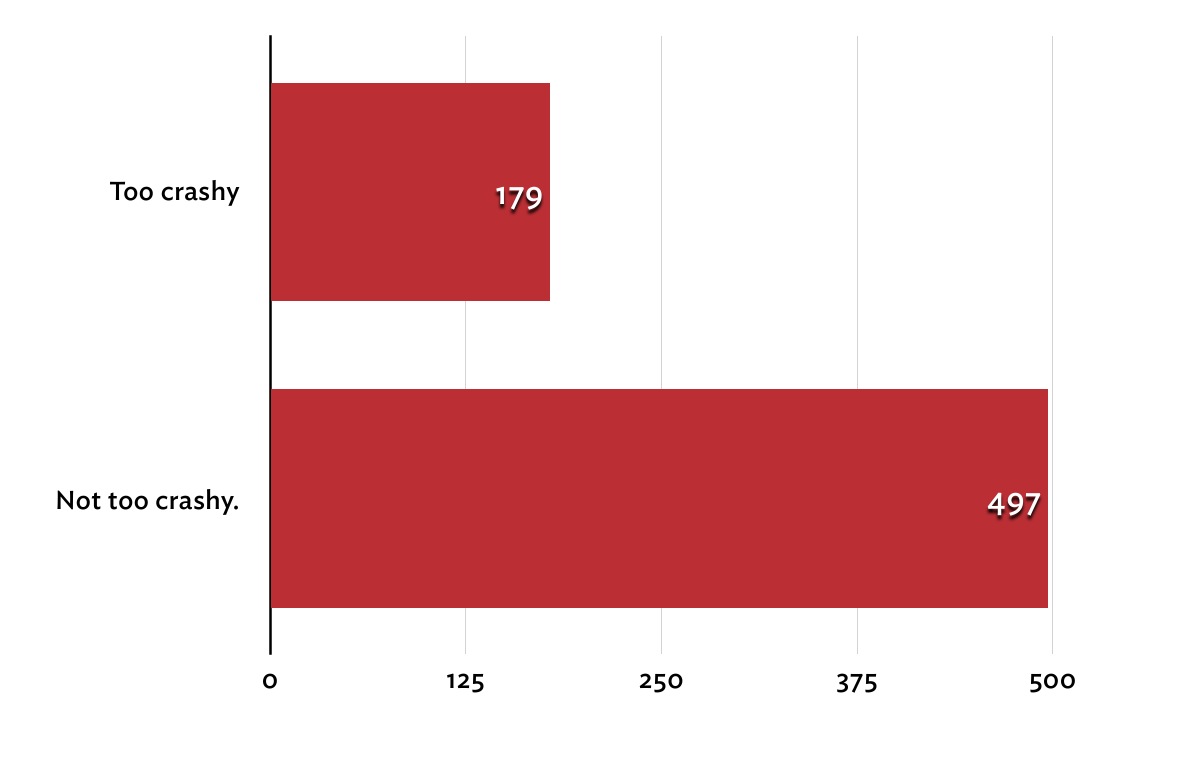
    I’ve now taken that same data set and consolidated the information into two categories, with “Barely, Never, Only a few times” being one category that I call “not too crashy”. The second category is “Every time I used the device, Multiple times per day, Daily”, which is called “too crashy”.

    In other words I boiled the results down to a yes or no answer of: Did you iPhone crash too much?

    The overwhelming answer is no, for most people their devices did not crash too much. But their devices did crash and one could make the unreasonable argument that even a single crash is too much.

    While that is a nice goal, it is completely unrealistic for any operating system on this scale.

    What this data doesn’t tell us, that would be most useful, is how these responses differ from iOS 6. Without that knowledge we cannot make a conclusion as to whether the software has become more crash prone or not. And it’s hard to judge the damage that iOS 7 did to Apple’s reputation.

    All I can say right now is that 26.4% of respondents to my poll claim iOS 7 crashed far too often to be considered acceptable by any reasonable person. I have no way of knowing if that is worse or better than anything else. It is just a number by itself.

    So the real question then: Did Apple damage its “just works” reputation with a 26% crash rate for users of iOS 7?

    You be the judge — honestly it was a lower percentage than I thought it would be, but higher than I would want it to be.

  • Review: Tom Bihn Founder’s Briefcase

    A few months ago Tom Bihn announced the Founder’s series of bags — specifically creating a backpack and briefcase. Both looked neat to me, but the backpack wasn’t one I was likely to ever use. The briefcase, however, intrigued me a bit more. Tom Bihn sent me a review unit of the Founder’s Briefcase to check out and I have been using it for about a month now.

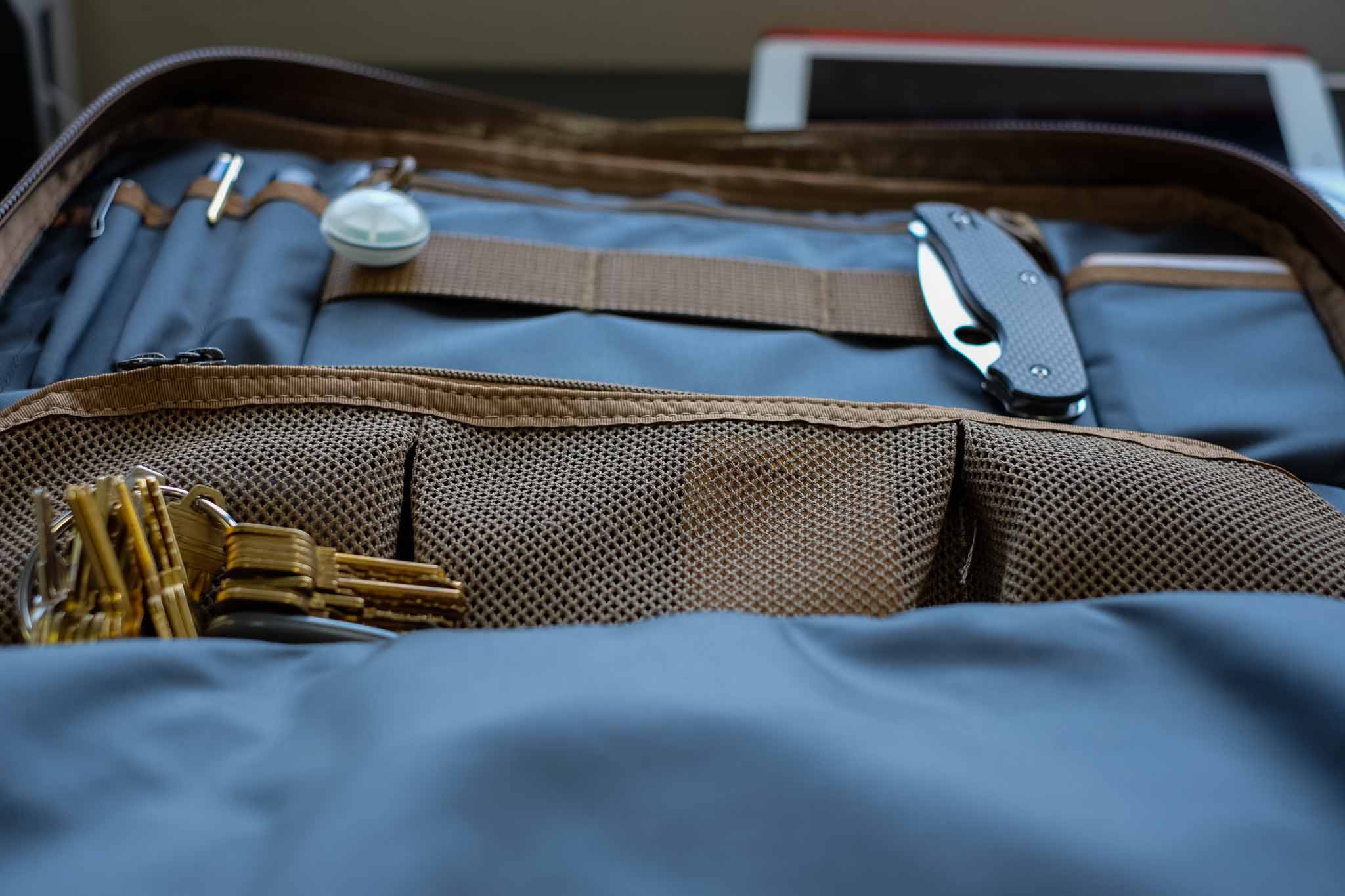
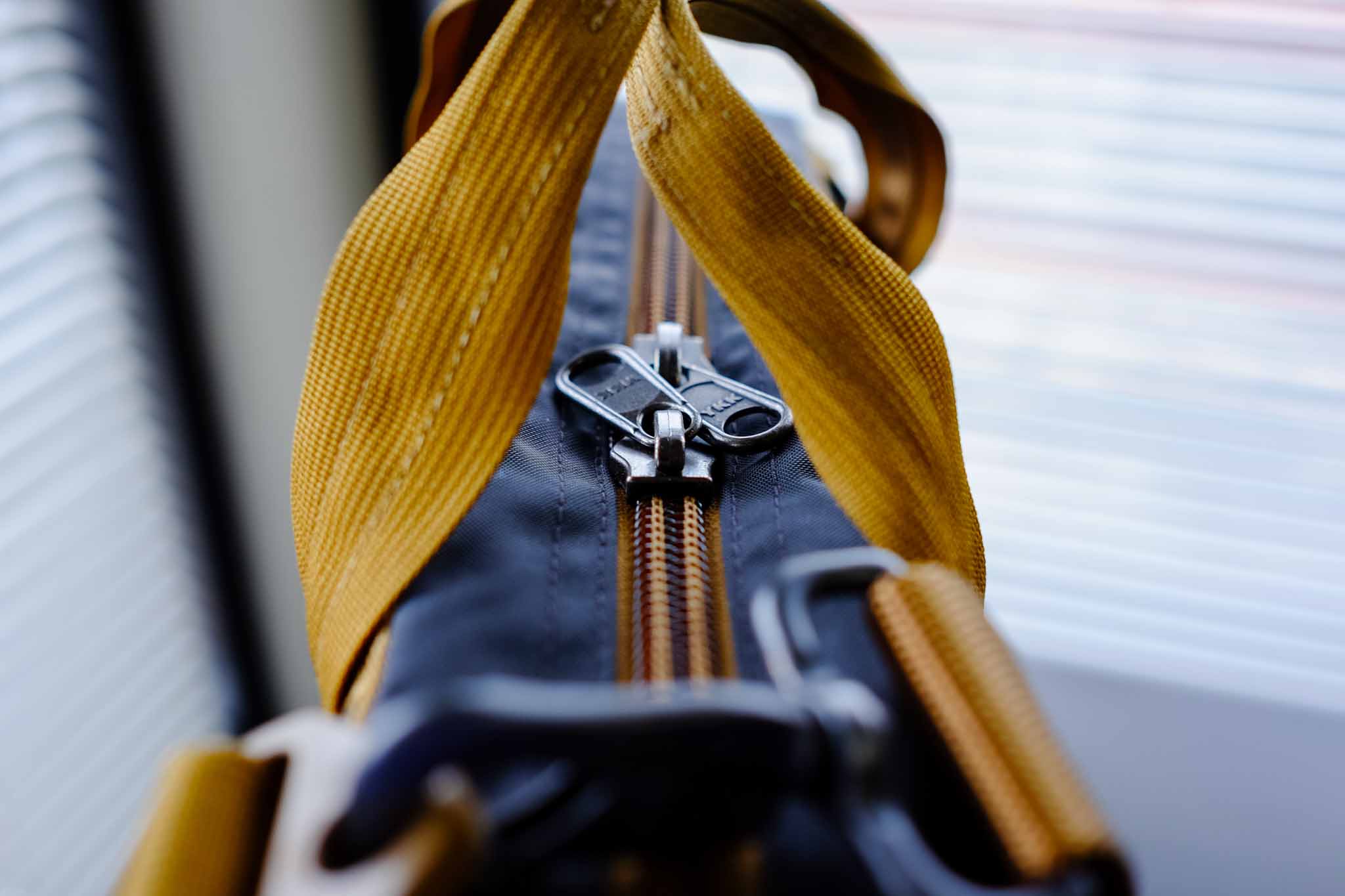
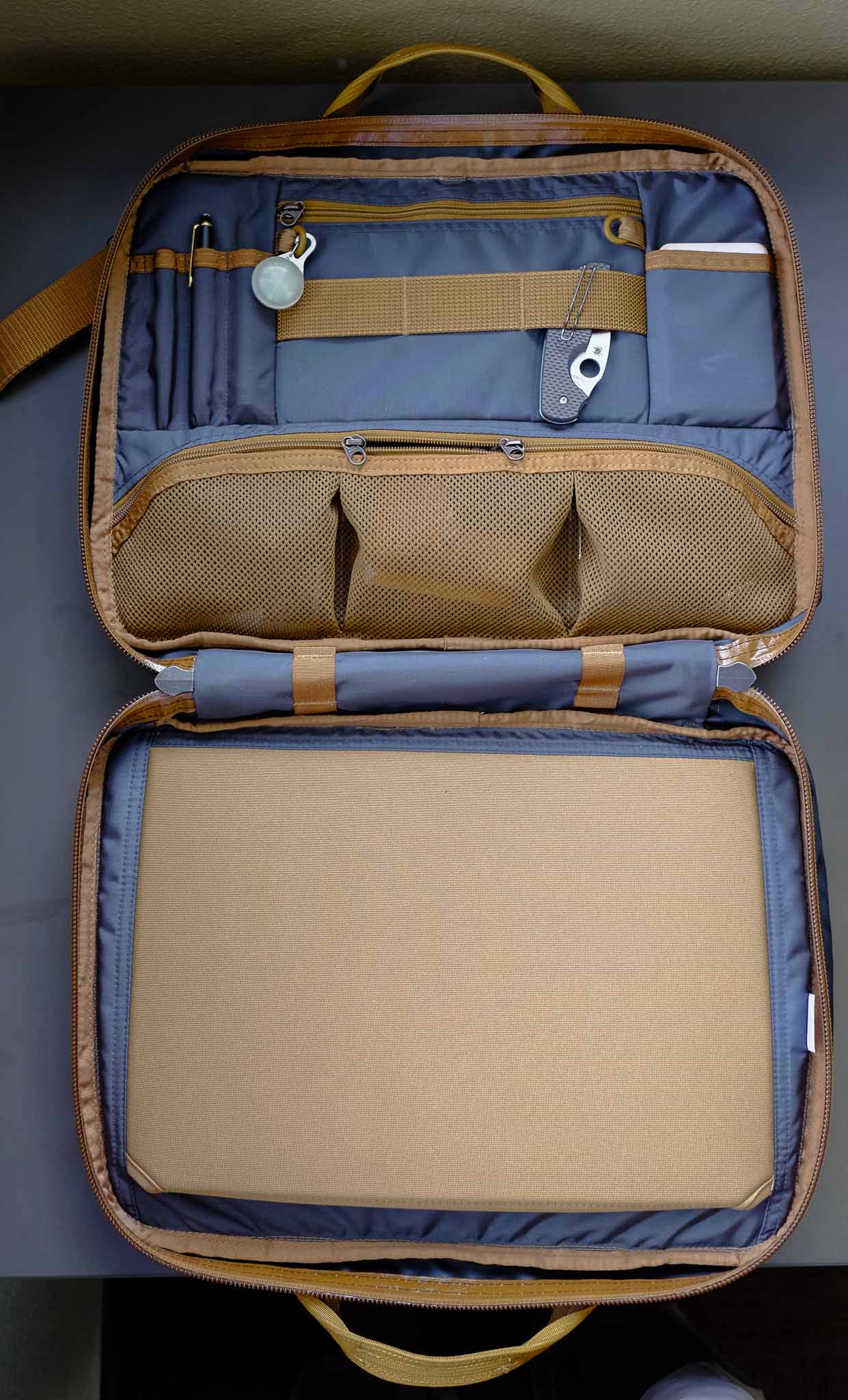
    This is a really odd bag. Over the course of using it I have gone from being in love with it, to being indifferent about the bag. It’s a clamshell design that has a very large zipper running around it — this allows for the bag to open completely flat so that you can leave your laptop in it as you go through TSA checkpoints, or you can just unzip the top and grab what you need (including your laptop).

    The Look

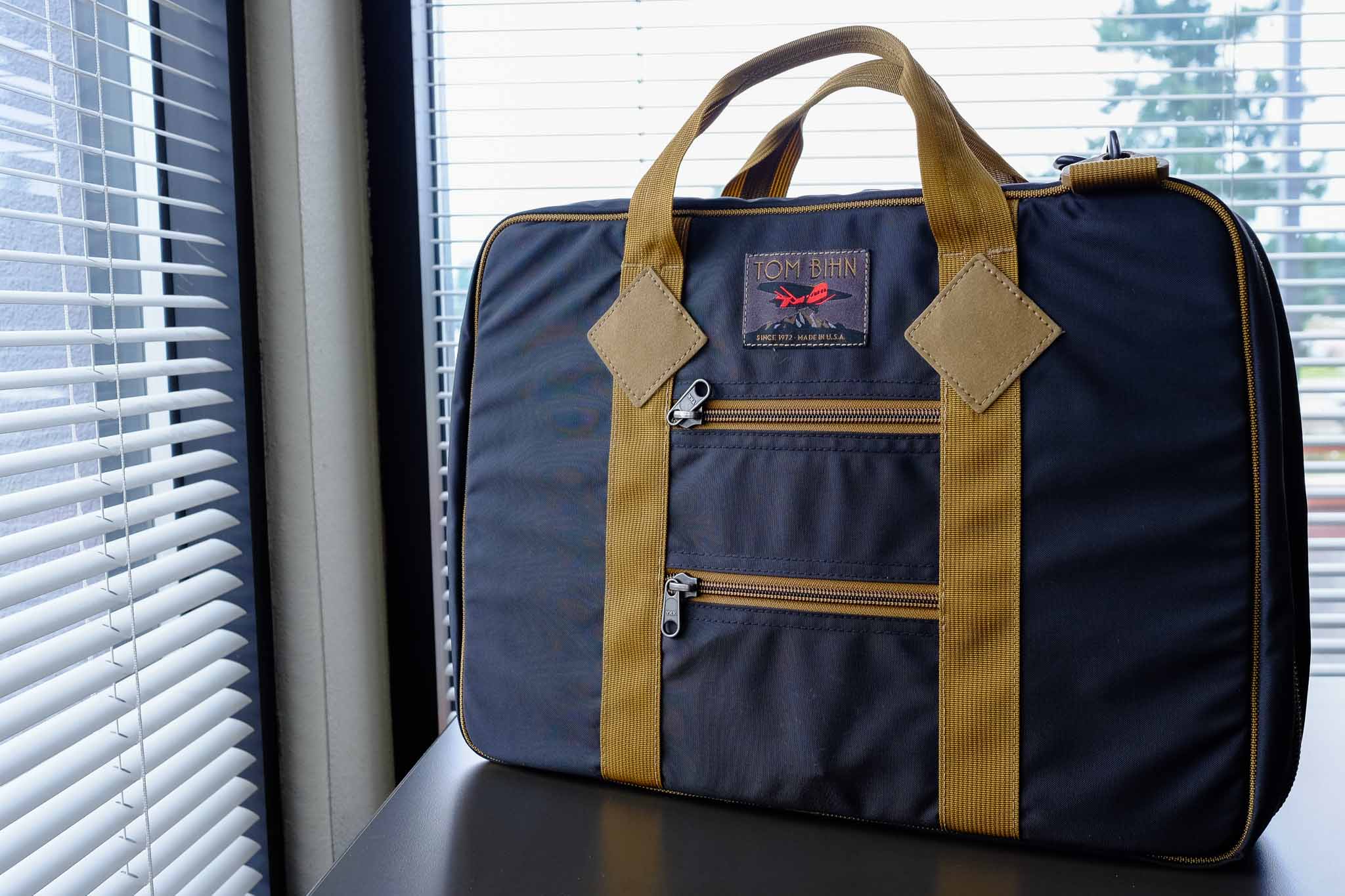
    What drew me to the bag initially was its look. Likely not everyone’s cup of tea, this bag screams Pacific Northwest style to me. You wouldn’t be out of place using this bag in Seattle with your Filson jacket on — it seems designed for the casual northwest businessman.

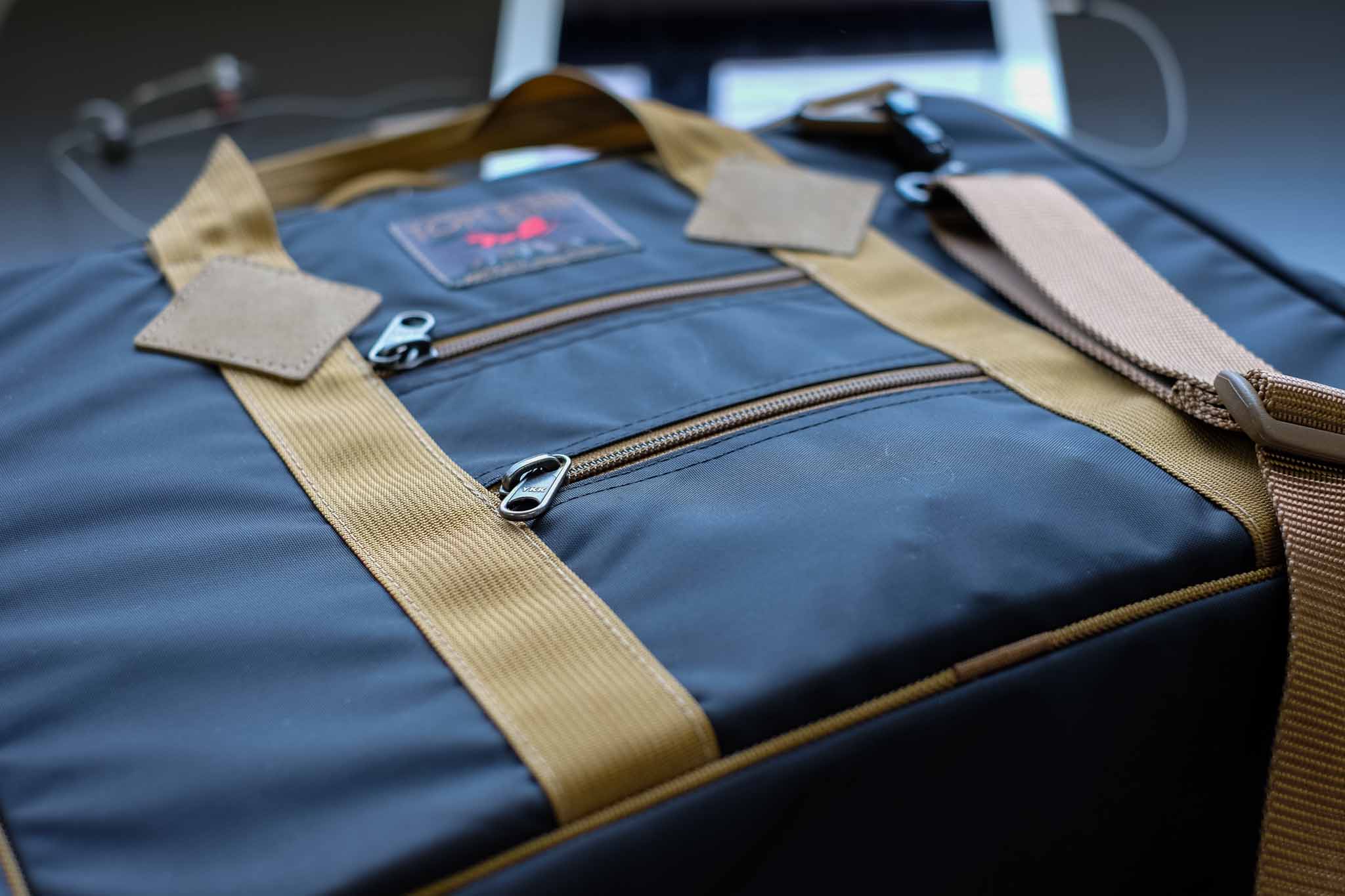
    Surprisingly the bag material had more of a sheen to it than I had expected, as the nylon used is a bit shiny for my liking. It’s not enough to ruin the aesthetic of the bag, but I personally think it makes the bag look too retro (even though that is the point), instead of making it look retro ‘inspired’. ((I really hate having to use that terminology.)) That’s a tough distinction, so you’ll have to judge from the pictures for yourself how you think the bag finishes.

    There’s one other aspect of the design that I love: the clasps on the shoulder harness. They are a bit large and metal — seemingly out of place on the bag — yet they are my favorite part. They are such nice detail and the fact that they mate with plastic means you won’t get that metal squeak.

    I think of this bag like a plaid flannel shirt — it can be very handsome, but can also be woefully out of place. Personally, I have a couple plaid flannel shirts.

    The Function

    So the design is niche, but well done. How about the functionality of the bag?

    I hadn’t used a shoulder bag in quite some time, so I was leery that I would enjoy it. I was proven wrong on that account — and while I still think backpacks overall are better, I’m hard pressed to find faults with the bag other than “it’s not a backpack”.

    This briefcase functioned exceedingly well in my day to day usage. There’s an option for an interior packing cube, which Tom Bihn sent to me, that I find rather unnecessary as it seems much too small to be useful and I found it just got in the way for me. The packing cube could be useful if you are prone to carrying a really light weight rain jacket — or a t-shirt — outside of that I don’t see the utility.

    It’s nice to know you can add a packing cube, but I’d rather see the mount used for an iPad sleeve or something of that ilk. Speaking of which, there is a “tablet” pocket in the bag which is fantastic — but only if you own an iPad mini or smaller tablet. It’s a pocket on the inside of the bag that is lightly padded with a bit of rigidity added — overall a wonderful touch. I just wish it fit an iPad Air instead.

    This tablet pocket is a design element I hope to see in more bags.

    There are two things which, functionally, I don’t like:

    The hefty zippers.
    Faux Molle straps.
    1. The zippers around the clam shell are large, which makes them tough to get moving, often causing me to lift up the bag from the resistance met with the zipper. The zippers are also pretty loud, and I much prefer quieter zippers for the same reason I hate velcro on my bag — the Goruck zippers are great in this regard.
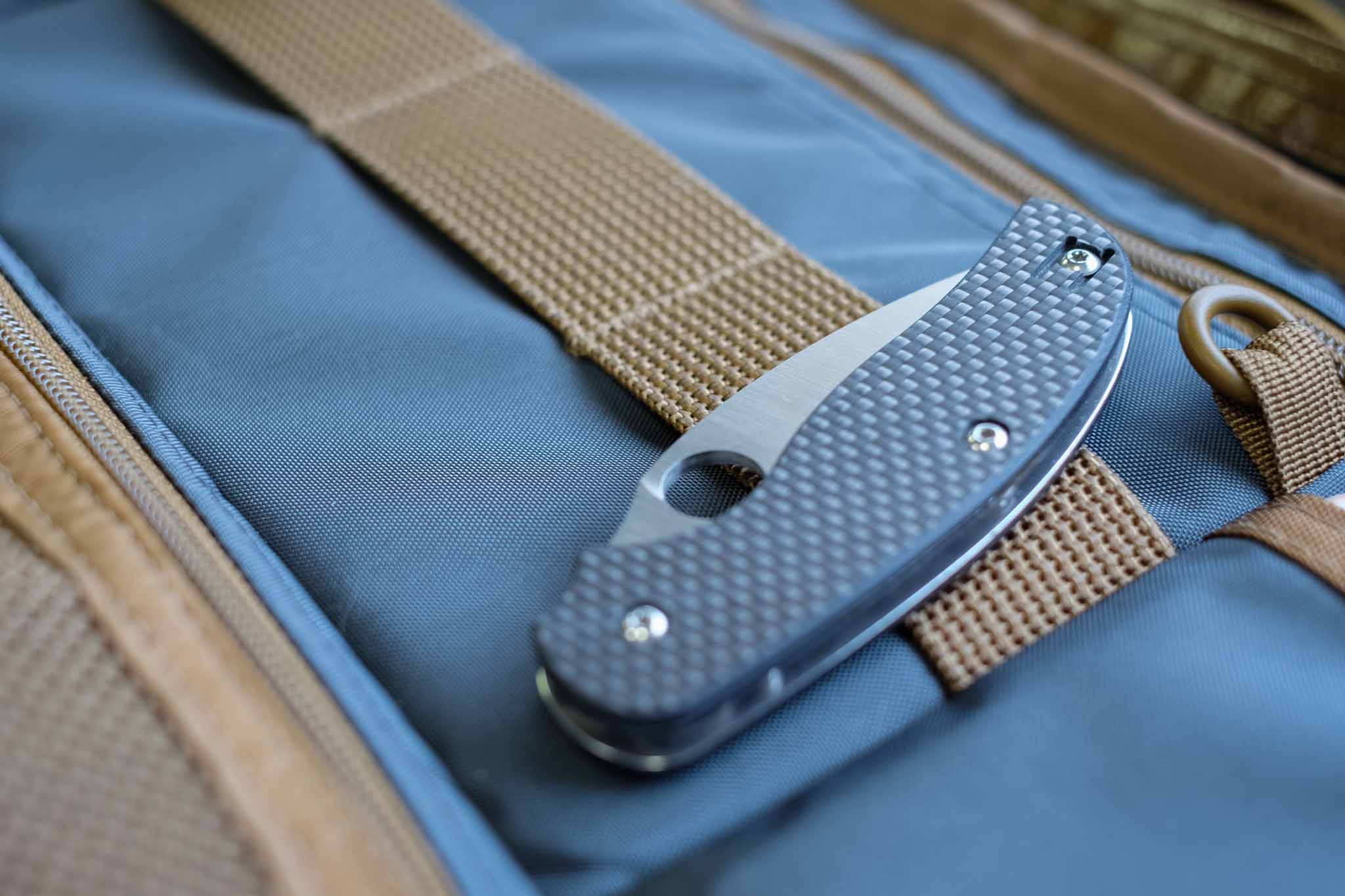
    2. There is a quasi Molle bit of webbing on the interior of the bag, three rather flat loops. They are really thick, and shown on Tom Bihn’s website as holding a great many things. I don’t get them. I think this space could be better served with more pockets instead of this strap system. Really seems like a waste.

    Aside from those two things, I have no other complaints. I like the two small exterior pockets and I really like the mesh pocket strip along the bottom on the interior of the bag — it holds a lot more than I would have guessed.

    Overall

    What I really liked about this bag was the ability to leave it standing (it stands well on its own) and zip just the top open to grab my laptop, or iPad — while reserving the option to lay the bag on its side and open it all the way. It’s a nice compromise in that you can easily use the bag as a top-loader (as I do 90% of the time), but it doesn’t bat an eye lash if you want to open it all the way up and lay it flat. This makes it a solid day-to-day option for the traveling person and excellent for neatly packing away your items for a longer journey.

    I really like the look of this bag when it’s gray and rainy here in the Northwest, it seems to fit in very well, but it stands out just enough to not be boring. I won’t be switching to this bag (since I prefer the extra room a backpack affords), but for those of you not on my backpack bandwagon you will find this to be a very solid alternative.

  • Should iOS7 Be an Embarrassment?

    Gabe Weatherhead:

    Even I consider iOS7 to be a great source of jokes about software crashing. That’s going to be a hard train to turn around.
    I really believe that Apple has harmed their brand with iOS7. It’s more devastating than any Samsung ad campaign.

    Really? That’s not been my experience at all. Yes, iOS 7 has crashed on me more than iOS 6, but Weatherhead’s statement is pretty strong. I wonder what real data can tell us.

    Mind helping?

  • A Couple More Fujifilm X-T1 Reviews

    I’ve read a lot of X-T1 reviews, but there are only a couple that I think are well rounded enough for people to read.

    The first is by Michael Reichmann at Luminous Landscape. One part that he dislikes on the X-T1 — which I hadn’t considered — is the lack of custom control settings:

    Many, if not most cameras these days have grouped custom settings. This allow a wide range of desired settings to be combined into a single setting and this then assigned to a custom function button. That’s the way I always work. I have at least two custom settings, one for everyday walk-around shooting and one for a situation such as illustrated above, where I need settings appropriate for fast action. The geese may fly by, there could be a fight across the street, a scaffolding is falling off a construction site – press a single button and you’re ready to capture the shot.

    I think this is a strong point, but the same complaint could be made of using a manual focus lens. It’s a limitation of the style of the camera, not so much the camera — and therefore it is a choice the user makes. I think that just makes his point a ‘thing’ and not so much a detracting feature. Certainly an important ‘thing’ though.

    Steve Huff also posted his review and he is typically hard on Fujifilm, but not so much this time. His review I find to be fairly accurate and nothing sticks out at me as “hey, that’s wrong”. Having said that I don’t like the way he compared the noise between the X-T1 and the E-M1. ((These fucking camera names are going to be the death of us.)) I specifically don’t like that he is comparing the JPEGs and not the RAW files — now the X-T1 isn’t supported yet by a lot of software, so that could be the reasoning, but still.

    Personally I think Fujifilm has the best noise control of any camera on the market today — and I am not the only one. However Huff mentions that the JPEG noise reduction can cause “issues”. I know what he means, as I could only use X-T1 JPGs for my testing, this 1-month photo of our daughter looks overly smooth in the skin because of that noise reduction. So while I personally think the X-T1 bests the E-M1 in noise control by a strong margin, I do agree that I wish noise reduction could be turned off.

  • Analysis: Fujifilm X-T1

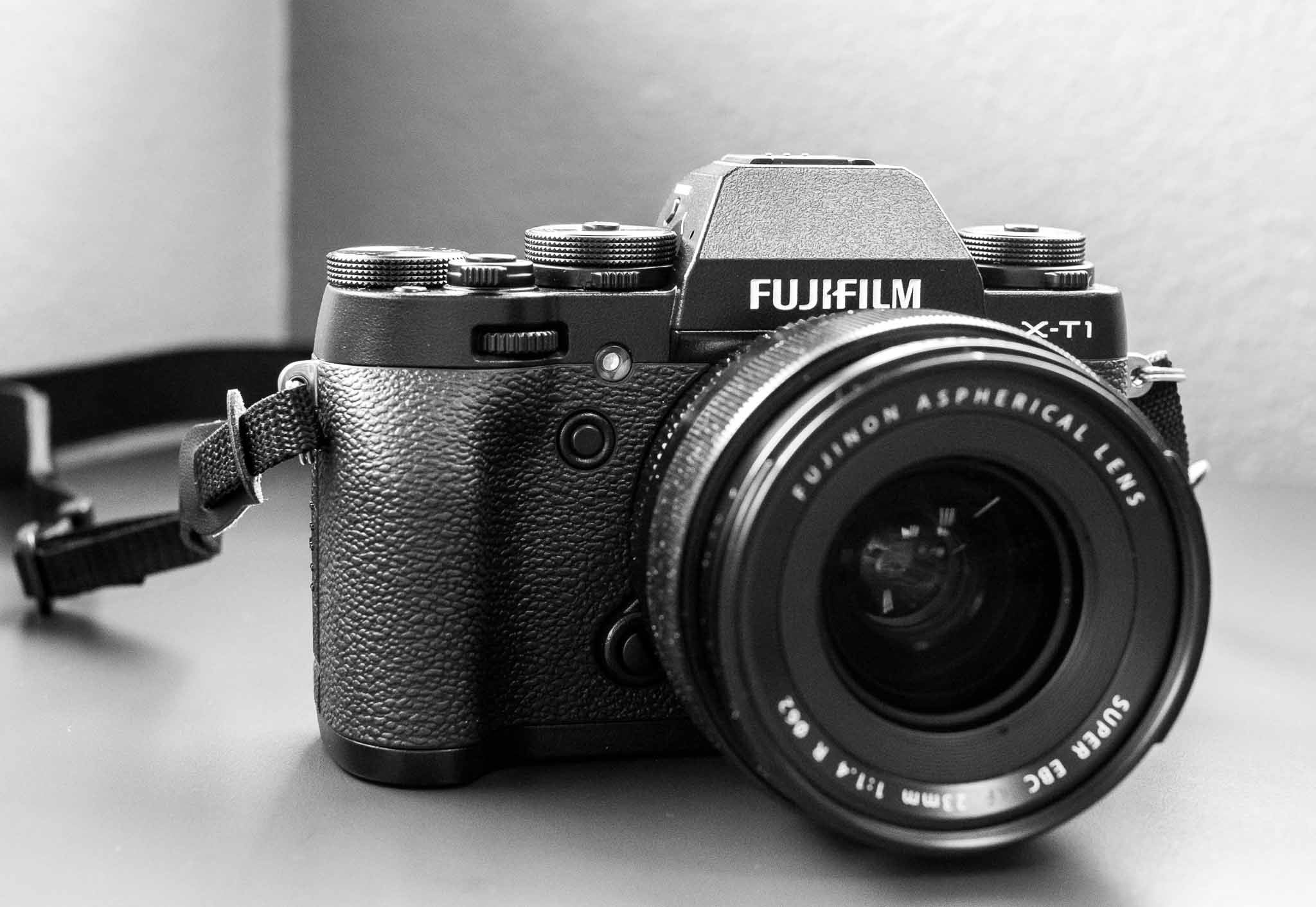
    This is going to be an analysis, more than review, of one of the ‘hottest’ cameras to come out: the Fujifilm X-T1. It’s an analysis because this camera has been reviewed to death. That said, I wanted to share a few of my thoughts on this new camera and take a practical look at what type of person this is ideally suited for.

    The Appetizer

    Overall the camera feels absolutely great in my hand. The balance, grip, and size are very well done. It feels solid too, but also light weight. As far as handling, it is near perfect for me. I personally think the camera balances best with the heavier 23mm 1.4 lens on it, but the 35mm 1.4 makes for a really nice and light setup if weight is of concern.
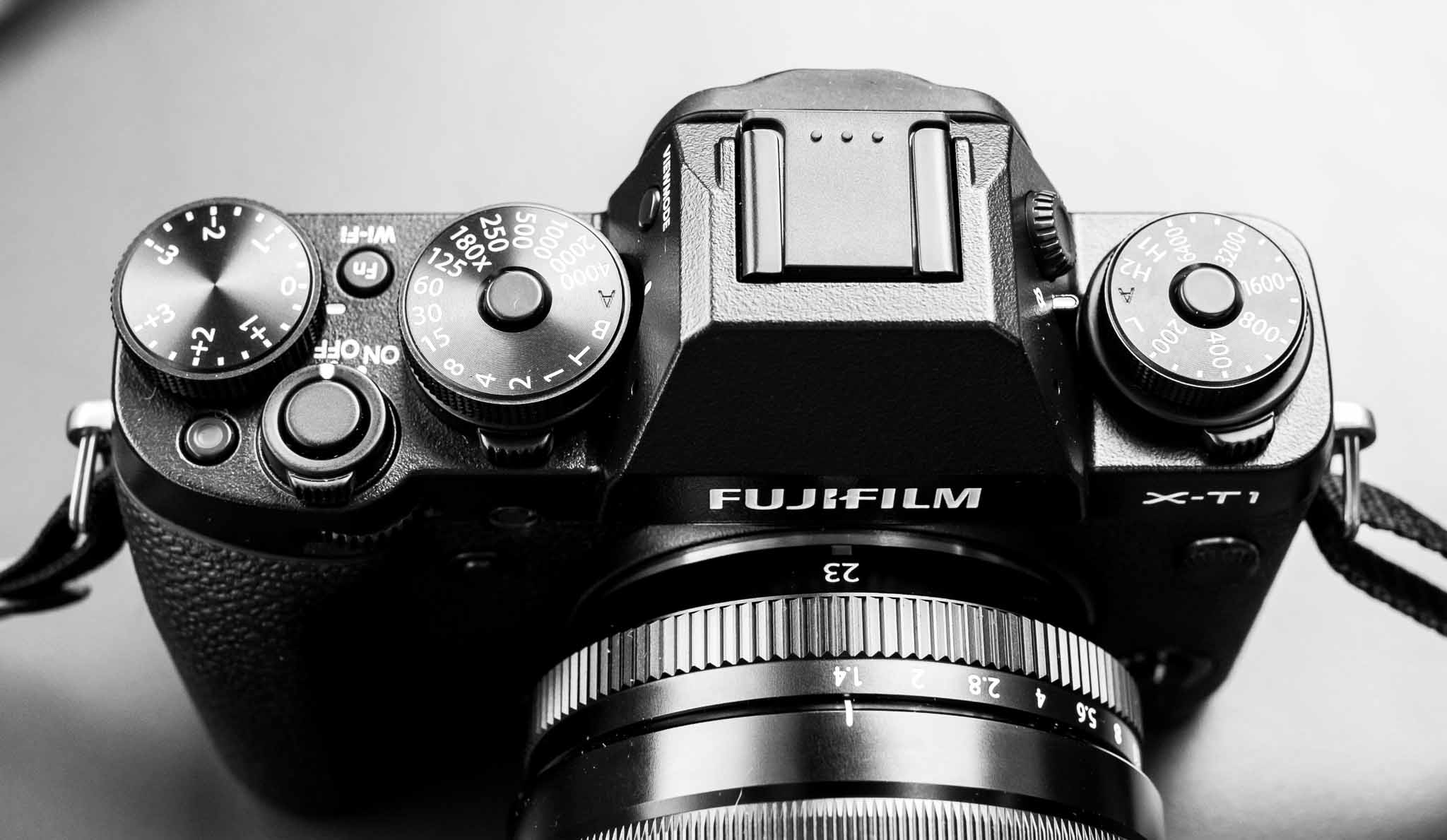
    The big draw of this camera is the fact that it has more manual dials on it for controlling camera settings. While it is rather overwhelming at first (a lot of what’s this, where’s that), within an hour or so of shooting I became very well accustomed to where and what each dial was — and in fact was really enjoying them.

    I do have a few concerns on the button and dial front:

    • The exposure compensation dial is difficult to turn with just your finger. This is nice because it won’t get as easily shifted as the X-E2 dial, but also hard to use if you want to hold your framing while adjusting it.
    • The ISO dial is a welcome addition, but the dial is locking. Unlike the shutter dial it locks at every adjustment (the shutter only locks when in auto). So you cannot easily change the ISO on the fly. This is very annoying. Even though I have taken to using auto ISO (because the noise control on Fujifilm is excellent), I still wish I could easily spin that dial with one finger while the camera was up to my eye. ((Someone is crowd funding a little sticker to go over the top and keep the button depressed.))
    • The 4-way buttons are atrocious. They are hard to press, mushy, and located very poorly. They are the single worst designed aspect of this camera.
    • Once again the playback button is in an odd spot. I’d prefer it where the Q button is, or at the very least flipped spots with the trash button.

    While I am trashing the camera a bit, there is also a rubber cover on the bottom that the grip connects to — yeah, that is going to get lost.

    Ok, that’s the extent of my complaints — seriously — because I love everything else about this camera. It is very fast, handles exceedingly well, and the quality is excellent (just as the X-E2 is). And that viewfinder is to die for, but you’ve read about that before.

    The Meat

    The big question I had about this camera is where it fits. That is, who should buy this camera? After using it for a week I came to the conclusion that this is a camera I would absolutely love to own, but not one that I would be likely to carry around as much as I do the X-E2 (which goes almost everywhere with me). While the two cameras are almost physically the same size, the addition of the viewfinder hump makes the X-T1 just too unwieldily as an everyday carry. It’s the change that moves the body from ‘kind of svelte’, to ‘you’re not stashing this away’.

    This is a camera that you purposefully choose to carry. When you get into that realm you start talking about Sony A7s, Olympus E-M1s, and of course all of your traditional dSLRs. That’s a huge market, and one that I am not going to tackle.

    Instead, I look at this camera a lot like a prosumer dSLR — and in that light how does the X-T1 stack up?

    I am a big Canon guy, so for me if I was looking to own an X-T1 I would also be comparing it with a Canon. Which brings into consideration the 5D MKIII, 6D, or 7D cameras from Canon — the price difference alone on some of these makes the decision easily in Fuji’s favor. But let’s ignore price for this.

    For me the real question here is whether the X-T1 would be a good option for someone to buy instead of one of those Canons listed above. These are cameras that are a bit too large to carry all the time, and yet are serious about taking pictures. The Canon’s across the board will take better video — not even close — so I want to caveat that now.

    The X-T1, then, offers something that the Canon lineup cannot: fun.

    I shot for many years with a Canon 5D, and I can tell you that I never enjoyed shooting with the 5D as much as I have with the X-T1. Canon’s are made for you to trust the camera, and the X-T1 seems to love you even more when you flip to manual and stop trusting it.

    The Canon wants to do things for you, whereas the Fuji wants you to take charge.

    It’s almost like the difference in car gearboxes. Point and shoots are all automatics for the most part, and SLRs used to be the manuals. That’s shifted, where now I see most dSLRs (certainly the ones I mentioned) as more of the sequential-manual gearboxes (the flappy paddle gearboxes as Top Gear would say). That is, you can still mostly control everything, but there’s a purposeful computer there to make sure you do it right. In that sense the X-T1 truly can be a manual transmission. It’s fun because you can make mistakes with it, but also because when you get it right, you really get it right and there’s a wonderful sense of perfect harmony there.

    Yes the sensors are bigger on some of those Canons, but I can tell you without a shadow of a doubt that you will enjoy taking pictures more with the X-T1 than with any of those Canons.

    Unless you are faced with the most demanding of situations for cameras (either sports, weather, or needing as much image quality as possible) then I don’t see how the X-T1 isn’t the better tool.

    It’s more fun, it’s smaller, and it’s cheaper.

    The Dessert

    We’ve come to a point with cameras where the image quality of the top of the line cameras is so good, that the sensor sizes are mattering less and less. The E-M1, X-T1, A7 cameras all offer superb image quality. You’d have to really look to find issues in any of them for most any shooting circumstance.

    This is excellent news for anyone who loves cameras, because that tech will not only trickle down, but it means you can just buy the camera that you like the best and rest assured it will serve you well even if you want to try and be a “pro” photographer some day.

    I like the X-E2 better, but that is only because the sensor is the same as the X-T1.

    Buy It

    Buy it at Amazon, or B&H Photo and you help support the site.
  • ‘The Best Utility Knife’

    Doug Mahoney had the unenviable job for The Sweethome to pick “The Best Utility Knife.” I have a huge issue with his pick: it’s a folding utility knife. Yuck.

    To be fair, he does state:

    To get the full range of use out of the knife and as much safety and portability as possible, we recommend going with the folding style over the retractable. They’re smaller to store, tend to come with belt hooks, and because of the way the folded blade nests in the body, there is a lower chance of their accidentally deploying in your pocket. Retractable knives are nice, but their feature set is more geared toward the professional tradesman.

    If that’s your caveat, then you need your headline to read: “Best Household Utility Knife”, anything less is disingenuous and annoying to anyone who actual wants the best utility knife.

    Now, you may wonder what my background here is, so let me tell you: my grandfather, and father, own and have run a construction company since he left the military in the early part of the 1970s. I had my first tool belt (not a toy one) when I was 6. From 16 to 23 years of age I worked all school holidays in the field of my father’s construction company. To this day, my office, is inside a construction company office.

    Next to a tape measure, pencil, and hammer is where the utility knife stands in usefulness — It’s something every construction worker that is worth a damn carries. I know what I am talking about when I talk about utility knives because I used them day in and out for a very long time in very tough conditions. I’ve sliced my hand open a ton with them, and demolished a great many things with the help of them.

    These folding utility knives aren’t good for much. Sure, you may think they are safer, they are smaller (when folded), and have a belt clip (really?), but they are worse than a “normal” utility knife in just about every task. ((I can’t think of a task they are better for, but I am sure there is one.)) They usually are less sturdy, less comfortable in your hand, and far more fiddly to open.

    If you are worried about safety, but you still want a really good utility knife, then you buy this Stanley one. I have about six of them, and have had them forever. What’s not great is that if the blade gets gummed up you can’t retract it, and with too much force the blade may retract on its own. What is great is how grippy the handle is, how well they work, and the fact that they are seemingly indestructible. I’ve never had one accidentally open — so I think they are just as safe as those folding ones.

    My favorite utility knife? This one for $6. It doesn’t retract, has a flat head screw (the philips ones always strip out) and stores blades. This thing is light, always ready, and even more indestructible than the retractable version. Even if you do destroy it… it was $6.

    A lot of people don’t like non-retracting blades, and I get that, but this is the best utility knife you can buy — not those folding pieces of shit. ((Just to set the record straight.))

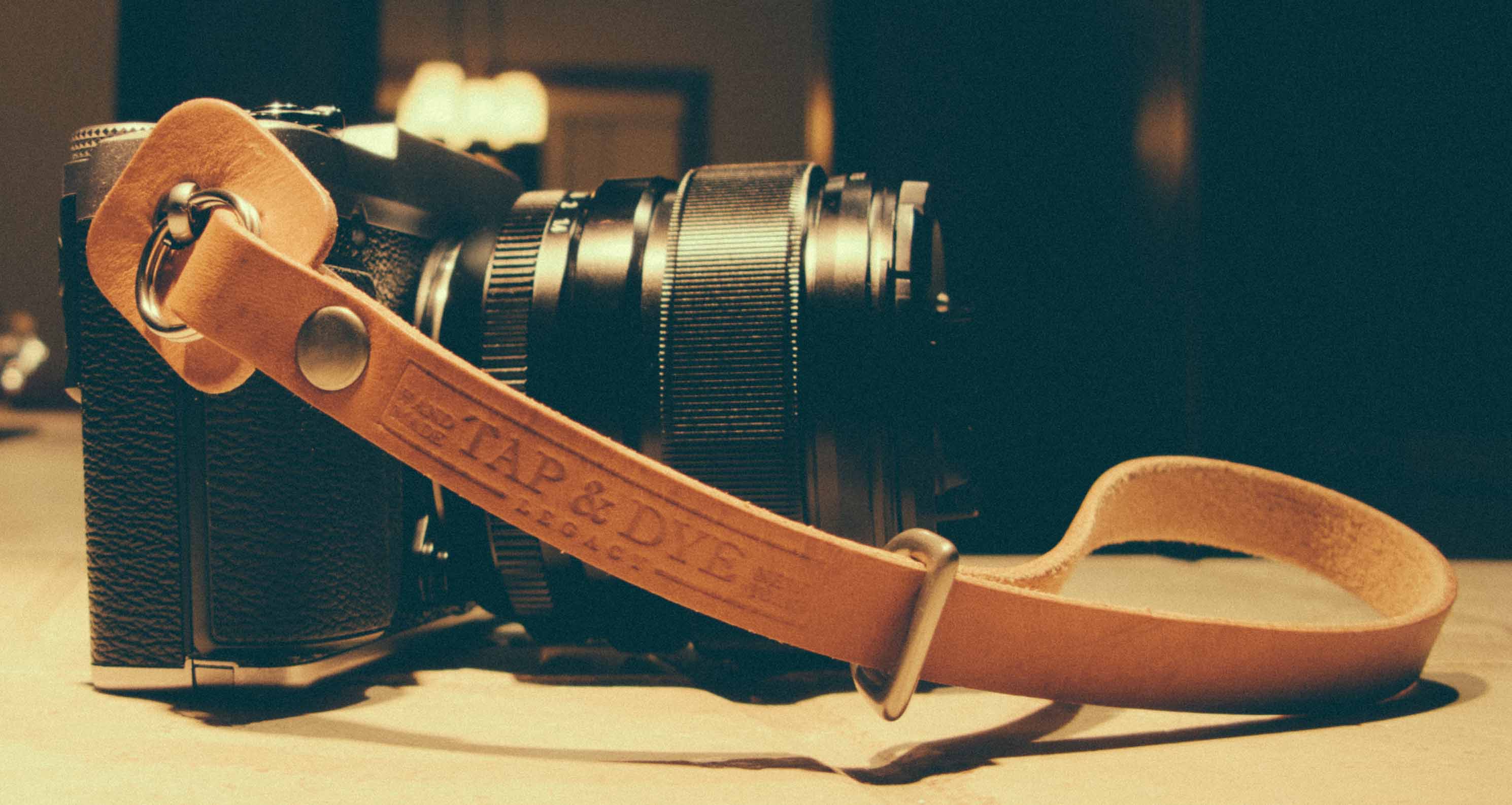
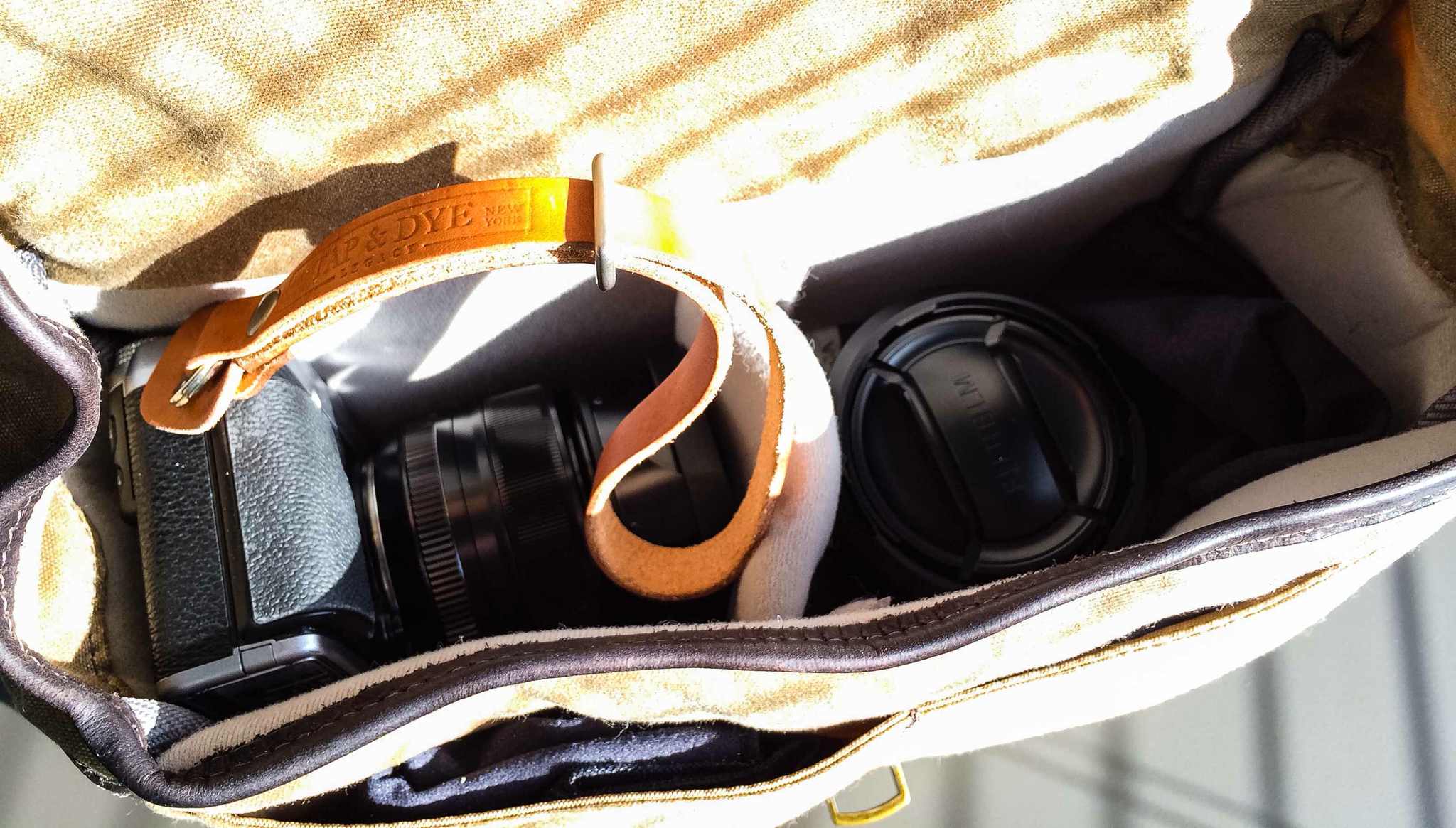
  • Quick Review: Tap & Dye Wrist Strap

    I struggled with finding a wrist strap to use for the X-E2, as my old DSPTCH wrist strap was a tiny bit too small for my wrist/hand. I first put on a trusty Domke neck strap, but there are only a handful of times each year where I would actually want a neck strap on my camera.

    I knew I wanted a wrist strap, but there are tons out there. I looked mostly at Gordy straps, as they are very popular, but then I found Tap & Dye and I really love the look of their stuff. I picked one up, and have been using it ever sense.

    In brief, here are my thoughts on it:

    • It’s rather expensive, but I wouldn’t say overpriced.
    • The attachment to the camera looks superb, with good protection and a beefy look.
    • The sliding D-ring on the strap functions a lot better than I had anticipated, much better than the DSPTCH strap.
    • This is a strap that is just begging to get a little patina on it, but surprisingly it doesn’t patina quickly. I guess that is good, and not bad.
    • It’s surprisingly much more comfortable on my wrist than I thought. I think of wrist straps as more a drop-prevention mechanism, than I do a carrying mechanism and that is the best way to use this strap. I don’t find the strap uncomfortable to use by any means.
    • The strap really doesn’t pack down well at all. With nylon straps you can really get them out of the way, but this strap is stiff and seemingly always in the way when you want to pack away your camera. The best bet is to loop the strap opening around your lens, but then you have to finagle it off the lens when you want to shoot a picture.

    Overall though, I am quite happy with the strap, and love the way it looks.

  • Jarvis Standing Desk

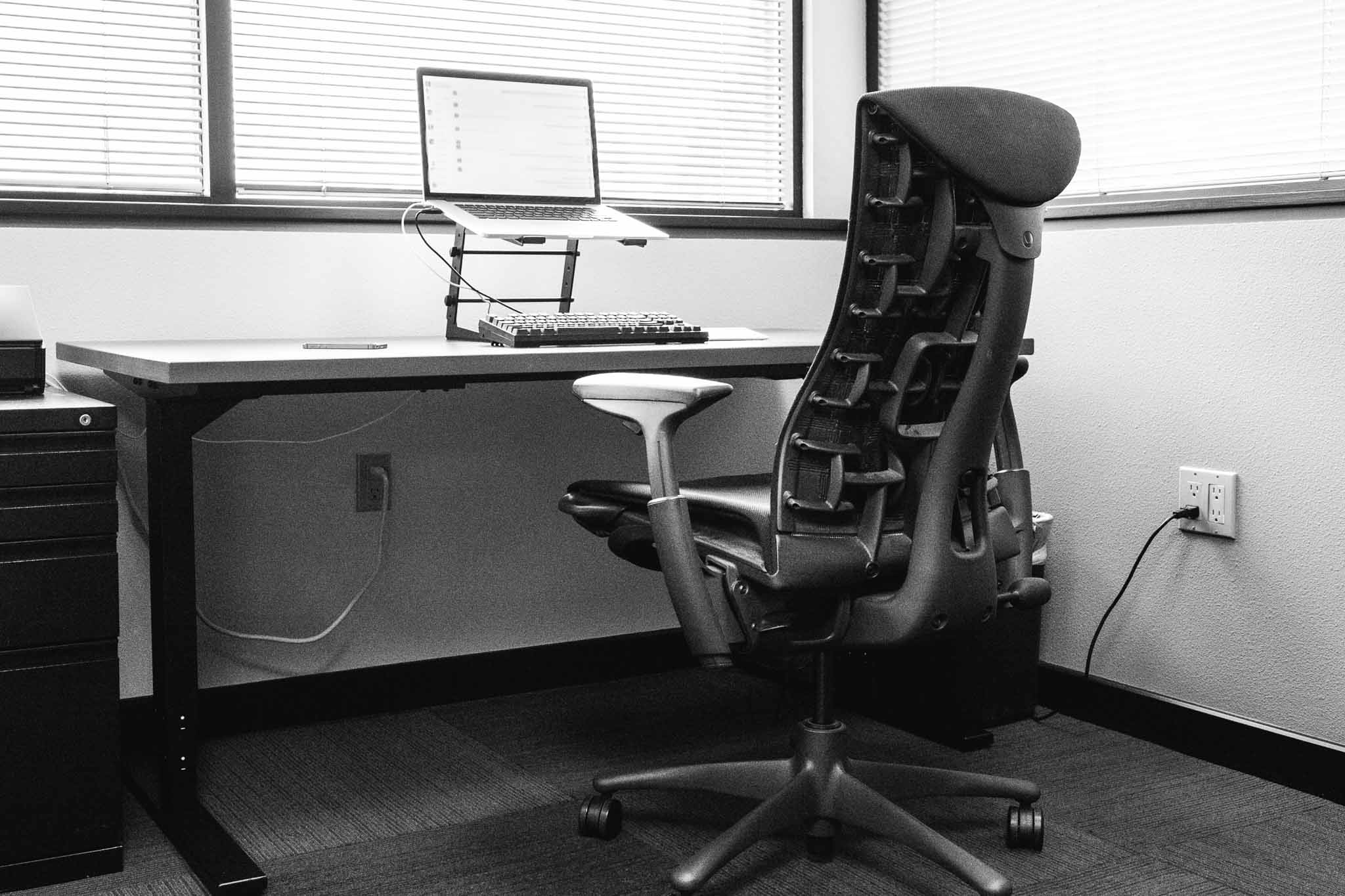
    I’ve been using a standing desk pretty solidly since 2011 and prior to last month I could have confidently told you that I had only spent 20–30 days sitting at a desk since 2011. Sitting was a very rare thing, because when I work, I stand.

    That’s just the way it is now for me.

    My legs and feet rarely get tired. I don’t get annoyed by standing and anyone who has tried standing for work knows exactly the annoyance I am talking about.

    I prefer standing and my life seems to not be impacted, so I stand.

    From the moment that I started standing I wanted to get an adjustable height desk — a fancy one that moves up and down to preset heights with just a push of a button.

    There are times, especially with young kids at home, where I just don’t get enough sleep and that makes sitting really — really — needed.

    In the past I’ve always had a sitting desk I could move to, but it meant physically moving all my crap from one desk to another. That amount of annoyance always kept me standing, but meant that if I did move it was a move that would last the rest of the day.

    An adjustable height desk just seemed logical, but I forbade myself from getting one for the first year to force myself to stand more. However, a month ago I got myself an adjustable height desk, apparently I finally “got around to it”.

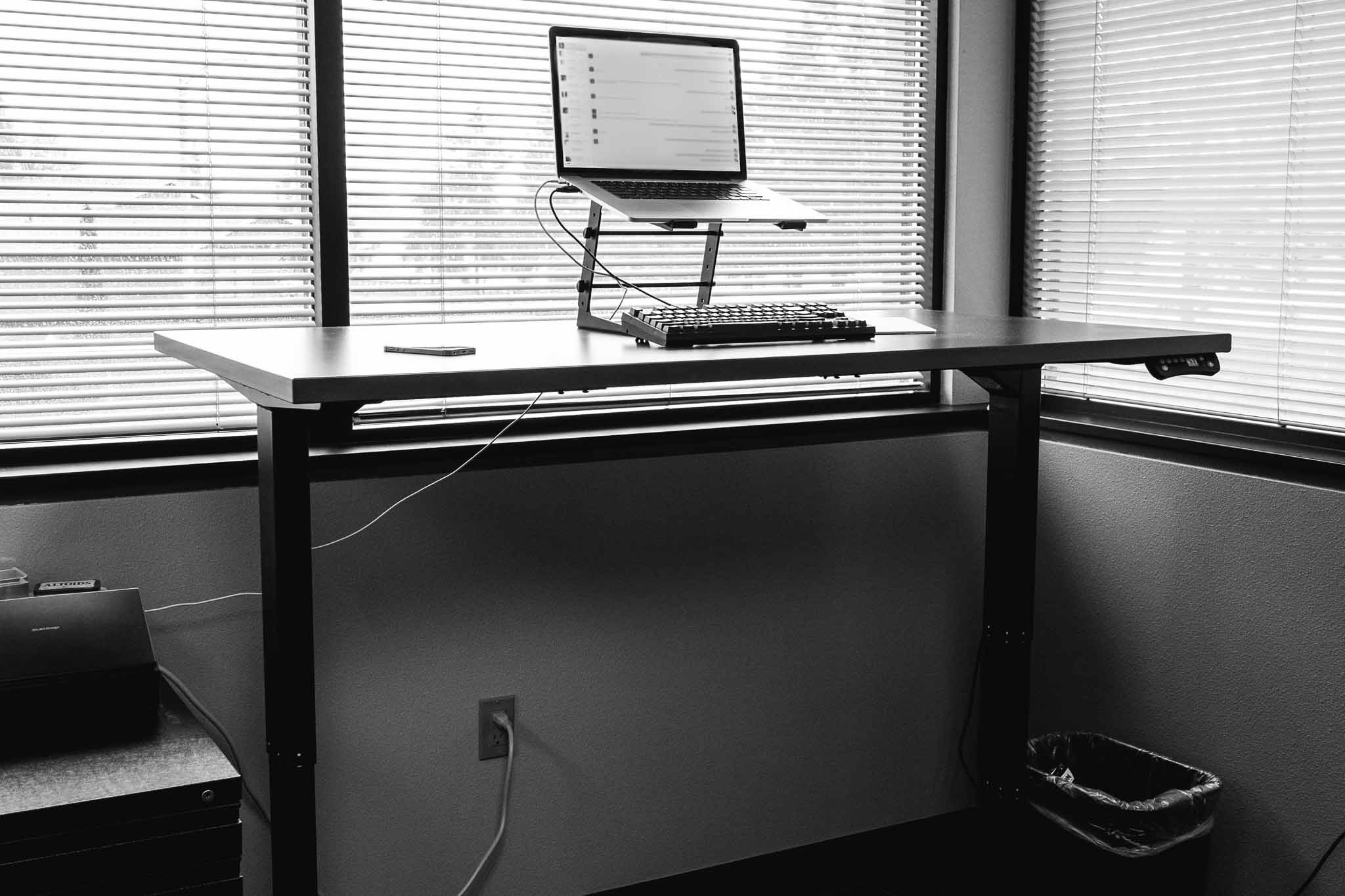
    I bought the Jarvis Desk from ErgoDesk.com, as it seemed decent looking, but more importantly it was cheaper than most other options I was considering — by about half. It was almost a no-brainer purchase.

    I did consider other desks, the two top contenders I didn’t buy were:

    • GeekDesk: This is probably the most well known of the lot. But I didn’t like a few things about it: the top choices were various flavors of ugly, and the legs have a large cross bar on them that I find unappealing. Additionally it was more money once shipping was factored in.
    • NextDesk: I really wanted one of these. They are gorgeous and just look like art. However their starting price was double the Jarvis, and they had that bar across the legs (again).

    The Jarvis was cheap, and missing a cross bar, so I pulled the trigger.

    The Desk

    Overall the desk is what I thought it would be. It’s very sturdy, large enough, has four presets for height control (I only use two), and just works.

    It’s a desk, what more do you want?

    There are some nice things about the desk:

    • The top can easily be swapped out, and the width of the legs is adjustable, so you have a pretty flexible base for your desk.
    • The presets work like a charm, though I keep playing with them all the time.
    • Overall the desk is very stable. It’s not rock solid, but then again it adjusts over a huge range — it’s more stable than I expected.
    • The movement speed and fluidity is fine. Nothing stellar, it is what it is. I can’t imagine a scenario where I would need a desk to zoom from one position to another. The wait isn’t annoyingly long, but it isn’t fast either.

    There are, of course, a few issues:

    • It’s pretty noisy. As in: the entire area around me knows when I am changing heights because you can’t avoid the whining sound. That’s probably the second worst issue with the desk. (But something I expected. I doubt it’s any more annoying than Shawn typing next to you.) Maybe less of a whine and more of a whine-hum.
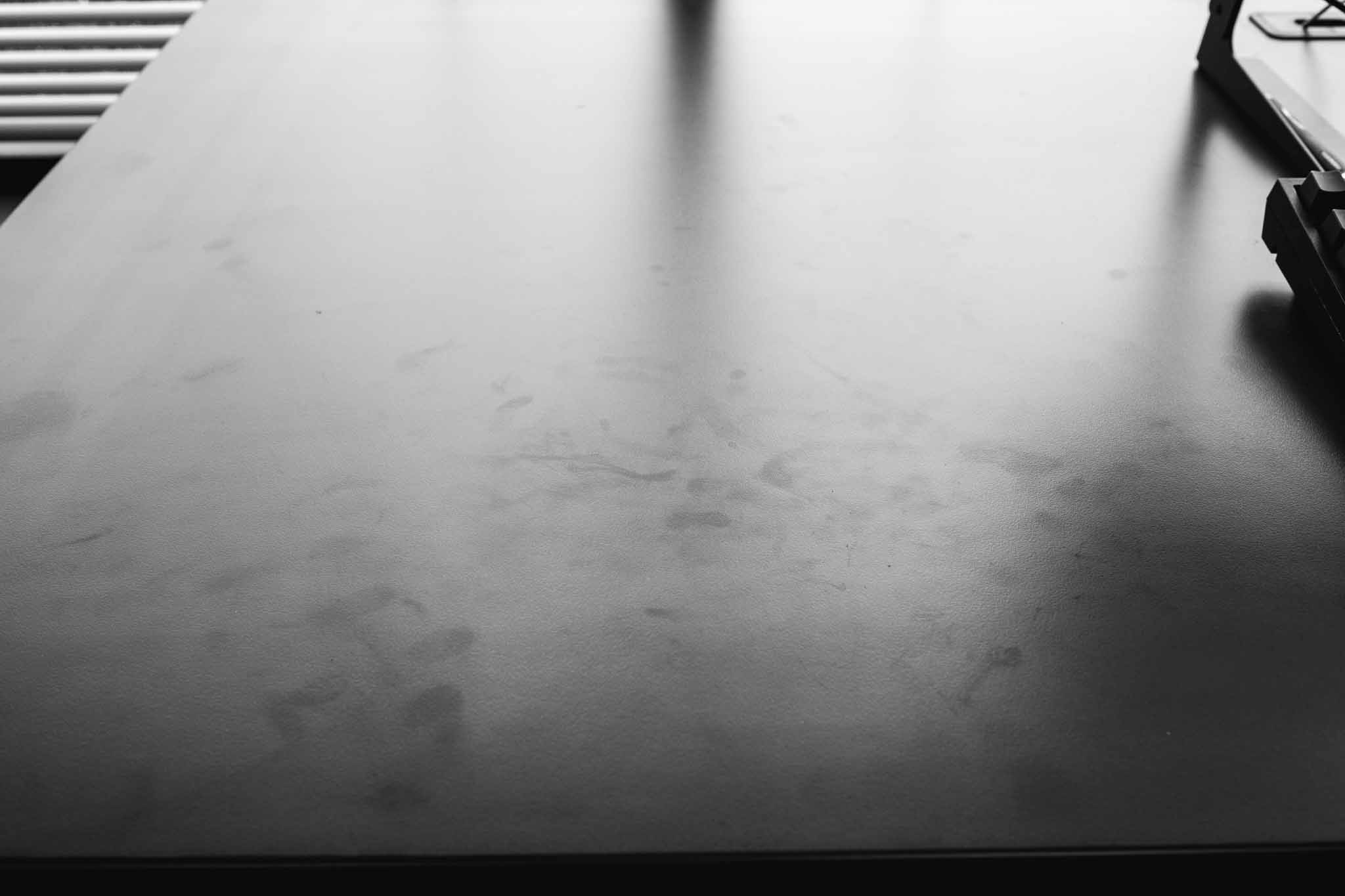
    • The top I picked is a dark grey laminate, and man does it suck. I like the look of it just fine (though it’s nothing great), but it’s a magnet for smudges. I tried seven different cleaners before finding one that would clean it streak free, and even then you can’t touch the desk without leaving a mark. It will drive an OCD person to break — I get close sometimes.

    Overall then, solid value for a solid adjustable height desk. I’d pick a different top/color, but I am probably only a month away from building my own top for the desk anyways (that was the plan all along).

    I recommend the desk, but I have caveats, which I detail next.

    Using an Adjustable Height Desk

    For the first week of owning the desk I imposed a rule: sitting is allowed at lunch only. (I eat lunch at my desk most days.) Then after the first week I changed the rule to: sitting is only allowed after noon.

    In fact, today, as I write this post it’s the first time in almost three years that I came into the office and just sat down instead of standing up to work.

    Where I was perfectly happy standing before, I am now prone to switch heights two to three times throughout the day. I worry that this is less healthy — having an adjustable height desk over a standing only desk — but then again I am much more comfortable and thus less cranky being able to sit down when I want.

    When I don’t sleep well the night before, or when I just need to kick up my feet it’s easy to do so. I’ve built the habit of standing to work, so I feel more awkward sitting. So long as I don’t let that feeling change, I should still stand more than I sit.


    My advice is to get a standing only desk for at least the first year of standing while working. If you give yourself the option to sit when you are trying to change from sitting to standing, then you will sit. Take away that option to sit for at least a year so that you can build a strong habit.

    After that you will probably find you don’t need an adjustable height desk after all. I sure as heck don’t need it. It’s a nice desk, but unnecessary.

  • Review: Ona Bowery

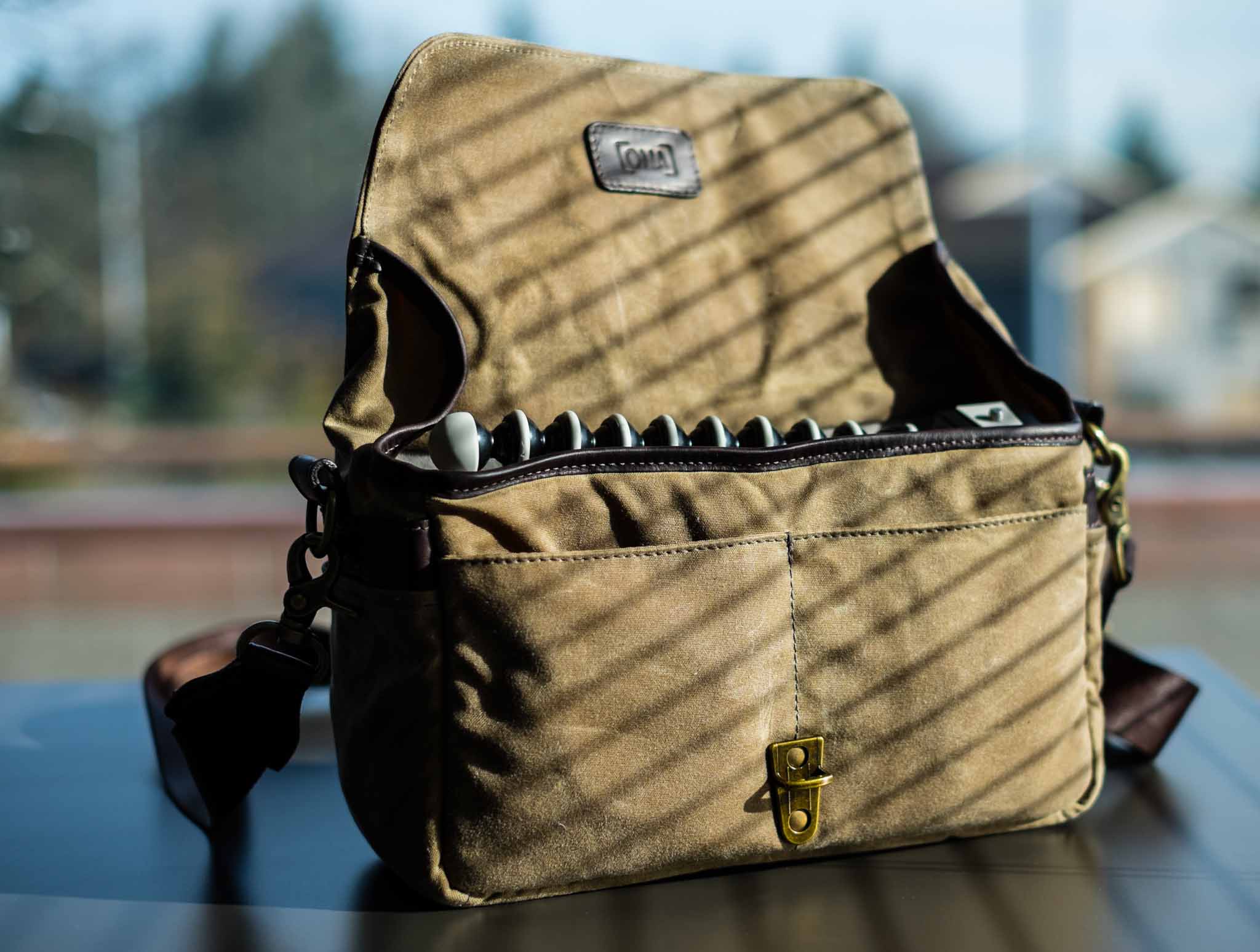
    I have a serious addiction to bags, but my recent move to Fujifilm cameras necessitated another bag purchase — this time a camera bag. I never found the need for a small camera bag with the GX1 and the OM-D as they stowed well inside the GR1 Field Pocket (and inside my jacket pockets). I really only used one lens with both those cameras.

    With the move to Fujifilm, however, I sold off all of my other camera gear, and thus needed a bag to at least have a central repository for my new gear at my home. This became blatantly apparent when I carried all the lenses and accessories piece meal to the hospital for my daughter’s birth.

    Previously

    With my Canon gear, the size alone, meant you needed bags for the gear. I had a special hiking backpack (for sale right now), a Pelican/LowePro serious storage case, and my shooting bag which is the more classic Domke F-4AF Pro.

    I still have those bags, but the Domke proved too large. The camera and lenses swim around in the bag, and it is just too big now. So despite all of that, I wanted a smaller bag which better reflected the smaller size of my tools.

    The Search

    I really thought I would just get a smaller Domke, as they hold up really well, but I kept looking to Think Tank and Ona Bags as well.

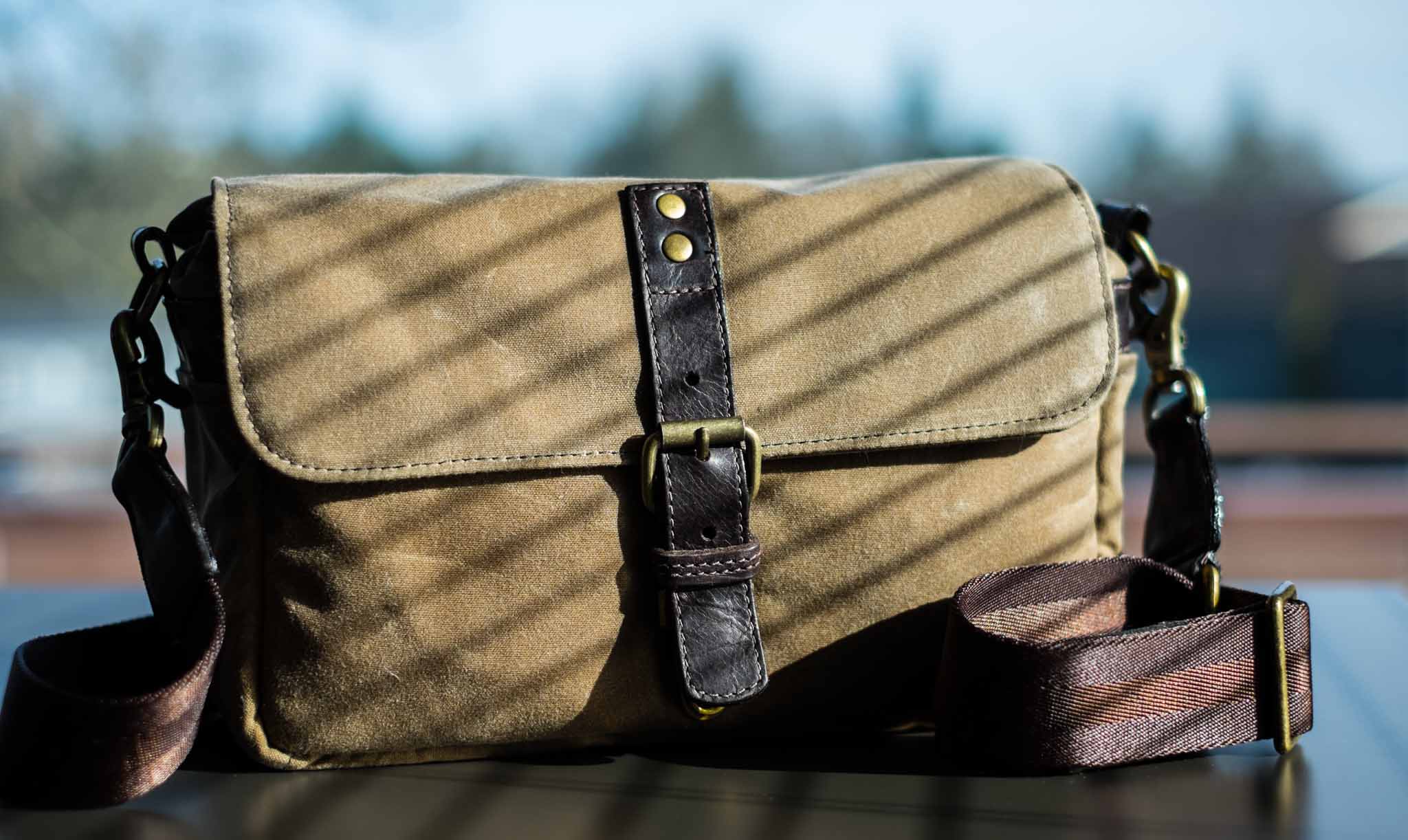
    Ultimately, the Ona Bowery in Field Tan led me to the purchase button.

    Quality

    I was immediately taken aback when I opened up this bag, the fit, finish, and feel of the bag is exquisite. In my opinion it is finished better, and feels better, than Hard Graft bags and at a fraction of the price.


    It’s small — though others would say large — but it holds my entire Fujifilm kit just so. This bag is just something special as a bag in general.

    The canvas is meant to patina, and comes a bit distressed (I don’t think purposefully). Since owning it the distress keeps coming, and I love every new mark that shows up on it, but one could wax the canvas if bothered.

    There are a few really nice touches on this bag that I want to point out:

    • The clasp. I am so used to velcro and zippers, that the metal clasp is a refreshing change. It’s silent to use, secures well, and is just all around better to interact with.
    • The shoulder strap feels like a smoother seatbelt material. I really love it. It’s smooth, but no so slick that it slides off your shoulder. Really something nice. The DSPTCH straps always slid off my shoulder, but for some reason this strap (though smoother) stays put.
    • The trimming on the bag is subtle, but so well done that sometimes I just admire it. I’m trying not to exaggerate, but it really is well trimmed.

    Of course, nothing in life is perfect and especially not the accessory pockets on this bag.

    At each side of the bag are little pockets to stow stuff. The rear and front pockets are adequate. They don’t secure shut, but they are tight enough that batteries, memory cards, and filters won’t come slipping out.

    It’s the end pockets that are the real issue: they are tiny, obstructed by leather trim at the opening, and almost comically useless. I loathe them. They are hard to get anything out of, and not much will fit in them. I’d almost prefer they didn’t exist at all.

    The bag is also missing any kind of secured pocket — I’d love to see a zippered pocket on the inside of the flap for storing memory cards, but there isn’t one. In fact aside from the foam padding and interior divider you would be hard pressed to say this is a bag specifically made for cameras. That is both good, and bad.

    Overall

    This is easily the best camera bag I have ever owned, and quality wise one of the best bags I have owned in any category. It isn’t perfect, and it is pricey compared to like sized bags, but I don’t think I could have made a better purchase for a small camera bag.

    Something tells me I will have this bag for quite some time.

    Buy It and Support the Site
  • The New Must Have Micro Four Thirds Lens

    The instant-buy micro four thirds lens has long been the excellent (if dodgy AF) Panasonic 20mm f/1.7 lens. It’s a pancake lens that is very compact, very sharp, and offers a nice compromise in focal length between 35mm and 50mm. It’s a good lens all around and it is a decent price.

    Once you start to get more serious about micro four thirds gear, it always became apparent that you must have the Panasonic Leica 25mm f/1.4 lens. It’s exceedingly sharp, focuses fast, and is f/1.4. It was always the next lens you bought. It just made sense, and the 50mm focal length is one of the most popular out there. ((Rivaled only by 35mm, I would guess.))

    Recently Olympus announced a 25mm f/1.8 lens — something to take on the legendary Panasonic — and just this week these lenses started making their way in to people’s hands.

    I, like Shawn Blanc, have read quite a bit about the lens — and if what I am reading (and seeing) is accurate, the Olympus 25mm f/1.8 is the micro four thirds lens to buy.

    It’s almost as sharp, focuses quieter, is much smaller, almost as fast (aperture wise), and costs less than the Panasonic 25mm. You get 99% of the way to the Panasonic offering with a bunch of other benefits — that’s impressive.

    I previously told people to get the 20mm f/1.7 to start out with on micro four thirds because it got you a really great, but small lens — but no more because from here on out I strongly feel that you should get the Olympus 25mm f/1.8 to start out with. The focal length is better, the build is better, the AF is better, and it is likely sharper.

    The biggest downside to the Olympus lens (and any of their lenses, save the 75mm) is that it is not that great looking. ((The Olympus 45mm in particular looks like a little penis attached to a camera.)) The Panasonic 25mm looks much better — much more professional — but one of the great things about the Olympus is the small size. It doesn’t look bad, but it certainly doesn’t look bad ass either.

    I’d wager to bet this lens becomes very popular.

    Support the Site

    I only get income two ways: from memberships, and from affiliate links, so your help with either is what keeps this site going.

    Buying the Olympus 25mm f/1.8 from these links will directly support the site.
  • Secure Messaging

    I mentioned Threema in another post and talked about how there is a lot to do with key exchange that can make such apps insecure. In reading more about Threema in their FAQ, it appears that the app servers can either facilitate the key exchange or it can be done in person via QR codes.

    Key exchange is going to be that part of any end to end encryption system. iMessage most certainly holds the keys and are thus subject to court orders, it appears Threema doesn’t hold the keys.

    That alone doesn’t make it secure, as they note that they must know who to send the message to. Even though those logs are being stored, there is nothing stopping someone from forcing them to log that data and turn it over (which is what PRISM tracks), but this is where their location comes into play, and I’m not sure the Swiss laws on this stuff.

    At the end of the day you have to decide who you are trying to protect your data from.

  • Cowork Spaces

    Shawn Blanc on work:

    Well, that got me thinking… perhaps working out of my home office isn’t the best setup for me? I’ve long been leaving the house once a week to work from a coffee shop, but what if it should be more?

    When I lived in Seattle my commute to work was 45 minutes on a good day (and those days were rare). Because of that I worked from home on Fridays. Without a doubt, working from my office was more productive for a plethora of reasons.

    For me the biggest reason was that I couldn’t just fuck around all day at the office — someone was likely to see my computer screen. There’s something psychological for me, whereby when I enter a space designated for “work” I tend to be more serious about work. Whereas if it is a space that is still apart of my home, I tend to want to work, but I feel less rushed and less serious about it and therefore get less done.

    Sometimes this is beneficial, but sometimes you just need to get shit done.

    I’ve never used a cowork space (though I would love to) ((I wanted to when I was in Seattle, but the options at the time were very unappealing to me. Since then I have toyed with the idea of opening my own cowork space in Seattle, but haven’t taken it further than that.)) but I imagine I would likely see an even bigger boost to my productivity there. I say that because while I don’t want my employees to see me goofing off, I really wouldn’t want random coworking people to see me goofing off.

    Overall, I think cowork spaces are very interesting, and certainly here to stay. I do think that many of them focus too heavily on replicating a “modern” office feeling, instead of focusing on the more specific needs of coworkers, or remote workers in general.

    Needs like:

    • Podcast studio with computer and mic.
    • Large monitors already at the desk.
    • Rental lockers for people ‘in-town’ for the day that need a hub.
    • Computers in general for those that run around with just a tablet.
    • Chargers on site (why should I lug mine).

    I’m certain that these amenities exist at some locations, but it doesn’t seem to be the norm from what I can tell. Mostly, from what I can see just by looking at websites, I think there is also too much human interaction to get a desk — it’d be ideal to make no human interaction needed. Book the desk/locker/room/office on your iPhone, walk in and get to work, leave when you are done.

    More Uber, less Four Seasons. I don’t know about anyone else, but I hate interacting with people out to sell me something.

  • Notes on Fujifilm Lenses

    I’ve used just a small portion of the lenses available for the Fuji X-system, but I wanted to share a few thoughts for those interested on the lenses I have tried.

    XF 23mm f/1.4 R

    This is the widest lens I have, and also one of the biggest. The pros of the lens for me are:

    • Fantastically sharp.
    • The manual focus ring, with distance gauge, is fantastic.
    • The focus seems fastest of all my lenses.

    The biggest con is that the lens is truly big. When on my X-E2 the camera does not sit flat, as the lens diameter lifts the front of the camera up. The weight isn’t that big of an issue, but it is just physically large.

    The large size does mean that you get a beefy set of adjustment rings, but it is by no means a compact lens.

    Overall though, my favorite lens and the classic 35mm focal length on the X-system.

    Buy it on Amazon, or B&H, and support the site.
    XF 27mm f/2.8

    This is the slowest lens I own, but it is also tiny in comparison to all the lenses, as it is a ‘pancake’ lens design. This is like a slower aperture, faster focusing, Fujifilm equivalent of the Panasonic 20mm f/1.7 that everyone loves on the micro four-thirds system.

    The only reason I own this lens is because it makes my entire camera setup easy to carry around. It’s interesting to note that Photozone.de loves the optics of the lens — I just am not enamored with the lack of aperture ring and the focal length is a bit odd (just like the Panasonic lens).

    The size, and relatively low cost, is why you own this lens.

    Buy it on Amazon, or B&H, and support the site.

    XF 35mm f/1.4 R

    This is probably the most popular lens (outside of the kit lenses) on the Fujifilm system. It provides the classic 50mm focal length on the X-system. It is fast. It is tack sharp. It is small.

    This is truly the ideal lens for the X-E2 and it feels made for the camera. Truly fantastic. I have nothing but great things to say about this lens, but the lens hood, I hate the lens hood. It’s this odd metal hood that many love, but makes the traditional lens cap unusable when on, instead requiring use of a hood cap — I find that very annoying.

    If you want to get started with primes, this should be at, or near, the top of the list.

    Buy it on Amazon, or B&H, and support the site.

    18-55mm f/2.8-4 R LM OIS

    I rented this lens and was extremely impressed — as many told me I would be. I typically don’t like zoom lenses (more on that in a bit), but this is a truly good lens no matter how you look at it.

    It is sharp, has optical image stabilization, and a decent aperture range for a zoom lens. Having said all that, I am glad I rented the lens and did not buy it. The cons are just to great for me on the lens:

    • The zoom ring was too fidgety for me.
    • The lens was too heavy (though I didn’t think too big).
    • I like that there is an aperture ring, but it is more like a programmable dial as it is not marked out for the apertures. (That’s understandable given that the max aperture is variable, but it doesn’t quite feel right in the Fujifilm ethos — just as the 27mm feels odd too.)

    I would happily own this lens, but only if I bought it as part of the kit — otherwise I wouldn’t bother because I think the stand alone price is a bit high for the lens. Having said that, it’s the best zoom on the X-system.

    Buy it on Amazon, or B&H, and support the site.

    Primes versus Zooms

    I won’t dive too much into this debate, because it’s a big one, but I will note a few of my personal feelings on this — since this is something I struggled to understand initially too.

    I fell in love with primes when I got the Canon 50mm 1.4 — from then on I was sold on primes. I just like prime lenses better now.

    Primes can be faster, and have less distortion (operative word there being can). I used to be big into zoom lenses, but I find them more challenging to work with now then I do prime lenses. (Though more convenient.)

    Instead of standing in one spot and playing with the focal length, I find myself actively exploring to find new angles and shots. I pay less attention to the camera, and more attention to the view — to me that is worth going with primes alone.


    Of the above lens choices, the real decision is if you want the 35mm focal length (the 23mm Fuji) or the 50mm focal length (the 35mm Fuji, confusing, I know). The answer to which is highly personal, but I think I’m now a convert from the 50mm focal length, to the 35mm length. Luckily I have both, but man it’s a tough call.